

Introduction
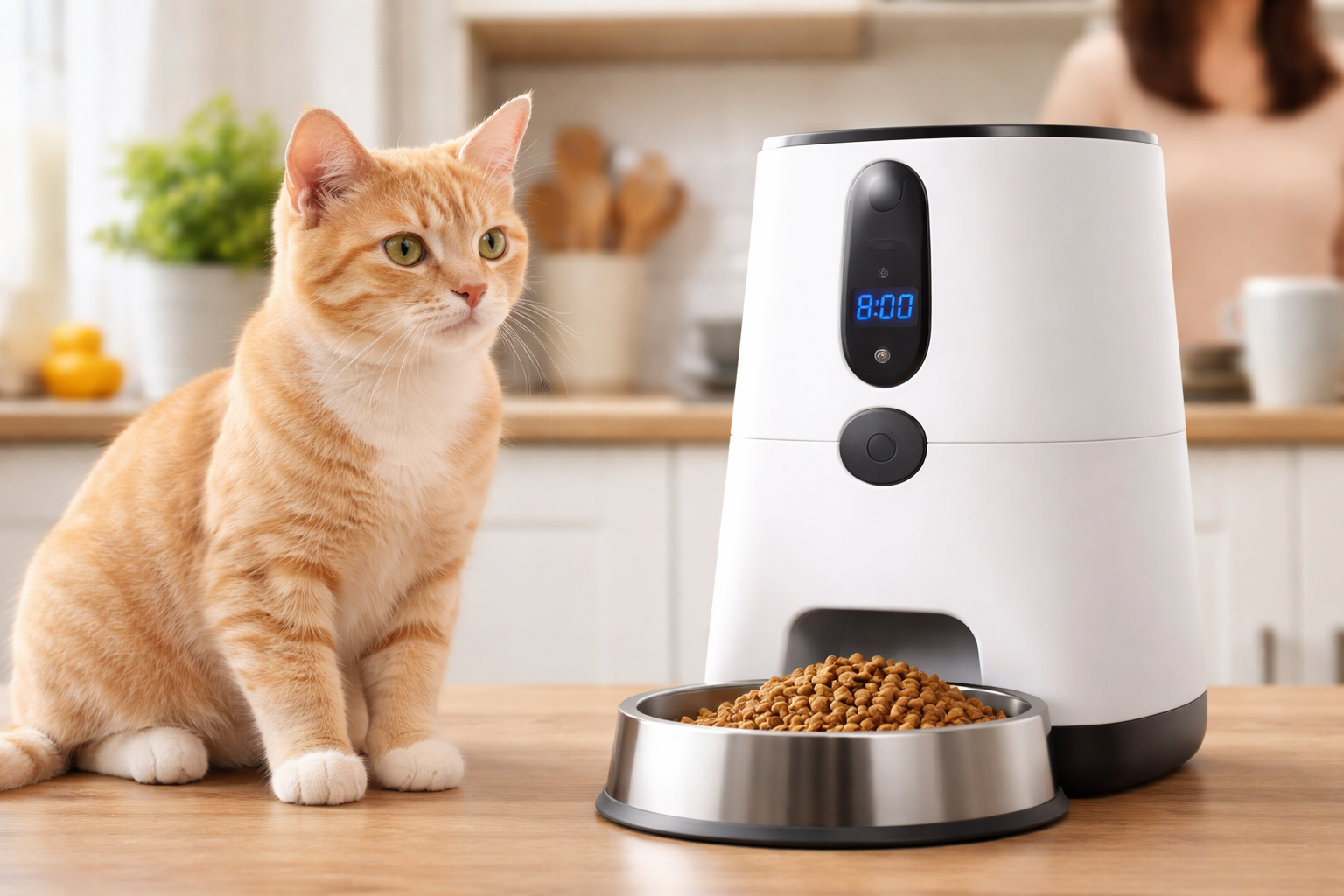
Bought an automatic cat feeder but your cat refuses to use it? You’re not alone. Many pet parents face this exact problem—an expensive feeder sitting unused while their cat ignores it completely.
- Introduction
- Before You Start: Setting Up for Success
- Day 1: Let Your Cat Observe
- Day 2: Build Familiarity
- Day 3: Create a Reward Connection
- Day 4: Introduce Feeder Sounds
- Day 5: First Automated Meal
- Day 6: Build Comfort and Independence
- Day 7: Full Transition
- What If Your Cat Still Refuses?
- Benefits of Using an Automatic Cat Feeder
- Conclusion
Here’s the reality: cats aren’t being stubborn. They simply don’t like sudden changes.
The key to success isn’t forcing your cat to accept the feeder—it’s helping them feel comfortable with it, step by step. With the right approach, even the most cautious cats can adapt within a week.
Before You Start: Setting Up for Success
Preparation plays a huge role in how quickly your cat accepts the feeder.
Choose the right feeder:
- Quiet models for easily startled cats
- Durable, tamper-proof feeders for food-driven cats
Placement tips:
- Semi-private but not isolated
- Away from noisy or high-traffic areas
- In a space your cat already feels safe
Avoid placing the feeder exactly where the old bowl was—it can confuse your cat. Instead, choose a nearby spot.
Day 1: Let Your Cat Observe
Place the feeder in the room but keep it turned off.
- Feed your cat as usual
- Don’t draw attention to the feeder
- Let your cat explore naturally
Goal: Your cat eats comfortably with the feeder nearby.
Day 2: Build Familiarity
Use your cat’s current bowl to create trust.
- Place the bowl next to or on the feeder
- Continue normal feeding routine
- Scatter treats near the feeder (not inside)
This step builds a positive association without pressure.
Day 3: Create a Reward Connection
Now it’s time to introduce the feeder as something positive.
- Feed your cat normally
- After the meal, manually dispense a small treat from the feeder
- Let your cat explore freely
Your cat starts learning: this machine = bonus food.
Day 4: Introduce Feeder Sounds
The biggest challenge is often the sound.
- Activate the feeder from a distance
- Let your cat hear it without pressure
- Pair the sound with treats or playtime
Tip: If your cat is scared:
- Place a mat under the feeder to reduce vibration
- Use quiet mode if available
Day 5: First Automated Meal
Time for the first real step.
- Set the feeder to dispense a small portion (25%)
- Stay nearby and offer extra food manually
- Let your cat approach at their own pace
Goal: Your cat investigates or tastes food from the feeder.
Day 6: Build Comfort and Independence
Increase portion size and reduce your involvement.
- Feed 50–75% via feeder
- Step away gradually during feeding
- Give your cat some privacy
Some cats actually eat better when left alone.
Day 7: Full Transition
Now your cat is ready for full automation.
- Program full meal portions
- Stick to a consistent schedule
- Observe without interfering
A relaxed cat will eat calmly and may groom afterward—this is a great sign.
What If Your Cat Still Refuses?
Some cats need more time, and that’s okay.
Try these adjustments:
- Extend each step by 2–3 days
- Use a quieter or different feeder model
- Place the feeder in a higher, more secure spot
For multi-cat homes:
- Use microchip feeders
- Separate feeding areas
- Stagger meal times
If resistance continues, consider using calming pheromones or consulting a vet.
Benefits of Using an Automatic Cat Feeder
Once your cat adapts, the benefits are huge:
- Consistent feeding schedule
- Less stress for pet owners
- No early morning wake-up calls
- Ideal for busy routines or travel
Conclusion
Training your cat to use an automatic feeder isn’t about forcing change—it’s about building trust.
By following this 7-day method, you’re giving your cat the time and confidence they need to adapt comfortably.
Be patient, stay consistent, and let your cat feel in control.
Because when cats feel like it’s their decision—they accept it much faster.