
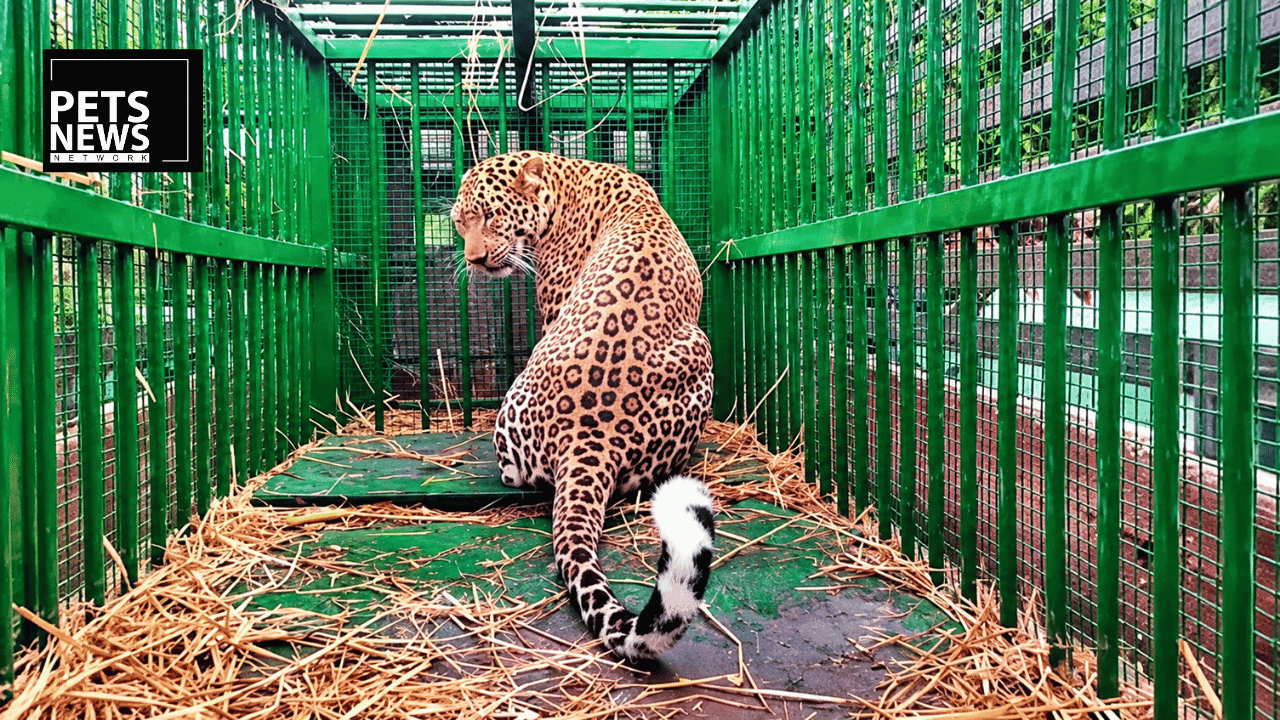

On the morning of 22 October, a five-year-old male leopard was found dead on farmland in Maval, outside Pune, with something wrapped around its abdomen. The forest department described it as a “snare-like object.” Not a snare. That gap between the two phrases is the whole case, and it will be closed by a post-mortem report, not by a headline.
What was found
Residents alerted the forest department at around 10:30 am on Thursday, 22 October 2026, after a leopard carcass was found on private farmland in Mau village, Maval taluka, Pune district.
The animal was a male, around five years old.
Range Forest Officer Somnath Takawale is leading the investigation, with Conservator Ashish Thakare overseeing it. The carcass was examined by forest officials along with the Wildlife Rapid Rescue Unit and ResQ Charitable Trust.
A post-mortem was carried out at the transit treatment centre in Bavdhan, under National Tiger Conservation Authority protocols, the standard procedure applied to big cat deaths in India.
An offence has been registered under the Wildlife (Protection) Act, 1972. Registering an offence at this stage is routine for the death of a protected animal; it does not imply that anyone has been identified or accused.
The post-mortem findings have not been released.
Two descriptions, two completely different events
Reports of the incident carry two different accounts of what was around the animal.
One describes a “snare-like object”, the forest department’s own phrasing. Another describes the leopard as having become entangled in a wire mesh fence.
These are not variations of the same thing.
| What it means | |
|---|---|
| A snare | A trap, deliberately set. Under the Wildlife (Protection) Act, trapping is hunting. This is a wildlife crime with an offender. |
| A fence entanglement | An accident. A problem of farm boundary design and animal movement. No offender, and a completely different response required. |
Notice what the forest department actually said. They did not say snare. They said snare-like object, careful, deliberately non-committal language from officials who have seen the carcass and are waiting for a report.
PNN is not going to be less careful than the people investigating it.
If it is a snare
The leopard is a Schedule I species under the Wildlife (Protection) Act, 1972, the Act’s highest category of protection. And the Act’s definition of “hunting” expressly includes trapping and snaring.
Under Section 51, an offence relating to a Schedule I animal carries:
| Imprisonment | Not less than 3 years, extending to 7 years |
| Fine | Not less than ₹25,000 |
| Second or subsequent offence | 3 to 7 years, fine not less than ₹1 lakh |
The court may additionally order that the trap, tools, vehicle or weapon used be forfeited to the State Government, and may cancel any licence the person holds under the Act.
It may also cancel an Arms Act licence, after which the person cannot obtain a new one for five years from the date of conviction.
This is among the most serious wildlife offences in Indian law. It applies only if the object was a trap.
If it is a fence
Then a different set of questions opens, and they are not criminal ones.
Wire mesh fencing is standard on farmland across Maharashtra. It is cheap, it keeps out nilgai and wild boar, and nobody installs it intending to kill a leopard. But a large cat moving at night through agricultural land does not see thin wire, and an animal that becomes entangled and panics tightens the trap around itself.
That is not a crime. It is a design failure with a predictable victim, and it is addressed through fencing standards, visibility markers and corridor planning, not through a prosecution.
The two outcomes require entirely different responses from the state. Which is precisely why the distinction cannot be guessed at.
The survey published ten days earlier
Here is context that the reports PNN has seen on the leopard did not carry, and it is the most striking thing about this case.
On 12 October 2026, ten days before the leopard was found, the Vadgaon Maval Range Forest Office, under the Pune Forest Division, published the results of a camera-trap survey of the same taluka.
| Conducted | April–May 2026, over two months |
| Where | Natural water bodies across eight villages in the Vadgaon Maval range |
| Records | 15,581 photographic images |
| Species | 51: 17 mammals, 34 birds |
| Most biodiverse site | Chikhalse, with 28 species |
Among the species recorded were Schedule I animals including the Indian leopard, the striped hyena and the jungle cat, along with the near-threatened rusty-spotted cat.
The survey was led by Range Forest Officer Prakash Shinde, with principal investigator Jigar Solanki heading the research team.
And its conclusions included two things that read very differently now.
First, officials cited increasing human pressure on wildlife habitats, and said the findings supported protecting water bodies and forest corridors, and could help plan anti-poaching patrols.
Second, the survey found a clear pattern of time-based separation: residents and livestock used the water sources during the day, while wild animals visited mostly at night.
Ten days after that was published, a Schedule I leopard was found dead on farmland in the same taluka.
Why the night-movement finding matters either way
That second finding deserves attention regardless of what the post-mortem says.
If leopards in Maval move predominantly at night, and farm boundaries are unlit wire mesh strung across land those animals cross, then entanglement is a foreseeable outcome, not an extraordinary one.
And if someone did set a snare, the same finding tells you when and where they would have set it.
The department’s own data describes the conditions in which this death became possible. That is worth saying whichever way the report falls.
What the post-mortem has to settle
One question sits above all the others: was the object a trap that tightened, or a fixed fence the animal pushed into?
That is what the examination at Bavdhan exists to help answer, alongside cause of death and the full pattern of injuries. Until the report is available, both explanations remain open, and anyone asserting either one is ahead of the evidence.
Pets News Network is India’s first dedicated media platform for the pet and animal industry. For breaking global pet news, brand coverage, and advertising enquiries, contact: info@petsnewsnetwork.com


