

A clip from Uttarakhand has been shared widely this week. It shows a tranquilised leopard being carried on a dandi-kandi, the traditional bamboo frame used to move people and loads in the hills, and, according to the account posted with it, slipping off and falling. The reaction has been immediate and angry. The local record of what happened in that village is longer, slower and harder, and almost none of it has travelled with the video.
What actually happened in Gwata
The incident took place in Gwata, a hamlet in Thakalad gram panchayat, Bageshwar district, Uttarakhand.
| Leopard entered | Thursday night, around 10:30 pm |
| Forest team reached the spot | Friday, around 2:00 am |
| Rescue completed | Friday, around 11:00 am |
| Total duration | Roughly 13 hours |
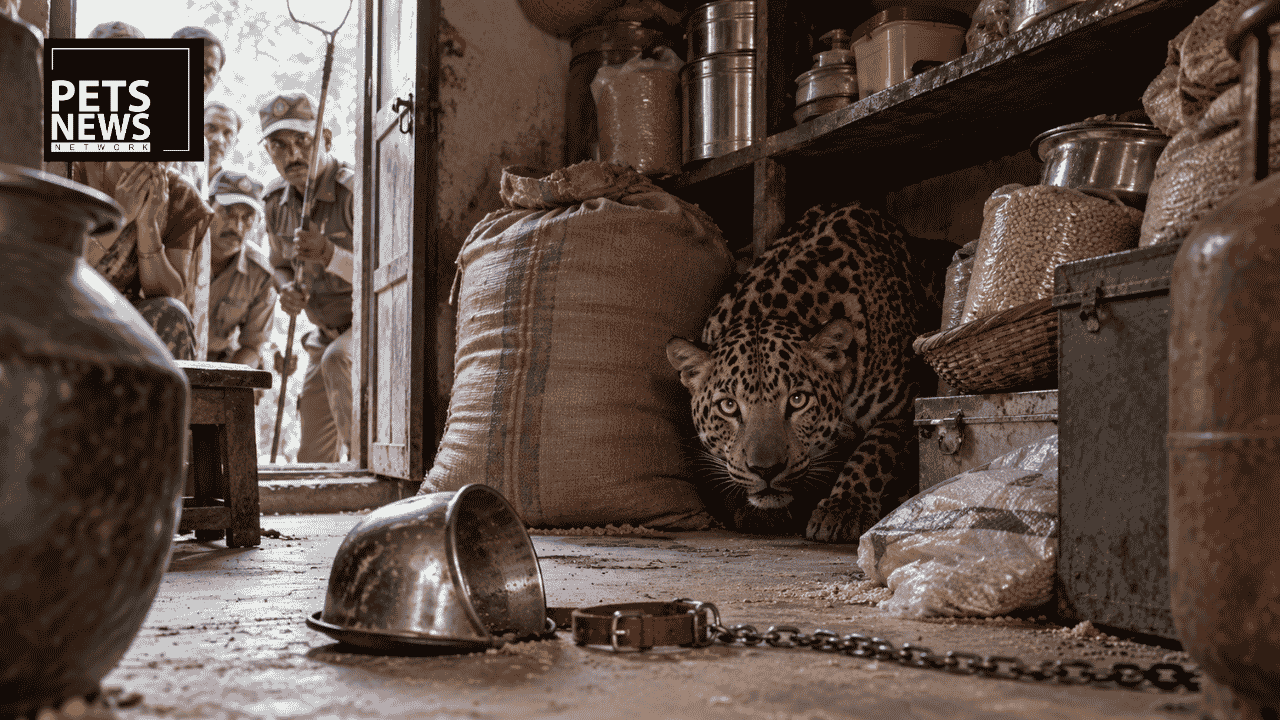
According to local reporting in Amar Ujala, a woman of the household had taken the family’s pet dog out of the storeroom. In the darkness, the leopard slipped inside. She put the dog back in, latched the door from the outside, and went to sleep.
She did not know the leopard was in there.
Later, she heard the dog making unusual sounds, looked in, and saw the animal. She raised the alarm, villagers gathered, and the forest department team arrived at around two in the morning. The surrounding houses are close together, which made the operation difficult. Staff and villagers stayed at the site through the night.
The leopard was removed safely the following morning.
The detail that is missing from every version of this story
The dog was found dead.
That family’s pet, shut in a storeroom with a leopard for several hours, is the only confirmed casualty of this entire episode.
It does not appear in the viral post. It does not appear in the national coverage. An article written about animal welfare, criticising a rescue on animal welfare grounds, has left out the one animal that is known to have died.
That is worth sitting with before anyone forms a view of the people who turned up at 2 am.
Two accounts that do not match
The nationally circulated version and the local record describe different events.
| National coverage | Local reporting |
|---|---|
| The leopard entered a livestock enclosure / cattle shed | It entered the storeroom of a house |
| Villagers secured the enclosure from outside and alerted the department, a considered decision | A woman latched the door before she knew a leopard was inside, with her own dog shut in with it |
| No duration given | A 13-hour operation, beginning at 2 am |
| No mention of any animal dying | The family’s dog was found dead |
These are not small differences. The second column is a village emergency that ran all night. The first is a summary assembled around a video clip.
What the video does and does not establish
The footage, shared on Instagram, shows a tranquilised leopard being carried on a dandi-kandi. The account posted with it says the animal slipped off and fell to the ground among forest personnel and villagers. It also raises the number of people standing close to the sedated animal.
Both concerns are legitimate. Neither has been independently confirmed.
There is no forest department statement on the carrying method or the precautions taken. There is no confirmation of whether the leopard was injured. The local report of 23 October describes the animal as a seven-year-old male that appeared healthy and was to be released after medical checks, but it does not mention the video or any fall, and no later update on the animal has been published.
PNN has not reproduced the footage and is not treating the fall as an established fact. What can be said is that a question has been raised, and that it has not yet been answered by anyone in a position to answer it.
Why moving a tranquilised big cat is the dangerous part
The concern behind the criticism is sound, and it is worth explaining properly rather than shouting about.
Sedation is not an off switch. The depth of chemical immobilisation changes over time. An animal that looks completely unconscious can begin to recover during transport, and the moment of recovery is the moment of greatest danger: to the animal, to the handlers and to anyone standing nearby.
A fall can injure an unconscious animal. Muscle tone is reduced under sedation and protective reflexes are absent. A drop that a conscious leopard would absorb easily can cause real damage to one that cannot brace.
Crowding makes everything worse. Noise and movement around a recovering animal increase stress, and stress affects both recovery and the risk of a sudden reaction. Standard practice in chemical capture is to keep the area clear, support the head and neck, protect the eyes, monitor breathing and temperature continuously, and move the animal in a secure, enclosed container.
That is the standard the criticism is measuring this against, and it is the right standard.
But here is the question nobody asked
The objection being made is: why was a secure transport cage not used?
It is a fair question. It cannot be answered without the one fact the national coverage left out: the team reached the village at two in the morning, and the operation ran until eleven.
Bageshwar is hill country. The dandi-kandi exists in these districts for a specific reason: there are hamlets that vehicles cannot reach. A frame carried on shoulders is how people and loads move where there is no road.
So the question that actually needs answering is:
Could a transport cage have physically reached Gwata?
If it could, this was a serious failure of procedure and the department should say so.
If it could not, then the failure is not the rescue team’s. It is a planning and equipment question: why a forest division operating in roadless hill terrain does not have a collapsible crate, a secure restraint stretcher or an equivalent piece of kit designed to be carried.
Either answer is a story. The difference between them is the difference between blaming the people who worked through the night and fixing a gap that will otherwise repeat.
Nobody asked. The video was enough.
This was not an isolated incident
Two days before the Gwata rescue, the same forest division was already dealing with leopard movement elsewhere in the district.
On 22 October, the range officer said leopard movement was being monitored continuously, and residents were advised not to let children or elderly people go out alone, to take extra care at dawn and dusk, and to inform the department rather than approach or provoke any animal they saw.
So cages existed in Bageshwar that week. They were deployed in villages where leopards were being monitored, not in a hamlet where one walked into a storeroom at half past ten at night.
That context does not excuse anything. It does make the criticism answerable rather than rhetorical.
A note on how this was reported
The most widely shared national write-up of this episode is, in its body text, reasonably careful. It uses hedged language throughout, states plainly that the available reports do not establish whether the leopard was injured, and carries a disclaimer saying the circumstances require independent confirmation.
The headline does none of that. It announces serious questions about wildlife safety, rescue methods and handling protocols, a verdict the article itself declines to reach four paragraphs later.
That gap between headline and text is how a single unverified clip becomes a national judgement on a forest team that nobody has interviewed.
What a rescue should actually be judged on
A successful wildlife rescue is not simply an animal removed from a dangerous place. It is an animal removed without injury to itself or to anyone else, by a method that can be defended afterwards.
On that test, this one has not been assessed, because the information needed to assess it does not exist in public. The forest department has not explained its method. No veterinary assessment of the animal has been released. The leopard’s condition after the rescue and its current location have not been confirmed.
Those are answerable questions, and they should be put to the Bageshwar forest division rather than to a comments section.
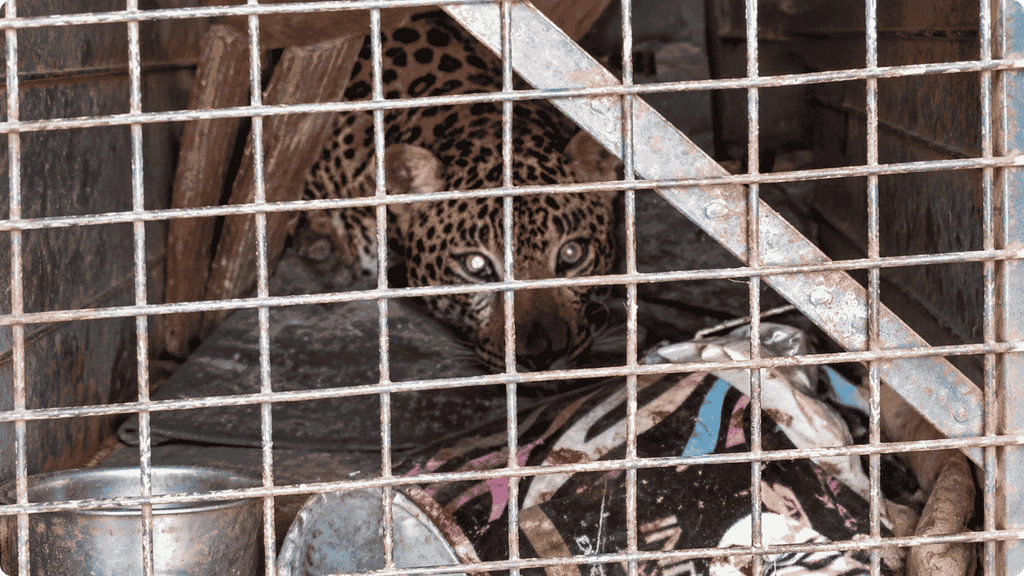
What is already known is this: a leopard walked into a house at night, a family’s dog died, a team worked from two in the morning until eleven, and the leopard came out alive.
Whatever else is established later, that is where this account should begin, and it is where almost none of them did.
Pets News Network is India’s first dedicated media platform for the pet and animal industry. The circumstances of the reported fall, any resulting injury, and the forest department’s account of its method remain unconfirmed at the time of publication. For breaking global pet news, brand coverage, and advertising enquiries, contact: info@petsnewsnetwork.com