
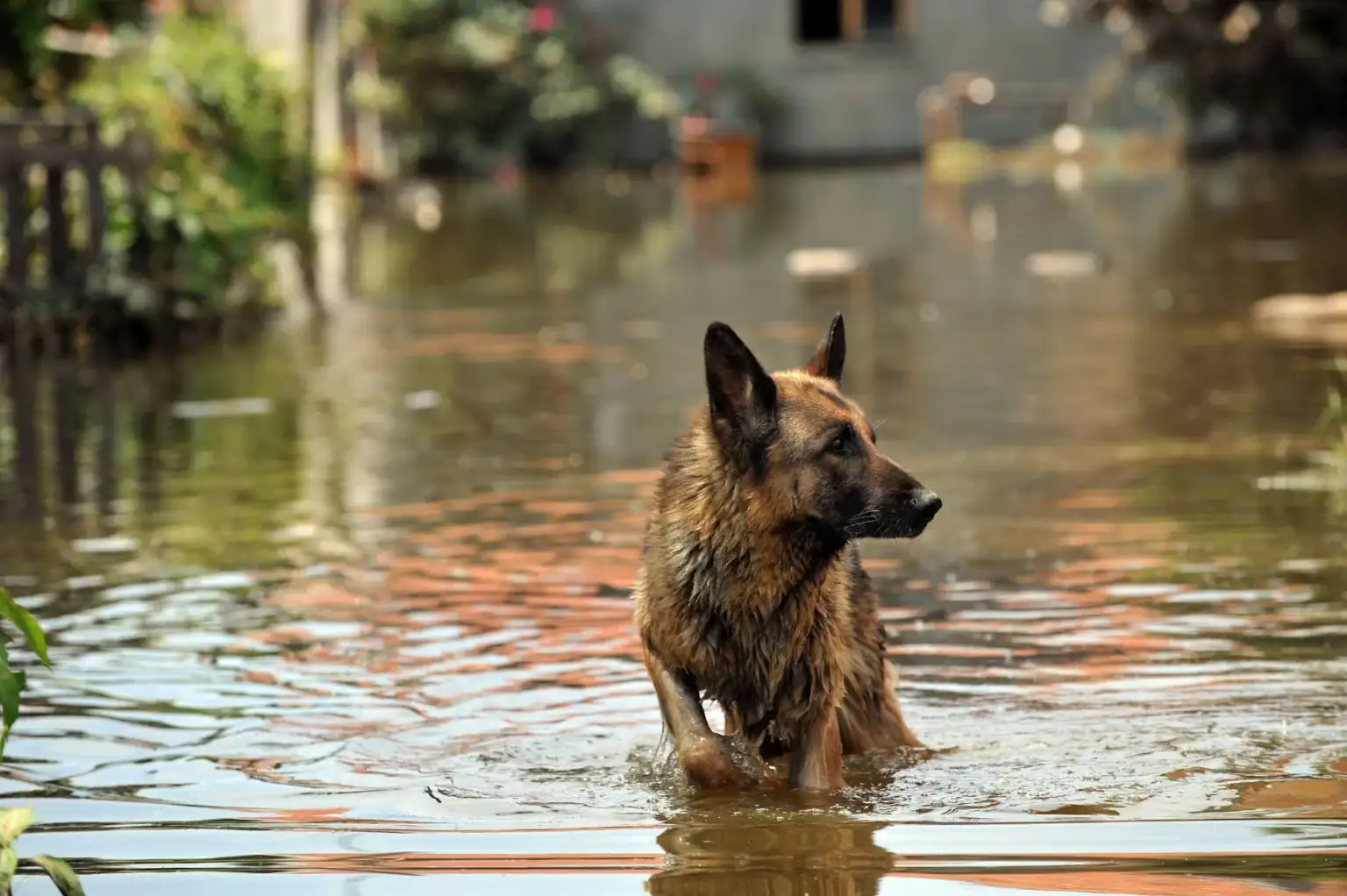

Right now, as you read this, Mumbai is drowning.
The India Meteorological Department has issued a red alert for the city, warning of extremely heavy rainfall. Flight operations have been severely impacted. Vehicles are crawling through waterlogged streets. Multiple rain-related fatalities have already been reported. Kurla, Sion, Dharavi, Andheri — entire neighbourhoods are knee-deep in floodwater that has nowhere to go.
Mumbaikars are documenting everything. The videos are everywhere — subways turned into rivers, auto-rickshaws stalled mid-road, office workers wading through brown water in their formal clothes. Social media is flooded with the city’s misery.
But scroll through all of it, and you will notice something missing.
Nobody is filming the street dogs.
The City Has ~100,000 Stray Dogs. The Monsoon Has No Mercy for Any of Them.
Mumbai’s stray dog population runs into the hundreds of thousands. They live under vehicles, inside drainage pipes, beneath shop awnings, beside chai stalls, in the gaps between buildings. They have carved out territory, found food sources, built routines. And then the monsoon arrives — and every single one of those survival strategies gets wiped out overnight.
Heavy rains flood their usual shelters under cars, makeshift huts, or beneath shop awnings, forcing them into the open. Food becomes scarce as garbage bins overflow with water and street vendors pack up early. The constant dampness leads to skin infections, fungal diseases, and respiratory issues. Puppies and older dogs are especially vulnerable, often falling sick or even succumbing to the harsh conditions.
This is not a gentle inconvenience. This is a survival crisis — playing out silently across every flooded street in the city, right now, today, July 5, 2026.

What the Floodwater Is Doing to Their Bodies
The water filling Mumbai’s streets is not rainwater. It is a toxic mix of monsoon runoff, sewage overflow, garbage, and most dangerously bacterial contamination that kills.
Leptospirosis is caused by Leptospira bacteria, found in the urine of infected rats, dogs, cattle, and other animals. The monsoon season in Mumbai heightens the probability of leptospirosis transmission, as intense rainfall results in flooding and waterlogging throughout the city.
For stray dogs, this is a death sentence written in floodwater. They have no choice but to wade through it, drink from it when they are desperate, and sleep in it when there is nowhere dry to go. Leptospirosis affects the kidney and liver of dogs, and can rapidly progress to organ failure without treatment. A dog with no owner, no vet, and no shelter has virtually no chance of surviving a serious leptospirosis infection.
And that is only one of the diseases the floodwater carries.
Mumbai’s monsoon streets are a cocktail of standing water, mud, sewage overflow, and microbial contamination. Stray dogs walking through it face fungal infections, bacterial skin issues, parvovirus, distemper, and the constant transmission of pathogens through their paws and mouths.
Parvovirus — highly contagious, often fatal in unvaccinated dogs — spreads rapidly in wet, contaminated environments. Stray dogs in India are considered the primary reservoir of distemper, a disease with mortality rates of up to 80% in unvaccinated animals. Mumbai’s stray population is largely unvaccinated beyond what NGOs can cover. In the floods, these diseases move fast.
The Invisible Suffering Nobody Is Photographing
Picture a street dog named Rani. A docile stray who has spent years beside a tea stall. The stall owner throws her some bits, and she has found a warm place behind the counter to sleep. But once the rains come, the stall closes earlier and the corner floods. Rani gets thrown out and is left to roam in search of an alternative home.
This story is not fictional. It is happening on thousands of streets across Mumbai today. The food sources disappear. The dry corners flood. The familiar humans retreat indoors. And the dog is left to figure it out alone — wet, hungry, frightened, and increasingly sick.
Rains create havoc for street animals. Constantly staying wet during rainfall, drinking unhygienic water, and the cold during monsoon are the main causes of illness and deaths. One of the biggest concerns for animals during the rainy season is the lack of proper food and shelter.
For puppies, the odds are even grimmer. A West Bengal study found that only about 19% of stray pups reach reproductive age — the remaining 81% die early, often from disease, malnutrition, accidents, or exposure to harsh weather. The monsoon accelerates every one of those causes of death simultaneously.
The NGOs Fighting the Flood on Their Behalf
They are out there. Quietly, with limited resources, without the viral videos or the news coverage — Mumbai’s animal welfare organisations are working through the worst of it.
The Welfare of Stray Dogs (WSD), operating since 1985, treats approximately 15,000 injured and sick street animals every year within their own territory. Their field team moves through the city, treating wounds, skin problems, maggot wounds, eye infections, and severe cases of kidney problems and jaundice — all for free, from Cuffe Parade to Mahim and Sion.
NGO RAWW (Resqink Association for Wildlife Welfare) deployed two wildlife ambulances, six rescue staff, and 20 volunteers during previous heavy rainfall emergencies in Mumbai — rescuing 88 animals and birds impacted by flash floods, including animals displaced from their habitats and those electrocuted by live wires.
One of the proudest moments documented by a Mumbai rescue team during monsoon operations was saving a litter of puppies stuck in a flooded drain. A small shelter was created on the spot with the help of local children, and the pups began being fed and looked after by rotating community members.
These stories happen every single day during Mumbai’s monsoon. They just do not make the news.

The Electrocution Risk Nobody Talks About
There is another danger specific to Mumbai’s monsoon that affects stray animals — one that is rarely discussed.
Mumbai’s electrical infrastructure, under pressure from decades of rapid urbanisation, leaks during heavy rain. Live wires come down. Submerged metal surfaces carry current. Stray animals — dogs and cats who shelter under vehicles and lean against structures — frequently get electrocuted by live wires during heavy rainfall and flash floods.
A dog sleeping against a flooded metal shutter does not know what is happening when the current hits. For rescue teams working in these conditions, it is one of the most unpredictable and heartbreaking outcomes of every major monsoon event.
What Mumbai’s Monsoon Means for Your Pet Too
If you have a dog at home in Mumbai right now, the floodwater outside is a direct threat to them too.
Never allow your dog to drink from puddles, rainwater pools, or any stagnant water body during the monsoon. Leptospira bacteria — responsible for leptospirosis, a potentially fatal zoonotic disease — thrive in warm, stagnant water. Mumbai’s streets right now are covered in exactly that water.
Before walks, confirm your dog is current on all core vaccinations — DHPPi (distemper, hepatitis, parvovirus, parainfluenza), rabies, and the leptospirosis vaccine. Monsoon increases your dog’s exposure to multiple infectious agents simultaneously.
Every time your dog comes inside from a walk, wipe their paws and belly thoroughly. Mumbai’s monsoon streets carry bacterial and fungal pathogens that enter through paws. A consistent post-walk paw-cleaning ritual is the single most effective way to prevent infections. Rinse paws with lukewarm water and a dilute chlorhexidine solution for antibacterial protection.
What You Can Do Right Now — For the Ones Who Have No Home
The stray dogs of Mumbai cannot call a helpline. They cannot find shelter on Google Maps. They cannot wait out the floods with a cup of tea and a working Wi-Fi connection.
But you can do something.
Feed them. If there is a stray you recognise near your building, leave some dry food in an elevated spot away from the floodwater. Wet food spoils rapidly in monsoon conditions — dry kibble or cooked rice and chicken is safer.
Build a temporary shelter. Temporary shelters can be set up using tents, wood, or tin sheets in public gardens or open areas. Use old newspapers, old clothes, and sheets for strays to curl up in — this goes a long way in maintaining their health and preventing sickness during the rains.
Pets News Network (PNN) is India’s first dedicated OTT and news platform for the pet industry. If you are in Mumbai and need to report an injured or distressed animal.


