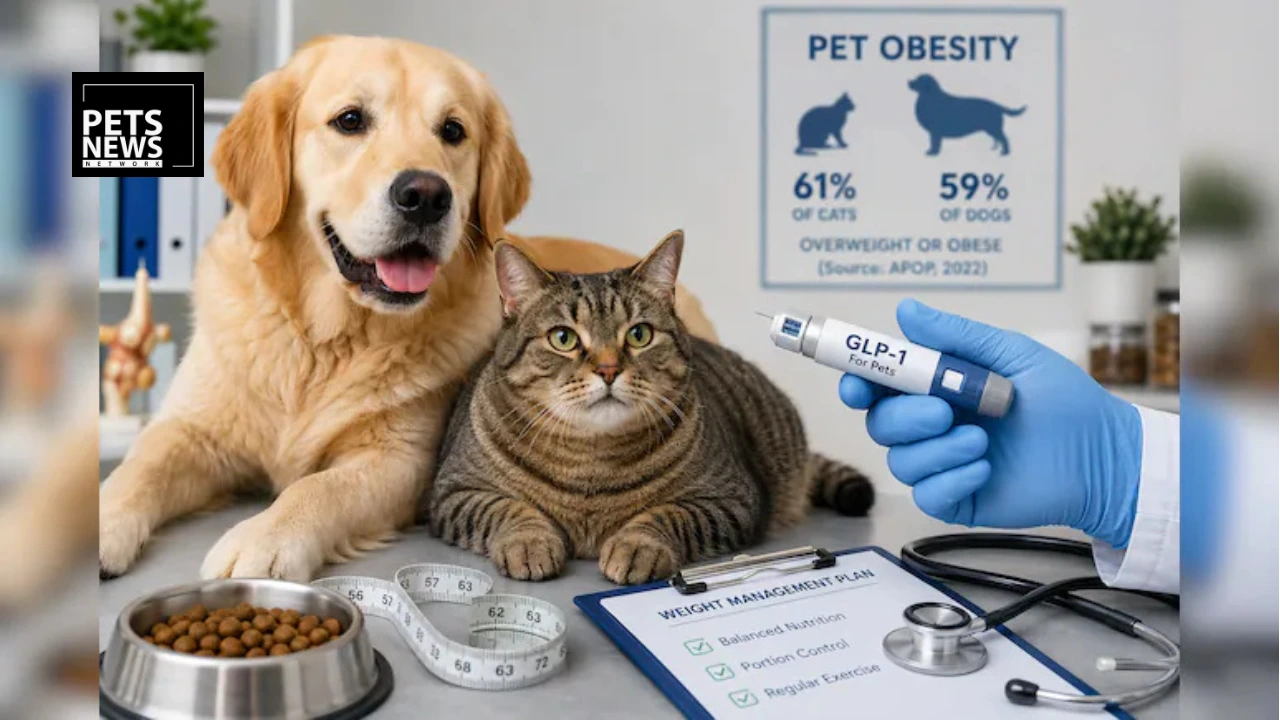

The drug that changed how the world thinks about human weight loss is now being pointed at something else entirely — the 61% of cats and 59% of dogs that veterinarians classify as overweight or obese.
GLP-1 receptor agonists — the class of drugs that includes Ozempic, Wegovy, and Mounjaro, and that has reshaped global conversations about metabolism, appetite, and chronic disease in humans — are now entering the veterinary pipeline. Clinical trials have begun. FDA approval timelines are being discussed. Biotech companies have raised funding specifically to develop pet versions. And a question that would have seemed absurd two years ago is now being asked in serious medical journals, investment reports, and veterinary conferences around the world:
Is pet Ozempic coming? And what happens to the global pet industry when it arrives?
The Scale of a Problem Every Vet Already Knows
Before understanding the drug, it helps to understand the problem it is trying to solve.
Pet obesity is not a fringe issue. According to the Association for Pet Obesity Prevention, 61% of cats and 59% of dogs evaluated by veterinary professionals in the United States in 2022 were classified as overweight or obese. This is not a number that has been improving. If anything, the same forces that have driven human obesity higher — ultra-processed food, sedentary lifestyles, emotional eating mediated by social bonds, and difficulty sustaining dietary change — apply equally, in modified form, to companion animals.
The health consequences are severe and well-documented. Obesity in dogs and cats is directly linked to diabetes, osteoarthritis, cardiovascular disease, reduced kidney function, shortened lifespan, and significantly lower quality of life. An obese cat that develops diabetes requires insulin injections twice daily for the rest of its life — a burden that is financially significant, emotionally demanding, and that dramatically reduces the quality of the human-animal bond that pet owners value most.
For decades, the veterinary prescription for pet obesity has been essentially unchanged. Eat less. Move more. Switch to a therapeutic diet. The problem, as veterinarians and pet owners both know, is that this prescription works inconsistently at best and often fails entirely. Cats in particular are notoriously difficult to manage. Unlike dogs, they cannot simply be taken on longer walks. They frequently resist dietary changes. They are hard to medicate consistently. And they are expert manipulators of the humans who love them into providing food on demand.
“In veterinary medicine for the last 100 years, the only prescription we had was feed less, exercise more, and that just doesn’t work for all types of obesity,” Dr. Ernie Ward, a veterinarian and leading pet obesity expert, told CBS News in late 2025.
That is what the GLP-1 revolution is now attempting to change.
What GLP-1 Drugs Are — and Why They Work
GLP-1 stands for glucagon-like peptide-1, a hormone naturally produced in the gut that signals the brain to reduce appetite, slow gastric emptying, and improve insulin sensitivity. In humans, GLP-1 receptor agonists — drugs that mimic this hormone’s effects — have been nothing short of transformational. Semaglutide, sold as Ozempic for diabetes management and Wegovy for weight loss, has achieved clinical results that were previously considered impossible: sustained, significant weight reduction without surgery, in a population where every other pharmaceutical approach had failed.
The Science journal named GLP-1 drugs its Breakthrough of the Year in 2023. The New Yorker called 2023 “The Year of Ozempic.” In the years since, the drugs have moved from breakthrough to baseline expectation across global healthcare.
The veterinary question is a natural extension of that success. If GLP-1 hormones regulate appetite and metabolism in humans, do they do the same in cats and dogs? The early evidence says yes — with important caveats about species-specific pharmacology that make a direct copy-and-paste from human drugs impossible.
This is why dedicated veterinary GLP-1 formulations are needed. And this is why multiple companies are now racing to develop them.
The MEOW-1 Trial: The World’s First GLP-1 Study in Cats
The most significant development in pet GLP-1 research to date is the MEOW-1 clinical trial, launched in December 2025 by Okava Pharmaceuticals, a San Francisco-based biopharmaceutical company.
The MEOW-1 study is testing OKV-119 — an investigational “ultra-long acting” GLP-1 implant designed specifically for cats. The device is a small, microchip-sized implant inserted under the skin that slowly releases exenatide — the first FDA-approved GLP-1 drug, originally authorised for human type 2 diabetes in 2005 — over a period of up to six months. Fifty cats are enrolled in the initial phase of the trial.
The choice of a slow-release implant rather than a traditional injection is deliberate and practically significant. Medicating cats consistently is one of the most common challenges in feline veterinary care. An implant that requires only one intervention every six months dramatically reduces the compliance barrier that defeats most long-term cat health interventions.
According to Okava, OKV-119 “is designed to mimic many of the physiological effects of fasting — improved insulin sensitivity, reduced fat mass and more efficient energy metabolism — without requiring significant changes in feeding routines or disrupting the human-animal bond that often centres around food.”
That last phrase is crucial. One of the deepest structural challenges in pet obesity management is that food is how most pet owners express love. Reducing food is not just a caloric intervention — it feels, to many owners, like withholding affection. A drug that achieves metabolic improvement without requiring the owner to fundamentally change their feeding behaviour removes this emotional barrier entirely.
Results from the MEOW-1 study are expected in mid-2026, with Okava targeting FDA approval for the implant within approximately two years of positive results. A companion version for dogs is already in development.
The potential benefits Okava cites extend beyond weight loss: reduced risk of diabetes through improved glucose metabolism, decreased osteoarthritic pain and inflammation, enhanced cardiovascular function, and improved kidney health — making OKV-119 potentially relevant not just to obesity management but to the broader agenda of extending healthy lifespan in companion animals.
Cornell University and Akston Biosciences: A Different Approach
Okava is not the only company in this space. Akston Biosciences is collaborating with Cornell University College of Veterinary Medicine on a parallel approach: a once-weekly GLP-1 injection called AKS-562c.
Cornell is running an 11-week trial in client-owned overweight and obese cats to evaluate whether weekly GLP-1 treatment can safely and effectively help household cats reach healthier body weight. Preclinical studies in laboratory cats showed reduced food intake without unexpected safety concerns and supported once-weekly dosing — a frequency that, while requiring more owner involvement than Okava’s six-month implant, is consistent with how other regular veterinary medications are administered.
The existence of two separate clinical programs, using different delivery mechanisms and different GLP-1 compounds, reflects the genuine scientific interest in this space and the competitive commercial opportunity it represents.
The Market Behind the Medicine
The financial logic driving investment in pet obesity drugs is straightforward, even if the clinical path remains uncertain.
Morgan Stanley estimates US pet food spending will total approximately USD 65 billion in 2026, while overall US pet spending is projected to grow from around USD 196 billion in 2025 to more than USD 240 billion by 2030. Veterinary care, diagnostics, and pharmacy services are taking an increasing share of that spending as pet owners treat companion animal health with the same seriousness and financial commitment they bring to their own healthcare.
Pet GLP-1 drugs, if successfully developed and approved, would enter an existing and growing ecosystem rather than creating a new one. Therapeutic nutrition, weight management services, veterinary diagnostics, and obesity-related conditions already represent significant revenue streams in the pet healthcare market. A pharmaceutical intervention that addresses the underlying metabolic condition driving those conditions would not replace those streams — it would add to them.
That said, analysts caution against assuming pet GLP-1 drugs will replicate the explosive commercial success of human obesity drugs. The difference in economics is fundamental: veterinary medicine is largely an out-of-pocket expense for pet owners. Pet insurance penetration, while growing, remains low in most markets outside the United States and the United Kingdom. The price sensitivity of the pet pharmaceutical market is meaningfully higher than the human pharmaceutical market — and any pet GLP-1 product will need to be priced accordingly.
“The most overhyped part is the assumption that pet obesity drugs will replicate the human GLP-1 market in terms of penetration and pricing,” one Morgan Stanley analyst observed in a recent assessment.
What It Means for the Pet Food Industry
The implications of effective veterinary weight loss drugs extend well beyond the pharmacy — they reach directly into the pet food and nutrition industry, and they raise questions that brands and manufacturers should be thinking about now.
If GLP-1 drugs reduce appetite in cats and dogs, consumption volumes of pet food may decline for treated animals. The compensating opportunity is that owners whose pets are on pharmaceutical weight management programmes will likely increase spending on premium therapeutic and supportive nutrition — precisely the high-margin, science-backed category that leading pet food brands have been investing in for the past decade.
As CNBC noted in its July 2026 analysis of the space, consumers are already increasing purchases of pet food marketed around healthier, fresh ingredients and therapeutic nutrition. The GLP-1 development does not challenge that trend — it accelerates it. Owners who are serious enough about their pet’s health to consider a pharmaceutical intervention are the same owners who will pay a premium for the food that supports that intervention.
The Association for Pet Obesity Prevention and the World Pet Obesity Association have both signalled that GLP-1 drugs, when they arrive, will be one tool within a broader ecosystem — not a replacement for dietary management, veterinary supervision, and appropriate physical activity. The brands building credibility in therapeutic nutrition today are positioning themselves well for a future in which pharmaceutical and nutritional interventions work in tandem.
What This Means for Indian Pet Owners
For India’s rapidly growing pet-owning population, the pet obesity story is just beginning — and it is worth paying attention to early.
Indian pets are increasingly experiencing the same obesity trends seen in Western markets: more sedentary indoor lifestyles, higher consumption of commercial pet food, and the tendency of pet owners to express affection through food. As premium pet food penetration increases and pets live longer, the chronic health conditions associated with obesity — diabetes, arthritis, kidney disease — will become more prevalent in Indian veterinary practices.
The drugs being tested now in the United States will take several years to reach commercial availability and regulatory approval in markets like India. But the nutritional and lifestyle interventions that support healthy weight management in pets are available today — and Indian veterinarians are increasingly equipped to diagnose and manage pet obesity with existing therapeutic dietary tools.
The era of weight loss drugs for pets is coming. For now, the most important thing any Indian pet owner can do is have their veterinarian assess their pet’s body condition score at the next visit — and take the answer seriously.
Pets News Network is India’s first dedicated media platform for the pet and animal industry. For breaking pet health news, brand coverage, and advertising enquiries, contact: ankur@petsnewsnetwork.com