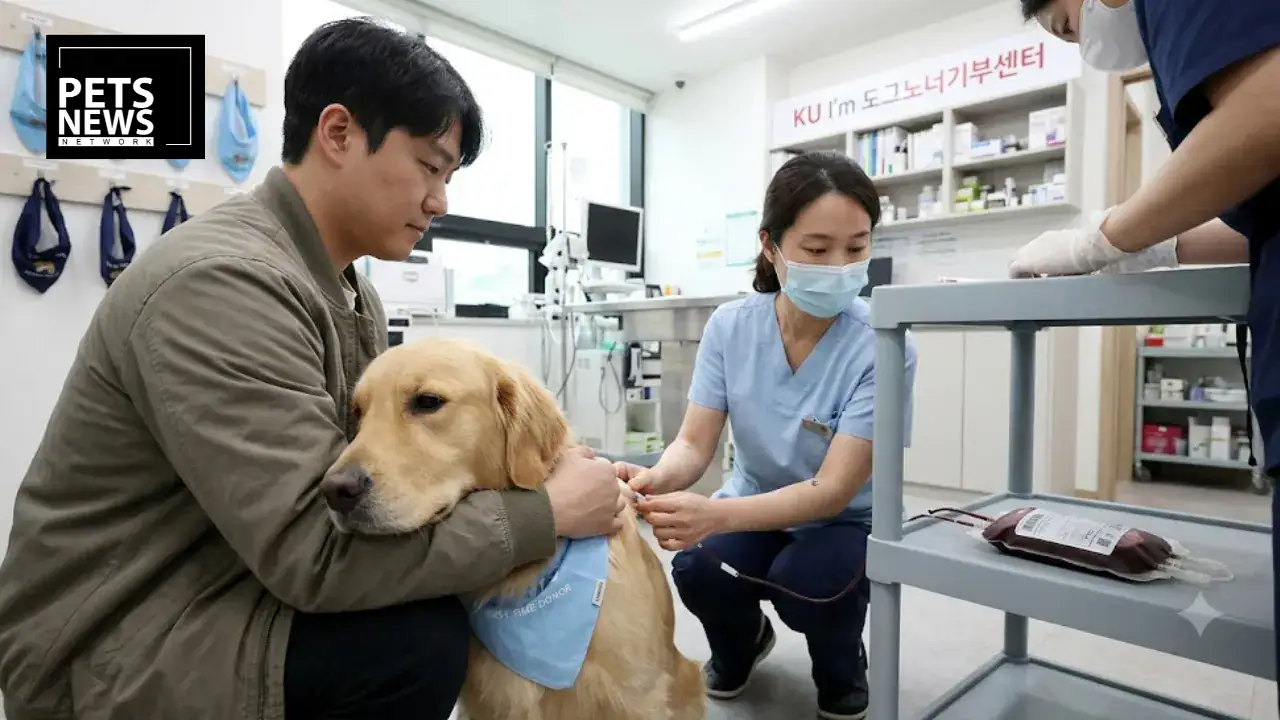

At Konkuk University’s KU I’m Dognor Blood Donation Center in Seoul, a 7-year-old, 31-kilogram Golden Retriever named Cappu recently completed his tenth and final blood donation. For Cappu, it marks the end of a donor journey that has likely helped save the lives of numerous other dogs he’ll never meet. For South Korea’s veterinary community, it’s a small but meaningful data point in a much larger, quietly urgent story: the country’s slow, deliberate shift away from a blood supply system that has long depended on dogs kept specifically, and often in poor conditions, for their blood.
The Problem Behind South Korea’s Canine Blood Supply
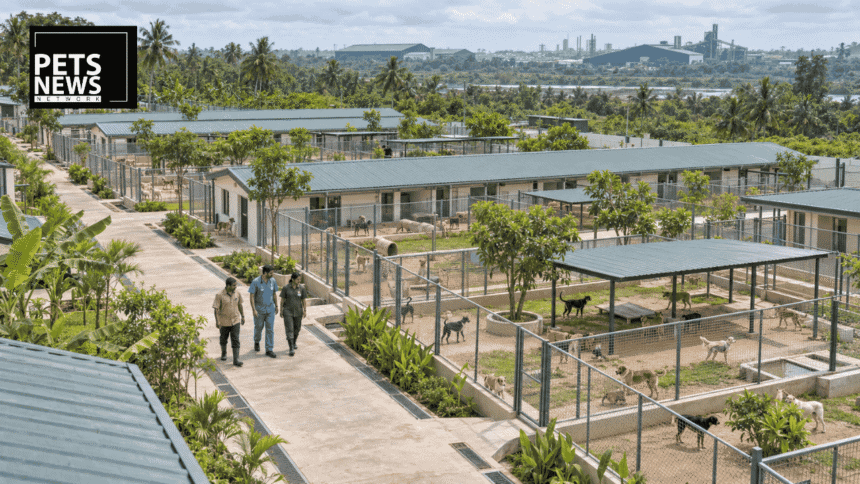
To understand why Cappu’s tenth donation matters, it helps to understand the system it’s slowly working to replace. South Korea has historically relied heavily on what are known as “commercial donor dogs,” large dogs kept, often in substandard conditions, for the sole purpose of regularly supplying blood for veterinary transfusions.
The scale of dependence on this system is significant. Voluntary donations currently make up less than 10% of the nation’s required canine blood supply, meaning the overwhelming majority of blood used in emergency surgeries, trauma cases, and anemia treatments across South Korea still comes from dogs whose entire existence is built around that single purpose, rather than dogs living as family pets who occasionally donate.
Who Qualifies to Be a Voluntary Donor
Not every dog can step into Cappu’s role, voluntary blood donation programs maintain fairly strict eligibility criteria, both to protect the donor dog’s own health and to ensure the blood collected is safe for transfusion.
Weight and age requirements. Donor dogs must weigh at least 25 kilograms and fall within a specific, veterinarian-defined healthy age bracket, ensuring the dog’s body can comfortably handle the blood volume being drawn without adverse effects.
Medical history screening. Eligible dogs must have no history of infectious diseases and need to be fully up to date on heartworm and broader parasite prevention, a critical safeguard given that blood-borne parasites or infections could otherwise be passed directly to a transfusion recipient.
Temperament matters just as much as health. Perhaps the most human-centred criterion in the entire process is behavioural: donor dogs must remain calm throughout the donation procedure. If a dog becomes overly anxious or visibly stressed in the clinical environment, veterinary staff stop the procedure immediately, prioritising the donor dog’s wellbeing over completing the collection.
Inside the Donation Process
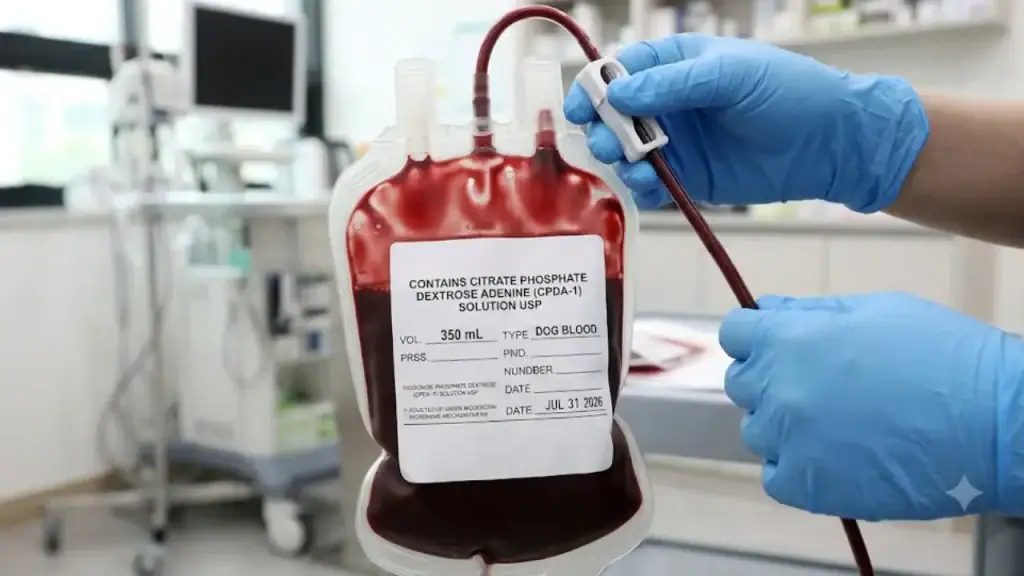
A single donation session yields between 300 and 400 millilitres of blood, a volume that might sound modest, but carries outsized impact given how transfusions are typically used. One donation bag from a large dog like Cappu can go on to save multiple smaller dogs during emergency surgeries, anemia treatments, or cases involving severe trauma, since transfusion volumes for smaller dogs are naturally lower.
The process itself is far from a quick, casual procedure. It requires a coordinated team of 4 to 5 veterinary professionals and takes approximately 2 hours from start to finish, a deliberately unhurried pace designed specifically to ensure the donor dog remains comfortable, calm, and safe throughout the entire session.
The Campaigns and Centres Driving Change
South Korea’s shift toward voluntary donation hasn’t happened by accident, it’s been driven by a coordinated mix of corporate campaigns, university-run donation centres, and individual veterinary hospitals choosing to build voluntary programs from the ground up.
Hyundai Motor’s “I’m Dognor” campaign, launched in 2019, has played a central role in raising public awareness around canine blood donation while funding mobile donation vehicles that bring the process directly to communities across South Korea, lowering the barrier for dog guardians who might otherwise never encounter the opportunity to have their pet donate.
Konkuk University’s KU I’m Dognor Center in Seoul, where Cappu completed his milestone donation, has built a genuinely substantial track record since 2023, recording over 570 unique donors and more than 1,000 total donations. Kyungpook National University operates a comparable centre in Daegu, extending voluntary donation infrastructure beyond the capital.
Local hospitals have joined the movement too. Facilities like Gwangju Animal Medical Center have run their own voluntary donation programs since 2019, helping hundreds of dogs through the contributions of around 100 regular donors, proof that meaningful impact doesn’t require a nationally coordinated infrastructure, just committed local veterinary teams willing to build the systems themselves.
Why Commercial Donor Dogs Haven’t Simply Been Phased Out
Despite the clear ethical case for expanding voluntary donation, veterinary professionals caution against treating this as a problem that can be solved overnight. Dr. Song Jeong-eun, a veterinarian involved in this space, has noted that eliminating commercial donor dogs immediately would effectively paralyze emergency veterinary operating rooms across the country, given how heavily the current system still depends on that blood supply to meet daily demand.
The transition, in other words, has to be gradual and deliberate, built through steadily expanding voluntary donation capacity rather than through an abrupt policy shift that could leave veterinary hospitals unable to perform life-saving transfusions during the interim.
The Awareness Gap Standing in the Way
One of the biggest obstacles to faster progress isn’t resistance, it’s simple lack of awareness. Many dog guardians in South Korea reportedly don’t know canine blood donation programs exist at all, meaning a significant pool of potentially eligible donor dogs, healthy, well-socialised family pets, never even enters the conversation.
Compounding the challenge, this entire movement currently operates without any government funding. Individual hospitals and university centres have had to build their own donor recognition systems from scratch, including making their own donor scarves and recognition awards in-house, small gestures that help build a sense of community and appreciation around donation, but that also highlight just how grassroots and under-resourced this shift genuinely is.
Why Every Voluntary Donation Matters Beyond the Individual Dog
There’s a broader systemic argument driving this movement forward that goes beyond simply reducing reliance on commercial donor dogs directly. As voluntary donations increase, they naturally raise the overall value and availability of ethically sourced canine blood within the system. That shift, in turn, creates real pressure and incentive to improve living conditions for any commercial donor dogs that remain part of the supply chain during this transitional period, since a system less dependent on any single source has more room to demand better standards across the board.
In this sense, every dog like Cappu who completes a voluntary donation cycle isn’t just directly helping the dogs who receive that blood, they’re contributing to a slow but genuine structural shift in how South Korea’s entire veterinary blood supply system operates.
What This Story Signals for Pet Care Globally
South Korea’s evolving canine blood donation network offers a useful case study for pet care systems in other countries still grappling with similar supply challenges, including parts of India, where veterinary blood banking and donation infrastructure remains in comparatively early stages of development.
The core lesson isn’t simply about blood donation itself, it’s about how corporate campaigns, academic institutions, and individual veterinary practices can each contribute meaningfully to solving a systemic animal welfare problem, even without centralized government support, provided there’s genuine coordination and sustained public awareness-building behind the effort.
For Cappu, his tenth donation marks a personal milestone and, likely, a well-earned retirement from donor duty. For South Korea’s broader veterinary community, it’s one more small proof point that voluntary, ethically-sourced blood donation isn’t just an idealistic goal, it’s a system that’s already, gradually, being built.
Pets News Network is India’s first dedicated media platform for the pet and animal industry. For breaking global pet news, brand coverage, and advertising enquiries, contact: ankur@petsnewsnetwork.co