By using this site, you agree to the Privacy Policy and Terms of Use.
Accept
PNN Logo - Pets News Network PNN Logo - Pets News Network
  • World
    An Avocado Shed Became One of the World's Largest Wildlife Hospitals. Most of Its Patients Are Birds, Not Koalas.
    Global Pet NewsWildlife

    An Avocado Shed Became One of the World’s Largest Wildlife Hospitals. Most of Its Patients Are Birds, Not Koalas.

    By
    Pets News Network
    9 Min Read
    A Dog Survived 50 Hours in an Alaskan Avalanche. Before You Buy an AirTag for Your Dog, Read How It Actually Worked.
    Animal Rescue & WelfareDaily DigestGlobal Pet NewsPet BraveryPet CarePet HealthPet Safety

    A Dog Survived 50 Hours in an Alaskan Avalanche. Before You Buy an AirTag for Your Dog, Read How It Actually Worked.

    By
    Pets News Network
    October 22, 2026
    Costa Rica Asked 335 Villagers If an Animal Was Gone. Their Answer Started a Rewilding Project.
    Daily DigestGlobal Pet NewsPet HealthPet SafetyWildlife

    Costa Rica Asked 335 Villagers If an Animal Was Gone. Their Answer Started a Rewilding Project.

    By
    Pets News Network
    October 15, 2026
  • Pet Technology
    Meet Chloe: The Rescue Dog Learning to Sniff Out Cancer With a Little Help From AI
    Daily DigestPet EducationPet HealthPet InnovationPet SafetyPet TechResearchTechnology

    Meet Chloe: The Rescue Dog Learning to Sniff Out Cancer With a Little Help From AI

    Bengaluru startup Dognosis pairs trained dogs with AI to detect cancer from…

    By
    Pets News Network
    10 Min Read
    From Mishti to SnootAbout: How One Pet Parent Is Building Delhi-NCR's Pet-Friendly Community
    BrandingNew LaunchesPet Business & FinancePet Human BondPet LifestylePet Parent GuidesPet Startup
    Pet-Friendly Experiences Are Becoming India’s Next Pet Business Vertical, and SnootAbout Wants a Piece of It
    Karnataka Will Vaccinate 11 Lakh Dogs This Year. The Dogs That Actually Spread Rabies Are Mostly Not in That Number.
    AWBI, Municipal by LawsDaily DigestPet CarePet EducationPet HealthPet SafetyPolicy & Law
    Karnataka Will Vaccinate 11 Lakh Dogs This Year. The Dogs That Actually Spread Rabies Are Mostly Not in That Number.
    A Dog Survived 50 Hours in an Alaskan Avalanche. Before You Buy an AirTag for Your Dog, Read How It Actually Worked.
    Animal Rescue & WelfareDaily DigestGlobal Pet NewsPet BraveryPet CarePet HealthPet Safety
    A Dog Survived 50 Hours in an Alaskan Avalanche. Before You Buy an AirTag for Your Dog, Read How It Actually Worked.
    Manipur Has Launched a Vulture Conservation Project. It Currently Has Four Vultures.
    Animal Rescue & WelfareDaily DigestPet CarePet HealthPet SafetyWildlife
    Manipur Has Launched a Vulture Conservation Project. It Currently Has Four Vultures.
  • Pet Insider

    How to Remove Plaque From Your Dog’s Teeth- A Simple Vet-Approved Guide.

    Two Minutes a Day Keeps the Vet Bill Away — Your Dog's Dental Care Routine Starts…

    By
    Pets News Network

    Which Dogs Have the Strongest Bite Force? A Vet’s Honest Guide.

    Powerful Jaws, Misunderstood Dogs — The Truth About Bite Force Every Owner Should Know

    By
    Pets News Network

    How to Check if Your Cat Has Eyelashes- What Every Cat Owner Should Know

    Look Closer — Your Cat's Eyes Are Hiding Something Important

    By
    Pets News Network

    Kochi Is Building a 500-Dog Shelter for 12,000 Dogs — on the Site That Choked the City in 2023

    Kochi Corporation's stray dog shelter at Brahmapuram will hold 500 dogs in phase one. The city…

    By
    Pets News Network

    The New Rules of Pet Care: How Investors and Founders Are Shaping India’s Booming Pet Industry

    Founders With Heart, Investors With Data — Who Will Shape India's Pet Industry?

    By
    Pets News Network

    Chronic Kidney Disease in Dogs: Symptoms, Treatment, Diet, and How to Give Your Dog a Better Quality of Life.

    When Your Dog's Kidneys Start to Fail — Here's What Every Pet Owner Must Know

    By
    Pets News Network

    Urinary Bladder Stones in Dogs: Types, Symptoms, Diagnosis, and Treatment Guide for Pet Parents.

    That Sad, Tired Look Could Mean More Than a Bad Day — Know the Signs of…

    By
    Pets News Network

    Dog Vaccination Schedule in India, The Complete Guide Every Pet Parent Needs in 2025.

    One Small Injection — A Lifetime of Protection for Your Dog

    By
    Pets News Network
  • Blog Index
  • Contact US
  • My Bookmarks
Reading: An Avocado Shed Became One of the World’s Largest Wildlife Hospitals. Most of Its Patients Are Birds, Not Koalas.
Sign In
  • Join US
Pets News NetworkPets News Network
Font ResizerAa
  • Pet Business & Finance
  • Animal Rescue & Welfare
  • Entertainment
  • Pet Food Science
  • Technology
  • Industry Insider
Search
  • Technology
  • Entertainment
  • Animal Rescue & Welfare
  • Industry Insider
  • Pet Business & Finance
  • Pet Food Science
  • Pet Health
Have an existing account? Sign In
Follow US
© Pets News Network 2026. All Rights Reserved.
An Avocado Shed Became One of the World's Largest Wildlife Hospitals. Most of Its Patients Are Birds, Not Koalas.
Global Pet NewsWildlife

An Avocado Shed Became One of the World’s Largest Wildlife Hospitals. Most of Its Patients Are Birds, Not Koalas.

Pets News Network
Last updated: October 23, 2026 1:03 pm
By
Pets News Network
9 Min Read
Share
SHARE

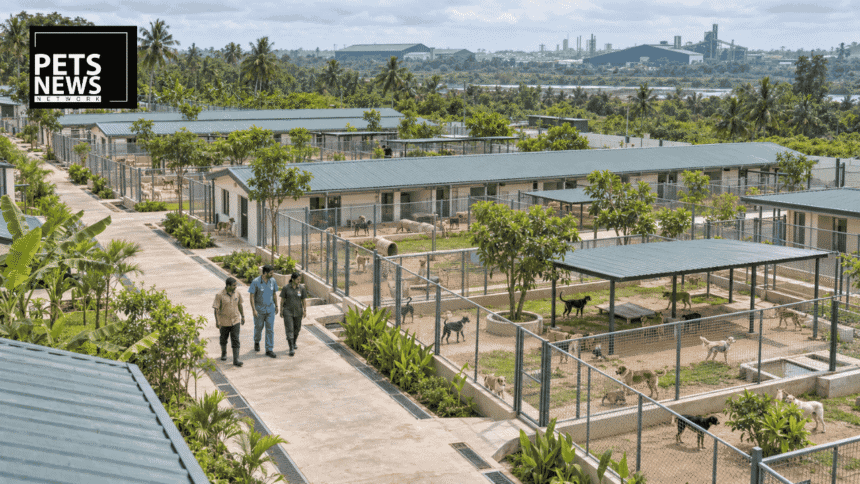
The story going around is that Steve and Terri Irwin turned an old avocado shed into a wildlife hospital in 2004, and that it has treated more than 136,000 animals. Both halves are true. But the figure is two years out of date, the shed is not the building doing the work today, and the animal most people picture on the operating table is not the one that actually arrives most often.

Contents
What they builtThe detail the headlines compressThe number is a 2024 numberWho the patients actually areWhat the facility actually containsThe model is the storyWhat this means for IndiaWhat it would take to build one hereThe thing worth remembering

What they built

In 2004, Steve and Terri Irwin took a small avocado packing shed on the grounds at Beerwah, Queensland, and renovated it into a functioning wildlife hospital.

It was built in memory of Lyn Irwin, Steve’s mother, who died in 2000. She had been a pioneer in wildlife care in Australia, and a facility of exactly this kind had been her ambition.

The hospital’s founding principle has not changed since: treatment is free, and native wildlife is never turned away.


The detail the headlines compress

The shed and the hospital are not the same building, and the gap between them matters.

DateEvent
2004The renovated avocado packing shed opens as a working wildlife hospital
4 September 2006Steve Irwin dies
15 November 2008The purpose-built facility opens, on Steve Irwin Day

The shed ran the operation for four years. The building that treats animals today is a dedicated hospital that opened two years after Steve Irwin’s death, which means Terri Irwin opened it without him.

That is a more interesting story than the one being told, and it is being flattened into a single sentence about a shed.


The number is a 2024 number

The 136,000 figure is accurate, and it comes from the hospital’s own published statistics.

It is also dated. The page carrying it is headed “2004–2024”, and was last updated in October 2024.

The hospital admits between 9,000 and 10,000 animals every twelve months.

Two more years have passed since that figure was published. On the hospital’s own stated intake, the real cumulative total today is almost certainly above 150,000, though no updated figure has been published, so that is arithmetic rather than a confirmed number.

The accurate way to state it is “more than 136,000 as of 2024.” Reporting it in 2026 as the current total quietly erases two years of work, roughly twenty thousand animals.


Who the patients actually are

This is the part that will surprise most readers, and it is published openly by the hospital itself.

Patient groupShare of admissions
Birds43%
Possums and gliders15%
Reptiles12%
Koalas9%
Bats5%

Birds are the single largest category by a wide margin. Koalas are nine per cent.

The public image of this hospital, and of Australian wildlife rescue generally, is a koala in a blanket. Koalas are the photograph that travels. They are not the workload.

This is not a criticism of koala conservation, which is urgent and well-founded. It is an observation about how wildlife rescue gets represented. The animals that fill a hospital are rarely the animals that fill the fundraising appeal, and that mismatch exists in India too, where the overwhelming majority of urban wildlife rescue calls are birds (kites, pigeons, owls, parakeets) and the coverage goes to leopards and elephants.


What the facility actually contains

It is worth setting out, because “wildlife hospital” means very different things in different countries.

The Australia Zoo Wildlife Hospital operates with:

  • A surgical theatre
  • An x-ray room
  • Intensive care units
  • A pathology laboratory
  • Wildlife veterinarians and veterinary nurses on staff

That is a diagnostic and surgical hospital, not a holding facility with a vet on call. The pathology lab in particular is what separates a rescue centre from a hospital: it is the difference between treating symptoms and knowing what is wrong.


The model is the story

The funding structure deserves more attention than the 136,000 figure.

Care is provided at no cost to the public. Anyone who finds injured native wildlife can bring it in without paying.

It runs on donations, with the Queensland Government and Sunshine Coast Council listed among its major supporters.

So the model is: a privately founded hospital, free at the point of care, sustained by public donation with institutional government backing, publishing its own admission statistics and species breakdown.

Every element of that is replicable. None of it requires a celebrity.


What this means for India

India does not lack wildlife rescue. It lacks wildlife rescue that is visible as data.

Most wildlife rescue here is carried out by NGOs, volunteer networks and state forest departments, often working from premises considerably more modest than a purpose-built hospital, and, critically, without published admission figures, species breakdowns or outcome data.

That absence is the real gap, and it is not a resource problem. It is a reporting problem.

Consider what the Australian hospital publishes and what an Indian equivalent typically does not:

  • How many animals came in, over what period
  • What species they were, as a percentage
  • What happened to them

Without those three things, no city can plan rescue capacity, no donor can judge where money works hardest, and no journalist can tell whether a facility is functioning. A rescue centre that does not publish its numbers cannot be evaluated, defended or funded properly.

The Australian hospital’s statistics panel is the most transferable thing about it.


What it would take to build one here

For anyone in India looking at this story as a blueprint rather than a feel-good item, the practical sequence is in the dates.

Start small and functional. The first version was a packing shed. Not a campus, not a masterplan, but a renovated outbuilding that could actually treat an animal.

Allow four years to the real building. 2004 to 2008. That is the honest timeline from working shed to purpose-built hospital, run by people with resources and national profile.

Secure a government partner early. A state government and a local council are named supporters. In India that would mean a state forest department and a municipal corporation, and in practice, that relationship determines whether a facility survives its third year.

Publish from day one. Intake, species mix, outcomes. The credibility compounds.

Expect birds. Build for volume of small patients, not for the occasional large one. The enclosure everyone imagines is not the enclosure that gets used.


The thing worth remembering

A shed full of avocado crates became one of the world’s largest and busiest purpose-built wildlife hospitals, and it has admitted more animals than the population of a mid-sized Indian town.

It did that by being free, by never turning an animal away, and by treating ten thousand ordinary birds and possums a year without a camera present.

That is the legacy, and it is a more useful one than the shed.


Credits: Details of the hospital’s founding, facilities, funding, admission figures and species breakdown are drawn from Wildlife Warriors’ official Australia Zoo Wildlife Hospital page, last updated October 2024. Additional background on the hospital’s history and dedication to Lyn Irwin is drawn from Australian Geographic, 1 September 2026.


Pets News Network is India’s first dedicated media platform for the pet and animal industry. For breaking global pet news, brand coverage, and advertising enquiries, contact: info@petsnewsnetwork.com


Total Views: 5,463

You Might Also Like

Linda Blair’s California Property Searched After 200 Dogs Found at 60-Dog Permitted Kennel
CVS Just Became Your Pet’s Pharmacy — 9,000 Stores Now Filling Dog and Cat Prescriptions Across America
Colombia’s Deadly Earthquake Leaves Pets Trapped as Rescuers Race to Save Dogs and Cats
NexGard Launches ‘Paw Promise’ Program to Help Cover Unexpected Vet Costs After Tick and Flea Treatment
Premium Fresh Dog Food Brand YEARS Recalls All Meals Over Buckwheat-Linked Eye Illness
TAGGED:animal hospitalAustralia Zoo Wildlife HospitalBeerwahbird rescueconservationdonation fundingIndia wildlife rescuekoalasLyn IrwinQueenslandSteve IrwinTerri IrwinVeterinary Carewildlife rehabilitationwildlife rescueWildlife Warriors
Share This Article
Facebook Email Copy Link Print

More Popular from PNN

A golden-brown Golden Retriever lying quietly on a dark leather couch with a tired, sad expression, representing the lethargy and discomfort experienced by dogs suffering from urinary bladder stones or uroliths.
Pet Health

Urinary Bladder Stones in Dogs: Types, Symptoms, Diagnosis, and Treatment Guide for Pet Parents.

By
Pets News Network
16 Min Read
A golden-brown Golden Retriever lying quietly on a dark leather couch with a tired, sad expression, representing the lethargy and discomfort experienced by dogs suffering from urinary bladder stones or uroliths.

Urinary Bladder Stones in Dogs: Types, Symptoms, Diagnosis, and Treatment Guide for Pet Parents.

By
Pets News Network
Kochi Is Building a 500-Dog Shelter for 12,000 Dogs — on the Site That Choked the City in 2023
Animal Rescue & WelfareAWBI, Municipal by LawsDaily DigestPet CarePet EducationPet HealthPet Human BondPet SafetyPolicy & LawTreatment & Health

Kochi Is Building a 500-Dog Shelter for 12,000 Dogs — on the Site That Choked the City in 2023

By
Pets News Network
11 Min Read
- Advertisement -
Ad image
Pet Health

Urinary Bladder Stones in Dogs: Types, Symptoms, Diagnosis, and Treatment Guide for Pet Parents.

That Sad, Tired Look Could Mean More Than a Bad Day — Know the Signs of…

By
Pets News Network
Treatment & Health

Blood Panel Clues in Dogs and Cats, What Your Vet’s Blood Tests Are Really Telling You

Your Cat's Blood Test Could Be Saving Their Life — Here's How

By
Pets News Network
Pet HealthTreatment & Health

Chronic Kidney Disease in Dogs: Symptoms, Treatment, Diet, and How to Give Your Dog a Better Quality of Life.

When Your Dog's Kidneys Start to Fail — Here's What Every Pet Owner Must Know

By
Pets News Network
Pet Health

Urinary Bladder Stones in Dogs: Types, Symptoms, Diagnosis, and Treatment Guide for Pet Parents.

That Sad, Tired Look Could Mean More Than a Bad Day — Know the Signs of…

By
Pets News Network
Pet Health

Dog Vaccination Schedule in India, The Complete Guide Every Pet Parent Needs in 2025.

One Small Injection — A Lifetime of Protection for Your Dog

By
Pets News Network
PNN Logo - Pets News Network

Pets News Network (PNN) is India’s first independent pet-industry news service and watchdog, delivering professional journalism, lifestyle content, and trusted reporting for every pet parent, professional, and animal lover.

Categories

  • Technology
  • Entertainment
  • Animal Rescue & Welfare
  • Industry Insider
  • Pet Business & Finance
  • Pet Food Science
  • Pet Health

Quick Links

  • World
  • Pet Technology
  • Pet Insider
  • Blog Index
  • Contact US
  • My Bookmarks

@COPY RIGHTS – 2026, Pets News Network. All Rights Reserved.

© Pets News Network 2026. All Rights Reserved.
PNN Logo - Pets News Network PNN Logo - Pets News Network
Welcome Back!

Sign in to your account

Username or Email Address
Password

Lost your password?