
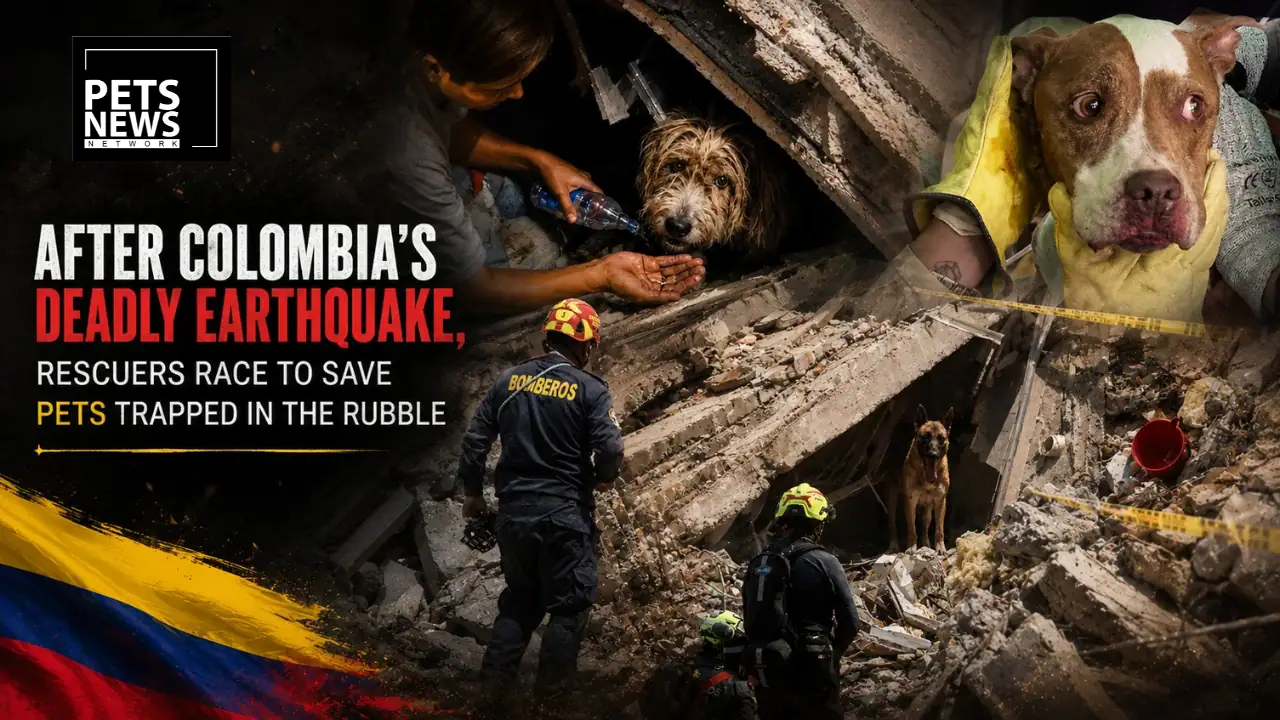

When a devastating magnitude 7.4 earthquake struck southern and west-central Colombia on the morning of Monday, August 10, 2026, the human toll was immediate and severe, hundreds of lives lost, thousands injured, and entire neighborhoods in the city of Cali reduced to rubble. But as rescue teams worked around the clock searching for survivors, another quieter, no less urgent crisis was unfolding alongside it: thousands of dogs, cats, and other companion animals left trapped, injured, or separated from their families in the wreckage.
Nearly two weeks on, the story of Colombia’s animal survivors has become one of the more emotionally resonant threads of the disaster’s aftermath, a mix of heartbreak, exhaustion, and, in many cases, genuine hope.
The Scale of the Human Disaster Behind the Animal Crisis
To understand the scope of the animal rescue effort, it helps to understand the scale of what triggered it. The earthquake left at least 281 people dead, nearly 3,971 injured, and 379 reported missing, with Cali among the hardest-hit cities. Officials reported more than 12,000 homes destroyed, leaving thousands of families suddenly without shelter, and, in many cases, without knowing whether their pets had survived the collapse of their own homes.
Within Cali alone, at least 20 buildings were reported to have fully collapsed, turning entire city blocks into active search-and-rescue zones where responders worked simultaneously to locate trapped people and the animals who had been sheltering alongside them.
Vets on the Streets, Kits in Hand
Almost as soon as the shaking stopped, veterinarians and volunteers mobilized. Teams grabbed basic first-aid kits, gloves, syringes, saline solution, alcohol, and cotton, and headed straight into the wreckage to treat injured, frightened, or displaced dogs and cats who had become unintended casualties of the disaster.
One of the earliest sites teams reached was the collapsed eight-story Ana Pilar building in Cali’s Cuarto de Legua neighborhood, where dust still hung over the ruins as emergency crews searched for survivors. It was here, and at sites like it across the city, that Colombia’s animal welfare responders began what would become a sustained, citywide rescue operation.
The Numbers Behind the Rescue Effort
Cali’s Centro de Bienestar Animal (CBA), the city’s animal welfare center, quickly became the operational hub for the entire rescue effort. According to official figures reported roughly a week after the quake, 164 animals had been brought into the CBA alive, while 34 were found dead. A further 380 animals were reported missing by their families, and 80 animals had received critical emergency treatment at response points set up directly in the disaster zones.
Andrés Burbano, a CBA official involved in the response, described the pace of those first hours and days as relentless. “Fueron horas eternas de rescates” (“They were endless hours of rescues”), he said, describing how each animal pulled from the rubble was immediately stabilized before being transported to the CBA, which quickly transformed from a routine shelter facility into what Burbano called a genuine crisis site.
Stories That Captured a Nation’s Attention
Beyond the statistics, individual rescue stories have moved deeply through Colombian media and social platforms over the past two weeks.
Renata, a small dog, survived buried under rubble for 72 hours before rescuers, guided by specialized equipment that detected body heat beneath the debris, finally located and freed her. Veterinarian Martín Ortiz, who treated her afterward, confirmed she received hydration and medication and was in stable condition, while rescue teams turned their attention to locating Copito, another dog from the same household still believed to be alive somewhere in the wreckage.

In another widely shared moment, Vickye Giraldo, a 56-year-old lawyer, was reunited with her cat Polux after volunteers freed him from a collapsed building. She described the reunion as an indescribable moment, holding her cat close and calling him “un hijo,” a son. Giraldo had four pets in her apartment when the quake hit, two dogs and two cats. One dog was rescued alongside Polux; tragically, another of her animals died, and one remained missing at the time.
Not every story has an easy resolution. Andrea Paredes, another Cali resident, has continued holding onto hope for a dog and two cats who were trapped in her bathroom when the earthquake struck. Her husband managed to grab one small dog before evacuating, but the fate of her remaining pets stayed unknown for some time afterward.
In Pereira, rescuers from Colombia’s Carabineros police division, the unit responsible for animal protection, found a mother dog named Reina trapped beneath a collapsed rural home alongside her ten newborn puppies. All eleven animals were safely recovered.
Perhaps the most sobering story to emerge involved a young woman named Lenny Fernández in Cali, who died during the earthquake while attempting to save her dog. Her body was later recovered alongside her pet, who had survived.
A Community Mobilizes Around Its Animals
The scale of animal displacement triggered a genuine grassroots response across Colombia. In the Valle del Cauca department, authorities opened donation centers accepting pet food, medicine, and crates specifically for animals affected by the disaster, alongside separate collection points for human aid. Pet store chain Laika opened donation drop-off points across several of its stores in Bogotá, Cali, and Medellín, reporting that citizens had already contributed seven tons of pet food and five tons of broader humanitarian aid within the response’s early days.
In Bogotá, the city government partnered with pet industry group Expopet to establish a dedicated donation and veterinary support hub, while similar collection points opened in Risaralda and Caldas departments to funnel pet food and supplies directly to affected municipalities.
According to CBA director Carmen Elena Domínguez Murillo, the community response has been instrumental in easing pressure on overwhelmed shelter services. As of the latest figures, 86 rescued animals had already been adopted into new homes, helping free up capacity for the steady stream of animals still being brought in.
Why This Story Matters Beyond Colombia
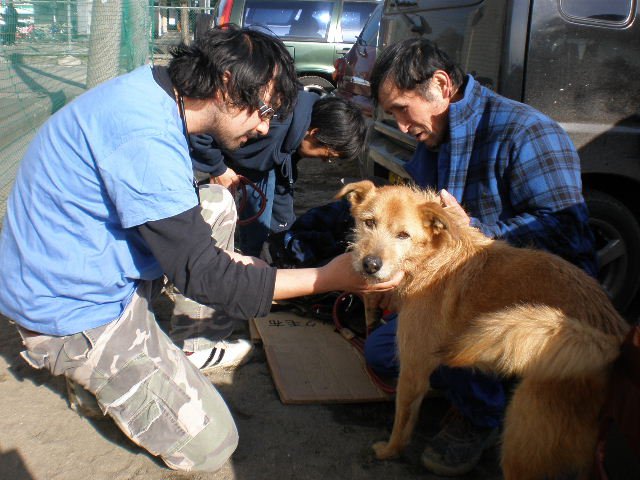
The scenes emerging from Cali reflect something animal welfare advocates worldwide have long emphasized: in any large-scale disaster, companion animals are rarely incidental casualties, they’re active, urgent parts of the response itself, requiring dedicated resources, trained responders, and public support just as human relief efforts do.
For pet owners everywhere, the Colombia earthquake also serves as a sobering, practical reminder. Organizations like the American Kennel Club have circulated renewed guidance in the wake of the disaster, encouraging pet owners to keep collars fitted with identification, maintain updated vaccination records, and have a clear emergency plan in place for pets, precautions that, as Colombia’s rescue efforts have shown, can make a genuine difference in reuniting families with their animals when disaster strikes without warning.
As search and recovery operations in Colombia continue, animal welfare volunteers remain on the ground, working through what has become one of the largest coordinated animal rescue efforts the country has seen in recent memory, driven not by any single organization, but by veterinarians, police units, shelters, and ordinary citizens refusing to let their four-legged neighbors become forgotten victims of the disaster.
Pets News Network is India’s first dedicated media platform for the pet and animal industry. For breaking global pet news, brand coverage, and advertising enquiries, contact: ankur@petsnewsnetwork.com