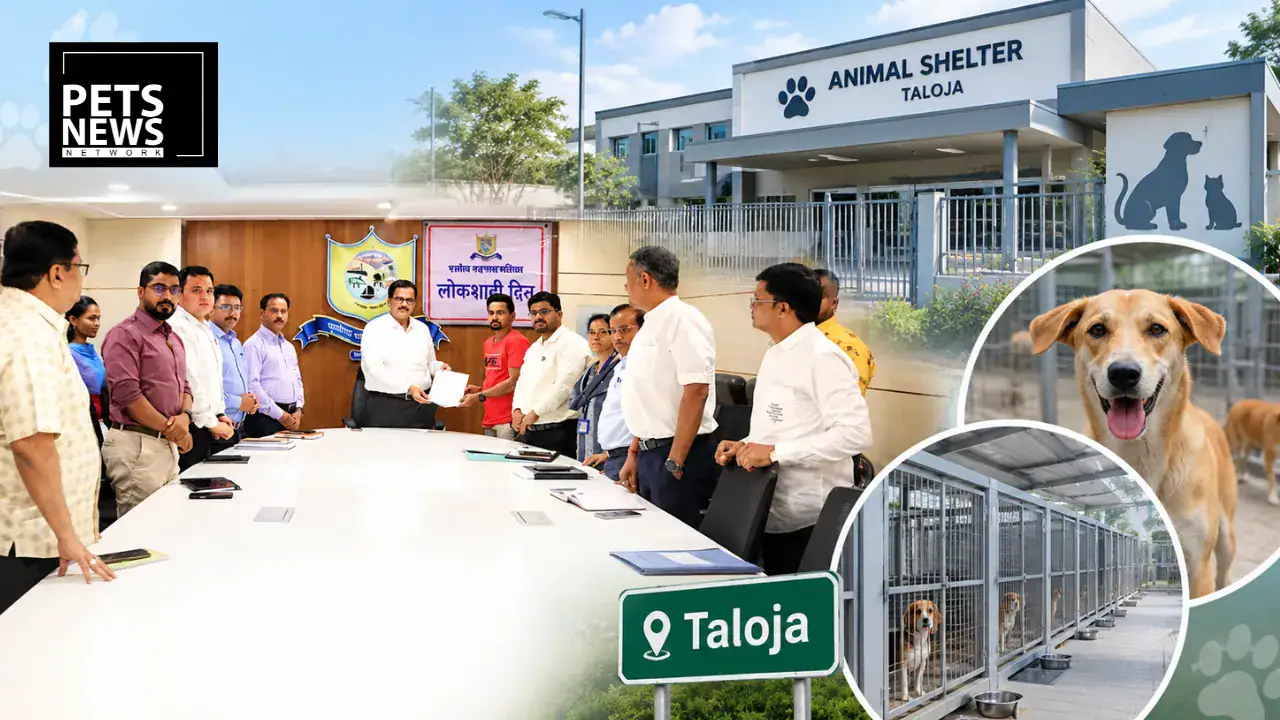

For a civic body responsible for managing thousands of stray and domestic animals across its jurisdiction, the Panvel Municipal Corporation (PMC) has, until now, operated without a single dedicated municipal animal shelter of its own. That’s set to change with a newly proposed project: a modern, purpose-built animal shelter in Taloja, carrying an estimated budget of ₹13.55 crore.
If approved and completed as planned, the facility would mark a genuinely significant infrastructure milestone for PMC, giving the corporation, for the first time, a centralised facility capable of treating and housing both stray and domestic animals across the areas it governs.
The Scale and Design of the Proposed Shelter
The proposed shelter is planned for a 3,343.50 square metre plot in Taloja, designated under Reservation No. 4-150. The building itself is designed as a ground-plus-three-storey structure, with a total built-up area of 2,885.16 square metres, a scale that reflects the ambition behind the project: not a small holding facility, but a genuinely comprehensive, multi-purpose animal care centre.
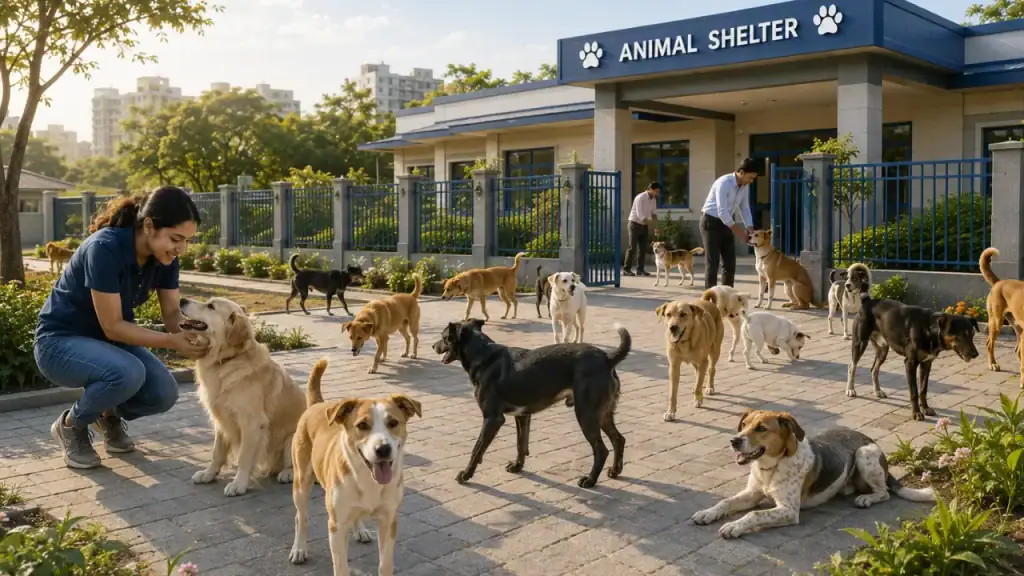
That scale is reflected directly in the range of facilities the shelter is designed to house. Plans include dedicated kennels for dogs, a separate cattle shelter to accommodate livestock, isolation rooms for animals requiring quarantine or specialised care, and an Outpatient Department (OPD) for ongoing veterinary treatment. Beyond direct animal care spaces, the facility is also designed to include staff accommodation and other specialised treatment amenities, indicating a facility built for sustained, full-time operation rather than intermittent or seasonal use.
Why Panvel Needs This Now
The case for building this shelter rests on a fairly stark infrastructure gap. PMC’s jurisdiction is currently estimated to be home to roughly 1,000 stray dogs and approximately 5,000 pet dogs, alongside a sizeable population of stray and pet cats and rural livestock spread across the corporation’s broader jurisdiction. Despite managing this substantial animal population, the corporation has had no dedicated municipal shelter facility to support sterilisation, treatment, quarantine, or housing needs at any meaningful scale.
That gap becomes especially significant in the context of aggressive or rabid stray dogs specifically, animals that, under current civic protocol without proper shelter infrastructure, have limited safe housing options beyond eventual return to public streets, a scenario public health and animal welfare advocates alike consider far from ideal.
The Legal Backdrop Driving This Decision
This isn’t simply a discretionary infrastructure upgrade PMC has chosen to pursue independently. The project is directly shaped by Supreme Court guidelines requiring that aggressive or rabid stray dogs be provided with safe, dedicated housing rather than being returned to public streets after capture or treatment, guidelines that form part of a broader national push toward more structured, humane stray dog management across Indian cities and civic bodies.
For a municipal corporation without any existing shelter infrastructure, meeting that judicial requirement in practice has been effectively impossible, making the Taloja shelter proposal less a matter of civic ambition and more a matter of aligning PMC’s operational capacity with legal obligations it’s already expected to meet.
Where the Project Currently Stands
The Taloja shelter remains in its proposal and approval stage, with several procedural steps still required before construction can begin. PMC is currently seeking General Body approval for the project, a necessary governance step before the plan can move forward formally.
Alongside that approval process, the land itself still needs to be formally transferred, with that transfer pending from both the Town Planning Department and the District Collector’s Office. Only once these approvals and the land transfer are secured can the corporation move to the next phase: opening a tendering process to select a contractor for actual construction.
It’s worth noting that the current ₹13.55 crore budget estimate isn’t necessarily final. Officials have indicated that final project costs may adjust by 10 to 15% once tendering is complete and actual construction costs are finalised, a fairly standard margin of adjustment for infrastructure projects of this scale and complexity.
Why This Project Matters Beyond Panvel
Panvel’s proposed shelter reflects a broader pattern playing out across Indian municipal corporations right now, civic bodies working to build the physical infrastructure necessary to comply with Supreme Court-mandated stray dog management standards, often starting from a position of having little to no dedicated animal shelter capacity at all.
For a rapidly urbanising region like Panvel, which sits within Maharashtra’s broader Navi Mumbai metropolitan growth corridor, a facility of this scale, four storeys, nearly 2,900 square metres of built-up space, and a full range of veterinary and housing amenities, represents a genuinely substantial commitment to building lasting animal welfare infrastructure, rather than relying on ad hoc, temporary measures to manage an animal population that continues to grow alongside the region’s rapid urban development.
If PMC secures the necessary approvals and moves forward with construction, the Taloja shelter could become a meaningful long-term asset, not just for managing stray dog complaints and rabies control, but for supporting the broader animal welfare needs of Panvel’s growing population of pets, strays, and livestock alike.
Pets News Network is India’s first dedicated media platform for the pet and animal industry. For breaking global pet news, brand coverage, and advertising enquiries, contact: ankur@petsnewsnetwork.com