
By using this site, you agree to the Privacy Policy and Terms of Use.
Accept
PNN Logo - Pets News Network PNN Logo - Pets News Network
  • World
    Costa Rica Asked 335 Villagers If an Animal Was Gone. Their Answer Started a Rewilding Project.
    Daily DigestGlobal Pet NewsPet HealthPet SafetyWildlife

    Costa Rica Asked 335 Villagers If an Animal Was Gone. Their Answer Started a Rewilding Project.

    By
    Pets News Network
    10 Min Read
    Simon Cowell Paid to Close One Dog Meat Farm. In 2027, a Law Will Close Them All.
    Animal Rescue & WelfareDaily DigestGlobal Pet NewsPet CarePet EducationPet HealthPet Safety

    Simon Cowell Paid to Close One Dog Meat Farm. In 2027, a Law Will Close Them All.

    By
    Pets News Network
    October 14, 2026
    "When Will This Stop?": A Nepali MP Takes the Dashain Sacrifice Question to Parliament
    Daily DigestGlobal Pet NewsPet CarePet HealthPet Safety

    “When Will This Stop?”: A Nepali MP Takes the Dashain Sacrifice Question to Parliament

    By
    Pets News Network
    October 10, 2026
  • Pet Technology
    Meet Chloe: The Rescue Dog Learning to Sniff Out Cancer With a Little Help From AI
    Daily DigestPet EducationPet HealthPet InnovationPet SafetyPet TechResearchTechnology

    Meet Chloe: The Rescue Dog Learning to Sniff Out Cancer With a Little Help From AI

    Bengaluru startup Dognosis pairs trained dogs with AI to detect cancer from…

    By
    Pets News Network
    10 Min Read
    Costa Rica Asked 335 Villagers If an Animal Was Gone. Their Answer Started a Rewilding Project.
    Daily DigestGlobal Pet NewsPet HealthPet SafetyWildlife
    Costa Rica Asked 335 Villagers If an Animal Was Gone. Their Answer Started a Rewilding Project.
    Kolkata's Biggest Pet Market Emptied Out. Not Because of a Ban — Because Nobody Knows Which Licence They Need.
    AWBI, Municipal by LawsDaily DigestPet SafetyPolicy & Law
    Kolkata’s Biggest Pet Market Emptied Out. Not Because of a Ban — Because Nobody Knows Which Licence They Need.
    Simon Cowell Paid to Close One Dog Meat Farm. In 2027, a Law Will Close Them All.
    Animal Rescue & WelfareDaily DigestGlobal Pet NewsPet CarePet EducationPet HealthPet Safety
    Simon Cowell Paid to Close One Dog Meat Farm. In 2027, a Law Will Close Them All.
    The Dog Isn't the Problem. The Person Holding the Leash Is.
    Dog BreedsPet EducationPet Safety
    The Dog Isn’t the Problem. The Person Holding the Leash Is.
  • Pet Insider

    How to Remove Plaque From Your Dog’s Teeth- A Simple Vet-Approved Guide.

    Two Minutes a Day Keeps the Vet Bill Away — Your Dog's Dental Care Routine Starts…

    By
    Pets News Network

    Which Dogs Have the Strongest Bite Force? A Vet’s Honest Guide.

    Powerful Jaws, Misunderstood Dogs — The Truth About Bite Force Every Owner Should Know

    By
    Pets News Network

    How to Check if Your Cat Has Eyelashes- What Every Cat Owner Should Know

    Look Closer — Your Cat's Eyes Are Hiding Something Important

    By
    Pets News Network

    The New Rules of Pet Care: How Investors and Founders Are Shaping India’s Booming Pet Industry

    Founders With Heart, Investors With Data — Who Will Shape India's Pet Industry?

    By
    Pets News Network

    Chronic Kidney Disease in Dogs: Symptoms, Treatment, Diet, and How to Give Your Dog a Better Quality of Life.

    When Your Dog's Kidneys Start to Fail — Here's What Every Pet Owner Must Know

    By
    Pets News Network

    Urinary Bladder Stones in Dogs: Types, Symptoms, Diagnosis, and Treatment Guide for Pet Parents.

    That Sad, Tired Look Could Mean More Than a Bad Day — Know the Signs of…

    By
    Pets News Network

    Dog Vaccination Schedule in India, The Complete Guide Every Pet Parent Needs in 2025.

    One Small Injection — A Lifetime of Protection for Your Dog

    By
    Pets News Network

    Neutering (Castration) in Dogs- Methods, Timing, Benefits, Risks, and Everything Pet Parents Need to Know.

    He Is Looking to You for the Right Decision — Everything You Need to Know About…

    By
    Pets News Network
  • Blog Index
  • Contact US
  • My Bookmarks
Reading: First Evidence of Possible H5N1 Cat-to-Human Transmission Found in US Veterinary Worker
Sign In
  • Join US
Pets News NetworkPets News Network
Font ResizerAa
  • Pet Business & Finance
  • Animal Rescue & Welfare
  • Entertainment
  • Pet Food Science
  • Technology
  • Industry Insider
Search
  • Technology
  • Entertainment
  • Animal Rescue & Welfare
  • Industry Insider
  • Pet Business & Finance
  • Pet Food Science
  • Pet Health
Have an existing account? Sign In
Follow US
© Pets News Network 2026. All Rights Reserved.
First Evidence of Possible H5N1 Cat-to-Human Transmission Found in US Veterinary Worker
Breaking NewsGlobal Pet NewsPet HealthResearchTreatment & Health

First Evidence of Possible H5N1 Cat-to-Human Transmission Found in US Veterinary Worker

Pets News Network
Last updated: September 23, 2026 2:22 pm
By
Pets News Network
9 Min Read
Share
SHARE

US health investigators have reported the first serologic evidence of possible influenza A(H5N1) transmission from a domestic cat to a veterinary professional, adding an important new dimension to bird-flu surveillance in companion animals.

Contents
Nineteen cats became ill after consuming raw productsPublic health teams tracked 139 exposed peopleApril serology changed the investigationWhy the earlier PCR test may have missed the infectionRaw milk and raw pet food remain a major concernVeterinary clinics need stronger infection-control awarenessPublic risk remains low, but the veterinary finding matters

The finding comes from an investigation by the US Centers for Disease Control and Prevention (CDC) and the Los Angeles County Department of Public Health into a cluster of severely ill cats seen between November 2024 and January 2025.

The veterinary professional never developed symptoms and initially tested negative for active influenza infection. Months later, blood testing detected H5N1-specific antibodies, indicating that an infection had likely occurred after occupational exposure to an infected cat.

CDC investigators describe the case as evidence of possible cat-to-human transmission, rather than proof of sustained spread. The agency continues to assess the overall risk from H5 bird flu to the general public as low.

Nineteen cats became ill after consuming raw products

The investigation began after 19 domestic cats from five Los Angeles County households developed severe illness.

Owners reported feeding the cats commercially purchased raw milk, raw poultry, raw meat or raw pet food before illness began. Some of the implicated products had also tested positive for H5N1.

Nine cats were tested and all nine were positive for influenza A(H5N1) clade 2.3.4.4b, genotype B3.13.

The consequences for the animals were severe. Fourteen of the 19 cats died or were euthanized, with reported illness including respiratory, hepatic and neurological signs.

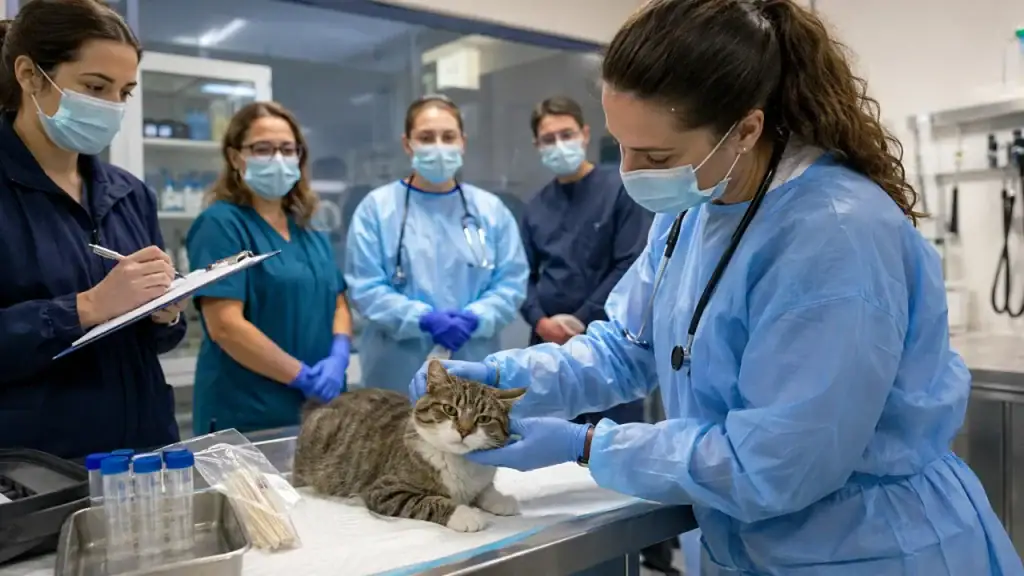
Fourteen cats were evaluated at 10 veterinary practices, meaning a substantial number of professionals came into close contact with infected or potentially infected animals before the public-health risk was fully understood.


Public health teams tracked 139 exposed people

Investigators identified 139 people with potential exposure to the affected cats.

The group included 126 staff members from 10 veterinary practices, 11 household members, one animal-control worker and one local public-health employee.

All were monitored for symptoms for 10 days after their last known exposure.

Thirty people reported influenza-like symptoms including cough, sore throat, runny nose, fatigue, muscle aches, headache and sneezing.

A total of 33 people underwent RT-PCR testing, including 18 symptomatic veterinary workers, 14 asymptomatic veterinary professionals and one asymptomatic pet owner.

None tested positive for H5N1.
First Evidence of Possible H5N1 Cat-to-Human Transmission Found in US Veterinary Worker

April serology changed the investigation

The key discovery came several months later.

In April 2025, the CDC and Los Angeles County invited all 139 exposed individuals to participate in a serological survey designed to detect evidence of previous H5N1 infection.

Only 25 people participated, equivalent to about 18% of the exposure group.

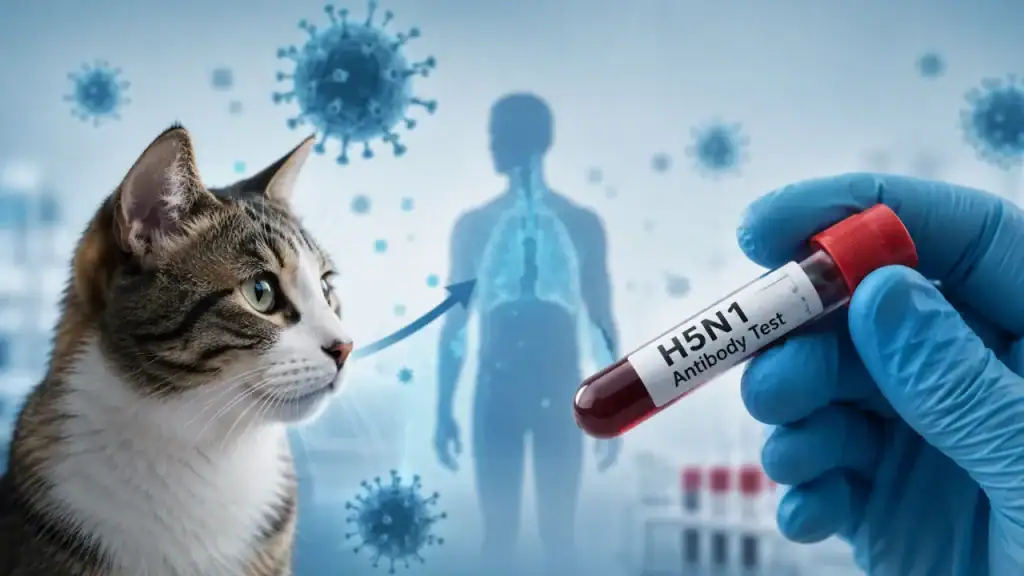
Among them, one asymptomatic veterinary professional had antibodies against H5N1 viruses antigenically similar to the virus found in the cats.

The worker had been exposed in early December 2024 to an infected indoor cat that later tested positive for H5N1. The cat developed respiratory problems, neurological abnormalities and serious eye disease after consuming a commercial raw poultry-based pet food.

The veterinary professional had received a negative influenza test seven days after exposure and never reported illness.

Investigators also found no other recognised H5N1 risk factors. The worker reported no exposure to backyard poultry, wild birds or dairy cattle and no consumption of raw meat or raw dairy products.

Staff at the veterinary facility routinely used gloves but did not consistently wear respiratory or eye protection during examinations.

Taken together, the exposure history and antibody findings led researchers to describe the case as serologic evidence of likely occupational infection and possible transmission from the cat.


Why the earlier PCR test may have missed the infection

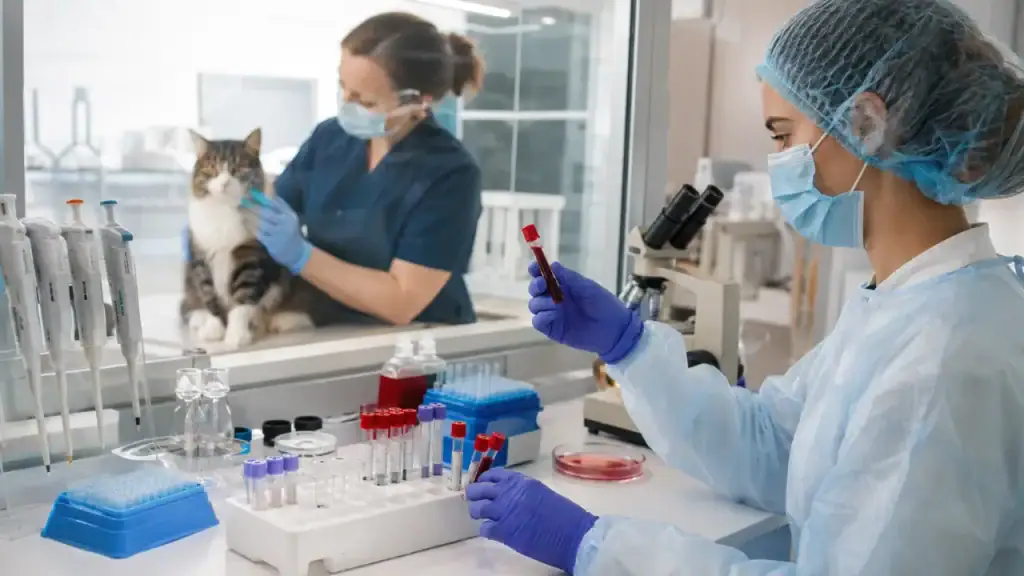
The finding also demonstrates the value of serology. RT-PCR looks for viral genetic material during active infection, while serology detects antibodies produced after exposure.

In this case, the veterinary professional’s later antibody result revealed evidence of an infection that would otherwise have remained undetected.

The investigators also acknowledged important limitations. Only 25 of 139 exposed people participated in the serosurvey, and paired acute and convalescent blood samples were not available.

That is why the CDC report uses careful wording around possible transmission rather than presenting the case as definitive proof of a broader cat-to-human transmission pattern.
First Evidence of Possible H5N1 Cat-to-Human Transmission Found in US Veterinary Worker

Raw milk and raw pet food remain a major concern

The feline outbreak reinforces public-health warnings about feeding cats raw animal products.

CDC guidance advises owners to avoid giving cats raw milk, raw meat or raw pet food, all of which have been linked to H5N1 infections in companion animals.

Cats can develop severe disease after infection, including fever, loss of appetite, lethargy, eye and nasal discharge, breathing problems and neurological signs such as tremors, seizures, poor coordination or blindness.

Separate CDC-published research in 2026 has also detected H5N1 antibodies in domestic cats living close to dairy farms in California’s Central Valley, strengthening evidence that cats can be exposed in environments where the virus is circulating.
First Evidence of Possible H5N1 Cat-to-Human Transmission Found in US Veterinary Worker

Veterinary clinics need stronger infection-control awareness

For veterinarians, the message is not that every cat with respiratory or neurological illness should be treated as an H5N1 case.

Instead, the CDC recommends considering bird flu when clinical signs are compatible and there is a relevant exposure history, including consumption of raw animal products or contact with infected birds, livestock or contaminated environments.

When H5N1 is suspected or confirmed, veterinary professionals should use appropriate personal protective equipment and minimise unnecessary close contact.

Respiratory and eye protection are especially important because influenza viruses can potentially enter through the nose, mouth or eyes during exposure to infected animals or contaminated secretions.

The Los Angeles case demonstrates why these precautions matter even before a laboratory diagnosis is confirmed.


Public risk remains low, but the veterinary finding matters

The investigation does not suggest that H5N1 is spreading efficiently from cats to humans.

CDC surveillance continues to report no evidence of sustained person-to-person spread, and the current risk to the general public remains low. People with close, prolonged or unprotected exposure to infected animals face greater risk.

What this case changes is the evidence surrounding companion animals.

Cats live in close contact with people, are routinely handled by veterinary professionals and can become infected through raw diets or exposure to infected wildlife and livestock environments.

For pet parents, the practical advice is straightforward: avoid raw animal products and seek veterinary care if a cat develops sudden respiratory, neurological or severe eye-related symptoms.

For veterinary teams, the case reinforces the need for consistent infection-control practices and a higher index of suspicion when exposure history points toward H5N1.

And for public-health agencies, it demonstrates why a One Health approach connecting animal health, human health and laboratory surveillance is critical for detecting infections that might otherwise remain invisible.


Pets News Network is India’s first dedicated media platform for the pet and animal industry. For breaking global pet news, brand coverage, and advertising enquiries, contact: info@petsnewsnetwork.com

Total Views: 5,645

You Might Also Like

Meet Dognosis: The Bengaluru Startup Training Dogs and AI to Sniff Out Cancer Early
Meet Mary- The Hero Sniffer Dog Who Helped Police Solve a Shocking Child Assault Case
11 Million Pets and Counting: PetSmart Charities Just Launched the Biggest Adoption Week of the Year — Right When Shelters Need It Most
Spain Renfe Pet Policy 2026- Dogs Up to 40 Kg Now Allowed on All Train Services From July 21
Meet Chloe: The Rescue Dog Learning to Sniff Out Cancer With a Little Help From AI
TAGGED:avian influenzabird flu in catscat-to-human transmissionCDCH5N1One HealthPet Healthraw milkraw pet foodveterinary healthveterinary PPEzoonotic disease
Share This Article
Facebook Email Copy Link Print

More Popular from PNN

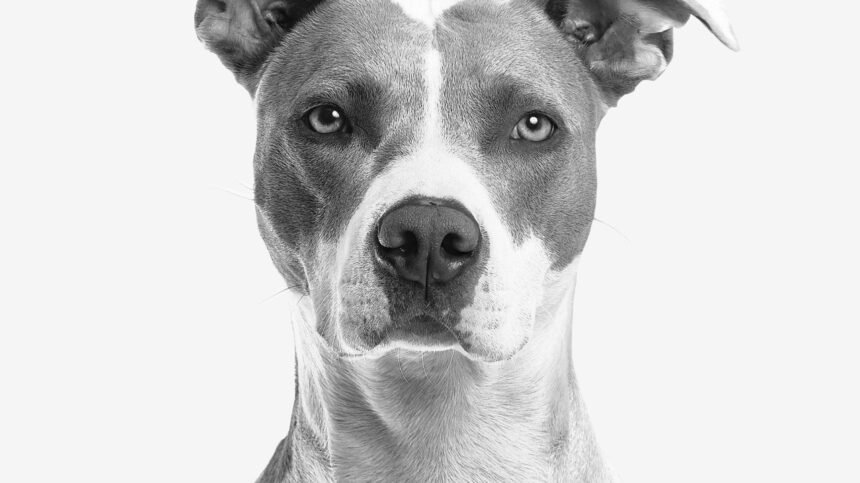
A striking black and white close-up portrait of a male Pit Bull mix dog looking directly into the camera with alert, intelligent eyes, representing the neutering and castration decision guide for male dogs.
Treatment & Health

Neutering (Castration) in Dogs- Methods, Timing, Benefits, Risks, and Everything Pet Parents Need to Know.

By
Pets News Network
18 Min Read
A striking black and white close-up portrait of a male Pit Bull mix dog looking directly into the camera with alert, intelligent eyes, representing the neutering and castration decision guide for male dogs.

Neutering (Castration) in Dogs- Methods, Timing, Benefits, Risks, and Everything Pet Parents Need to Know.

By
Pets News Network
A golden-brown Golden Retriever lying quietly on a dark leather couch with a tired, sad expression, representing the lethargy and discomfort experienced by dogs suffering from urinary bladder stones or uroliths.
Pet Health

Urinary Bladder Stones in Dogs: Types, Symptoms, Diagnosis, and Treatment Guide for Pet Parents.

By
Pets News Network
16 Min Read
- Advertisement -
Ad image
Treatment & Health

Neutering (Castration) in Dogs- Methods, Timing, Benefits, Risks, and Everything Pet Parents Need to Know.

He Is Looking to You for the Right Decision — Everything You Need to Know About…

By
Pets News Network
Pet HealthTreatment & Health

Chronic Kidney Disease in Dogs: Symptoms, Treatment, Diet, and How to Give Your Dog a Better Quality of Life.

When Your Dog's Kidneys Start to Fail — Here's What Every Pet Owner Must Know

By
Pets News Network
Pet Health

Urinary Bladder Stones in Dogs: Types, Symptoms, Diagnosis, and Treatment Guide for Pet Parents.

That Sad, Tired Look Could Mean More Than a Bad Day — Know the Signs of…

By
Pets News Network
Pet Health

Dog Vaccination Schedule in India, The Complete Guide Every Pet Parent Needs in 2025.

One Small Injection — A Lifetime of Protection for Your Dog

By
Pets News Network
Treatment & Health

Neutering (Castration) in Dogs- Methods, Timing, Benefits, Risks, and Everything Pet Parents Need to Know.

He Is Looking to You for the Right Decision — Everything You Need to Know About…

By
Pets News Network
PNN Logo - Pets News Network

Pets News Network (PNN) is India’s first independent pet-industry news service and watchdog, delivering professional journalism, lifestyle content, and trusted reporting for every pet parent, professional, and animal lover.

Categories

  • Technology
  • Entertainment
  • Animal Rescue & Welfare
  • Industry Insider
  • Pet Business & Finance
  • Pet Food Science
  • Pet Health

Quick Links

  • World
  • Pet Technology
  • Pet Insider
  • Blog Index
  • Contact US
  • My Bookmarks

@COPY RIGHTS – 2026, Pets News Network. All Rights Reserved.

© Pets News Network 2026. All Rights Reserved.
PNN Logo - Pets News Network PNN Logo - Pets News Network
Welcome Back!

Sign in to your account

Username or Email Address
Password

Lost your password?
