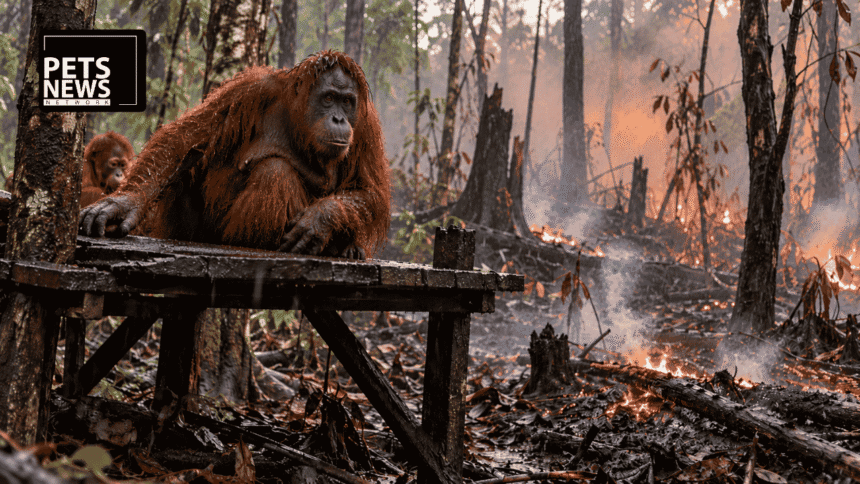
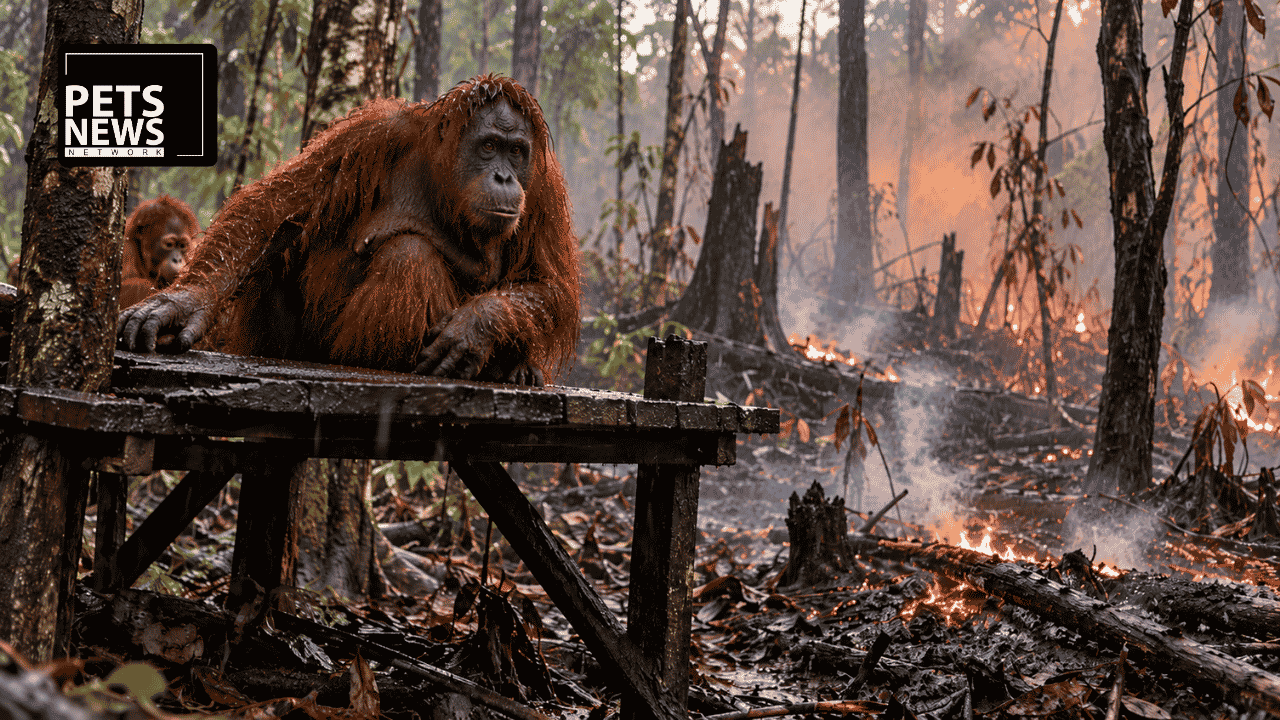

Fire spread through parts of Tanjung Puting National Park in Central Kalimantan, the park where modern orangutan research began, and reached the back of the Camp Tanjung Harapan feeding camp on 24 October. Police, the national forest firefighting brigade and volunteers have worked on it for weeks. Rain on 27 October reportedly helped, but on 28 October the regional police chief warned that embers still smouldering in the peat could bring the fire back. This is the latest on the Tanjung Puting fire and its orangutans.
The numbers, in one place
Rescued, evacuated or otherwise handled
| Wild animals handled nationwide | 290, attributed to an 8 October Ministry of Forestry recap (PNN could not trace it to a primary document) |
| Of those, in four Bornean provinces | 272 (same attribution) |
| Of those, Bornean orangutans | 96 (same attribution) |
| Later Ministry figure | 232 animals rescued across six provinces, including 71 orangutans (Mongabay Indonesia, 24 October) |
| Orangutans rescued by YIARI since August | 43, later reported as 51 (Ketapang and North Kayong) |
| Released into protected forest | Eight orangutans, reported mid-October |
| Snakes, turtles and pangolins received by YIARI | Reported, no count published |
Confirmed dead
| Total death toll | None found. PNN has not seen an agency release one. |
| Documented dead animals, coastal Kubu Raya | At least 16 (early August to late September), including silvered langurs, long-tailed macaques and proboscis monkeys |
| Same area, previous six years | 13 (SMART patrols, September 2020 to June 2026) |
| Named orangutan death with a post-mortem | One: Sempurna, 30 August |
| Snakes, monitor lizards, pangolins, birds | No verified counts found |
Read together, the honest summary is that hundreds of animals have been reached and nobody knows how many have died. Rescued animals are counted because they arrive at a clinic. The dead are often not counted because, in burning ground under heavy smoke, many are never found. Any article giving a precise national death toll is giving a number PNN could not trace to a source.
What is happening now
| Mid-October | Indonesia’s disaster agency (BNPB) reported about 513.89 hectares burning in the park, which it noted was mineral land, not peat. President Prabowo ordered special attention to the fires on 12 October. |
| 22–23 October | A volunteer reported flames about 600 metres from the Camp Tanjung Harapan feeding site, near Sekonyer Village. |
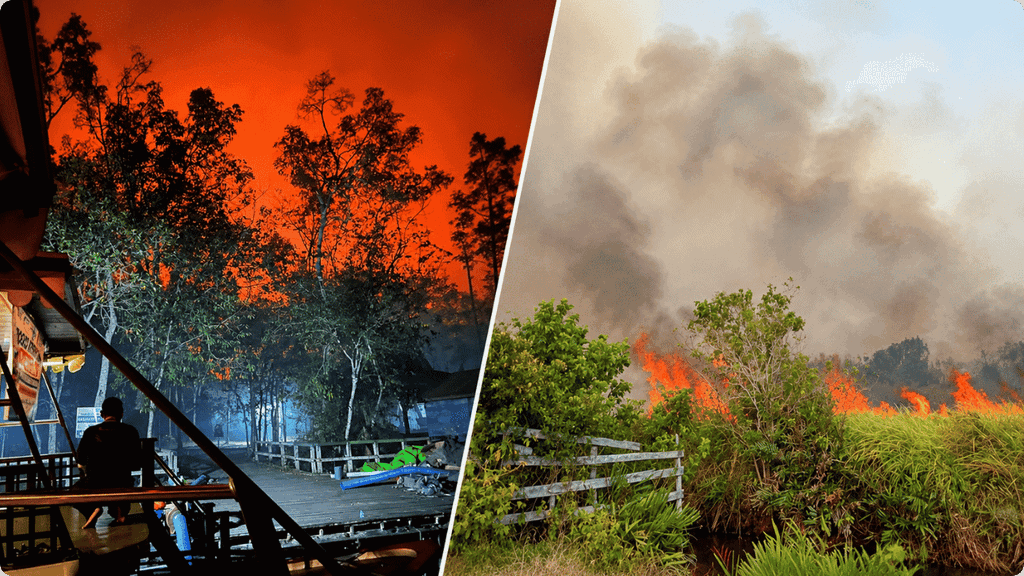
| 24 October | Fire spread to the back of Camp Tanjung Harapan and smoke covered the feeding camp. Pondok Tanggui, another camp, was still outside the fire’s reach. |
| 25 October | Orangutan Foundation International reported 14 orangutans at the camp, all appearing healthy, including the dominant male Roger. |
| 27 October | Police said crews were working “around the clock to suppress and cool the fires.” Heavy rain also reached the area, and volunteers relayed that the fire near the camp had gone out. That is not an official assessment. |
| 28–29 October | Central Kalimantan’s police chief, Irjen Pol Iwan Kurniawan, visited and warned that fire could reappear from embers still smouldering underground in the peat. Crews were still cooling the burned ground. |
Responders include West Kotawaringin Resort Police, Brimob, the environment ministry’s Manggala Agni brigade, Community Fire Awareness Groups and local volunteers. They have also been protecting the Pesalat Conservation Zone. A feeding site is where semi-wild and rehabilitated orangutans are provisioned on a schedule, which makes it a place where animals and fire can meet.
Why a peat fire does not end when the flames do
Officials have been explicit that peat fires burn underground and can reignite after surface flames are out. Peat is accumulated organic matter, metres deep, that smoulders where water cannot easily reach it. The park’s deep peatland is what makes firefighting difficult.
The picture is mixed. BNPB described the first 513.89 hectares as mineral land, so not every burning area is peat. But Brimob units have been cooling peatland in the park and the police chief’s warning is about peat embers. “Contained” in this park is a status, not an ending, and smoke can persist after visible fire has gone.
The place this is happening
| Size | About 416,040 hectares |
| Protected since | The 1930s, to protect orangutans and proboscis monkeys |
| UNESCO Biosphere Reserve | 1977 |
| National park | 1982 |
| Ramsar wetland | 2013 |
| Camp Leakey | Founded 1971, the park’s first research centre |
Camp Leakey is where Birutė Galdikas began the research that made orangutans known to the world. The park has burned badly before: fires in 1997 and 1998 caused heavy damage, and roughly 65% of its primary forest is reported degraded.
What has been rescued
For Tanjung Puting itself, no rescue or evacuation numbers have been published. Ministry of Forestry spokesperson Ristianto Pribadi said the park is a firefighting priority, that animal movements are being monitored, and that figures will be released once officially verified.
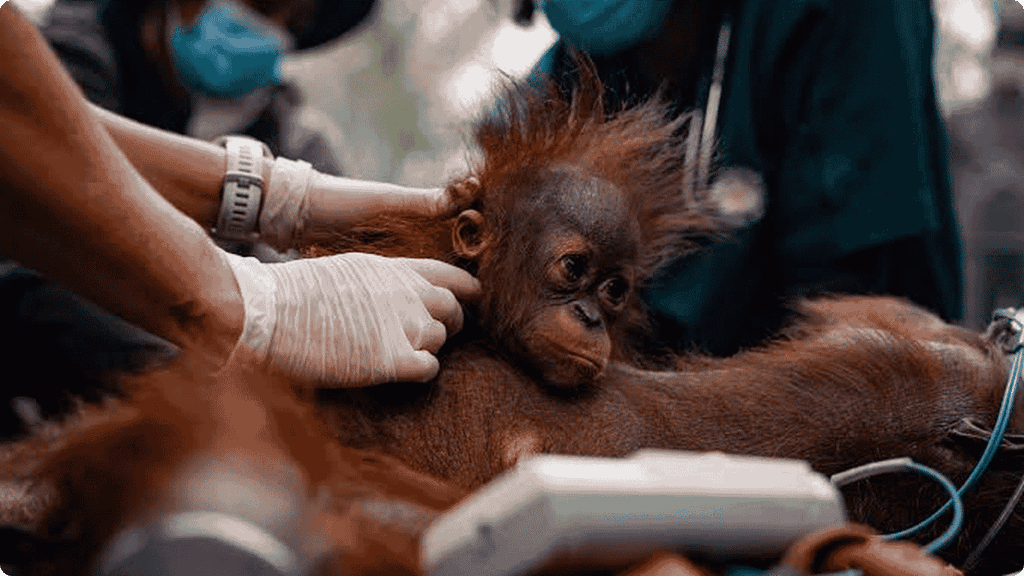
Across Kalimantan, a Ministry recap attributed to 8 October put wild animals handled at 290, including 96 Bornean orangutans, though PNN could not trace those totals to a primary document. A later report (Mongabay Indonesia, 24 October) quotes Pribadi giving 232 animals rescued across six provinces, including 71 orangutans, which suggests different measures. Pribadi has also stressed that “handling” includes herding animals toward safer habitat, translocation and rehabilitation, not only rescue. The rescue group YIARI reports rescuing 43 orangutans since August, later 51, in Ketapang and North Kayong, many with burns, dehydration or malnutrition. It has also received snakes, turtles and pangolins, with no counts published.
The deaths that have actually been counted
In coastal Kubu Raya, West Kalimantan, Yayasan Planet Indonesia recorded at least 16 dead animals between early August and late September, including silvered langurs, long-tailed macaques and proboscis monkeys. In the same area, SMART patrols logged 13 dead non-fish animals between September 2020 and June 2026, mostly natural causes or unexplained. That is thirteen in nearly six years against at least sixteen in two months. It is one organisation in one district, not a national figure, but it is the only mortality data from these fires that comes with a baseline.
One orangutan death is documented in detail. An adult male named Sempurna (also spelled Sampurna) was found on 30 August in a fire-affected palm oil plantation area in Ketapang, struggling to breathe, and died the same day. A necropsy on 1 September found changes to the lungs, heart and kidneys, with the lung changes strongly suspected to be linked to smoke exposure, according to West Kalimantan’s conservation agency head. Many animals in these fires are not burning. They are being starved of oxygen.
The 60% figure is being misread
A claim says 60% of Bornean orangutan habitat has burned. The Geopix analysis, released 3 September and reported by press, measured something different.
| The claim circulating | What was reported as measured |
|---|---|
| 60% of orangutan habitat burned | About 60.2% of the fire-affected area (25.8 of 42.8 million hectares, June to August) fell within orangutan habitat |
Geopix also counted 17,865 hotspots inside mapped orangutan habitat, 78.5% of the 22,744 across Kalimantan between 1 June and 28 August. That is a share of hotspots, not of area burned. PNN did not see the primary release.
Elsewhere: a research station 200 metres from the fire, and no water
In West Kalimantan, Gunung Palung National Park had about 9,055 hectares affected, according to the Ministry citing the park office. Fire came within about 200 metres of the Rangkong satellite research station, where more than 40 people built a firebreak and an improvised sprinkler system. Yayasan Palung’s research director said five orangutans from the long-term study population were seen fleeing.
Forest pools have dried and village ponds turned brackish. Pontianak received 5 million litres of freshwater from Kubu Raya on 19 September, and Planet Indonesia and village teams installed six forest water stations with camera traps, where animals drank within an hour of the first two going in.
Why this species cannot absorb a season like this
The Bornean orangutan (Pongo pygmaeus) is Critically Endangered on the IUCN Red List. Its most recent assessment, as cited, puts the wild population at roughly 104,700, less than 14% of what it once was.
What is not known, and should not be invented
PNN found no published total for animals killed in these fires, and no burned-area figure for Tanjung Puting after mid-October. Detailed death tolls with species breakdowns are circulating online, and PNN could not find a published source for them. In dense smoke over burning ground, many animals that die are never found. An untraceable number makes every real figure easier to dismiss.
Frequently asked questions
Is Tanjung Puting National Park on fire now?
Fires burned in the park through October and reached the back of Camp Tanjung Harapan on 24 October. Rain helped on 27 October, but as of 29 October crews were still cooling ground and officials warned of peat embers.
Why are peat fires so hard to put out?
Peat burns underground, below the reach of surface water, and can reignite after visible flames are out.
Are the orangutans safe?
On 25 October, 14 orangutans were reported at the camp, all appearing healthy. No deaths in the park have been reported, and no official animal figures have been released.
Did 60% of orangutan habitat burn?
No. Geopix found 60.2% of the fire-affected area fell within orangutan habitat.
Why is Tanjung Puting important?
It covers about 416,040 hectares, has been protected since the 1930s, is a UNESCO Biosphere Reserve and Ramsar wetland, and contains Camp Leakey, founded in 1971.
Pets News Network is India’s first dedicated media platform for the pet and animal industry. This is a developing situation; figures are as published by the agencies and organisations named, and where no verified figure exists PNN has said so rather than estimate. For breaking global pet news, brand coverage, and advertising enquiries, contact: info@petsnewsnetwork.com