
BREAKING
A 19-month-old male cheetah from Kuno National Park has died of firearm pellet injuries in Madhya Pradesh. Five pellets were recovered from his body during emergency surgery. He was a cub of Nirva, and he was found by Kuno’s monitoring team, which tracks the free-ranging cheetahs, in a forest outside the park. The Union government has sent a high-level team. The questions it needs to answer are not only about who fired.
What is established
| The animal | 19-month-old male (identified as KNG22), a cub of Nirva |
| Where found injured | A forest area on the Morena–Sheopur border, outside Kuno National Park; the state’s note places it in a Sheopur Territorial Forest Division compartment, other reports in the Pahadgarh area of Morena |
| Found | 25 October, by the monitoring team |
| Moved to Jabalpur | 26 October, for advanced treatment |
| Died | 27 October, despite surgery |
| Recovered in surgery | Five firearm pellets |
| Imaging | X-ray showed multiple foreign bodies; a CT scan found damage to internal organs and to the musculoskeletal and nervous systems |
The Union Ministry of Environment, Forest and Climate Change confirmed firearm pellet injuries as the cause of death in a statement on 28 October.
The state’s wildlife head, Samita Rajora, said emergency surgery was carried out and that five firearm pellets were removed from his body.
He was a Kuno cheetah, but he was not inside Kuno
Much of the coverage places this death “at Kuno National Park”. The distinction matters.
He was found outside the national park, in forest on the Morena–Sheopur border. Kuno’s Field Director, Uttam Sharma, has said he was not found within the park’s premises and that local forest authorities are legally responsible for the area. He was shot in a landscape without the protection a national park provides.
The pellet count is five, not four. Some reports give four. The figure of five comes from the state’s official note on the surgery. It is also worth saying what it does not mean: five pellets are not necessarily five shots, and nothing published establishes how many times anyone fired.
The division and the date vary between reports. The official note places the rescue site in a Sheopur forest compartment, while other reports say Morena. The state’s account gives 25 October as the date he was found.

Tracking is not protection
This animal was not lost. Reports say Kuno’s monitoring team, which tracks the radio-collared cheetahs in the wild, was the one that found him. Project Cheetah’s director has said a tracking team stays with the cheetahs around the clock.
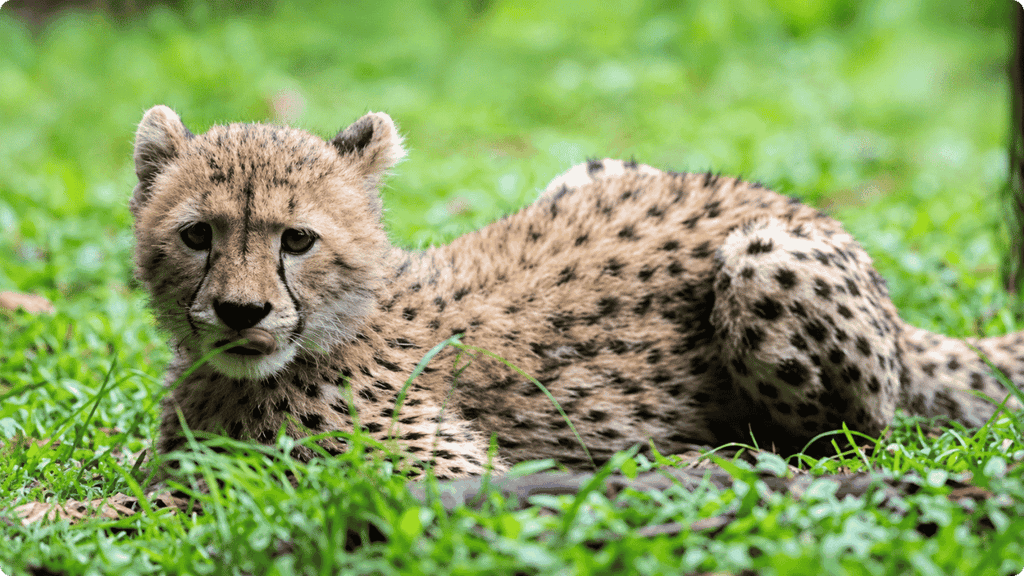
A collar reports where an animal is. It does not report what is happening to it, and it cannot intervene. Wildlife activist Ajay Dubey has alleged negligence by Kuno authorities and has sought a high-level inquiry, and the monitoring arrangements are now open to question, because the public reassurance about dispersing cheetahs has been that they are tracked.
The questions a review should settle are specific:
- When was this animal’s position last logged before he was found injured?
- Was his movement out of the park, and into a neighbouring forest division, known to the monitoring team at the time?
- Who holds responsibility for a Kuno cheetah once it crosses out of Kuno?
- How long passed between the shooting and his discovery?
None of these has been answered publicly.
Who is investigating
The Centre has deputed a team comprising the Inspector General of Forests of the National Tiger Conservation Authority, the Additional Director of the Wildlife Crime Control Bureau and the Regional Deputy Director of the Bureau. It will examine a possible poaching angle and review security protocols.
Madhya Pradesh has formed a Special Task Force of forest and police officers, and the state’s Tiger Strike Force has also been reported to be looking into possible poaching. Morena’s Divisional Forest Officer, Harish Baghel, and Kuno’s Field Director have said all angles are being examined. Ms Rajora described Morena as a “sensitive zone”.
The area has a record
Reports describe an earlier leopard-poaching case in the same part of Morena within the past few months. The figures differ: one report says a gang allegedly poached two leopards, while another quotes the state’s wildlife head as saying about ten dead leopards were found and a poaching racket was busted.
If that is accurate, then a cheetah from a flagship national programme was ranging through a landscape with a recent, known firearms problem. The question becomes whether anyone connected those two facts before this happened.
This is the dispersal problem, arriving
PNN has reported before that most of Kuno’s cheetahs are held in enclosures and only a minority range freely: 15 of Kuno’s 53 at the last count. The reason repeatedly given is risk: the landscape outside is not ready.
This death is that risk, realised.
A cheetah that leaves the park crosses into territory with ordinary villages, farmland and firearms and no cheetah-specific protection. The project’s long-term success depends on animals being able to live outside fences. Right now, one of them could not.
The honest framing is not that a cheetah wandered somewhere it should not have. Ranging is what the project is supposed to produce. The failure is that the landscape it ranged into was not prepared for it.
What has, and has not, been settled
In the early days after he was found, officials were examining whether he had been beaten by villagers with sticks, attacked by a leopard or shot. The surgical findings and the Ministry’s statement have now settled the cause: firearm pellets.
They have not settled the culprit. Who fired, from what distance and why remains under investigation, and no one has been identified.
The historical weight
India declared the cheetah extinct within its borders in 1952, and the last Asiatic cheetahs recorded in the wild here are widely reported to have been shot in 1947. Project Cheetah brought the species back in 2022 with animals from Namibia and South Africa.
The programme has lost animals before. PNN has not found an earlier death from a firearm in the coverage it reviewed, which would make this a different kind of failure: not a biological problem to be managed, but a law enforcement problem in a landscape the programme does not control.
Where the numbers stand
| Location | Cheetahs |
|---|---|
| Kuno National Park | 52 |
| Gandhi Sagar Wildlife Sanctuary | 4 |
| Veerangana Durgavati Tiger Reserve | 2 |
| Total in India | 58 |
These are the state’s figures. PNN’s earlier count was 59, with 53 at Kuno.
What the law provides
The cheetah is protected as a Schedule I species under the Wild Life (Protection) Act, 1972, the Act’s highest category of protection. For Schedule I offences, Section 51 provides for imprisonment of at least three years, extendable to seven, and a minimum fine, with higher fines for repeat offences.
A court may also order the forfeiture of any weapon, vehicle or trap used in the offence, and may cancel the offender’s Arms Act licence, after which no new licence can be obtained for five years from the date of conviction.
Frequently asked questions
How did the Kuno cheetah die?
Of firearm pellet injuries. Five pellets were recovered during emergency surgery, and the Union Environment Ministry confirmed the cause on 28 October 2026.
Was the cheetah inside Kuno National Park?
No. He was found injured in forest on the Morena–Sheopur border, outside the park.
How many cheetahs are in India now?
The state’s figure is 58: 52 at Kuno National Park, four at Gandhi Sagar Wildlife Sanctuary and two at Veerangana Durgavati Tiger Reserve.
What is the punishment for killing a cheetah in India?
The cheetah is a Schedule I species. Section 51 of the Wild Life (Protection) Act, 1972 provides for imprisonment of three to seven years and a fine for Schedule I offences, with higher fines for repeat offences.
Has anyone been arrested?
No. No individual has been identified or charged, and a central team and a state task force are investigating.
Pets News Network is India’s first dedicated media platform for the pet and animal industry. No individual has been identified or accused in connection with this death; the investigation is ongoing. For breaking global pet news, brand coverage, and advertising enquiries, contact: info@petsnewsnetwork.com