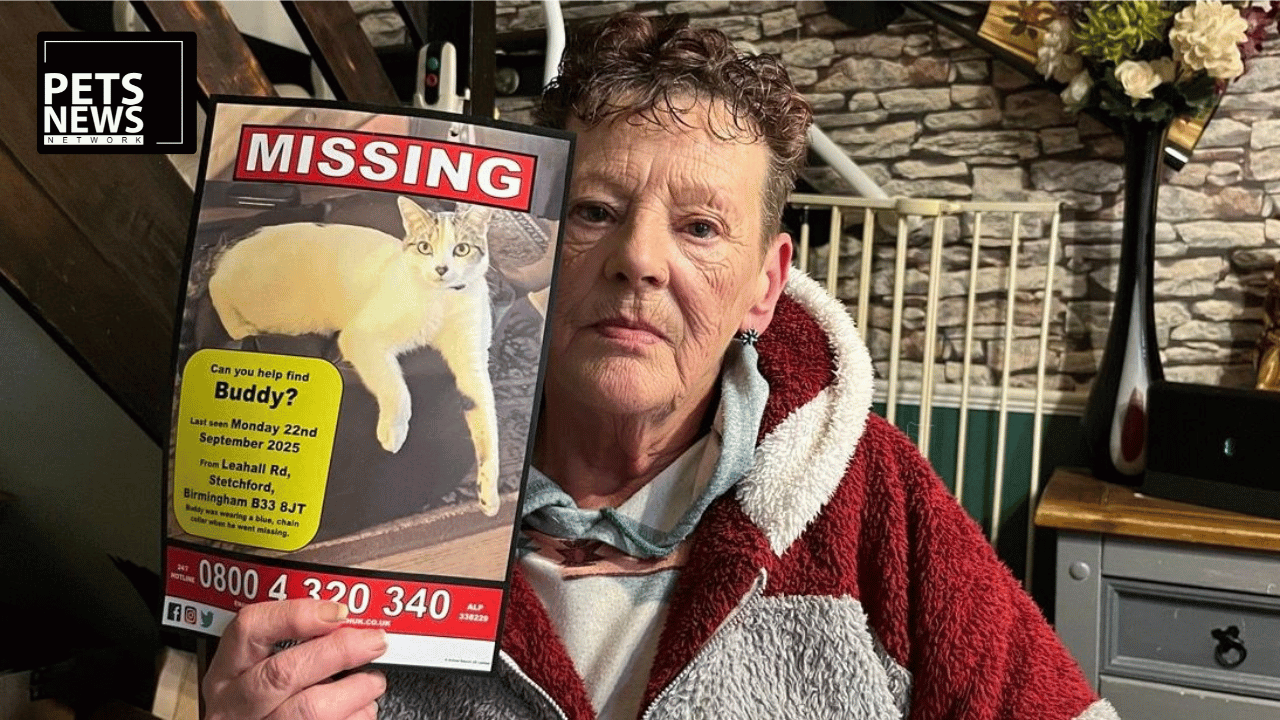

An AI missing pet scam has left a foster carer in Birmingham, England, facing threats to her cat. Her cat Buddy disappeared from her garden in September 2025. Months later, a stranger sent her a photograph of a cat that looked exactly like him and asked for a reward. However, she found that AI had generated the photograph. When she questioned it, the threats began. A recent news report describes the case as one of a growing number.
What happened to Buddy the cat
| Owner | Stephanie Young, a foster carer from Birmingham |
| Pet | Buddy, a cat |
| Went missing | From her garden, September 2025 |
| The contact | A woman who gave her name as Melissa and said she had found Buddy |
| The ask | Reward money, which the woman said was for her autistic grandchildren |
| Payment demanded | Apple gift cards, after Young refused to pay cash |
| What followed | Threats to “sell or murder” the cat when Young questioned the photos |
A woman who said she had found Buddy sent Young an image of the cat. Young was “100% certain” it was Buddy. She remembered thinking he had picked a lovely garden to sit in, so she was ready to go to the bank to pay for his return.
Within hours, she agreed to meet the woman nearby. However, the person never turned up. Instead, she refused a cash payment and pushed for Apple gift cards as the reward.
Then Young looked closely at the pictures. She concluded that AI had generated them, so she questioned the woman’s authenticity. Soon after, the woman threatened to sell or murder her pet. Young said she was shocked that anyone could be “so evil”.
How the AI missing pet scam works
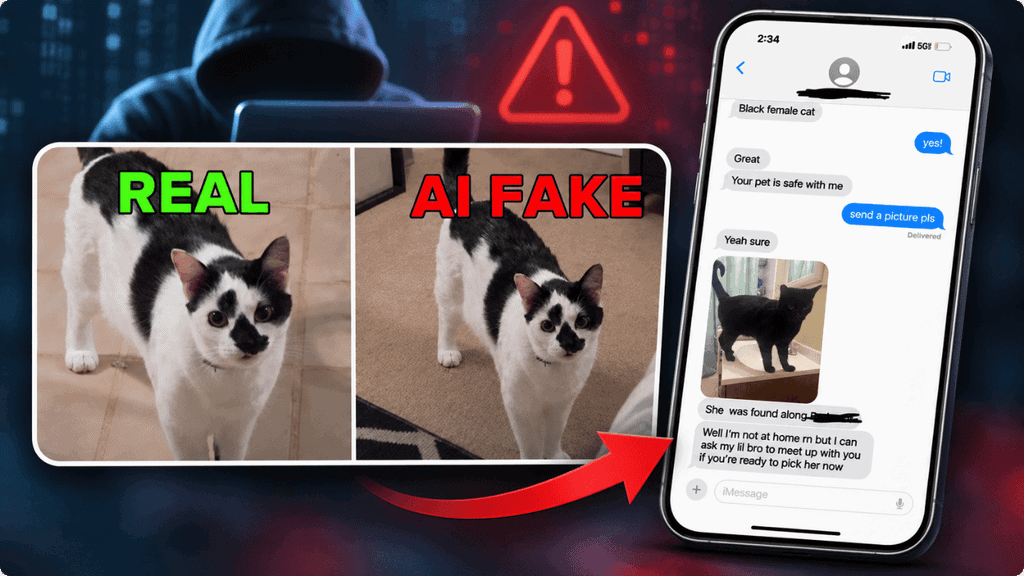
Fraudsters prey on owners of missing pets by using AI to fake images of the animal. Next, they invent detailed backstories and fake evidence to claim the pet has been found. When owners refuse to pay hundreds of pounds, the scammers threaten to kill the animal. Then they bombard victims with abuse.
The method depends on public information. For example, owners of missing pets post clear photographs, markings and the area where the animal was last seen, on rescue sites and in community groups. A scammer can use those same posts as raw material for a convincing fake.
The lost pet scam is not an isolated case
Other countries have issued similar warnings over the past year.
- Guelph, Canada (September 2025). Police reported two cases in a week in which someone used AI-generated images to demand money from people who had posted about lost pets. For example, a man whose cat was missing received a demand for $300. He sent $50, then received an AI-generated photo and a demand for more. Police said the scam works because upset owners may believe the fake photos. In addition, scammers use fake phone numbers and email addresses that are hard to trace. In a separate case, Wellington County OPP said someone asked a resident for $250 and sent a digitally altered version of the photo the resident had posted. However, the resident called police before paying, and the cat later came home.
- Phoenix, United States (June 2026). A woman whose dog Nala had escaped paid $1,300 by Zelle to a caller posing as a police officer. Authorities determined that someone had generated the photo he sent from her own missing-pet posts. Moreover, the pick-up address was an empty courthouse parking lot. Maricopa County Animal Care & Control says it will never ask for money over the phone.
The pattern is the same each time: an AI-made photo as “proof”, a payment demand that grows, and pressure to act fast. Similarly, the Birmingham case adds a threat to the animal itself.
AI missing pet scam: warning signs to watch for
These warning signs come from the cases above and from consumer-protection guidance.
- Payment by gift card, cryptocurrency or a peer-to-peer app. These are hard to trace and hard to reverse. In fact, a genuine finder does not need an Apple gift card.
- A meeting that never happens. In the Birmingham case the person did not turn up, and in Phoenix the pick-up point was an empty car park.
- Pressure and threats. Watch for urgency, a rising amount, or a warning that the scammer will sell, move or harm the pet if you hesitate.
- A photo that matches your own posts too neatly. If the “found” image looks like your appeal poster, treat that as a reason for caution, not comfort.
- A reluctance to prove it. By contrast, a genuine finder can show the animal live.
What to do if you suspect an AI missing pet scam
- First, ask for a live video call showing the animal, or a photo of it next to a handwritten note with today’s date. Consumer-protection advice suggests exactly this, because it is hard to fake on demand.
- Next, keep back one identifying detail. Leave a distinctive mark, or the microchip number, out of your public posts so you can test a claim. This is PNN’s practical suggestion.
- Also, do not pay in advance. Police and animal control agencies do not charge to return a pet.
- In addition, meet in a public place, with someone else, and tell a friend or the police where you are going.
- Then keep the messages and report them to the police and to your country’s fraud reporting service. Unfortunately, it is difficult to recover money from these scams.
- Finally, keep searching through the proper channels: local shelters, vets, microchip databases and neighbourhood groups.
What Indian pet owners should know
The cases reported here come from the UK, Canada and the United States. PNN has not verified any case of this specific scam in India. However, the ingredients are all present here: lost-pet appeals that people share widely on WhatsApp, Instagram and Facebook groups, clear photographs in public posts, and UPI as an instant payment method.
Therefore, the same rule applies: do not send money, by UPI or any other route, to a stranger who claims to have your pet before you have seen the animal with your own eyes. If someone targets you, report cyber fraud through the National Cyber Crime Reporting Portal or call the 1930 helpline.
Why this lost pet scam matters
Most scams target money. However, this one targets the hope that a missing pet is alive. That is why it works on careful, caring people, and why scammers use threats to the animal as leverage.
A real finder wants your pet home. A scammer wants your payment first.
Sharing a missing-pet appeal remains worthwhile, and this case is not a reason to stop. Instead, hold back one identifying detail and ask for proof before paying anything.
Pets News Network is India’s first dedicated media platform for the pet and animal industry. PNN has not independently confirmed the details of the Birmingham case, which come from a news report. For breaking global pet news, brand coverage, and advertising enquiries, contact: info@petsnewsnetwork.com