
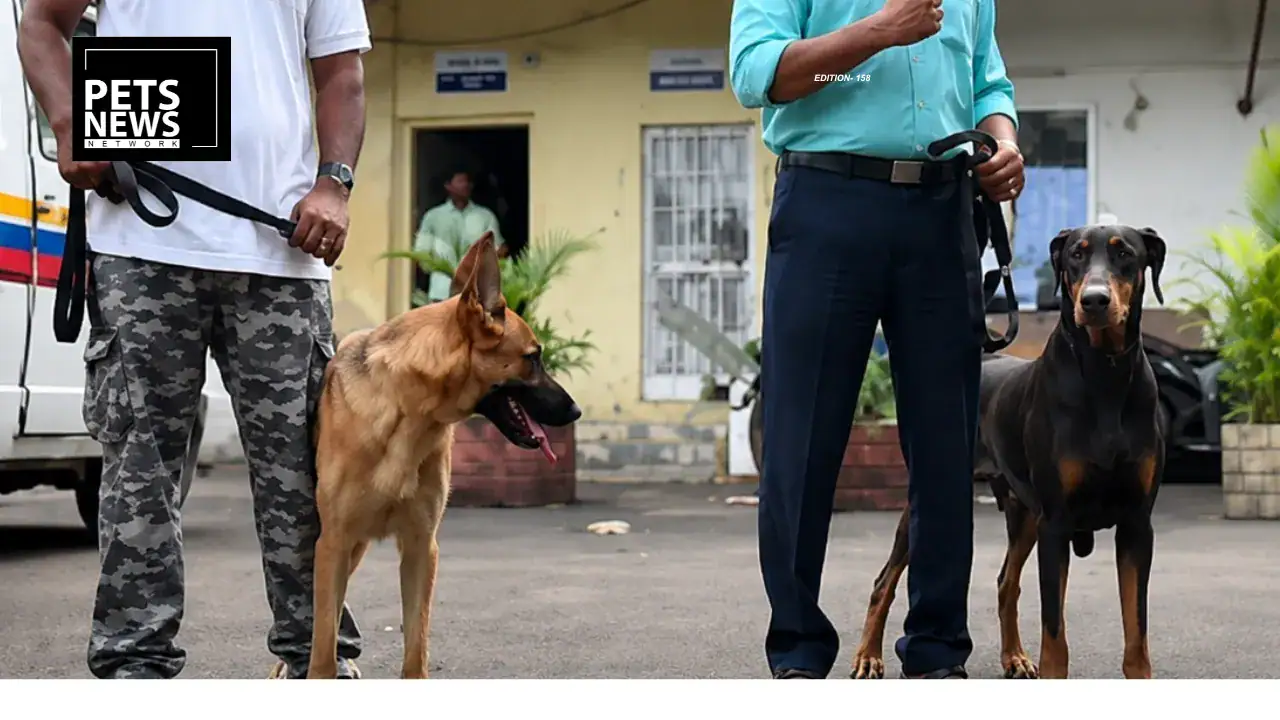

For Maharashtra’s police dogs, retirement will no longer mean saying goodbye to the only humans they’ve ever truly known. Chief Minister Devendra Fadnavis announced on Saturday, August 22, that police dogs completing 10 years of service will no longer be offered up for adoption to third parties. Instead, they’ll remain part of the police department for the rest of their lives, living out their final years alongside the handlers who worked beside them throughout their careers.
It’s a genuinely significant shift for a state that has, until now, followed the same retirement practice used across most Indian police forces, one that often quietly failed the very animals it was meant to reward for years of loyal service.
What the Old System Got Wrong
Under the previous arrangement, a police dog would formally retire after 10 years of active duty and typically be handed over to an adoptive family outside the force, sometimes a member of the public, sometimes a screened external adopter. On paper, it looked like a reasonable way to give retired service animals a second life in a private home.
In practice, according to government sources in Maharashtra, the results were often deeply troubling. “The practice has been to give away retired police dogs in adoption elsewhere. This has been seen to adversely affect the mental health of adopted canines, and many even refuse to eat,” officials noted. Dogs that had spent a full decade bonded to a single handler, following the same routines, responding to the same voice and commands, were suddenly placed in entirely unfamiliar households, with unfamiliar people, and no continuity with the working life they’d known.
For an animal whose entire adult life had been built around a specific human partnership, that abrupt severance often proved genuinely traumatic, manifesting in refusal to eat, withdrawal, and broader signs of psychological distress in unfamiliar surroundings.
What Changes Under the New Policy
The new arrangement addresses that problem directly, at its root. Police dogs will still formally retire from active operational duty after completing 10 years of service, that timeline itself isn’t changing. What changes is what happens next: rather than being sent elsewhere, retired dogs will continue to remain enrolled with the police force and continue living with their long-time handlers for the remainder of their lives.
Critically, the Maharashtra Home Department will bear full responsibility for the cost of this arrangement, funding the dogs’ post-retirement food, medical treatment, and other day-to-day living requirements entirely. Handlers won’t be expected to personally shoulder the financial burden of caring for a retired service animal, a burden that, in other countries with similar retirement systems, has often fallen unfairly on individual handlers or adoptive families struggling with rising veterinary costs.
The Chief Minister’s Reasoning
Fadnavis was direct about why this change was necessary. “A dog that has served the police force for 10 years should not be made to suffer after retirement,” he said, adding that such animals deserve to spend their remaining years in a safe, familiar, and comfortable environment.
He framed the decision in terms of basic responsibility toward animals that had given years of dedicated service. “Even though it is a canine, honoring its service and caring for its remaining life is a fundamental responsibility,” Fadnavis said, a sentiment he reinforced elsewhere by stating plainly: “We must care for the canines who serve us and must allow them to spend the rest of their lives comfortably.”
A Proposal That Took Nearly a Decade to Become Policy
What makes this announcement particularly notable is that it isn’t a brand-new idea, it’s the long-delayed realisation of a proposal first raised nearly ten years ago. Back in 2017, the Mumbai Police approached the Maharashtra Home Department seeking financial support specifically for retired sniffer dogs, a proposal informally referred to at the time as a possible “pension” for police dogs, intended to cover food, medicine, and other post-retirement necessities.
That 2017 proposal never fully materialised into policy at the time. Nearly a decade later, with mounting evidence of the psychological toll external adoption was taking on retired canines, the state has finally moved to formalise exactly the kind of sustained, state-funded support that was originally proposed.
Why the Handler Bond Matters So Much
Understanding why this policy matters requires understanding just how deep the working relationship between a police dog and its handler actually runs. Over a decade of active service, handlers and their dogs typically develop an intensely close working partnership, one built on daily routines, consistent training reinforcement, and mutual trust developed across potentially dangerous operational deployments, from tracking suspects to detecting explosives.
Severing that bond abruptly at the exact moment a dog is entering its most vulnerable life stage, ageing, likely dealing with the physical toll of years of active service, has long been recognised by animal behaviourists as a uniquely stressful transition. By allowing dogs to remain with the same handler through retirement, Maharashtra’s new policy essentially removes the single most disruptive variable in that transition altogether.
A Move That Puts Maharashtra Ahead of a Global Conversation
Maharashtra’s decision arrives at a moment when the question of proper post-retirement care for service dogs is being actively debated well beyond India. In the United Kingdom, for instance, the charity Thin Blue Paw Foundation has spent recent years campaigning for a formal pension system for retired police dogs, citing steep veterinary costs, some running as high as £2,400 annually for age-related conditions, that often fall entirely on adoptive owners without any government support.
By contrast, Maharashtra’s new policy sidesteps that entire dilemma, since the dogs never leave the force’s structure or funding responsibility in the first place. Rather than debating who should pay for a retired dog’s care after adoption, the state has simply removed the adoption step from the equation altogether.
What This Means Going Forward
For Maharashtra’s serving police dogs today, many of them German Shepherds, Labradors, and other working breeds trained for tracking, detection, and patrol duties, this policy represents a fundamental change in what retirement will actually look like. Instead of an uncertain transition to an unfamiliar home, retirement now means staying exactly where these animals have spent a decade building trust, identity, and purpose: alongside the handler who knows them best.
It’s a small but meaningful acknowledgment that service animals, much like their human counterparts in uniform, deserve a retirement that honours the years they’ve given, rather than one that simply moves them along once their working years are done.
Pets News Network is India’s first dedicated media platform for the pet and animal industry. For breaking global pet news, brand coverage, and advertising enquiries, contact: ankur@petsnewsnetwork.com