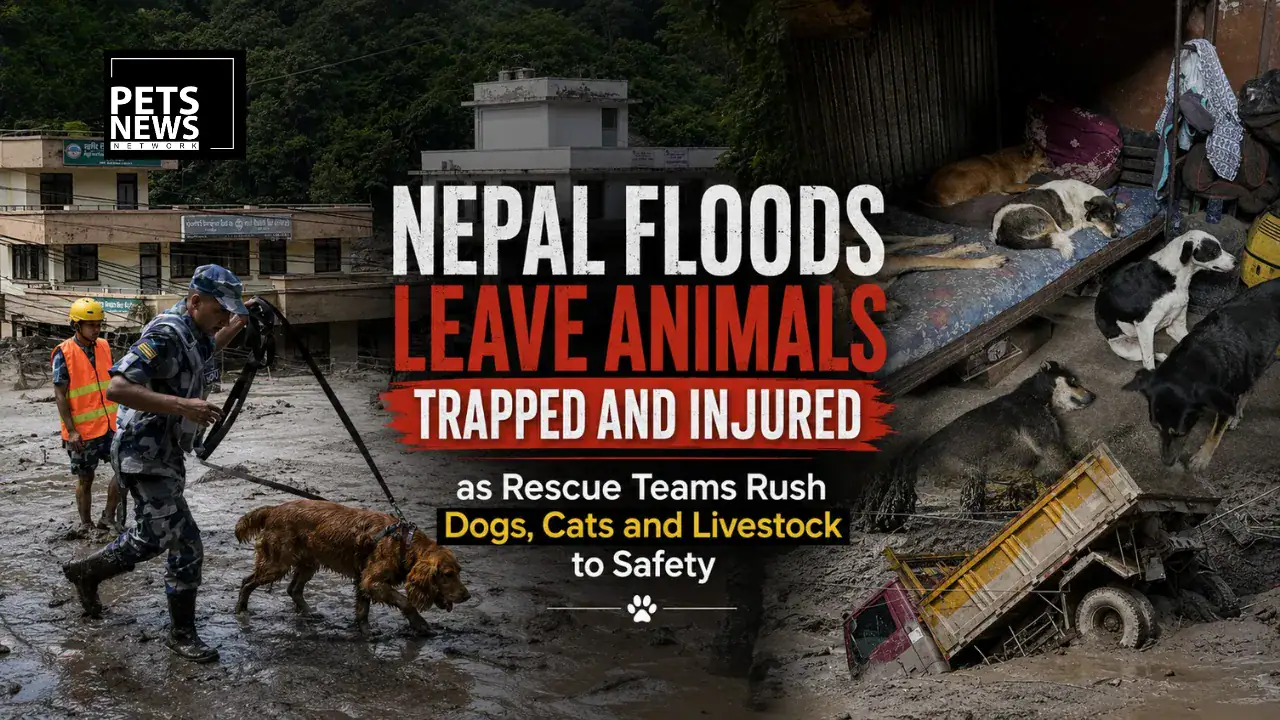

As rescue teams continue searching through the devastation left by Nepal’s catastrophic August 26 flash flood, a parallel emergency is emerging for animals caught in the disaster zone.
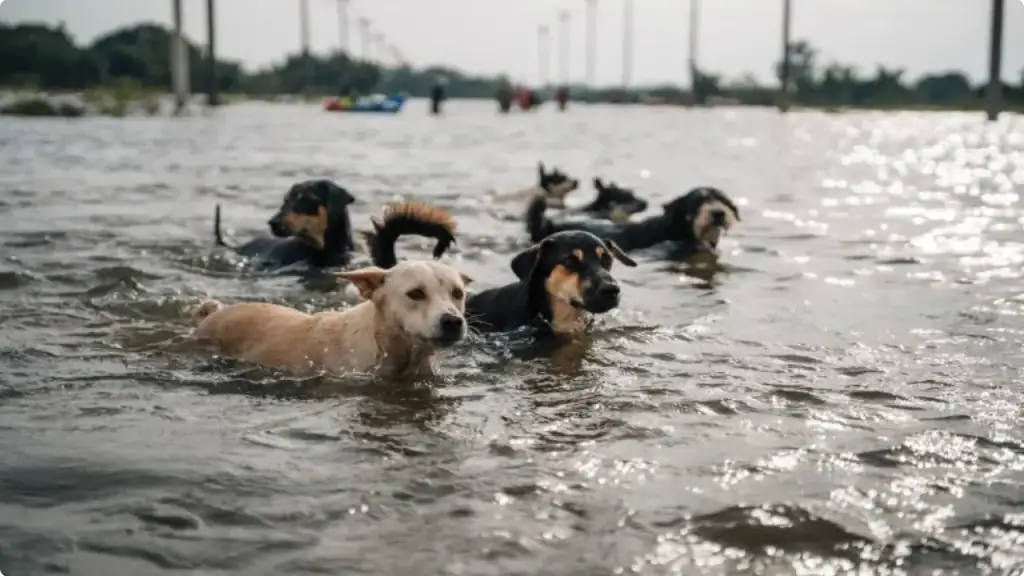
Pets, community dogs and cats, farm animals and other animals have been left injured, stranded, displaced or without access to food and veterinary care after floodwaters tore through settlements along the Bhote Koshi and downstream river systems.
The human toll has been enormous, with hundreds of deaths reported and search operations continuing across badly damaged areas. But for animal-welfare organisations and veterinary teams, one of the biggest challenges is that the true scale of animal suffering is still unknown.
As of August 28, no verified nationwide figure has been released for the number of dogs, cats or other companion animals killed, missing or rescued in the disaster.
That lack of data does not mean the impact is small. It reflects how difficult it remains to reach some of the worst-affected communities, where bridges and roads have been destroyed and rescue teams are still dealing with unstable terrain, debris and the threat of further flooding.
Three animal ambulances mobilised toward Rasuwa
Among the first specialised animal responses, Nepal-based organisations Sneha’s Care, Voice of Animal Nepal and Nepal Welfare and Research Center mobilised three animal ambulances carrying emergency supplies toward the Rasuwa region.
The teams moved after receiving reports that numerous animals had been trapped or injured in flood-affected communities.
They are carrying veterinary medicines, food and emergency relief materials, while attempting to reach animals that may have been left behind when families fled rapidly rising waters.
Sneha’s Care has warned that many animals may be frightened, hungry or injured while human rescue operations understandably remain the first priority.
IFAW provides emergency support for animal assessment
The International Fund for Animal Welfare (IFAW) has also entered the response, providing emergency funding to Sneha’s Care for rapid animal-needs assessments.
The initial work is beginning in Nuwakot, where teams are expected to identify injured, stranded and displaced animals and determine where rescue, veterinary care, food and other support are most urgently needed.
Animals in critical condition are expected to receive immediate treatment during the assessment phase.
IFAW has stressed that the animal impact cannot yet be quantified because access to affected areas remains extremely limited.
Destroyed roads and bridges, mud and debris are still limiting access, making it difficult even to establish how many animals need help.
Veterinary teams deployed to Rasuwa and Nuwakot
Nepal’s veterinary sector is now mounting a more formal emergency response.
The Department of Livestock Services has deployed two technical teams, one to Nuwakot and another to Rasuwa, to support animal rescue, emergency treatment and biosecurity.
Their responsibilities go beyond treating injuries and include safe management of dead animals, disease surveillance and outbreak prevention.
The Nepal Veterinary Association has also deployed a five-member veterinary team to affected districts in coordination with government agencies.
The group is expected to conduct field assessments, provide first aid and treatment, document damage to livestock and fisheries, and identify where more personnel or medical supplies are required.
A 24-hour hotline is connecting animal owners with help
To improve access to veterinary support, the Nepal Veterinary Association has activated a 24-hour animal-health hotline on 1159.
Flood-affected farmers and animal caretakers can use the number to seek veterinary advice and report animals in need of treatment or rescue.
Information received through the hotline can be coordinated with veterinary teams in the field. In rural communities, where livestock are central to household income and food security, rapid treatment can also help reduce longer-term economic losses.
Dogs and cats remain among the hardest animals to count
For Pets News Network, one of the most important unanswered questions is the number of companion and community animals affected.
No government agency or animal-rescue organisation has yet published a reliable total for dogs or cats killed, missing or rescued.
IFAW specifically says the full impact on pets, farm animals and other community animals is still being assessed. Until field teams publish verified counts, large dog or cat casualty figures circulating online should be treated with caution.
Dogs are also helping search the disaster zone
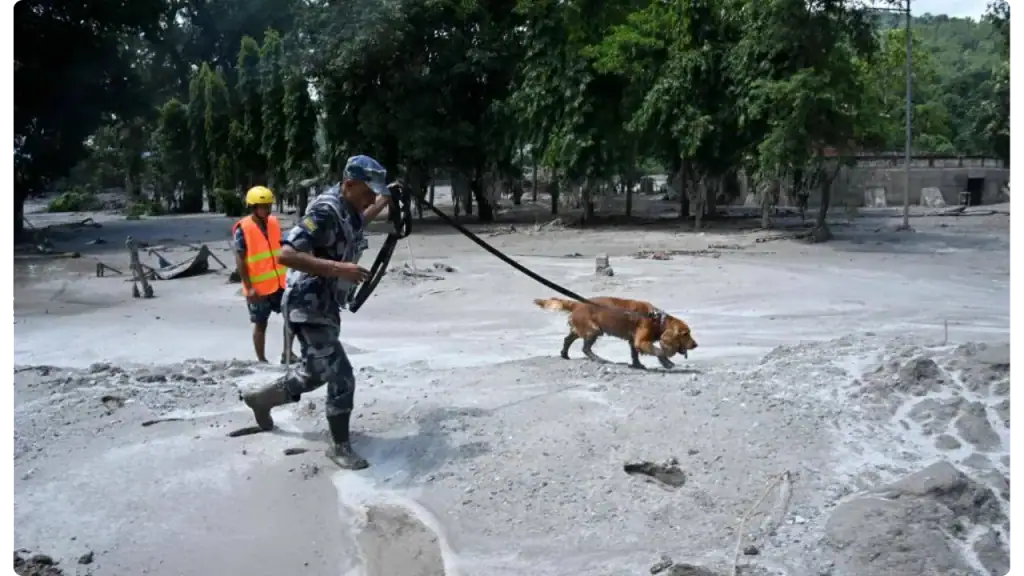
Dogs are not only among the animals at risk—they are also part of the rescue response.
Nepal’s Armed Police Force has deployed trained K-9 search dogs alongside rescue personnel and drones in the Bhote Koshi disaster zone.
One reported deployment included three K-9 dogs working with nine personnel as teams searched areas affected by debris and collapsed structures.
The contrast is striking: while animal-welfare teams work to reach stranded dogs and other animals, trained dogs are simultaneously helping human rescuers search through the destruction.
Livestock losses could deepen the disaster for rural families
Although reliable casualty numbers are still being collected, Nepalese veterinary authorities say the flood has caused serious damage across the livestock, poultry and fish-farming sectors in affected districts including Rasuwa, Nuwakot and Dhading.
The Ministry responsible for agriculture and animal health has ordered rapid assessments to document losses across livestock, agriculture, forests and wildlife.
A Rapid Action Team has been tasked with gathering field data on the nature and scale of the damage so authorities can plan rescue, relief and rehabilitation.
For rural families, those losses can mean reduced milk production, breeding stock, food supply and household income, making animal recovery part of the wider humanitarian recovery.
Disease prevention is becoming the next concern
Even animals that survive the flood may remain at risk.
Floodwater can contaminate feed and drinking water, force animals into crowded temporary shelters and expose them to injuries, stress and infectious disease.
Nepalese veterinary authorities have therefore emphasised biosecurity, disease monitoring and safe disposal of animal carcasses as urgent priorities.
Veterinary organisations are also calling for additional professionals to volunteer, while animal-health businesses have begun contributing medicines and other supplies.
Nepal’s forgotten animal victims need to remain visible
The scale of the Nepal flood means human rescue and recovery will continue to dominate attention—and rightly so.
But animal welfare is also part of disaster recovery.
Dogs and cats left behind need food, treatment and reunification with families, while farm animals need veterinary care and safe shelter. Nepal now has animal ambulances, field teams, an emergency hotline and international animal-welfare support operating alongside the broader disaster response.
What remains missing is a reliable count of the animals affected. As access improves, those numbers should begin to emerge.
Until then, the most accurate conclusion is also the most sobering: the full animal toll of Nepal’s flood is still unknown, and rescue teams are only beginning to uncover the scale of the crisis.
Pets News Network is India’s first dedicated media platform for the pet and animal industry. For breaking global pet news, brand coverage, and advertising enquiries, contact: info@petsnewsnetwork.com