
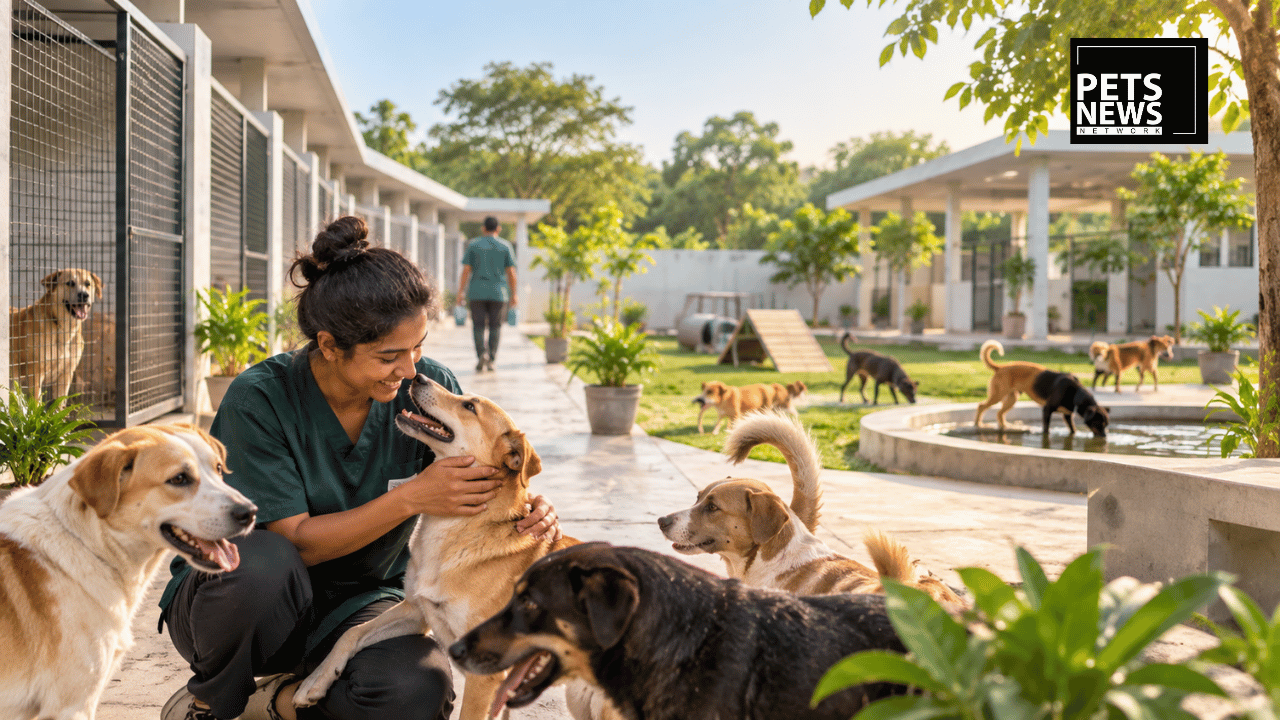

A municipal animal shelter exists to serve two overlapping purposes at once: it’s meant to be a genuine safe haven for the animals housed inside it, and a protective piece of public health infrastructure for the community living around it. When a shelter is properly built, staffed, and maintained, both of those goals reinforce each other. When basic standards slip, both animals and neighbouring residents can end up paying the price simultaneously.
With cities across India, including Bengaluru, currently racing to expand animal shelter capacity in response to a Supreme Court mandate on stray dog management, it’s worth understanding exactly what proper shelter standards actually require, and why gaps in these standards carry consequences well beyond the shelter’s own boundary walls.
Why Waste Management Is the Single Biggest Risk Factor
Of every operational element in a municipal animal shelter, waste management arguably carries the most serious public health stakes. A shelter housing even a modest number of dogs generates a substantial, continuous volume of organic waste every single day. How that waste is contained, treated, and disposed of determines whether a shelter remains a contained, sanitary facility, or becomes a genuine environmental and health hazard for the surrounding area.
Properly designed shelters require lined, engineered waste containment systems, not open, unlined pits that allow waste to seep directly into surrounding soil. When waste containment fails, the most serious downstream risk is groundwater contamination, particularly fecal coliform contamination reaching nearby borewells and groundwater sources that local residents may depend on for drinking water and daily household use. This isn’t a hypothetical concern: fecal coliform contamination in drinking water is a well-documented public health hazard, linked to gastrointestinal illness and, in vulnerable populations, more serious complications.
Proper shelters also require dedicated internal drainage for each kennel or enclosure, kept entirely separate from any stormwater drainage system. Combining waste drainage with stormwater channels creates serious overflow risk during heavy rainfall, precisely the kind of monsoon-season hazard that can turn a manageable waste stream into a genuine pathogen exposure event for both animals and nearby residents.
What Proper Animal Care Actually Requires
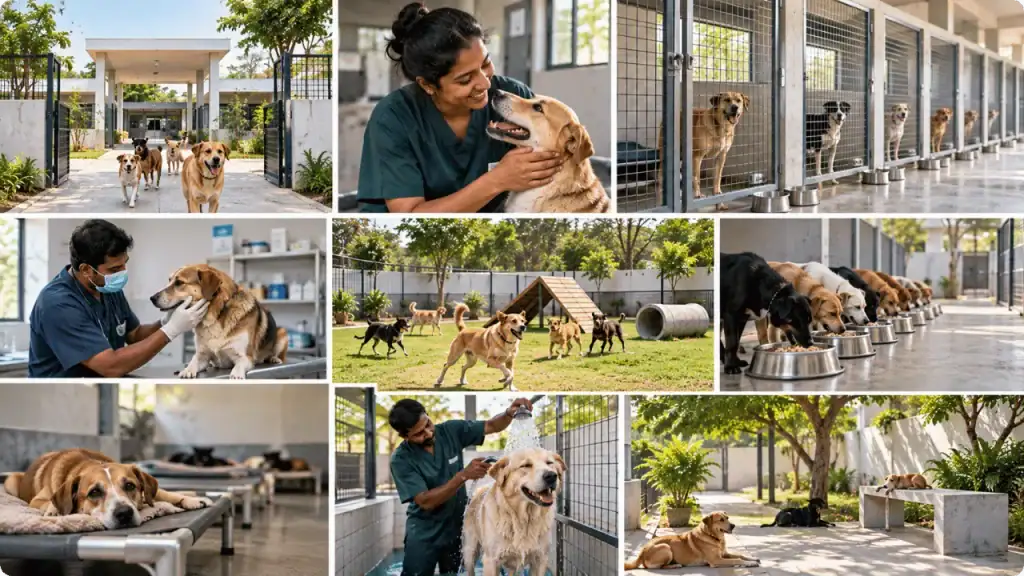
Beyond environmental safety, animal welfare standards at any municipal shelter should include a few non-negotiable basics. Every animal should receive measured, appropriate nutrition, not an inconsistent, unmeasured feeding routine that leaves individual animals’ dietary needs unaccounted for.
Equally important, and often overlooked, is proper record-keeping. Every animal in a shelter’s care should have an individual health card or identification record tracking vaccination status, medical history, sterilisation records, and general health observations over time. Without this basic documentation, it becomes genuinely difficult for shelter staff, veterinarians, or civic oversight bodies to track an animal’s welfare consistently, or to demonstrate accountability for the care being provided.
The Structural Safety Standards That Protect Everyone
A shelter’s physical infrastructure carries its own set of essential safety requirements, for the animals housed there, the staff working there, and anyone visiting the facility. Enclosures need secure, well-maintained mesh and fencing, both to prevent animal escape and to protect against injury from compromised materials. Proper ventilation is essential, particularly in warmer climates, to prevent heat stress and support general respiratory health among housed animals.
Fire safety deserves particular attention in any facility involving cooking or gas use near animal housing areas. Basic fire safety infrastructure, extinguishers, clear emergency exit routes, and appropriate separation between open flame or gas equipment and animal enclosures, isn’t an optional extra. It’s a fundamental safety requirement anywhere animals are housed in enclosed or semi-enclosed spaces they cannot evacuate on their own in an emergency.
Why Shelter Capacity Gaps Make Everything Worse
India’s civic shelter infrastructure is currently under real strain. In Bengaluru specifically, the Greater Bengaluru Authority (GBA) has publicly acknowledged a severe citywide shortage of shelter facilities. Following a Supreme Court directive requiring stray dogs to be removed from public spaces, including schools, hospitals, and transit hubs, and relocated to proper shelters after sterilisation and vaccination, GBA’s own survey identified over 3,000 dogs needing shelter, against existing citywide capacity of only around 1,000 animals, roughly a two-thirds gap the authority is still working urgently to close.
This kind of capacity shortfall creates real pressure on whatever shelter infrastructure does exist, sometimes leading facilities to house more animals than their waste management, drainage, or staffing capacity can properly support. That pressure is precisely why proper infrastructure standards matter more, not less, during periods of rapid shelter expansion: a facility built or operated below proper standards doesn’t just fail the animals inside it, it can actively create new public health and safety risks that didn’t exist before the shelter was built.
What Communities and Civic Bodies Should Be Asking
For residents living near any municipal animal shelter, and for civic bodies overseeing shelter expansion, a few practical questions are worth asking regularly:
- Is animal waste being properly contained and treated, separate from any stormwater drainage system?
- Is there any visible or reported change in nearby groundwater quality that residents should be monitoring?
- Are animals receiving consistent, measured nutrition and maintained health records?
- Does the facility meet basic fire and structural safety standards for both animal and staff safety?
These aren’t advanced or unreasonable expectations. They represent the baseline any properly functioning animal shelter should already meet, standards that exist precisely because both animal welfare and public health depend on getting them right.
A Shared Responsibility Going Forward
As Indian cities continue expanding shelter infrastructure to meet growing stray population management needs and court-mandated deadlines, ensuring new and existing facilities actually meet these baseline standards deserves to be treated as seriously as the expansion itself. Building more shelter capacity quickly is important, but capacity built without proper waste management, animal care protocols, and structural safety standards risks solving one problem while quietly creating another, for the animals these facilities are meant to protect, and for the communities living around them.
Animal welfare organisations, civic oversight bodies, and residents each have a role to play in holding shelter infrastructure to these standards, not out of suspicion toward any single facility, but because the entire premise of a municipal shelter, a genuine safe haven that protects public health rather than threatening it, only holds up when these basics are consistently met.
Pets News Network is India’s first dedicated media platform for the pet and animal industry. For breaking global pet news, brand coverage, and advertising enquiries, contact: info@petsnewsnetwork.com