

A Weekly Toll That Keeps Climbing
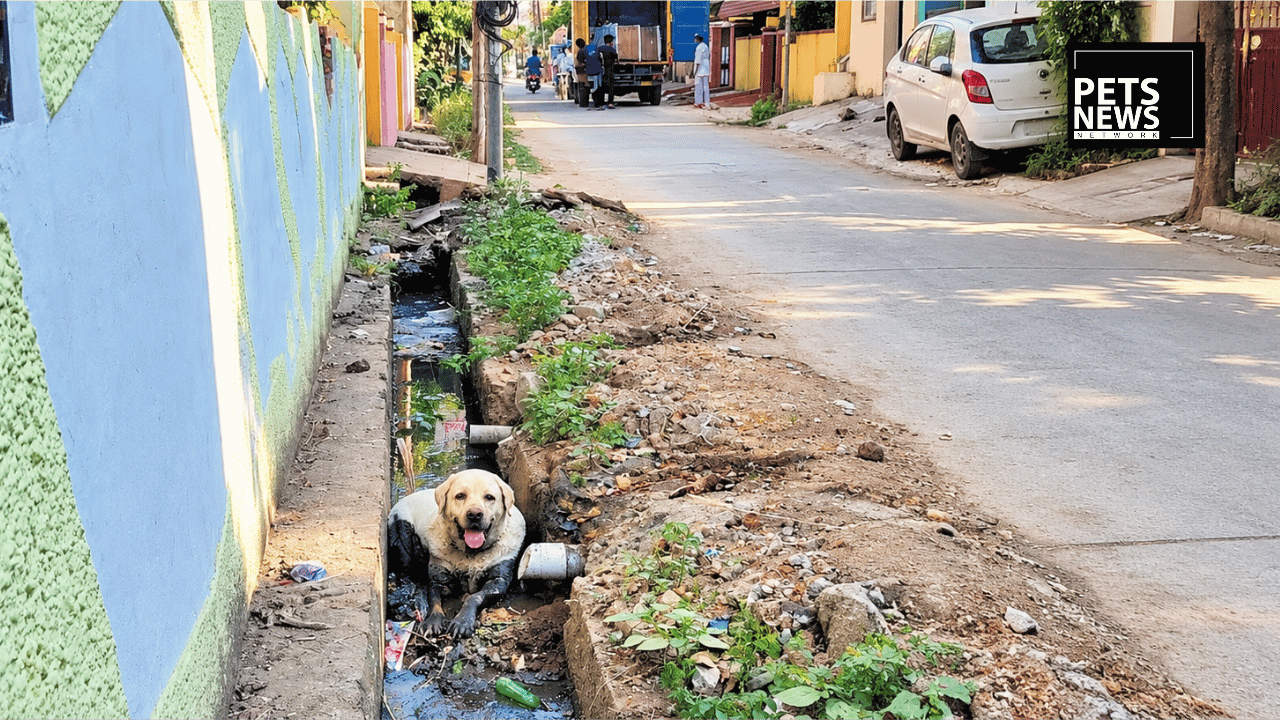
Chennai is grappling with a surge in pet abandonment that animal welfare activists describe as unrelenting. According to rescuers working across the city, at least 15 pet dogs are being abandoned every week, left on highways, dumped in sewage canals, or turned loose in open spaces regardless of weather. The figure comes from activists tracking rescue calls and street conditions directly, rather than from any single official civic count, but it lines up with what shelters and rescue groups say they are seeing on the ground: a steady, almost routine stream of abandoned animals that shows no sign of slowing down.
When Even “Good Breeds” End Up on the Street
What makes Chennai’s abandonment problem particularly striking is that it isn’t confined to strays or casually-bred mixed dogs. Purebred and relatively high-maintenance breeds, including Shih Tzus, Terriers, German Shepherds, Labradors, and Huskies, are turning up abandoned on highways and in canals with increasing frequency. These are animals that typically represent a deliberate purchase or adoption decision, which makes their abandonment a pointed signal that the problem is rooted less in accidental strays multiplying and more in pet owners, and breeders, walking away from animals once they become inconvenient, expensive, or simply undesired.
An Adoption Bottleneck Making Everything Worse
Rescue organisations working in Chennai, including groups such as Hope for Kritters, report receiving as many as five rescue calls a day, a volume that has pushed already-stretched shelters into serious overcrowding. Space constraints and financial strain are compounding the problem on the intake side, but the deeper issue is what happens after rescue: activists estimate that only about 5 out of every 100 abandoned dogs are eventually adopted. That bottleneck means dogs are piling up in shelters faster than they can be placed in homes, and many arrive already suffering from maggot infestations, untreated skin diseases, and other conditions typical of prolonged exposure and neglect before rescue.
Breeders Are Part of the Problem Too
Activists are also pointing directly at unscrupulous breeders as a significant contributor to the crisis. Breeding operations that produce more puppies than they can sell, or that discard adult dogs once they are no longer considered commercially useful for breeding, are adding purebred and crossbred animals to the same highways and canals where family pets are being dumped. This dimension of the crisis complicates any narrative that frames abandonment purely as an individual pet-owner failure; it also implicates a largely unregulated breeding trade operating with little oversight or accountability.
Why Microchipping Alone Hasn’t Solved This
The Greater Chennai Corporation (GCC) rolled out a mandatory pet registration and microchipping requirement last year, and the program has seen substantial uptake. As of the latest civic data, 115,548 pets have been registered across the city’s 15 zones, with 78,328 microchipped licences issued so far. The GCC has also collected roughly ₹7 lakh in fines from owners found in violation of registration and microchipping rules.
Yet despite this infrastructure, abandonment has continued largely unabated. The gap is instructive: microchipping helps trace ownership and enables enforcement in theory, but a mandate built around registration compliance does not, on its own, address the financial or logistical reasons an owner decides to abandon a pet in the first place. It also does little to deter breeders operating outside formal, traceable retail channels. The city’s civic helpline (1913) and enforcement teams have also been contending with a heavy caseload elsewhere: GCC data shows 15,477 stray dog complaints logged in just the first six months of this year, with Tondiarpet recording the highest volume at 1,869 complaints, followed by Manali at 280, alongside 26,498 dogs captured for sterilisation over the same period. Against that backdrop, abandonment enforcement has clearly not been the department’s primary bottleneck-breaker.

The Fine Now on the Table
In response to the continuing crisis, the GCC is now moving to pass a resolution introducing a significantly heavier, abandonment-specific fine. Officials have proposed a penalty of ₹25,000 for pet abandonment, a sharp escalation from the smaller registration-related fines currently in place. Animal welfare activists, however, argue that even this figure may not go far enough. Many are calling for penalties in the range of ₹25,000 to ₹50,000, paired with formal charges under the Prevention of Cruelty to Animals Act, 1960, arguing that a fine without accompanying legal charges risks becoming just another cost of doing business for repeat offenders, particularly commercial breeders.
A Bigger, Statewide Infrastructure Push
Alongside Chennai’s local enforcement debate, the Tamil Nadu Animal Welfare Board has been advancing a broader, statewide push to expand shelter infrastructure. Per the Board’s stated plans, six new state-funded shelters are being established across Tirunelveli, Salem, Madurai, Tiruchy, Chengalpattu, and Tiruvallur. Comprehensive bylaws covering pet ownership and stray animal management have reportedly been submitted for implementation as well. Longer-term, the Board’s plans reportedly extend to constructing 70-dog capacity shelters across all 38 districts of Tamil Nadu, along with 150-dog capacity facilities spread across 72 local body locations statewide.
These figures reflect the scale of ambition behind the state’s response, though independent, itemised confirmation of each shelter’s capacity, funding source, and timeline was not available at the time of writing. If realised as described, the expansion would represent one of the more significant state-level animal shelter infrastructure commitments seen in India in recent years.
Why Enforcement and Infrastructure Have to Move Together
Taken together, Chennai’s situation illustrates a pattern familiar to animal welfare advocates across India: punitive measures and physical infrastructure tend to address different halves of the same problem, and neither works well in isolation. A ₹25,000 fine may deter some casual abandonment, but without enough shelter capacity to absorb animals that are surrendered, confiscated, or found abandoned regardless, enforcement risks simply displacing the crisis rather than resolving it. Conversely, new shelters without stronger deterrents against abandonment and unregulated breeding risk filling up just as quickly as existing ones already have.
The GCC’s own numbers make the scale of the underlying challenge clear: tens of thousands of registered pets, tens of thousands of stray complaints, and a fine structure that, until now, was not calibrated to the specific act of abandonment at all.
What Happens Next
The proposed ₹25,000 abandonment fine still needs to move through GCC’s resolution process before it becomes enforceable, and it remains to be seen whether the final figure will move closer to activists’ preferred ₹25,000–₹50,000 range or include accompanying PCA Act charges. Meanwhile, the Tamil Nadu Animal Welfare Board’s shelter expansion, if it proceeds as outlined, would take time to materialise across dozens of districts.
For now, rescue groups like Hope for Kritters continue absorbing the daily reality of the crisis, one overcrowded shelter and one rescue call at a time, while the city and state work out whether stronger penalties, more shelters, or some combination of both can actually turn the weekly abandonment count downward.
Pets News Network is India’s first dedicated media platform for the pet and animal industry. For breaking global pet news, brand coverage, and advertising enquiries, contact: info@petsnewsnetwork.com