
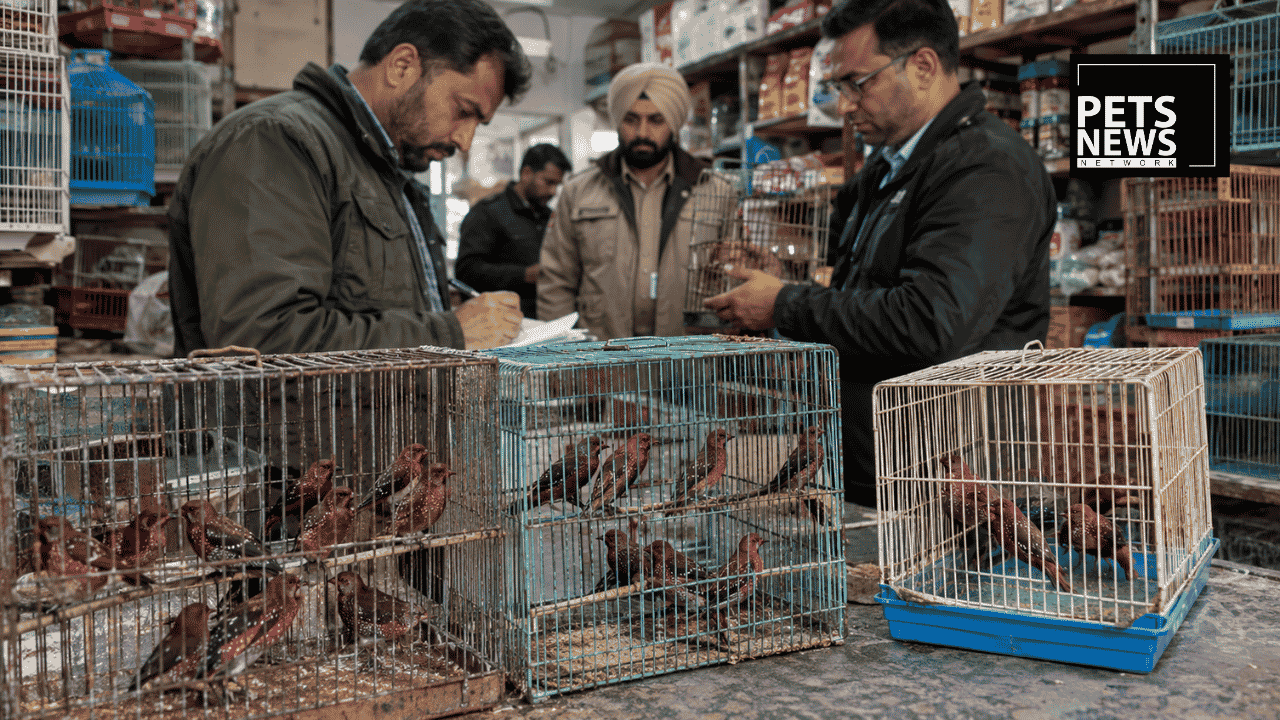

The birds are the size of a sparrow and sell for a few hundred rupees. Keeping one in a cage is a criminal offence — and most buyers have no idea.
What happened in Jagraon
A team from the forest and wildlife department seized at least 38 red munias from Royal Pet Shop in Jagraon, in Punjab’s Ludhiana district, on Thursday. The raid was carried out with the help of a local environmentalist, and the shop owner has been booked.
Red munias are a protected species under the Wildlife (Protection) Act, 1972. Their commercial sale and possession are prohibited, and Hindustan Times, which first reported the seizure, said the birds fall under Schedule II of the Act.
Being “booked” means an offence has been registered. It is not a conviction, and the case will now go through investigation and prosecution.
What a red munia actually is
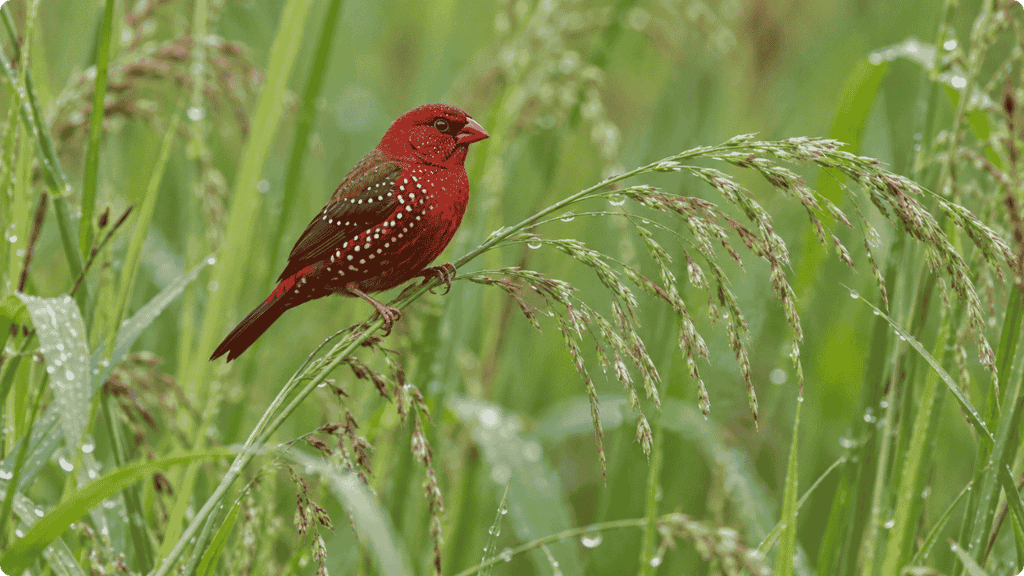
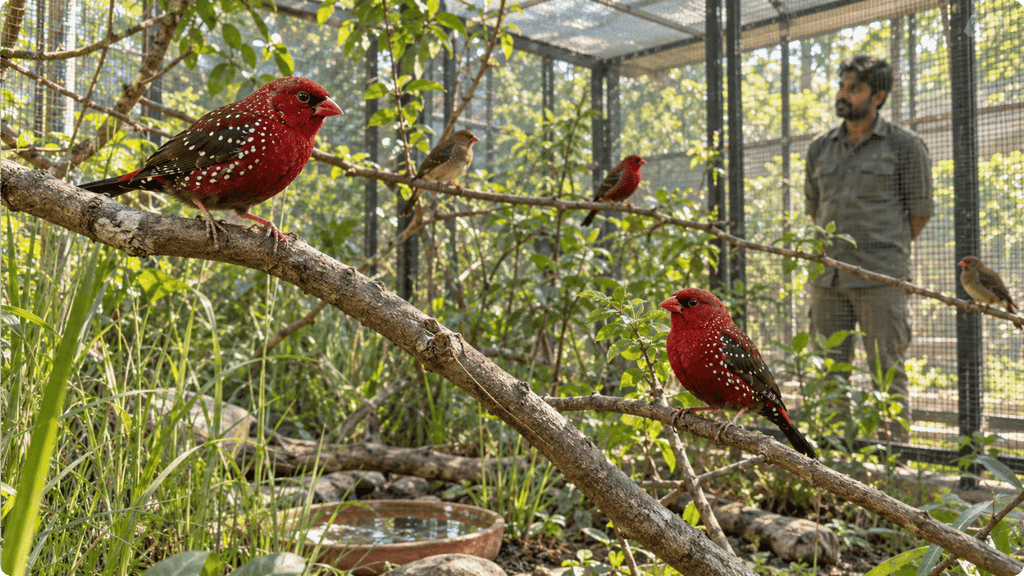
The red munia (Amandava amandava), also called the red avadavat or strawberry finch, is a sparrow-sized bird found across the open fields and grasslands of tropical Asia, including much of India. It breeds during the monsoon.
In the breeding season the male turns a deep crimson flecked with white spots, which is precisely the problem. That plumage has made the species one of the most heavily trapped cage birds on the subcontinent for centuries.
The connection is embedded in its own name. “Avadavat” is a corruption of Ahmedabad, the Gujarati city from which these birds were exported into the international pet trade in large numbers in earlier centuries. The scientific name amandava comes from the same root.
Globally the species is still classified as Least Concern, so this is not a case of a bird on the edge of extinction. It is a case of a common native bird being systematically removed from the wild in numbers large enough to matter, and of a legal protection that almost nobody enforces or obeys.
The law, in plain terms
Two separate laws apply here, and most coverage mentions only the first.
The Wildlife (Protection) Act, 1972. Native Indian birds listed in the Act’s schedules cannot be hunted, captured, kept or traded. Offences in pet shop cases are typically registered under Sections 39(3), 50 and 51. In a comparable Punjab case, forest officials raided an aviary in Rajpura, Patiala district, seized an Alexandrine parakeet and a rose-ringed parakeet, and booked the shop owner under exactly those sections.
The Act was amended in 2022, which restructured its schedules. Native species in the protected schedules cannot be hunted, captured or bred except in narrow circumstances, such as when a wildlife warden deems an animal a danger to human life or injured beyond recovery.
The Prevention of Cruelty to Animals Act, 1960. This is the one that gets forgotten. It is illegal to confine any animal in a cage that does not give it reasonable opportunity for movement — and for a bird, meaningful movement means flight. A finch in a small cage breaches this regardless of which species it is.
So a shop selling caged native birds is potentially committing two distinct offences, not one.
This is not an isolated shop
The Jagraon seizure fits a pattern documented across the country.
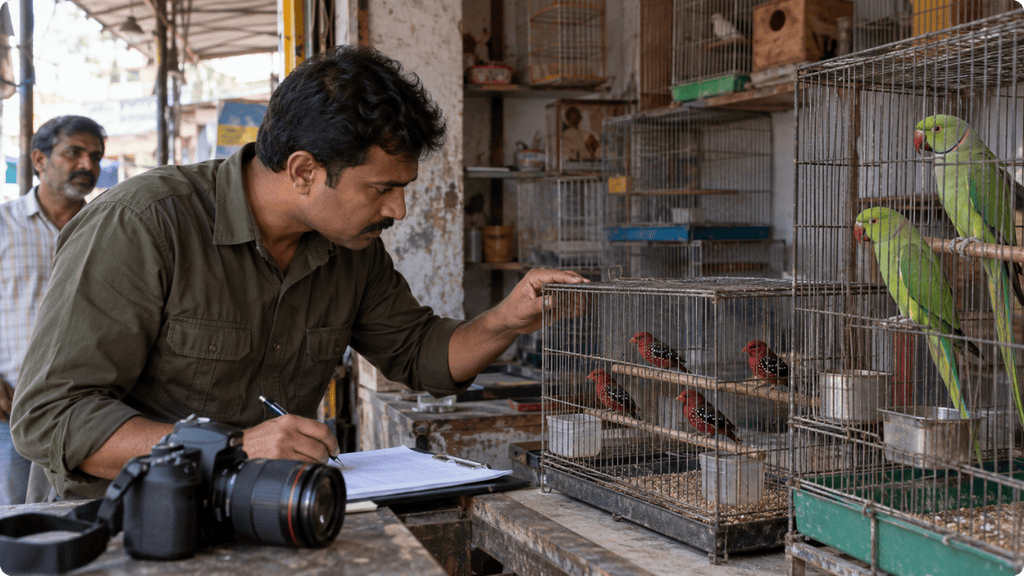
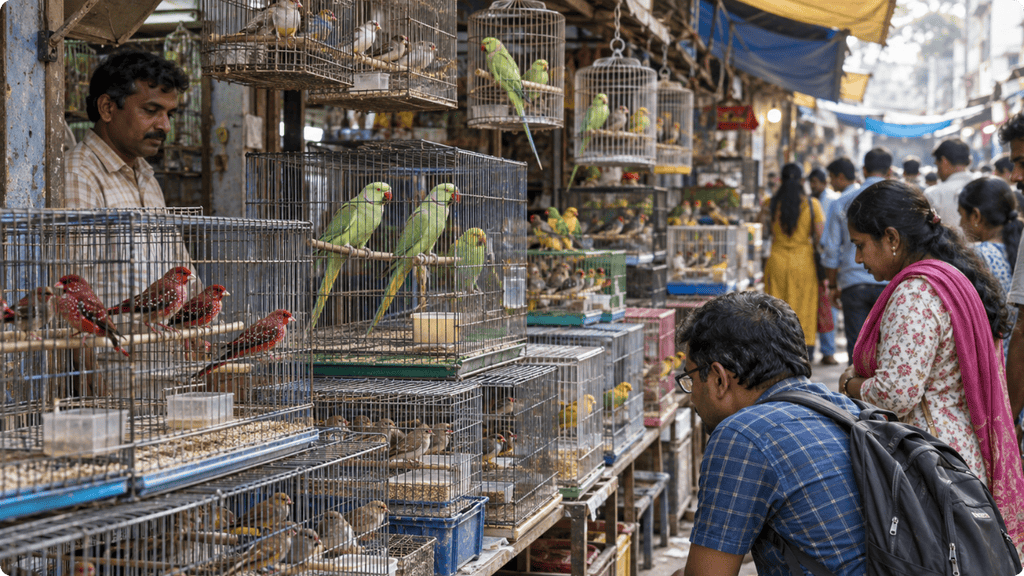
An investigation by IndiaSpend into bird markets in Patna, Lucknow and Delhi found native species openly on sale, including red-breasted parakeets, plum-headed parakeets, rose-ringed parakeets, Himalayan parakeets, munias of several kinds, Himalayan mynahs, weavers and bulbuls. A single 2023 raid at Lucknow’s Nakkhas market resulted in the seizure of more than 1,200 parrots, munias and foreign birds.
Similar actions have followed across states. Forest officials in Haridwar rescued 34 rose-ringed and Alexandrine parrots from meat shops in Roorkee and arrested two men. In Jharkhand, 30 parakeets were rescued from an illegal footpath pet stall after a complaint. In Bengaluru, police seized 95 munias that had been dipped in textile dye to disguise them as different, legal-looking species.
Experts quoted in the IndiaSpend investigation make the same point repeatedly: India’s wildlife laws are adequate on paper and poorly implemented in practice, which is why the markets keep running.
The part nobody tells the buyer
Here is what makes this trade different from most wildlife crime. The buyer is usually not a criminal. The buyer is usually a family that wanted a pretty bird.
In one Bengaluru case involving smuggled Alexandrine and rose-ringed parakeets, police recorded that the accused were first-time offenders who were unaware the birds were protected. That is almost certainly true of the majority of people who buy a parakeet or a munia from a roadside shop in India.
The shop does not tell them. There is no label, no warning, no licence check. The bird sits in a cage next to legal exotic species, priced modestly, and looks like an ordinary purchase.
So which birds can you legally keep?
The broad rule is simple: native Indian wild birds cannot be kept as pets. Non-native domesticated species generally can.
Not legal to buy, sell or keep (this list is indicative, not exhaustive):
- Red munia and other Indian munias
- Rose-ringed, Alexandrine, plum-headed and other Indian parakeets — every parrot native to India
- Mynahs, weavers, bulbuls and other native songbirds
- Any Indian bird trapped from the wild, whatever the seller calls it
Generally legal, being non-native domesticated cage birds bred in captivity, are species such as budgerigars, cockatiels, lovebirds and zebra finches. Note that exotic species have their own separate rules around import and declaration, so buying an unusual imported bird is not automatically straightforward either.
One warning from the Bengaluru dye case: sellers actively disguise protected birds to look like legal ones. If a bird’s colouring looks unnaturally vivid or uneven, or the seller cannot say where it was bred, walk away.
How to report a shop
If you see native birds for sale:
- Photograph the birds and the shop, with the date and location if your phone records it.
- Contact your district forest department or the divisional forest officer. Wildlife offences are a forest department matter, and they can register cases directly.
- Involve an animal welfare organisation. In the Jagraon case a local environmentalist assisted the raid. In several documented cases, action followed a formal complaint from a welfare group rather than a lone citizen.
- Do not buy the bird to “rescue” it. Paying for it funds the next trapping run. Report it instead.
What happens to the birds now
Seized birds are typically sent for a health check and treatment, then held for rehabilitation before release back into the wild once they recover. That process is not always simple. Birds trapped young, kept in cramped cages and poorly fed can arrive in bad condition, and some do not survive.
The outcome for the Jagraon birds has not yet been reported.
Why a small seizure matters
Thirty-eight birds from one shop in one Punjab town is not, by itself, a large enforcement action. Set against a single Lucknow raid that yielded more than a thousand birds, it looks minor.
What makes it worth reporting is that it happened at all. Most pet shops selling native birds in India are never raided, because almost nobody complains — and almost nobody complains because almost nobody knows it is a crime.
The Jagraon case turned on one local environmentalist who recognised what was in the cages and told the forest department. That is the entire mechanism. Until buyers learn to recognise a red munia for what it is, that mechanism is the only thing standing between a wild population and a display cage.
Source: This report is based on reporting by Hindustan Times, “Ludhiana: 38 protected birds rescued from Jagraon pet shop, owner booked,” 25 September 2026. Legal and species background drawn from the Wildlife (Protection) Act, 1972, the Prevention of Cruelty to Animals Act, 1960, and published reporting on India’s bird trade.
Pets News Network is India’s first dedicated media platform for the pet and animal industry. For breaking global pet news, brand coverage, and advertising enquiries, contact: info@petsnewsnetwork.com