
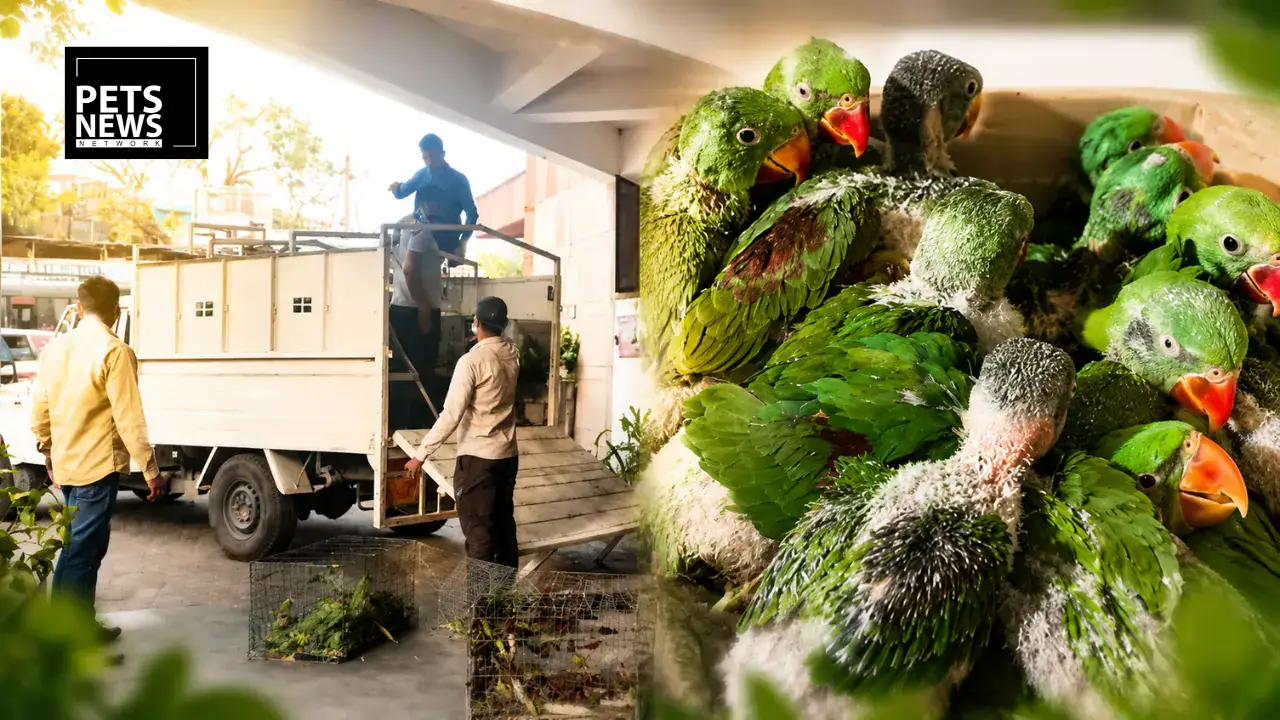

One of Old Delhi’s most notorious wildlife trade hotspots has once again come under the scanner, this time in a raid that recovered hundreds of protected birds crammed into conditions authorities describe as overcrowded and unhygienic.
As many as 863 birds and animals were rescued from five pet shops in Kabootar Market near Delhi’s Jama Masjid, including 431 belonging to protected or scheduled species. The joint operation was carried out by Central District Police, People For Animals (PFA), World Wide Animal, and officials from Delhi’s Forest and Wildlife Department, following a tip-off PFA received on August 9 about the alleged illegal sale, possession, and confinement of protected birds and animals in the market.
What Was Found Inside the Shops
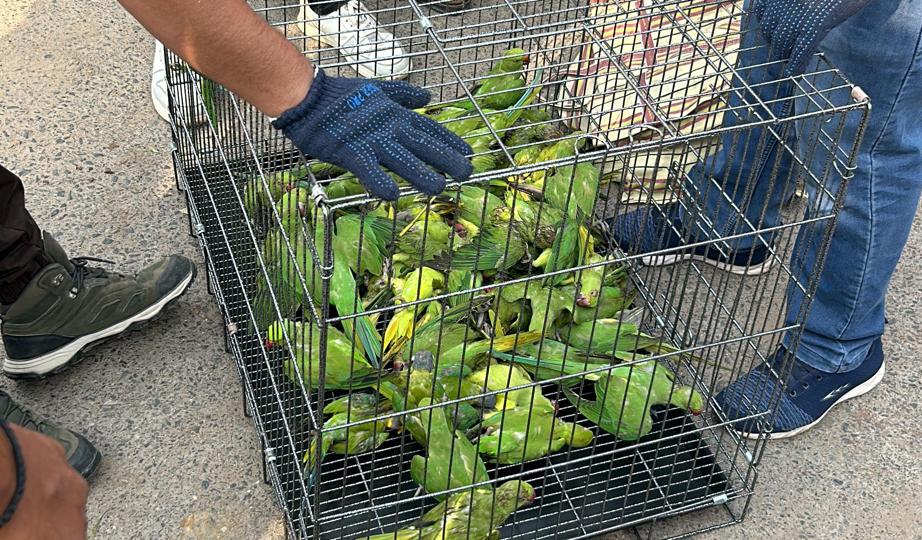
Acting swiftly on the information, the joint team systematically inspected all five shops in the market. What they found matched the concerns raised in the original complaint: birds and animals kept in overcrowded, unhygienic conditions, far below the standards required under India’s pet shop regulations.
Among the protected species recovered were 183 Ring-necked Parakeets, 72 Plum-headed Parakeets, 63 Alexandrine Parakeets, and 113 Muniya birds — all species that carry legal protection under the Wildlife (Protection) Act, 1972, making their sale, possession, and trade a criminal offence.
Beyond the protected birds, another 432 animals and birds were rescued, spanning Budgerigars, Cockatiels, Lovebirds, Guinea Pigs, Grey Squirrels, White Mice, Rabbits, and various non-protected parakeets and other common pet birds. “Apart from the 431 protected or scheduled birds, 432 other birds and animals were rescued,” DCP Central Rohit Rajbir Singh confirmed.
A Case Now Moving Through the Legal System
Based on the recoveries and the original complaint, an FIR was registered at Jama Masjid Police Station under Sections 9, 39, 44, 49, 50, and 51 of the Wildlife (Protection) Act, 1972, Section 11 of the Prevention of Cruelty to Animals Act, 1960, and Sections 325 and 3(5) of the Bharatiya Nyaya Sanhita, 2023 a combination of charges that reflects both the wildlife trafficking and animal cruelty dimensions of the case.
Five residents of Kabootar Market were identified in connection with the case and bound down for questioning about the source, procurement, transportation, and sale of the recovered birds and animals. Investigators are now working to trace the wider supply chain behind the operation, including possible suppliers, transporters, distributors, and other establishments allegedly linked to the illegal wildlife trade.
A Market With a Long, Troubling History
This isn’t Kabootar Market’s first brush with law enforcement. The market, located a short distance from Jama Masjid, has faced repeated raids over the years, each uncovering similarly large numbers of protected birds kept in cramped, filthy conditions. Previous operations at the same location have recovered everything from hundreds to well over a thousand birds at a time, underscoring just how persistent and deeply entrenched the illegal trade has remained despite ongoing enforcement efforts.
Species like the Alexandrine Parakeet are protected under Schedule II of the Wildlife (Protection) Act, meaning buying, selling, or possessing them can carry a fine of up to ₹1 lakh, imprisonment of up to three years, or both. Several of the birds involved in trades like this one also fall under international protection through CITES, the Convention on International Trade in Endangered Species of Wild Fauna and Flora, given their status as non-native or endangered species.
Why Raids Like This Matter
Beyond the immediate rescue, operations like this one serve two critical purposes: removing animals from conditions that pose genuine welfare and health risks, and disrupting the supply chains that keep illegal wildlife markets running. Investigators tracing suppliers and transporters, rather than stopping at the point of sale, is exactly the kind of upstream enforcement that animal welfare advocates have long argued is necessary to make a lasting dent in trades like this.
What Happens to the Rescued Animals
Rescued birds from operations like this one are typically sent for veterinary health checks, treatment, and temporary rehabilitation before being assessed for release back into the wild, where their condition allows for it. Given the scale of this rescue, and the number of protected species involved, the coming weeks are likely to involve extensive veterinary care and careful assessment of each animal’s health and suitability for release.
For a market that has weathered repeated crackdowns over the years without fully shutting down its illegal trade, this latest raid adds fresh pressure both legal and public on a supply chain that continues to put hundreds of protected birds at risk each time it operates undetected.
Pets News Network is India’s first dedicated media platform for the pet and animal industry. For breaking global pet news, brand coverage, and advertising enquiries, contact: ankur@petsnewsnetwork.com