
He spent two years at police academy and failed. His trainer says he was simply too nice for the job. This month, he is on cinema screens worldwide, and reviewers are only half-joking about whether a dog can win an Oscar.
A film about a man, a dog and some mountains
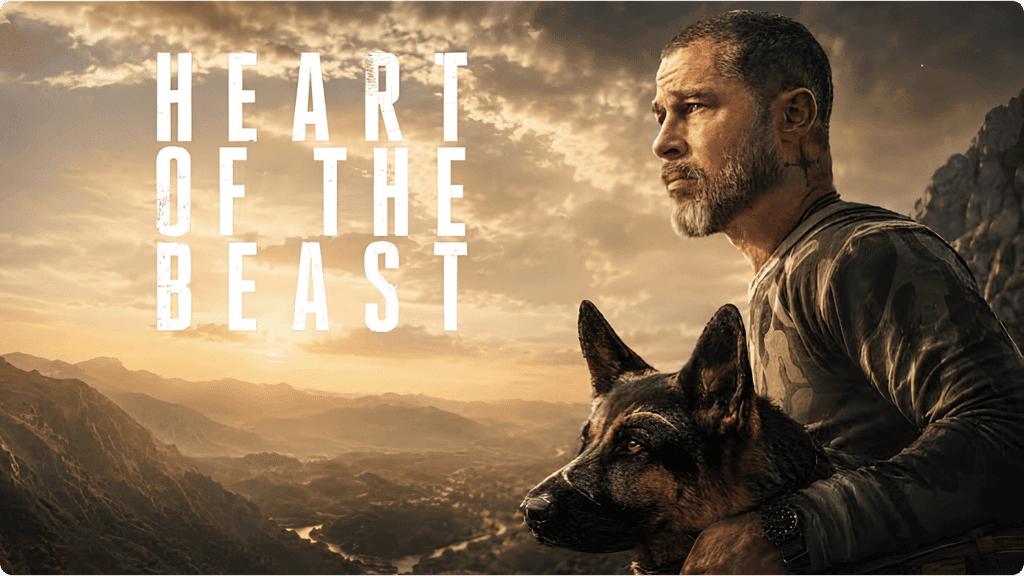
Heart of the Beast, released by Paramount Pictures on 25 September, is a survival thriller directed by David Ayer from a first screenplay by Cameron Alexander. Brad Pitt plays James Belmont, a retired US Army Special Forces veteran and former military service-dog trainer, stranded in the Alaskan wilderness after his seaplane goes down.
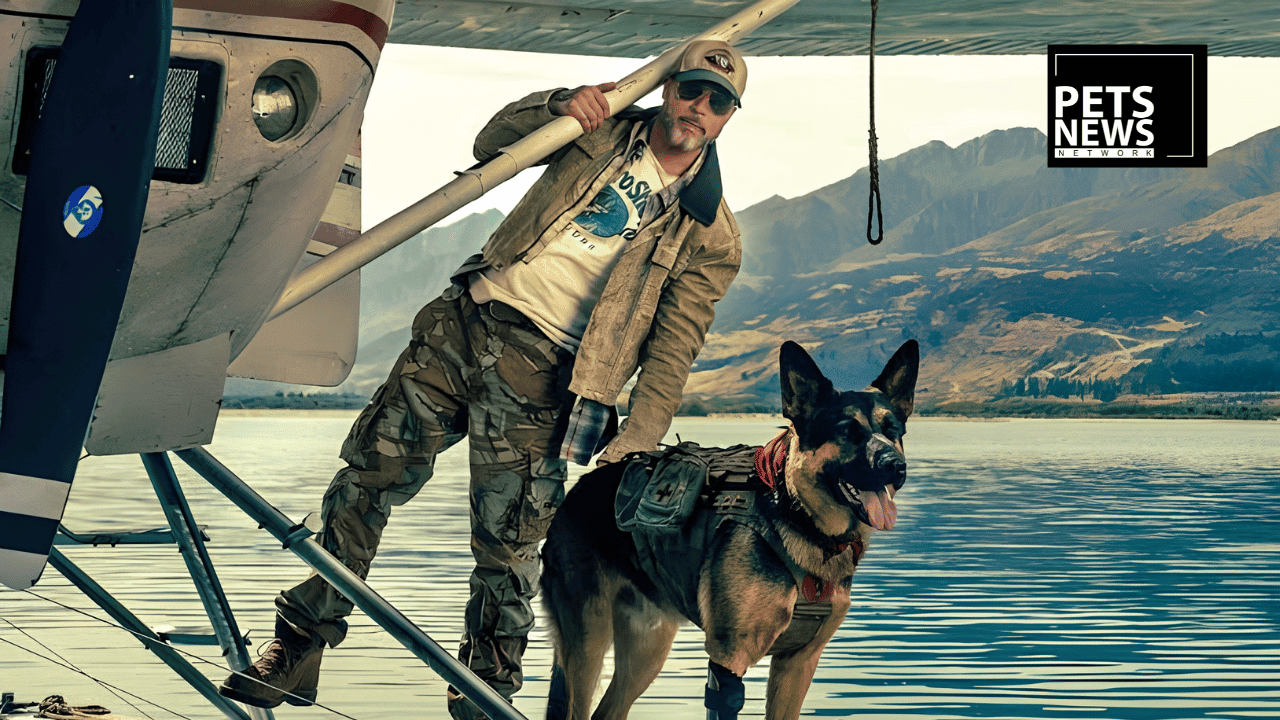
His only companion is Odin, a German Shepherd who served with him overseas and now lives with him in retirement. In the film, Odin carries the marks of that service, a prosthetic front leg and titanium replacement teeth, both effects work on a healthy animal rather than anything real.
Ayer, who previously directed Pitt in Fury, summed the project up bluntly in an interview with The Credits, the Motion Picture Association’s publication.
“If you look at the film, it’s Brad and a dog and some mountains,” he said.
That description is close to literal. The film is largely dialogue-free, and for long stretches the emotional weight rests entirely on the dog. Reviewers have noticed. Deadline called Odin’s work one of the best performances by an actor this year, and asked, only partly in jest, whether a dog has ever won an Oscar.
Which raises the question PNN readers will actually care about. Who is the dog?
Auditions across New Zealand
The animal work was led by Andrew Simpson, a trainer Ayer described as “absolutely one of the premier dog trainers in the world.” Simpson has worked on over 150 films across a career beginning in 1988, and is perhaps best known for training wolves for feature work.
Rather than casting from established animal-actor rosters, Simpson went to New Zealand and held auditions across the country. The film was shot in Otago and Fiordland, whose landscapes stand in for the Alaskan wilderness, so casting locally made practical sense.
“Andrew came across Uber, who was living with his family,” Ayer said.
Simpson’s reaction, as he later told Radio New Zealand, was immediate. A very special dog, he said, he knew as soon as he saw him. What sold the casting was the face. Close-up emotional beats in the finished film, a tilt of the head or a lick of the chops, came from the dog rather than from editing or effects.
The part of the story that matters most
Uber did not come from a film background. He came from a failed one.
He started out on a police dog track and spent two years in police academy before washing out.
Simpson’s explanation, given to RNZ, is the line worth remembering: “I think he was just too nice a dog to be a police dog.”
Rather than the end of his working life, that became a redirection. Uber went on to work in mountain rescue in New Zealand, a role that rewards a very different temperament from police patrol work. Search and rescue dogs need drive, stamina and focus, but also steadiness around distressed strangers and the ability to work in chaotic conditions without aggression.
Those are precisely the qualities that made him castable. A film set is loud, crowded, unpredictable and full of equipment and people the dog has never met. A dog that stays level in that environment while taking direction is rare, and it has almost nothing to do with the traits police work selects for.
For anyone who has adopted a working-breed dog that “failed” at its intended job, this is a useful corrective. A dog that doesn’t suit one role is not a dog that has failed. It is a dog that has not yet been matched to the right one.
One character, four dogs
Odin is not played by a single animal. Uber shared the role with three of his own sons, named in production credits as Seeka, Ryker and Hondo.
This is standard practice in film work with animals, and it reflects something important about how these performances are built. Different dogs are trained and conditioned for different demands.
“Another dog was great for swimming, and then for running,” Ayer said of the casting approach.
Splitting the role protects the animals. No single dog is asked to swim, run, perform close-up emotional work and endure long shooting days in cold mountain terrain. Each does what it is physically and temperamentally best suited to, and the edit assembles a single character.
The support structure behind this was substantial. Alongside Simpson, the production credited dog trainer Esther Murphy, whose past work includes John Wick: Chapter 3 – Parabellum, and military advisor Shaun DeZern to keep the service-dog behaviour authentic. Ayer described the dog infrastructure on the production as impressive.
There were unusual complications too. Simpson told RNZ that one ongoing challenge was keeping the dogs separated from the native wildlife in the areas where they were filming, a New Zealand-specific concern, given how vulnerable the country’s ground-nesting birds are to dogs.
Building the bond on camera
The relationship between Belmont and Odin is what the film rests on, and reviewers have consistently singled out its believability.
That did not happen by accident. Pitt reportedly carried dog biscuits at all times during production, and worked closely with Uber and Simpson throughout the shoot to establish the bond that reads on screen.
It is a simple technique and a revealing one. The actor becomes the source of good things in the dog’s day, consistently, over weeks. What audiences read as devotion between two characters is, underneath, a relationship built through exactly the kind of positive association any dog trainer would recognise.
Why this is worth noticing
Studios have increasingly turned to digital animals, and there are legitimate reasons for that, welfare, safety, and the ability to stage things no real animal should be asked to do.
Heart of the Beast went the other way. It built a film around a real dog and a team of trainers, and the response suggests audiences can tell the difference. The reactions to Odin’s performance have been about the specific, unrepeatable quality of a real animal’s attention, the way a dog actually looks at a person it trusts.
For readers in India, where German Shepherds are among the most popular large breeds and where working-dog culture is growing in police, military and disaster response, there is a practical takeaway in Uber’s story.
A dog’s aptitude is not fixed by its breed or its first assignment. A German Shepherd that is too gentle for bite work may be exactly right for search and rescue. One that is too excitable for detection work may excel at agility or as a family companion with a job to do. The mistake is assuming that a dog which does not fit one mould has no other use.
Uber spent two years failing at one job, found another, and is now on screens worldwide.
Pets News Network is India’s first dedicated media platform for the pet and animal industry. For breaking global pet news, brand coverage, and advertising enquiries, contact: info@petsnewsnetwork.com