
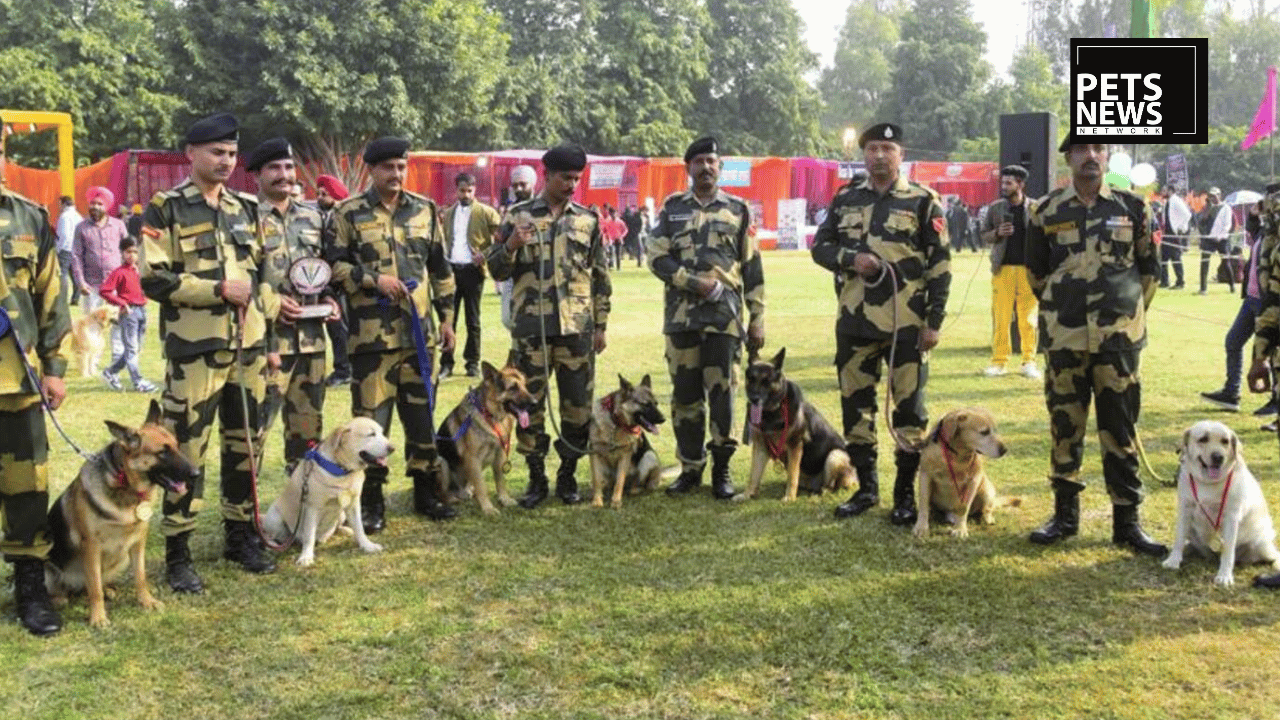

For decades, the image of an Indian police or paramilitary dog was almost always the same: a German Shepherd, a Labrador Retriever, a Belgian Malinois, breeds imported and bred from foreign bloodlines, deployed across India’s borders, airports, and high-security installations. That image is now changing, deliberately and systematically, as the Ministry of Home Affairs and India’s Central Armed Police Forces (CAPFs) work to replace these imported breeds with dogs bred right here in India.
The shift isn’t cosmetic or symbolic alone. It’s built on a straightforward operational argument: native Indian breeds are naturally better suited to the country’s own climate, terrain, and disease environment than dogs originally bred for entirely different parts of the world.
The Breeds Leading the Charge
Two sighthounds have emerged as the standout performers in this transition so far. The Rampur Hound, native to the former princely state of Rampur in Uttar Pradesh, was historically bred by Nawabs for hunting jackals, prized for its speed, stamina, and fearlessness. The Mudhol Hound, native to the Deccan Plateau region of Karnataka, carries its own storied history, traditionally used for guarding and hunting, with local accounts linking similar hounds to Maratha forces valued for their alertness and loyalty. The breed was later revived and refined by Raja Malojirao Ghorpade of Mudhol.
Beyond these two sighthounds, a second category of native breeds is being tested specifically for high-altitude and extreme terrain deployment: the Gaddi, Bakharwal, Himachali Shepherd, and the globally recognised Tibetan Mastiff. These Himalayan mountain canines have spent generations working in some of the most punishing terrain and climate conditions on Earth, exactly the kind of environment India’s northern and high-altitude border postings demand.
What These Dogs Are Actually Trained to Do
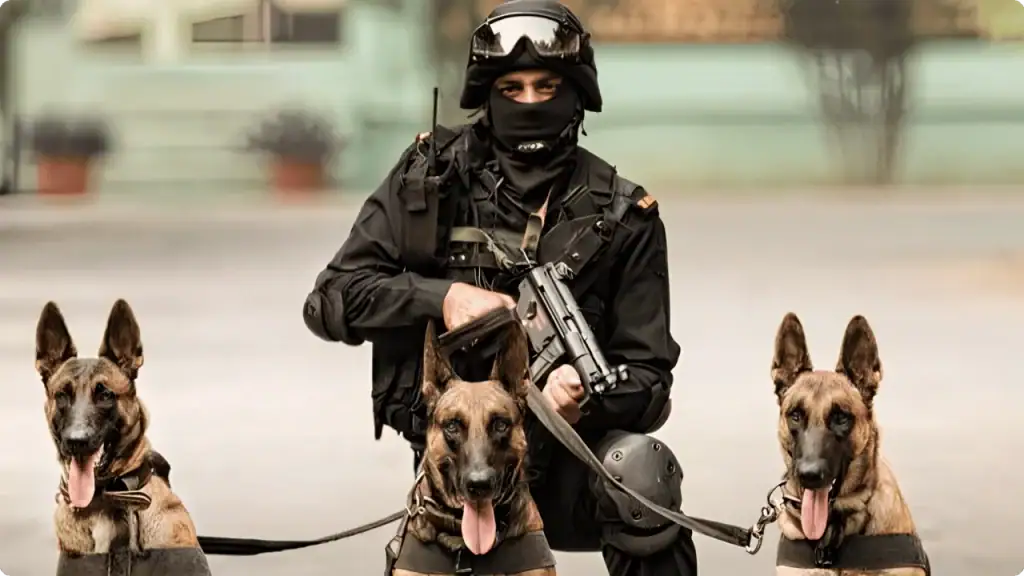
Once deployed, these indigenous breeds take on the same demanding operational responsibilities as their imported predecessors. Police and paramilitary service dogs in India are trained to detect explosives, including IEDs and landmines, alongside narcotics and counterfeit currency. Beyond detection work, dogs are used in combat support roles, border patrolling, and search operations aimed at locating suspects or terrorists in the field.
This work is carried out across several of India’s major central forces: the Border Security Force (BSF), Central Reserve Police Force (CRPF), Central Industrial Security Force (CISF), Indo-Tibetan Border Police (ITBP), and Sashastra Seema Bal (SSB). Each of these forces maintains its own K9 units, all operating under a shared institutional framework designed to standardise training and performance across the country’s security apparatus.
The Scale of India’s K9 Operation
The numbers behind India’s police dog programme are substantial. The CAPFs collectively maintain the largest police dog population in the country, with nearly 4,000 active service dogs, and the forces bring in approximately 300 new puppies every year to sustain and grow that operational strength.
Among individual forces, the CRPF fields the largest canine contingent, with roughly 1,500 dogs, followed by the CISF with around 700. The counter-terrorism unit National Security Guard (NSG) maintains a smaller, specialised force of approximately 100 dogs. This entire ecosystem falls under the Police Service K9 (PSK) framework, established by the Home Ministry in 2019 as part of a broader police modernisation programme aimed at standardising the breeding, training, and selection of service dogs nationwide.
Where the Push for Indigenous Breeds Actually Began
This shift traces back to a specific moment: Prime Minister Narendra Modi’s visit to the BSF’s National Training Centre for Dogs (NTCD) at Tekanpur, Madhya Pradesh, in January 2018. During that visit, Modi emphasised the need to promote Indian dog breeds within the country’s security forces, a call that translated into focused, sustained efforts to identify, train, and operationally deploy native breeds over the years that followed.
The trial process has moved through clear stages since then. By 2022, the Mudhol Hound trial had already been concluded successfully by the SSB and ITBP, while trials for the Rampur Hound were underway with the BSF, and the Combai, a breed native to Tamil Nadu, was being tested by the CRPF. By 2023, additional trials were underway for the Himachali Shepherd, Gaddi, Bakharwal, and Tibetan Mastiff across multiple force training centres.
A Breakthrough Moment: Riya’s Historic Win
Perhaps the clearest sign that this initiative has moved from experimental trial to proven operational success came in 2024, when Riya, a Mudhol Hound serving with the BSF, made history at the All India Police Duty Meet. Riya became the first Indian breed to win both Best in Tracker Trade and Best Dog of the Meet, a genuinely significant achievement given she was competing against dogs from breeds with far longer histories of formal police service training worldwide.
Modi himself highlighted Riya’s achievement during the 127th episode of his Mann Ki Baat radio programme, framing the win as evidence of India’s growing confidence in its own native breeds. By October 2025, BSF Academy officials confirmed that 150 Indian breed dogs had already been deployed operationally along the nation’s borders, with BSF Director General Daljit Singh Chawdhary describing these indigenous dogs as having made “significant contributions as force multipliers during BSF operations.”
Why Native Breeds Actually Perform Better in Indian Conditions
The operational case for indigenous breeds rests on a few consistent, well-documented advantages. BSF officials have specifically pointed to these breeds’ agility, endurance, adaptability, and resilience, qualities shaped by generations of natural selection within India’s own diverse geo-climatic conditions, rather than imported from breeds developed for entirely different climates and terrains abroad.
Just as importantly, these breeds bring natural disease resistance built up over centuries of exposure to local pathogens, alongside comparatively low maintenance requirements, both factors that translate directly into more resilient, lower-cost operational deployment in demanding field environments, whether that’s the extreme heat of desert border postings or the brutal cold of high-altitude Himalayan deployments.
Part of a Larger National Push
This transition fits within India’s broader Aatmanirbhar Bharat (self-reliant India) initiative, a national push toward reducing dependence on imported goods and technology across multiple sectors. Applying that same philosophy to police and paramilitary K9 units carries genuine strategic logic: breeding and training capacity built entirely within India reduces reliance on foreign breeding programmes and import supply chains, while simultaneously supporting the conservation and formal recognition of native Indian dog breeds that had, for decades, received far less institutional attention than internationally popular breeds.
What Comes Next
With trials for several Himalayan breeds still ongoing and indigenous dogs like Riya already proving themselves capable of matching, and in some cases beating, internationally trained competition, India’s K9 transition looks set to continue expanding rather than slowing down. For a security apparatus managing nearly 4,000 active service dogs across some of the country’s most demanding operational environments, from scorching border deserts to freezing Himalayan outposts, breeds literally born and refined within those exact conditions may prove to be not just a matter of national pride, but a genuine operational upgrade.
Pets News Network is India’s first dedicated media platform for the pet and animal industry. For breaking global pet news, brand coverage, and advertising enquiries,contact: info@petsnewsnetwork.com