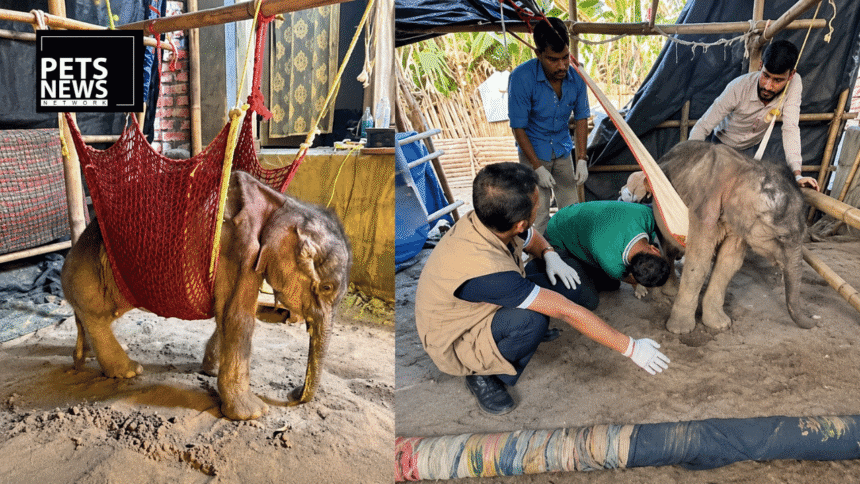
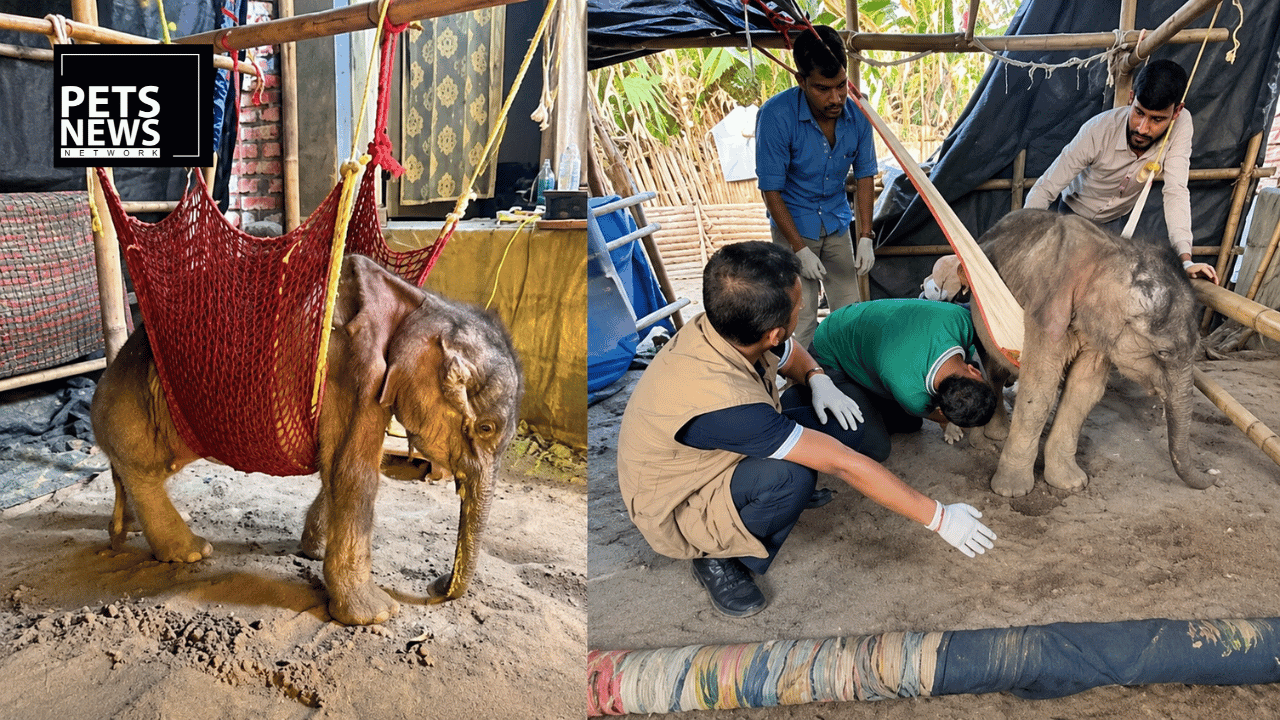

The Assam elephant calf Raja, born seven weeks ago and carrying a fractured leg, is due to be flown across the country for treatment. The calf is to travel from Guwahati to Jamnagar in Gujarat on a chartered aircraft, a reported journey of more than 2,500 kilometres, to reach the Vantara rescue and rehabilitation centre. However, much about the case has been reported without named sources, so this article separates what is established from what is not.
What has been reported
| Detail | What is reported |
|---|---|
| The calf | Raja, described as a male elephant calf |
| Born | 2 October 2026, in the Rupahi Forest Range at Gogamukh, Assam |
| His mother | Makhoni, a domesticated elephant in private ownership in Lakhimpur district |
| His injury | A fractured leg |
| The flight | Planned for 20 November 2026, from Guwahati to Jamnagar, Gujarat |
| Distance and time | More than 2,500 km; about five hours in the air |
| On board | A dedicated veterinary team |
| Destination | Vantara, the wildlife rescue and rehabilitation centre founded by Anant Ambani |
By his reported date of birth, the calf is seven weeks old.
At Vantara, he is expected to receive orthopaedic treatment for the fracture, nutritional support, rehabilitation and long-term care. The flight has been described as the third emergency airlift of this kind that Ambani has arranged. Earlier this month, an 18-month-old elephant calf was flown to the same centre from Kerala.
How it came to this
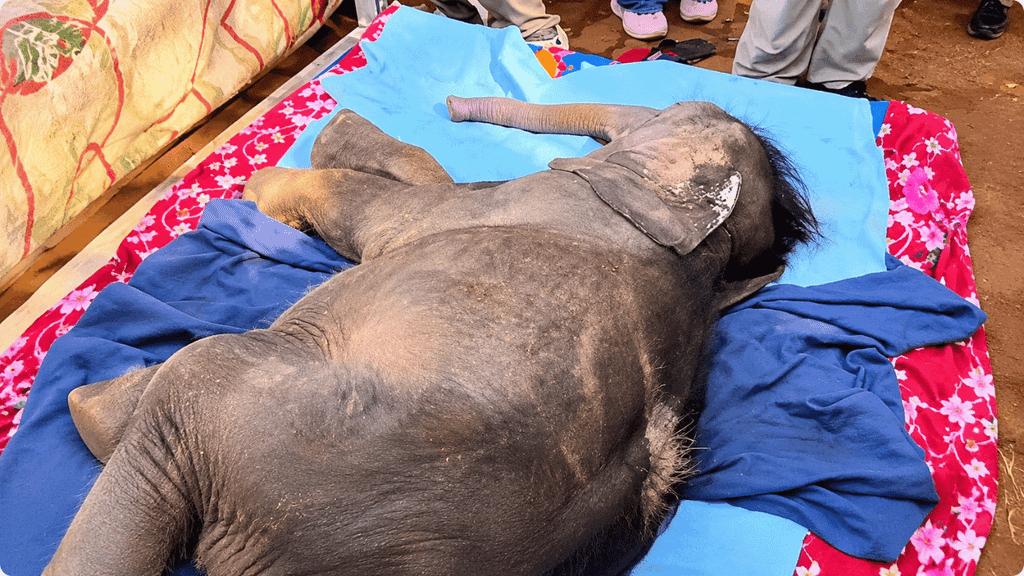
By the available account, Raja’s difficulties began almost at birth. He was reportedly deprived of his mother’s milk and care soon after he was born, and his mother is alleged to have kicked him, breaking one leg.
He was then looked after for several weeks in Assam. He was reportedly treated under the supervision of an experienced veterinarian associated with Vantara, at the veterinarian’s residence, while specialised care was arranged.
Appeals for more advanced help reportedly circulated on social media, some with a photograph of the calf held upright in a makeshift sling. The airlift plan followed.
Why a seven-week-old calf is so fragile
The fracture is the visible problem. For a calf this young, it may not be the most serious one.
Milk is everything. An elephant calf lives on its mother’s milk alone for the first months and goes on nursing for two years or more. A calf separated from its mother in its first weeks has to be fed by hand, many times through the day and night, on a substitute formula. Getting that formula right is difficult, and digestive upsets are a leading danger for hand-reared calves.
A calf must stand to live. Elephants are not built to lie down for long. A calf that cannot bear weight on a leg has trouble feeding, moving and keeping its circulation and digestion working. This is why injured calves are often supported in a sling: it keeps them upright while taking load off the damaged limb.
Young bones heal well, under the right conditions. Fractures in very young animals can mend faster than in adults. However, the limb has to be held still, the calf has to keep growing normally around it, and the other three legs have to cope with the extra load in the meantime.
Company matters. Elephant calves are intensely social and depend on constant contact. A calf raised without its mother needs keepers with it around the clock, as much for reassurance as for feeding.
In short, a calf like Raja needs orthopaedic care, round-the-clock feeding and constant company at the same time, for months.

What it takes to fly an elephant calf
Moving any elephant by air is unusual. A calf of a few weeks is small enough for it to be practical, but the journey still asks a lot of the animal.
- The road leg comes first. Raja was to be taken to Guwahati before the flight.
- A padded crate or pen is typically used so that the calf can stand supported and cannot fall if the aircraft moves suddenly.
- A veterinary team travels alongside, watching breathing, temperature and stress, and feeding on schedule.
- Noise, vibration and changes in cabin pressure are all unfamiliar to the animal, which is why such journeys are kept as short and direct as possible.
- Feeding cannot stop. A calf of this age needs milk every few hours, in the air as on the ground.
The case for flying is time. A road journey of this length would take days. For an injured animal that needs feeding every few hours, five hours in the air is the gentler option.
Treat on the spot, or move the animal?
Every case like this turns on one judgement: is the journey a smaller risk than staying put?
For a large elephant, the answer is often to stay. Earlier this year a 16-year-old male in upper Assam whose tusks had been cut by poachers was treated where he was, with a dental team travelling to him.
A calf of a few weeks changes the calculation. He is small enough to lift, crate and fly. What he needs, by contrast, is hard to provide in a private home for long: imaging, orthopaedic surgery if it comes to that, a supply of the right milk formula, and trained keepers working in shifts through the night.
That is the reasoning behind moving him. It does not remove the risk of the journey; it accepts that risk in exchange for facilities that were not available where he was.
What the law requires when a captive elephant is moved
Raja’s mother is reported to be a privately owned elephant, which would make him a captive-born calf, not a wild animal rescued from a forest. Two points follow.
Ownership of a captive elephant has to be documented under the Wild Life (Protection) Act, 1972, and a calf born to a captive elephant is expected to be recorded with the authorities in the same way.
Moving a captive elephant between states is regulated. Rules notified by the central government in 2024 set out when a transfer or transport is allowed and require permission from the wildlife authorities concerned. Better upkeep of the animal is among the grounds the rules provide for.
None of this is a comment on the present case, where the details have not been published. It is the framework within which any such move takes place.
Where this stands
- Raja, born on 2 October, has a fractured leg and has reportedly been without his mother’s care since soon after birth.
- He has been looked after in Assam for about seven weeks.
- He is due to be flown from Guwahati to Jamnagar on 20 November for specialist treatment.
- How he was injured, his exact diagnosis and the approvals for his transfer have not been confirmed by any named source.
For a calf this young, the weeks ahead matter more than the flight. A fracture can be treated. Whether he feeds, grows and stays on his feet is what will decide how his story goes.
Pets News Network is India’s first dedicated media platform for the pet and animal industry. For breaking global pet news, brand coverage, and advertising enquiries, contact: info@petsnewsnetwork.com