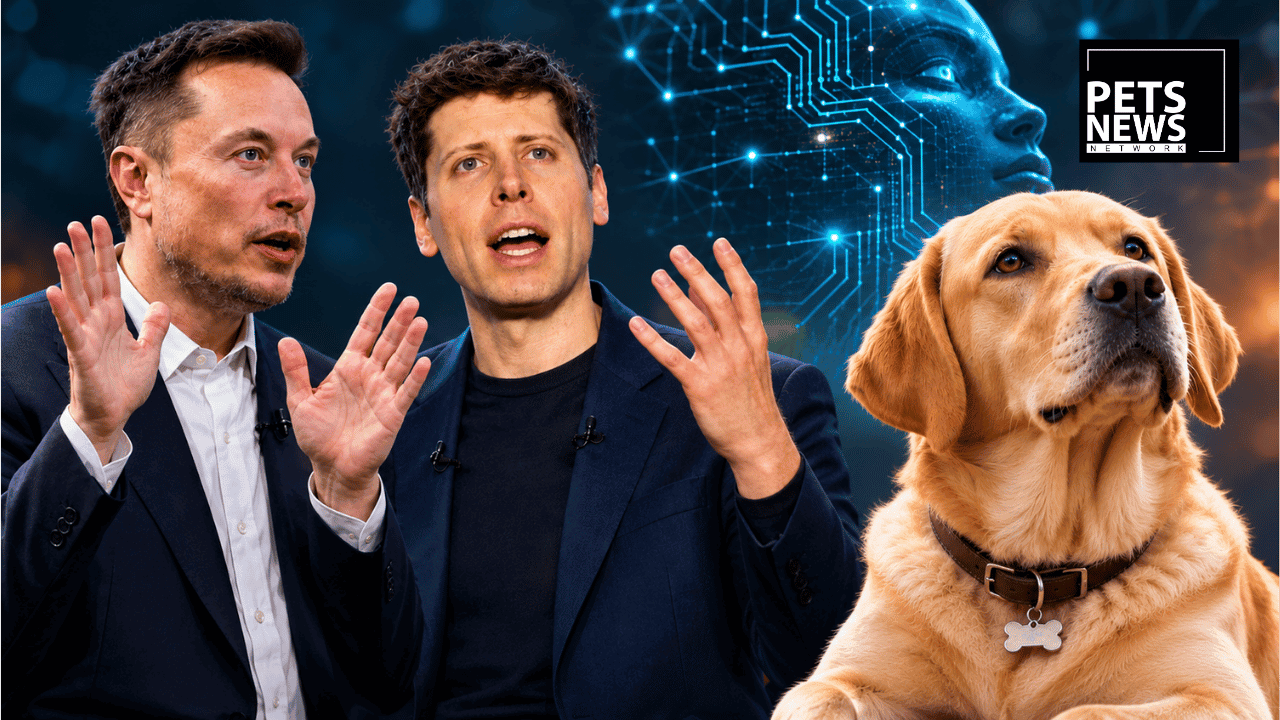

The Altman, Labrador and Musk exchange now running through the technology world began with a pet. This week the head of the company behind ChatGPT said he does not want to be a Labrador, and does not want his children to be Labradors either. He was answering an image another technology leader first used eleven years ago: that people might one day live beside far smarter machines the way a dog lives beside its owner. Here is what was said about pets, by whom, and when.
What Sam Altman said
Speaking in an onstage interview at a business summit, reported on 18 November 2026, OpenAI chief executive Sam Altman was direct:
“I don’t want to be a Labrador. I don’t want my kids to be Labradors.”
The point behind the line, as reported, was that people should have agency over the future, as they have had until now.
OpenAI president Greg Brockman was on stage with him. The two were reported to have said that people need to stay in control of the future, and to have described growing industry talk of gradually handing authority to AI as a terrifying idea.
Where the Labrador came from
The dog was not Altman’s image. It belongs to Elon Musk, and it is older than most people repeating it this week realise.
In 2015, in a conversation with the astrophysicist Neil deGrasse Tyson, Musk set out a worry about machines able to improve themselves, rapidly and around the clock across millions of computers. If superintelligence arrived, he suggested, people would not even be assured the best case: “we won’t be like a pet Labrador if we’re lucky.”
He meant it as a warning. The pet Labrador was his picture of the better outcome if things went wrong: looked after, but no longer in charge.
Then came the house cat
In 2016, Musk reached for a second animal. He said he did not like the idea of becoming a house cat, and argued that the way to avoid it was to connect human brains directly to computers.
Within two years, the same man had compared humanity’s possible future to both of the world’s most popular pets, and made clear he was not keen on either.
The July remark about happy Labradors
The remark that set up this week’s exchange came in July 2026. Asked in an interview about his old comparison, Musk reportedly laughed and said Labradors are pretty happy animals.
It was a light answer, and it changed how the image sounded. In 2015 the pet Labrador was something to be avoided. In July it sounded like something a person could live with. That shift is what Altman was pushing back against.
Who said what, and when
| When | Who | What was said about pets |
|---|---|---|
| 2015 | Elon Musk | “We won’t be like a pet Labrador if we’re lucky” |
| 2016 | Elon Musk | Said he did not like the idea of becoming a house cat |
| July 2026 | Elon Musk | Laughed and said Labradors are pretty happy animals, as reported |
| 18 November 2026 | Sam Altman | “I don’t want to be a Labrador. I don’t want my kids to be Labradors.” |
Why the pet comparison is so effective
Technical arguments about artificial intelligence are hard to follow. A Labrador is not. Almost everyone knows one, and almost everyone understands the terms of its life without being told.
A well-kept pet is safe, fed, treated when it is ill, and often adored. It also decides almost nothing. Where it lives, what and when it eats, whether it is neutered, when it goes out and who it meets are all settled by someone else.
That is why the image divides people. One reading hears “happy”. The other hears “owned”. Musk’s July answer leaned on the first, and Altman’s reply leaned on the second. Neither man is disputing what a Labrador’s life is like. They are disputing whether it would be enough for a person.

Where the two men agree
Beneath the exchange there is less distance than the headlines suggest. Musk raised the Labrador in 2015 as a danger, not a goal. Altman rejects handing control to machines. Both are reported to have backed a call made in September by Dario Amodei, the head of the AI company Anthropic, to slow the research that pushes AI systems toward improving themselves, and to use the time to work out how to keep them under human control.
Musk co-founded OpenAI and helped fund it in its early years. On the question of whether people should end up as pets, though, both have said no.
No response from Musk to Altman’s remarks had been reported at the time of writing.
What the argument gets right about pets
There is one point in all this that anyone who lives with an animal will recognise. Musk’s observation that Labradors are happy is true of many Labradors. It is not true of every one. A dog that is overfed, under-exercised and left alone all day is the same breed as the cheerful one at the park. What separates them is not the dog. It is the person responsible for it.
That is the uncomfortable accuracy of the metaphor, and probably why Altman rejected it so firmly. A pet’s wellbeing depends on the goodwill, attention and competence of whoever holds the lead. Most owners take that seriously, but the animal has no say if they do not.
For the debate about machines, that is a warning. For the dogs and cats living in people’s homes, it is simply a description of daily life, and a fair summary of what owning one means.
Where this stands
- Altman has said plainly that he does not want a future in which people live like pets.
- Musk first raised that future as a risk in 2015, and reportedly joked about it in July.
- No response from Musk had been reported at the time of writing.
- The Labrador, through no effort of its own, has become one of the most quoted animals in technology this week.
Pets News Network is India’s first dedicated media platform for the pet and animal industry. For breaking global pet news, brand coverage, and advertising enquiries, contact: info@petsnewsnetwork.com