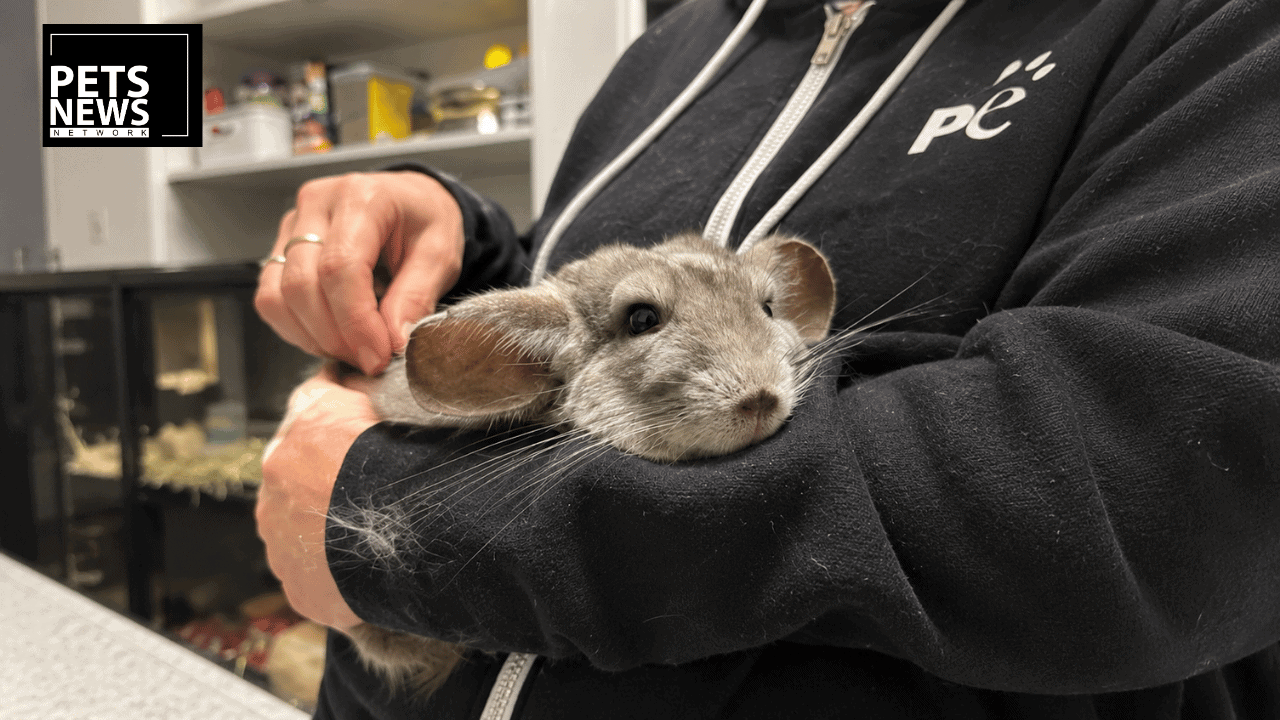

More than 1,100 chinchillas rescued in Ohio are now with animal welfare organisations after a federal settlement closed a commercial breeding business for good. The legal case took about three months. The harder part starts now, because a chinchilla can live for up to twenty years and each of these animals needs a home prepared for that.
What happened to the Ohio chinchillas?
| Detail | What has been reported |
|---|---|
| The facility | R & R Chinchilla Inc., a commercial breeder in Jenera, Hancock County, Ohio |
| Animals involved | More than 1,100 chinchillas |
| Legal outcome | A consent decree endorsed by a federal court in early November 2026 |
| Under the decree | The owner surrenders all remaining animals and permanently stops any activity regulated by the Animal Welfare Act |
| Licence | Revoked by the US Department of Agriculture |
A consent decree is a settlement approved by a court. The findings described below are allegations from the government’s complaint and inspection records, and the case did not go to trial.
How many chinchillas were rescued?
More than 1,100. The figure most often quoted is 951, but that is the number removed by Humane World for Animals alone.
| Group | Chinchillas |
|---|---|
| Humane World for Animals, from 13 October | 642 over two days |
| PETA | More than 150 |
| Humane World for Animals, 3 November | 309 |
| Total | More than 1,100 |
Roughly 800 animals left the site under a modified court order before the settlement. The remaining 300 or so followed once the consent decree was in place.

What did inspectors allege?
According to the federal government, US Department of Agriculture inspectors visited the facility 18 times from September 2022 onwards and documented 59 violations of the Animal Welfare Act over four years. The department says it issued an official warning in 2024 and took further enforcement action, including two summary suspensions, before the case reached court. The complaint describes what inspectors reported finding:
- Faeces covering the floors of hundreds of enclosures
- Ammonia levels high enough to force inspectors out of the building
- Open packets of rat poison beside enclosures
- Animals with swollen, crusted-shut eyes
- A metal collar embedded in an animal’s neck
- Dead animals
The detail that changed the case came on 5 August 2026. The complaint alleges that the owner told officials the facility held 300 to 450 animals, and that roughly 800 more were kept for years in a separate, undisclosed building. When inspectors entered it that day, they reported hundreds of animals in dire conditions.
The Justice Department asked a federal court for an emergency order on 20 August, and the court granted it the next day. PETA says it filed complaints with local and federal officials that helped bring the hidden animals to light.
| When | What |
|---|---|
| 5 August 2026 | Inspectors enter the second building |
| 20–21 August | Emergency order requested and granted |
| Mid-October | About 800 chinchillas surrendered under a modified order |
| Early November | Consent decree endorsed; remaining animals surrendered |
David M. Toepfer, the US Attorney for the Northern District of Ohio, said in a statement: “Animals cannot be abused, kept in dirty cages, and neglected so badly that they suffer or die.” Laura Koivula of Humane World for Animals, describing the scene inside, said: “It was like walking through a factory of forgotten souls.”
How does an Animal Welfare Act breeder licence work?
The Animal Welfare Act is the main US federal law covering animals bred for commercial sale, exhibition and research. Breeders who sell certain animals into the pet trade at scale need a licence from the Department of Agriculture. Holding one means accepting unannounced inspections against set standards for housing, cleaning, food, water and veterinary care.
Inspection depends on seeing every animal, and the government alleges that most of them here were out of sight. A licence is a minimum standard, not a guarantee. India has its own rules for breeders, which we examined in our report on the law governing dog breeders.
Why is a rescue this size slow work?
- Every animal has to be examined. Reported problems include matted coats, skin inflammation, overgrown teeth, sores and eye infections, and some animals were missing toes or ears. All need treatment before an animal can be offered to a home.
- Males and females have to be separated. Animals from a breeding facility arrive in mixed groups, and without sorting the breeding simply continues.
- Some females may already be pregnant. A chinchilla pregnancy lasts around 111 days, unusually long for a rodent, so kits could keep arriving for almost four months. The number needing homes may end up higher than the number rescued.

How long do chinchillas live, and what does a chinchilla need?
Chinchillas commonly live 10 to 20 years, longer than most dogs. An animal adopted this winter may still need daily care in the 2040s. This chinchilla care guide sets out what the animal needs.
| Need | Why |
|---|---|
| Dust baths, several times a week | Their fur is exceptionally dense and is cleaned with fine volcanic dust, not water, which the coat traps and holds |
| A cool room | They come from the high Andes and overheat easily. Temperatures much above 25°C are dangerous for them |
| Company | They are social animals and generally do better with another chinchilla |
| Hay, always available | Their teeth grow throughout life and need constant wear, and hay is the base of the diet |
| A tall, solid-floored cage | They jump and climb, and wire floors can injure their feet |
| Quiet days, active evenings | They are most active at dusk and at night |
| Gentle handling | Rough handling can cause a chinchilla to shed patches of fur |
| Plain food, few treats | Their digestion is built for dry, fibrous plants, and sugary or fatty treats cause illness |
| A vet who sees small mammals | Not every clinic treats chinchillas, so find one before the animal comes home |
Two of those rule out many households before anything else is considered. A home without reliable cooling in summer is not suitable, and neither is a home where nobody is awake and present in the evening.
Adopting a chinchilla: what to check first
- Consider a rescue first. Small-animal rescues in most countries have animals waiting, and many more chinchillas will need homes after this case.
- Ask to see where animals are kept if buying from a breeder. A seller who will only meet in a car park, or shows one clean room and nothing else, is telling you something.
- Look at the animal, not the price. Bright, open eyes, a full coat without bald patches, clean feet and a clean enclosure are the basics.
- Count the years. If twenty years is more than you can promise, a chinchilla is the wrong animal, however appealing it looks.
What does this mean for pet parents in India?
Anyone in India thinking about a chinchilla should weigh two points from this case.
Heat is the first problem. Most Indian cities spend months well above 25°C, so a chinchilla here would need air conditioning through the summer, including during power cuts. Vets are the second. Not every clinic treats small exotic mammals, so check before you commit.
The buying checks are the same as anywhere. Ask to see where the animals are kept, and be wary of a seller who cannot show you. Our report on Kolkata’s Galiff Street pet market showed how unclear licensing can be for sellers of live animals. A study we covered found more than 2,200 dangerous wild animals legally kept as pets in Britain, with the number rising.
Where this stands
The facility has closed and its licence has been revoked. The animals are with rescue organisations, where they are receiving veterinary care, and placement into permanent homes is expected to take time. For the chinchillas, the court case was the short part.
Pets News Network is India’s first dedicated media platform for the pet and animal industry. For breaking global pet news, brand coverage, and advertising enquiries, contact: info@petsnewsnetwork.com