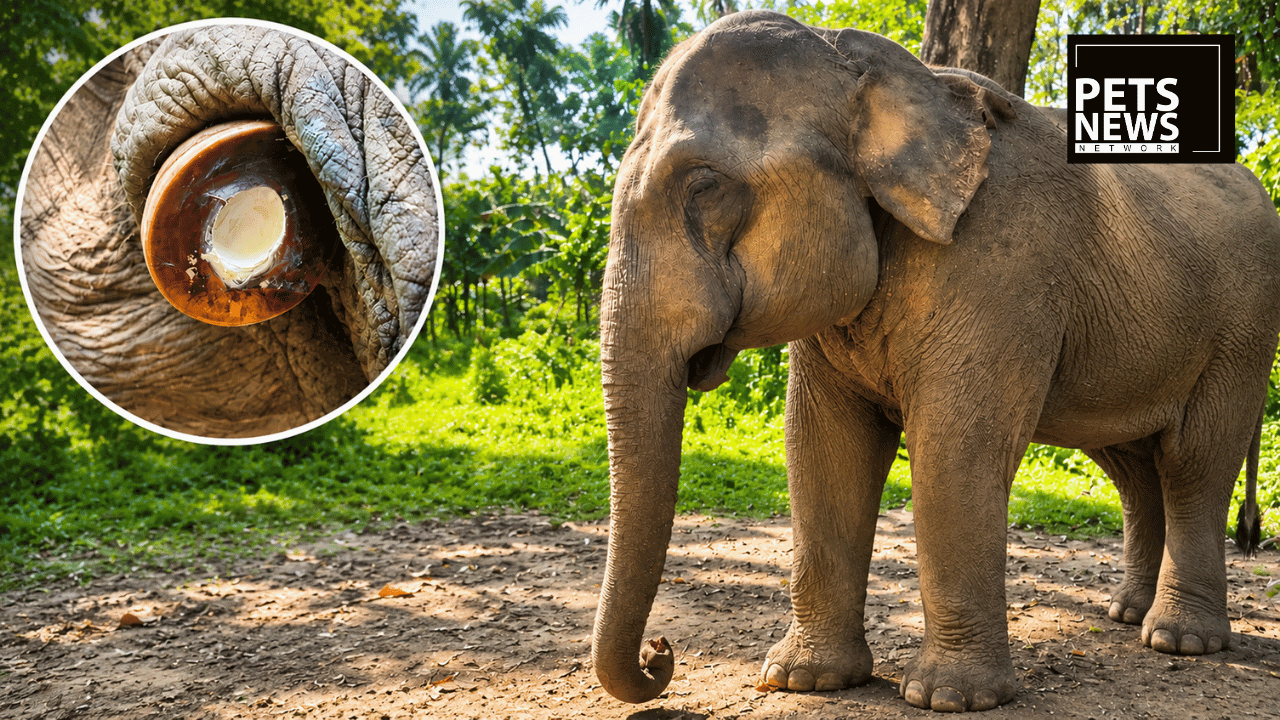

In April, poachers sawed both tusks from a living 16-year-old elephant in a forest area of upper Assam. However, the attack caused far more than a cosmetic injury. A tusk is a tooth, and cutting one near the root exposes living tissue. In August, rather than transport an animal already in pain, a veterinary and orthodontic team carried their equipment to where he lives and treated him there. The case of elephant tusk poaching in Assam is also an open investigation, with no arrests reported.
What happened in this Assam elephant poaching case
Mangal Singh is a 16-year-old male Asian elephant from Margherita in Assam’s Tinsukia district. Officials believe the attack happened on the night of 15 April 2026 in the Lakhipathar forest area, under the Digboi Forest Division. Reports state that poachers sawed off both tusks close to the roots while he was alive, using heavy rain as cover.
Consequently, an early source questioned how poachers could remove both tusks from a living elephant without anaesthesia. However, officials have not answered that question publicly. Locals formally informed the forest division on 16 April, and veterinary treatment began on 17 April after he had bled for nearly three days.
Why a cut tusk is not a cosmetic injury
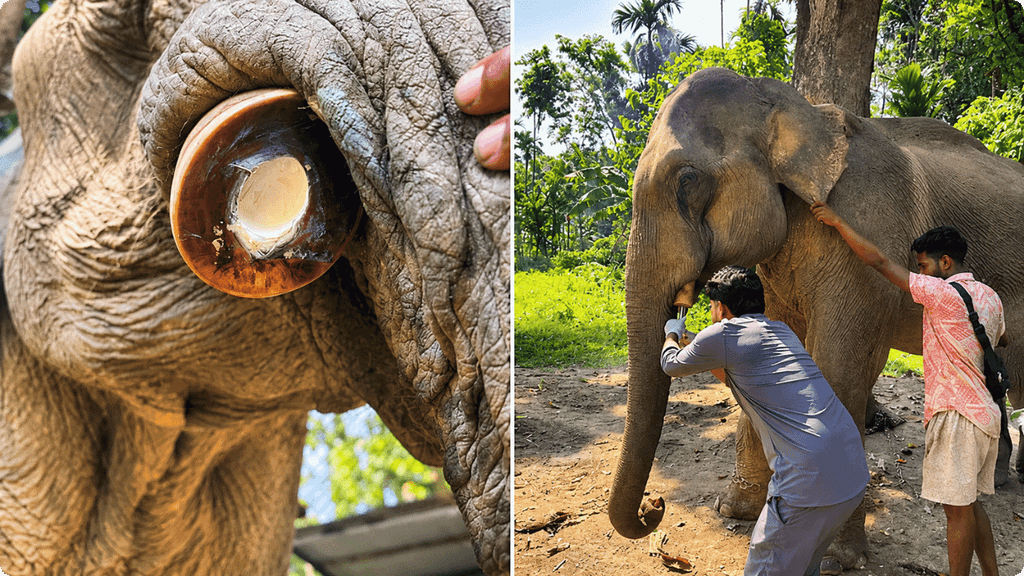
However, most coverage of ivory poaching skips this crucial biological detail. Essentially, a tusk grows as an elongated upper incisor. Therefore, like any tooth, it has a hard outer structure and an inner chamber of living pulp with nerves and blood vessels.
| Question | Answer |
|---|---|
| Do tusks have nerves? | Yes. The pulp inside the tusk contains nerves and blood vessels |
| What happens if a tusk is cut near the root? | The pulp cavity is opened to the outside. It can bleed, admit bacteria and become infected |
| Can it heal on its own? | An open pulp cavity does not simply close, and infection can persist |
| What is a partial pulpotomy? | A dental procedure used when pulp is damaged or infected but some remains healthy. The diseased pulp is removed, the healthy tissue is protected and the tooth is retained |
In human dentistry the technique is routine, most often used on children’s teeth. Performing it on an adult elephant, in a village, is not.
The procedure, at the elephant’s home
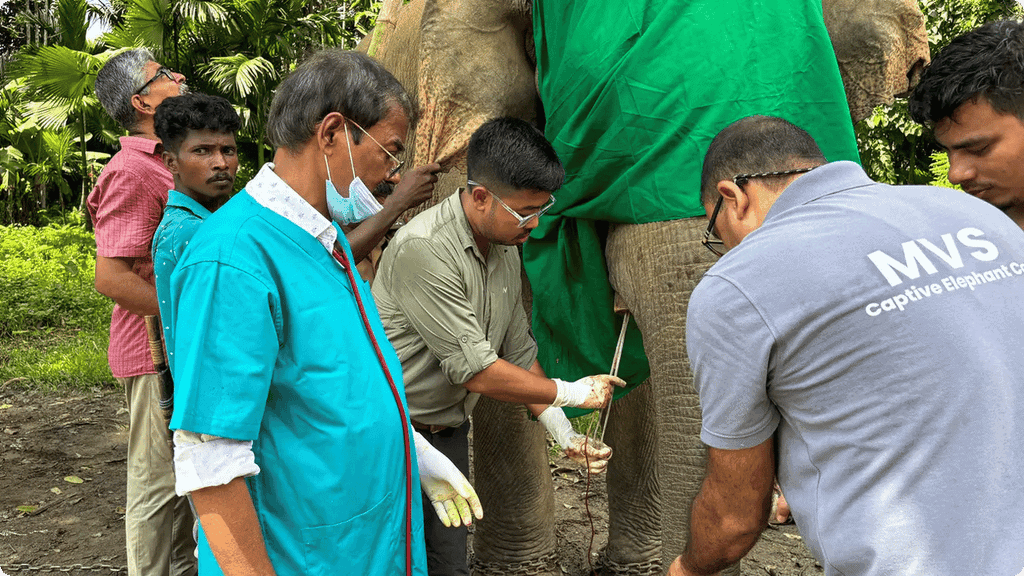
Finally, on 26 August 2026, a multidisciplinary team performed the partial pulpotomy. Specifically, Dr Bhaskar Choudhury led the team, centre manager and lead veterinarian at the Centre for Wildlife Rehabilitation and Conservation (CWRC). Dr Bhupen Sarma, a retired professor and elephant anaesthesia specialist, handled anaesthesia. An orthodontic team from Tinsukia led by Dr Abhishek Ojha took part, along with veterinary staff of the Assam Animal Husbandry Department and the Wildlife Trust of India, working under guidance from the Assam Forest Department.
Doctors treated him at his home to avoid the stress of moving him. Moving a large animal in pain is itself a medical risk, and in-situ treatment of this complexity is uncommon. The Wildlife Trust of India, the International Fund for Animal Welfare, and the Assam Forest Department jointly run the CWRC.
The timeline
| Date | What was reported |
|---|---|
| Night of 15 April 2026 | Both tusks sawn off in the Lakhipathar forest area |
| 16 April | The forest division is formally informed |
| 17 April | Veterinary treatment begins, after nearly three days of bleeding |
| Late July | More than three months on, reporting described a severe tooth infection with little improvement and said no X-ray had been done |
| 26 August | The partial pulpotomy is performed |
| 14 September | Infection found in one tusk canal. Pus drained, dead pulp removed, the area cleaned, dressed and temporarily sealed. The right tusk shows signs of recovery |
| 29 September | Follow-up shows further improvement |
Meanwhile, equipment shortages reportedly delayed earlier specialised care. For instance, in July, veterinary sources said the government veterinary hospital lacked the X-ray capability to examine him and that the absence of portable diagnostic facilities was a major obstacle, with the facility expected in about two weeks. That is a procurement question rather than a clinical one, and it is the detail most likely to matter to the next injured elephant.
Where the elephant tusk poaching investigation in Assam stands
The forest department registered a wildlife offence, and officials summoned and questioned the elephant’s owner and caretaker. According to the latest reports, police have made no arrests and have not recovered the tusks. Investigators have also not identified who cut them. A wildlife activist has questioned the pace of the probe and sought an independent review.
The case remains one of the most closely watched incidents of elephant tusk poaching in Assam this year.
The wider question for captive elephants
Furthermore, Assam has many privately owned captive elephants, a legacy of the timber-extraction era, and owners often take them to graze in nearby forests. Consequently, supervising these animals while foraging and quickly reporting injuries remains a practical question for the whole category. Still, this observation does not criticise any single household. Instead, this case shows the clear difference between treating a wound within hours versus waiting days. Therefore, preventing elephant tusk poaching in Assam depends heavily on faster detection and reporting.
Veterinarians report steady progress in his recovery, though he still needs regular cleaning, dressing, and monitoring. His tusks will not grow back. However, the surgery relieves chronic infection and pain while saving what remains of both teeth.
Pets News Network is India’s first dedicated media platform for the pet and animal industry. For breaking global pet news, brand coverage, and advertising enquiries, contact: info@petsnewsnetwork.com