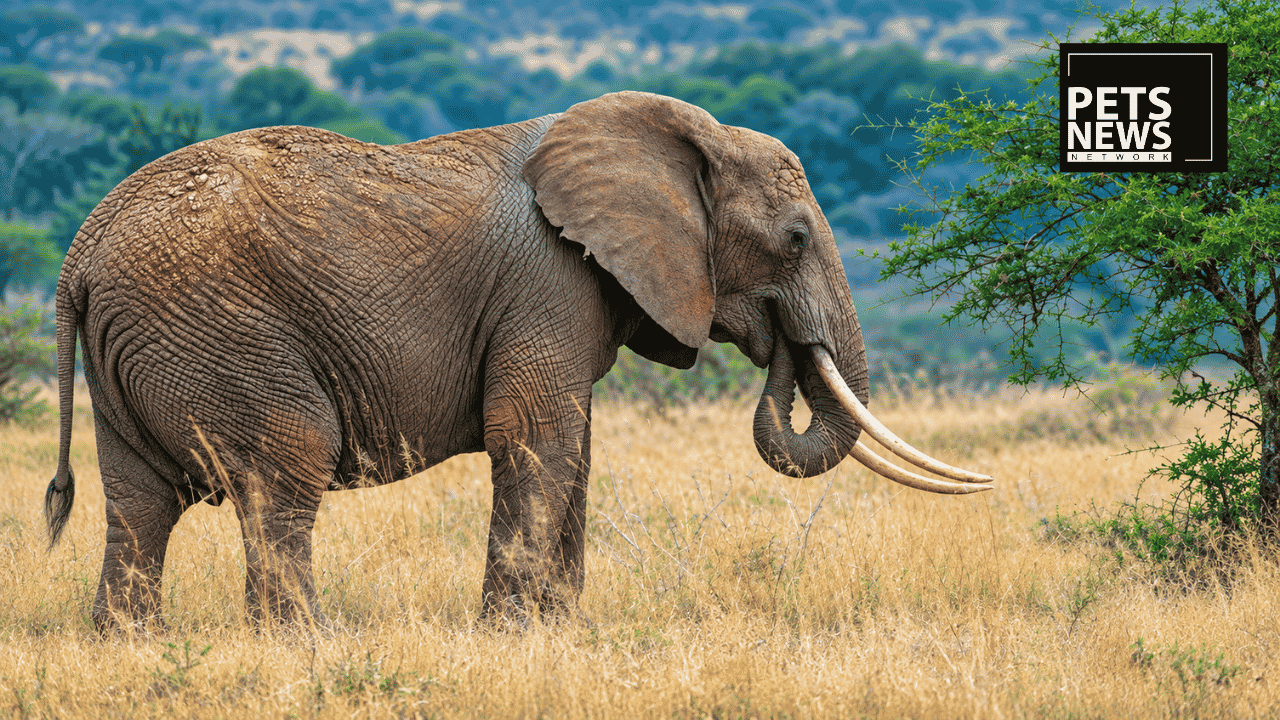

More than a hundred forest staff, three veterinarians, drone teams and two trained kumki elephants are tracking the Kabra Kaan elephant across northern Chhattisgarh. Press reports put the solitary tusker’s weight at around three tonnes and blame him for 19 deaths over roughly six months. Four days after officials cleared the operation, teams had still not darted him. What is meant to happen to him if he is remains unclear, and the two versions in circulation lead to completely different lives.
Where the Kabra Kaan elephant operation stands
Figures below are as reported up to 16 November 2026 and are changing quickly.
| Point | What is reported |
|---|---|
| The animal | A solitary male tusker, called Kabra Kaan locally |
| Deaths attributed | 16 as of 12 November; 19 by 15 November, after two women were killed on the Wednesday and Thursday and another woman was critically injured |
| Range | Around 75 km across Korea, Surguja, Surajpur and Balrampur districts |
| Nightly movement | 35 to 40 km |
| Approval | Reported on 12 November 2026 |
| Deployed | More than 100 forest staff, three veterinarians, drones and two kumki elephants |
| Status | Not darted. He could not be located in dense forest on the first day of the operation |
| Precaution | Schools closed in nearby villages, reported as 15 to 17 on different days |
The Chief Conservator of Forests for the Surguja circle said on 12 November that teams would capture the animal within four days. That window has now passed. The weight and the death toll come from press reports, not from an official statement, and the toll has risen more than once in a few days.
What the approved order says
The state’s Additional Principal Chief Conservator of Forests (Wildlife) cleared the operation. As reported, the approved sequence is:
- Tranquilise the animal, using trained captive elephants if required
- Fit a satellite radio collar
- Conduct a health examination
- Release him into his natural habitat if he is found healthy
- Report on his movements every fifteen days
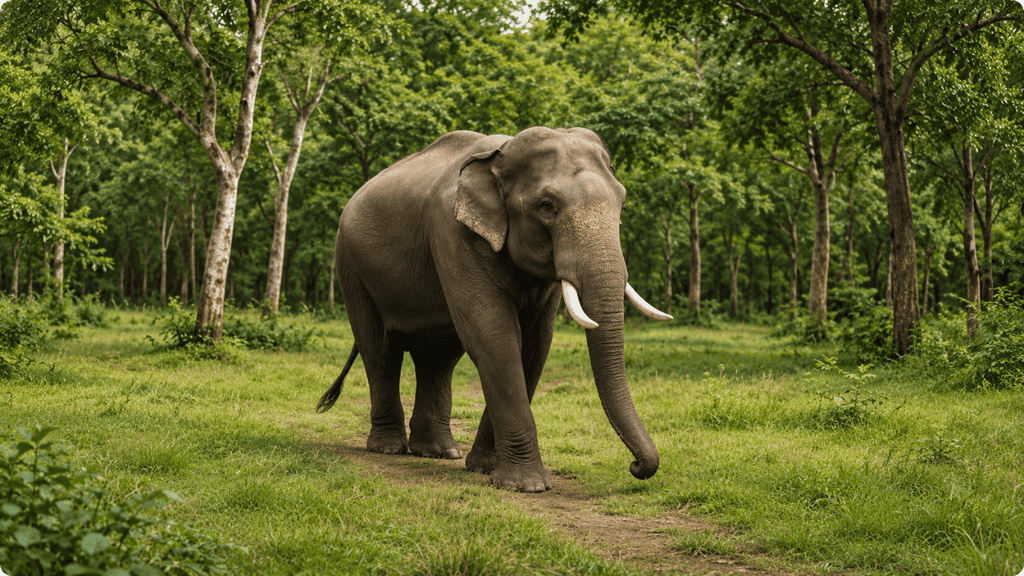
Local reports named the ranges he moves through, including Pratappur, Ghui, Surajpur, Rajpur, Ambikapur and Tamor Pingla. Read plainly, that is a collar-and-release operation. The Kabra Kaan elephant stays wild, and the collar makes him visible so villages can be warned before he arrives rather than after.
Why the difference is not a detail
For the villages, the two outcomes may feel similar, because the elephant stops being an immediate danger either way. For the animal they are not remotely similar.
A collared elephant released back into forest remains a wild elephant with a device on his neck. He continues to range and live the life of his species, with the crucial difference that staff know where he is. Taking the Kabra Kaan elephant to a rescue centre ends his wild life, and managing such an animal in captivity requires a commitment spanning decades, not months.
There is a reasonable case for either decision. What there is no case for is leaving the public unable to tell which decision officials have taken. One sentence from the forest department would settle it: does the collar go on and the animal walk away, or does the animal go on the truck?
What musth is, and why “rogue” is the wrong word
Much coverage of this operation uses the words “rogue” and “killer”. Both are worth setting aside, and the reason is factual. The official reporting we found did not confirm whether this particular bull is in musth, but musth is central to understanding how elephants like him behave.
| Question | Answer |
|---|---|
| What is musth? | A normal, periodic condition in healthy adult bull elephants, not a disease or a behavioural disorder |
| What changes? | Testosterone rises steeply, and the bull becomes far more aggressive and less tolerant of interference |
| Why does it matter for safety? | Bulls in musth often range much further than usual, which makes them harder to predict and to track |
| Is it permanent? | No. It is temporary and runs its course |
The distinction matters because of what readers conclude from it. “Rogue killer” implies an animal that is permanently and inherently dangerous, which points to permanent removal. Musth describes a known, temporary state, which points to tracking, warning systems and timing. Long nightly distances and a range across several districts are consistent with that picture, though they are not proof of it in this case.
The herd, and why accounts differ
One complication has made tracking the Kabra Kaan elephant harder, and the reporting disagrees here too. One account says the herd is not accepting him, that he walks 10 to 20 metres behind it, that there have been fights, and that officials are waiting for him to separate before darting him.
Another says he fought the herd’s lead bull overnight, drove him off and joined a herd of 17, which then moved into the Kusuwamuda forest. Both accounts agree there has been fighting and disagree on who prevailed. Darting an animal walking behind a herd is a far simpler task than isolating him from inside one, so any estimate of how long this will take is guesswork.
The cost already carried
The bereaved. Nineteen families, on the latest press figure. Recent victims include villagers who died while guarding a field at night, cycling home and going outside after dark, which shows how ordinary the moments of danger are.
The villages. Schools have shut, officials have cordoned off the affected area, and authorities have told villagers not to enter nearby forests during a working season.
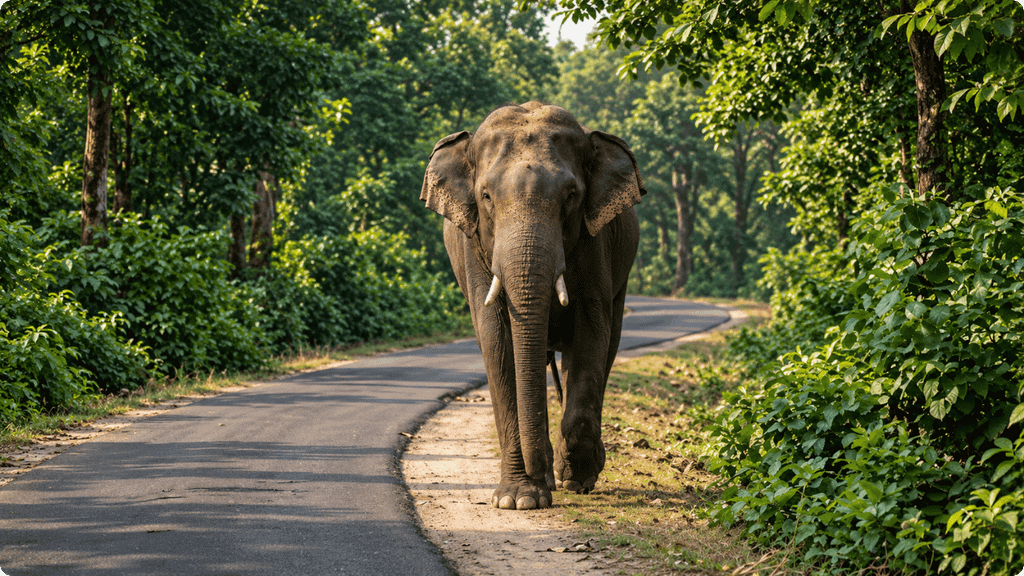
The field staff. More than a hundred forest personnel and local volunteers are working through dense forest and at night alongside the three-tonne Kabra Kaan elephant that can cover 35 to 40 km before morning. That is difficult and dangerous work, and it deserves careful reporting rather than breathless coverage.
The question worth putting
The forest department is attempting something genuinely hard: darting a three-tonne animal in dense forest, near a herd, without harming him, the herd or anyone in the field. But one question sits under all of it, it has a one-sentence answer, and nobody has asked it loudly enough yet.
If the Kabra Kaan elephant wears a collar back in the wild, he remains a wild animal. One that teams drive away on a truck becomes something else for the rest of his life.
Pets News Network is India’s first dedicated media platform for the pet and animal industry. For breaking global pet news, brand coverage, and advertising enquiries, contact: info@petsnewsnetwork.com