
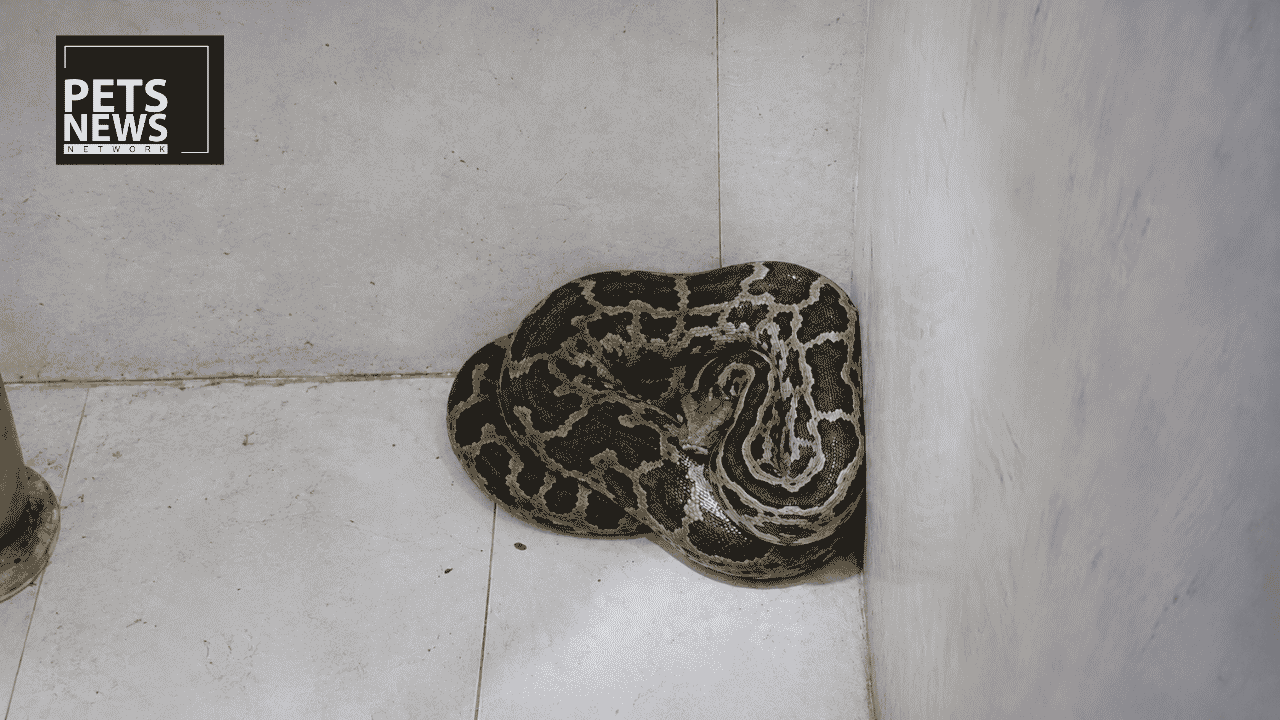

On 13 November, security personnel at the Taj Mahal reportedly found an Indian rock python in a staff washroom in the complex opposite the monument’s eastern gate. It was removed by a two-person rescue team, kept under observation for a few hours and released. Nobody was reported hurt, and the snake was not harmed. The interesting part is not that it happened. The Indian rock python Taj Mahal sightings are part of a pattern, because the monument stands beside a river on ground that suits the species.
What happened
According to the report, Central Industrial Security Force (CISF) personnel posted at the eastern gate spotted the snake inside a washroom used by security staff. They did not try to handle it, and they informed the Archaeological Survey of India (ASI). The ASI then called the emergency helpline run by the wildlife rescue organisation Wildlife SOS.
A two-member Rapid Response Unit reached the site. Their first action was to move visitors back to a safe distance, and only then was the python extracted. It was observed for a few hours, found to be healthy, and released into suitable natural habitat away from the monument.
The rescue team’s message, as reported, was twofold. The Indian rock python is non-venomous and ordinarily keeps away from people, and an animal in a washroom is usually looking for shade, damp and quiet. Wildlife also does not stay in forests. It lives along riverbanks, drainage lines, green belts and the margins of busy places.
Why there was a python at the Taj Mahal
The Taj Mahal stands on the bank of the Yamuna. The river’s floodplain and the green belt beside the monument, known as the Taj Nature Walk, offer water, cover and small mammals, which are the species’ preferred prey. Wildlife SOS has said previous sightings came from that green belt.
This is not the first such incident. In early November 2019, a python of about nine feet was found in the monument’s western parking area, and Wildlife SOS believed it had wandered out of the green belt. In April 2021, a roughly five-foot Indian rock python was found near the ticket counter at the West Gate and was released after a few hours’ observation. Wildlife SOS has also said it has rescued several reptiles and birds from the premises over the years.

Seen together, these incidents are what one would expect of a heavily visited complex next to a riverine green belt. They are worth stating plainly so that the next sighting prompts a phone call rather than alarm.
What to do if you find a snake
The handling described at the Taj Mahal is a model anyone can follow. This guidance is general and is not a substitute for advice from a trained rescuer.
Do:
- Move people and pets away first. Children and dogs come before anything else, because curious animals tend to investigate.
- Keep the snake in sight from a safe distance, so the rescue team is not searching an empty room.
- If it is in a room, close the door and block the gap underneath with a cloth.
- Call a trained rescuer or the state forest department. Many cities have a snake-rescue contact, and several wildlife organisations run 24-hour helplines. Save a number before you need it.
- Give a clear location: building, floor, room, and what the snake is near.
Do not:
- Do not try to catch, pin or move it yourself. Snake handling by untrained people is a common way injuries happen.
- Do not kill it. Many snakes around Indian homes are harmless, and killing a protected species can be an offence.
- Do not throw things, pour water, or use smoke or chemicals. A frightened snake moves unpredictably and may retreat somewhere harder to reach.
- Do not crowd it for photographs. Crowds make a calm rescue harder.

If anyone is bitten, treat it as a medical emergency and go to a hospital at once. Do not wait to identify the species.
How big the python was
The length of this python has been given inconsistently. Some accounts put it at around five feet and others closer to seven. No official measurement appears to have been published, and this article uses the lower figure.
For context, Indian pythons usually reach about three metres, close to ten feet, and the longest scientifically recorded specimen was about 4.6 metres. On either reported figure, this animal would be below typical adult size. The word “giant” often attaches to python sightings, but it does not appear to fit here.
A protected species, not a pest
| Item | Detail |
|---|---|
| Scientific name | Python molurus |
| Venomous | No |
| IUCN Red List | Near Threatened (assessment cited from 2021) |
| Reason cited | An estimated decline of about 30% over 2010–2020, linked to habitat loss and over-exploitation |
| Indian law | Schedule I of the Wild Life (Protection) Act, 1972 |
Schedule I is the highest tier of protection under the Act, the same schedule that covers the tiger and the Asian elephant. Killing or harming a Schedule I animal can attract serious penalties. That matters because the instinct in many households is still to kill a snake on sight. For this species, that instinct is unnecessary and may be unlawful.
It will happen again, and that is manageable
Rescuers generally report more snake sightings in and after the monsoon, when flooding and heavy rain push animals toward drier ground, which can mean buildings. As cities grow into river edges and green belts, the distance between people and large reptiles narrows. Pythons turning up in parking lots and storerooms is unlikely to stop.
What is within reach is the response. According to the report, it took one observant guard who did not panic, one call through the right channel, and two trained people who moved the crowd before they moved the snake. Nobody was bitten, nothing was killed, and a Near Threatened species went back to the floodplain it came from.
Pets News Network is India’s first dedicated media platform for the pet and animal industry. For breaking global pet news, brand coverage, and advertising enquiries, contact: info@petsnewsnetwork.com