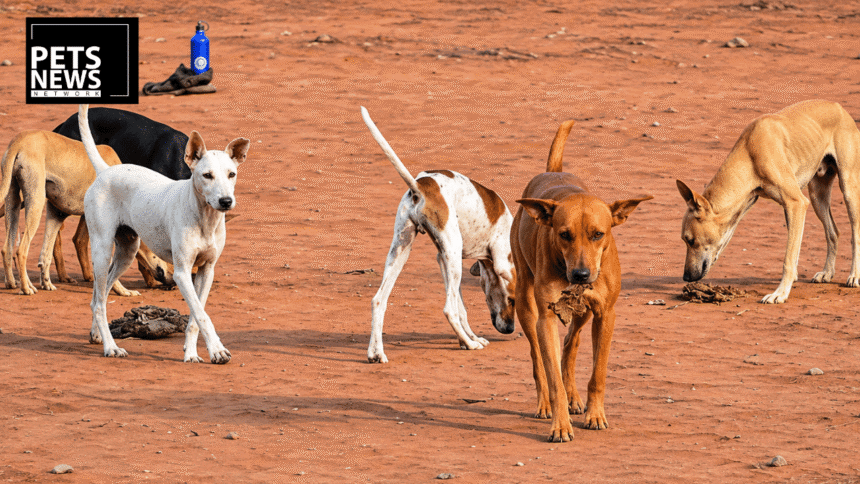
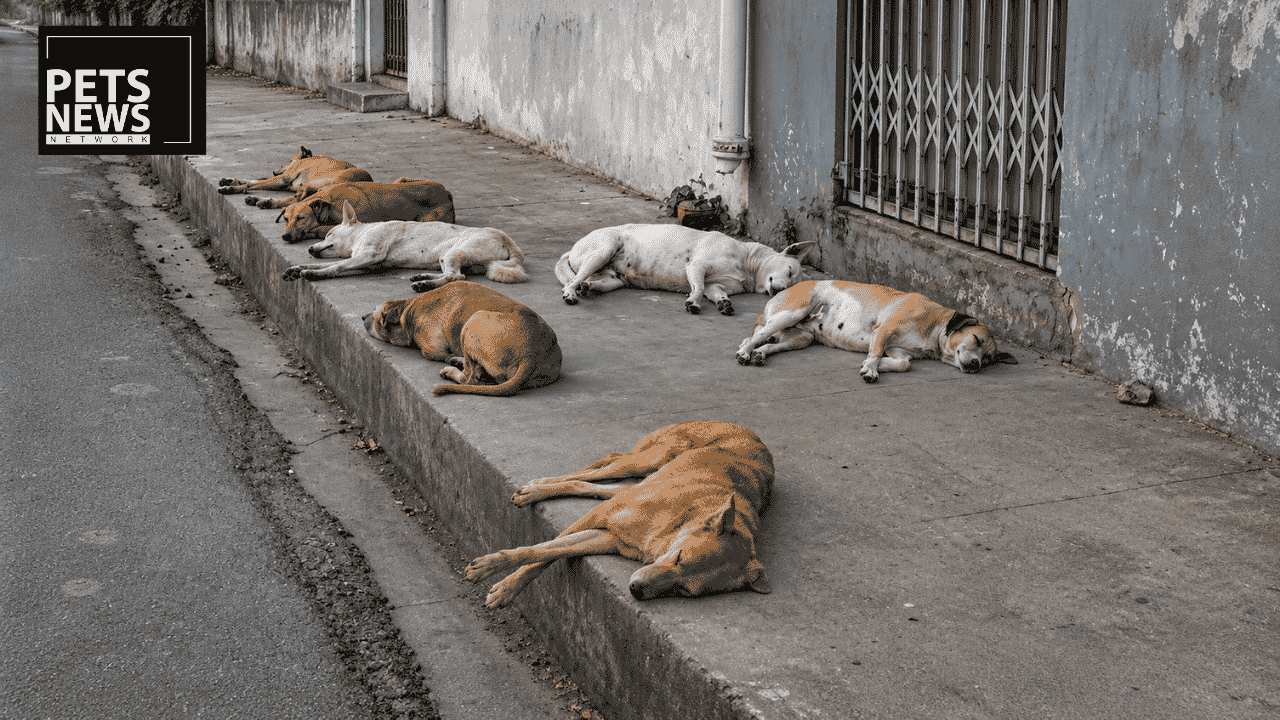

Reports say construction has stopped on Delhi’s first purpose-built dog shelter. Pollution restrictions under the Graded Response Action Plan (GRAP) have reportedly halted work in Dwarka and the late-November completion target now looks unlikely. The delay will pass. However, the harder question is the standard the shelter is built to: barely a year old, drafted quickly, still argued over, and sitting beside older rules written for a different kind of building.
Where the Delhi dog shelter stands
The project sits in Dwarka Sector 29, inside a complex that already has two Animal Birth Control centres and a pet crematorium. Officials plan the facility for around 1,500 dogs, including animals vets assess as aggressive. Funding comes from corporate social responsibility money from the GMR Varalakshmi Foundation, with the Municipal Corporation of Delhi building the facility.
| Point | What is reported |
|---|---|
| Location | Dwarka, Sector 29 |
| Capacity | Around 1,500 dogs |
| Funding | CSR support from the GMR Varalakshmi Foundation |
| Foundation stone | 28 July 2026 |
| Target at the time | November 2026 |
| Reported progress | A Block and 19 kennels complete; shuttering for B Block under way |
| Reported cause of the stoppage | GRAP curbs on construction in Delhi-NCR |
The progress and stoppage details come from a single report that we could not independently confirm. Lieutenant Governor Taranjit Singh Sandhu laid the foundation stone in July 2026 and targeted completion for November.
For scale, the kennels at the existing Sector 29 sterilisation centre hold roughly 300 dogs. Therefore, the new facility would be about a fivefold increase.
One figure needs caution. Different reports put the plot size at 6,050 square metres or 2.5 to 3 acres. These do not match, because 6,050 square metres is about 1.5 acres. Furthermore, authorities have issued no corrected figure, so we note both here and treat neither as settled.
The AWBI shelter SOP: the standard it is built to
On 27 November 2025 the Animal Welfare Board of India circulated a Standard Operating Procedure for dog shelters to the Chief Secretaries of all states and union territories. It followed Supreme Court directions on stray dogs. As a result, that document is what Delhi, and every other city under the same direction, is building to.
| Item | What the SOP sets out |
|---|---|
| Space per dog | About 20 square feet |
| Worked examples | About 70 × 40 ft for 100 dogs; 157 × 90 ft for 500; 221 × 127 ft for 1,000 |
| Fencing | At least six feet high, with secured entry and exit points |
| Staffing | A 24-hour watchman, cleaner, caretaker and record keeper, scaling with size |
| Veterinary care | An on-site unit where no veterinary hospital is nearby |
| Housing | An open, demarcated area so packs can stay together |
| Water | Available 24 hours |
| Feeding | Meals and portions set by age and body weight, with no free feeding |
These are not trivial requirements. Undoubtedly, a shelter meeting all of them would improve on many municipal animal facilities in the country.
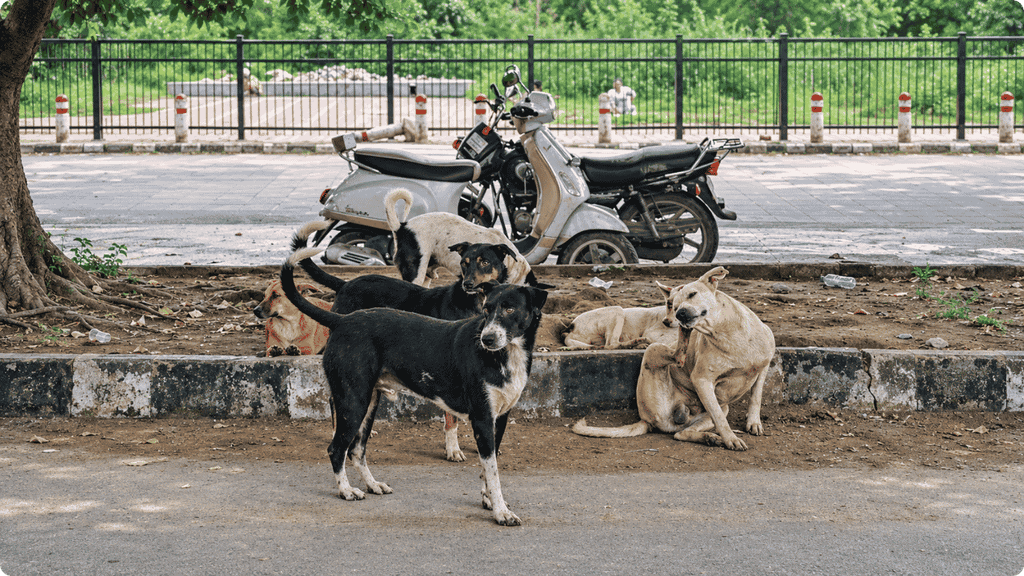
Why the ABC Rules 2023 fit a different model
India’s established framework is the Animal Birth Control Rules, 2023. They also set kennel dimensions, reported as individual kennels of about three feet by four feet floor space per dog, and allow group kennels for small numbers of dogs. Readers should check the exact rule text, because we did not independently confirm those figures here.
The more important point is the model. The ABC Rules describe a sterilisation centre built around catch, neuter, vaccinate and return. A dog arrives, undergoes surgery, recovers for a few days, and goes back to the area it came from. A small kennel for a few days is one proposition.
By contrast, the shelter model is a different one. Specifically, authorities do not plan to return dogs they pick up from institutional areas, so this is long-term housing of free-ranging dogs. A standard for a five-day stay and a standard for a five-year stay are not the same document, and the country is using something closer to the first to build the second.
What critics of the SOP say
Animal lovers have not received the SOP quietly. Its critics are animal welfare organisations and activists, and their central objection is to the model itself. Specifically, it moves away from the release-based approach of the ABC Rules by mandating permanent sheltering.
- Twenty square feet is too small for a dog that will live there indefinitely, as opposed to recovering for a week.
- Mixed packs in shared areas risk behavioural decline, psychological distress, physical health problems and disease spread.
- The SOP leaves funding undefined. Responsibility falls on municipal bodies, state governments and union territories, with only vague mention of NGOs and no identified source for construction or long-term upkeep.
- Finally, pickup locations go beyond the court’s order. For example, the SOP lists places such as religious sites, airports and tourist sites that the Supreme Court order did not name.
None of this means the document is wrong. Nevertheless, it does mean Delhi is building to a specification that is still contested while the concrete is going in.
Does 1,500 dogs fit the Dwarka site?
The honest answer depends on which plot figure is correct. Scaling the SOP’s own example of 221 × 127 feet for 1,000 dogs, about 28,000 square feet, to 1,500 animals gives roughly 42,000 square feet of shelter footprint. Keep in mind that this is an illustrative calculation, not an official design figure.
| If the plot is | Total area | Footprint as a share |
|---|---|---|
| 2.5 acres | 108,900 sq ft | About 39% |
| 6,050 sq m | 65,121 sq ft | About 65% |
On the larger figure there is comfortable room for a clinic, kitchen, quarantine, staff areas and open space. On the smaller figure, all of that must fit into the remaining third of the site. Both are buildable, but they are not equally comfortable, which is why a confirmed plot size is worth more to readers than any adjective about the project.
Other Delhi dog shelter sites
Dwarka is the first site, not the whole plan. Officials have spoken of a five-acre site at Mukundpur for an integrated ABC centre, shelter and crematorium, and of space at Bela Road. Moreover, they have said they are looking at government veterinary hospitals and dispensaries. Meanwhile, reports mention other locations that we could not confirm. Ultimately, officials would build every site to the same one-year-old standard.
Why the delay matters least
A construction pause for air quality is routine in Delhi between October and February. Work should resume once the curbs lift, and the shelter will open some months later than planned.
The questions that decide whether this is a good building are different. Is twenty square feet enough for a dog that is never going home? Do packs housed together stay well? Who pays the watchman and the caretaker in year three? Does a standard drafted in weeks hold up once fifteen hundred animals live inside it?
Those questions can be answered, and the people best placed to answer them, including veterinarians, welfare organisations and resident groups, should have a say in how the facility operates. Authorities should seek their input before finishing the building rather than after.
Pets News Network is India’s first dedicated media platform for the pet and animal industry. For breaking global pet news, brand coverage, and advertising enquiries, contact: info@petsnewsnetwork.com