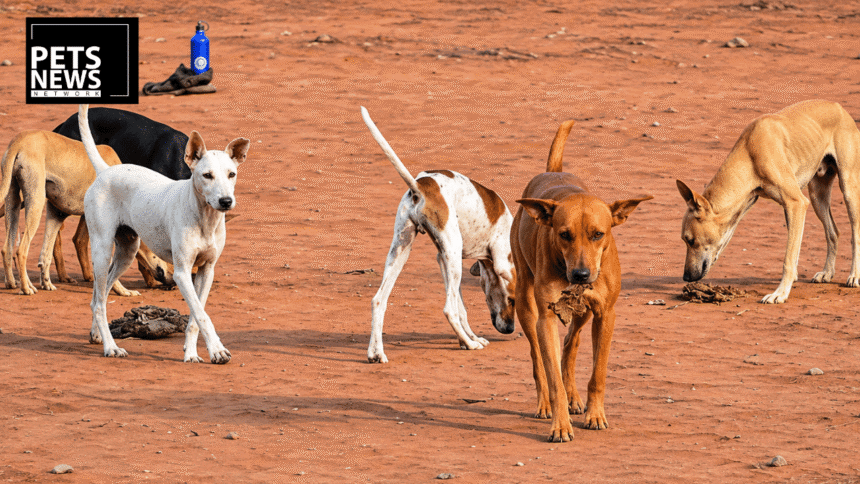


A five-month-old puppy named Ballu died on Sunday 8 November. His owner, the fitness influencer and Bigg Boss 18 contestant Rajat Dalal, wrote that Ballu had eaten a thorny plant eight days earlier. It is easy to read a loss like this as sudden. In his account, it was not, and the days in the middle are what other pet parents most need to understand. If your dog has swallowed plant thorns, or anything sharp, this is what to know.
What happened
| Detail | As Rajat Dalal has shared it |
|---|---|
| The puppy | Ballu, born 12 June 2026, died 8 November 2026, about five months old |
| Owner | Rajat Dalal, fitness influencer and Bigg Boss 18 contestant |
| The incident, in his account | Ballu ate an entire plant on 31 October, including its thorns |
| Treatment | Ballu was taken to hospital and treated, but his condition stayed critical because of internal injuries |
| The end | Rajat wrote that Ballu was moving around him on Saturday, and that he found him dead the next morning |
In Rajat’s words: “31 October ko Ballu ne poora paudha kha liya tha, jismein kaante the.” He also wrote that the thorns badly damaged Ballu’s intestine.
His caption read: “BALLU MERA PYARA BETA. 12 June 2026 – 8 Nov 2026. Kuch kamiyan jeewan bhar ke liye reh jati hai.”

The signs to watch for
These are the clinical signs the American College of Veterinary Surgeons (ACVS) lists for gastrointestinal foreign bodies. Any of them, in a dog that may have swallowed something, is a reason to call a vet rather than wait.
- Vomiting, especially if repeated or continuing beyond one episode
- Loss of appetite, such as refusing food the dog would normally take
- Abdominal pain, which can look like flinching when touched, a hunched posture or reluctance to lie down normally
- Dehydration
- Diarrhoea, sometimes with blood
- Fluid in the abdomen, which a vet detects rather than an owner
A dog with a partial blockage can keep eating, drinking and walking while the problem worsens inside. Normal behaviour is not proof that nothing is wrong.
Eight days is the whole lesson
It is natural to compress a loss like this into a single moment: a puppy swallows thorns, a puppy dies. That is not how it unfolded, and the difference matters.
Ballu ate the plant on 31 October and died on 8 November. In between, by his owner’s account, he was treated in hospital and was still moving around the day before he died. PNN does not know the details of his care, and nothing here suggests anyone failed him. The general point still stands for every other owner.
Swallowing something dangerous is rarely the moment of death. It is the beginning of a process that can unfold over days, which is why it can sometimes be caught.
The difficulty is that the early part of that process can look like a mildly unwell dog.
What a swallowed object actually does
According to ACVS, the problems a foreign body causes depend on how completely it blocks the passage, where it sits, how long it has been there and what it is made of. Small, smooth objects may pass without harm. Others do not.
The serious complication is perforation. A foreign body can pierce the wall of the intestine, spilling its contents into the abdomen. ACVS says this “quickly leads to life-threatening inflammation of the abdominal lining (peritonitis).” Bacteria then multiply in a space that is meant to be sterile, and the animal can go on to develop sepsis.
This is why sharp material is a different category of danger from a swallowed sock. The risk is not only blockage. It is puncture.
Two different dangers, and most lists only cover one
Nearly every “plants dangerous to dogs” list is about poisoning, meaning chemicals that harm the liver, heart or nervous system. Ballu’s case, as his owner describes it, sounds mechanical instead, with thorns injuring the intestine. No one has published a diagnosis, so that remains the owner’s account.
A thorn does not need to be toxic to cause serious harm. It needs only to be sharp and to be swallowed. A plant can therefore be non-toxic and still dangerous to a dog that chews it, and it will not appear on any toxicity list.
So there are two separate questions to ask about every plant in your home:
- Is it poisonous?
- Is it sharp?
Bougainvillea, cacti, roses and many ornamental hedges raise the second concern however they score on the first.
And the plants that are genuinely toxic
On the chemical side, these are among the most dangerous plants commonly found in Indian homes and gardens:
| Plant | What it does |
|---|---|
| Oleander (kaner), common on Indian roadsides and in gardens | Cardiac glycoside poisoning: vomiting, slow or irregular heartbeat, weakness, collapse. Dried material stays toxic. |
| Sago palm / cycads, used in landscaping | Severe liver injury and clotting problems. The seeds are most dangerous, but other parts are toxic too. |
| Castor bean (arandi) | Seeds contain ricin. Severe gastrointestinal injury, weakness, shock. |
| Lantana | Gastrointestinal upset and possible liver injury. |
| Dieffenbachia (dumb cane) | Calcium oxalate crystals cause mouth pain, drooling and swelling. |
| Lily of the valley | Cardiac glycosides: vomiting, arrhythmias, collapse. |
Why puppies
Ballu was five months old, and that matters. Puppies at that age are teething and exploring, and they put everything in their mouths. They have not yet learned what is food and what is not. A smaller animal also has a narrower intestine, so there is less margin when something goes wrong.
A five-month-old puppy in a garden is not being naughty. It is doing the only thing it knows how to do.

If you think your dog has swallowed something
Call a vet immediately. Do not wait to see whether it passes.
Do not induce vomiting on your own. Vets sometimes induce vomiting to retrieve certain items, but with something sharp that is a decision for them. Bringing a sharp object back up can cause damage on the way.
Tell them exactly what and when. Give the object or plant and the time. If you have the plant, photograph it or take a cutting.
Expect tests and a range of treatments. ACVS lists X-rays, barium studies and ultrasound for diagnosis. Treatment ranges from hospitalisation with IV fluids and monitoring to endoscopic retrieval or surgery. ACVS describes the outlook after surgery as usually good, but that depends on reaching a vet before perforation and peritonitis set in.
What is worth taking from this
Rajat Dalal has lost a five-month-old dog and chose to say publicly what happened. He did not have to.
The most useful thing any other owner can do with that is to look at their own plants today, checking not only for the poisonous ones but for the sharp ones. They should also remember that the dangerous period after a dog swallows something is not a moment. It can be days, during which the dog may look very nearly fine.
Pets News Network is India’s first dedicated media platform for the pet and animal industry. For breaking global pet news, brand coverage, and advertising enquiries, contact: info@petsnewsnetwork.com