It is a snake that spends most of its life underground, in dry sand, in places with very little else around. So the question is not how it got into a five-star hotel. The question is who brought it.
Start with what is impossible
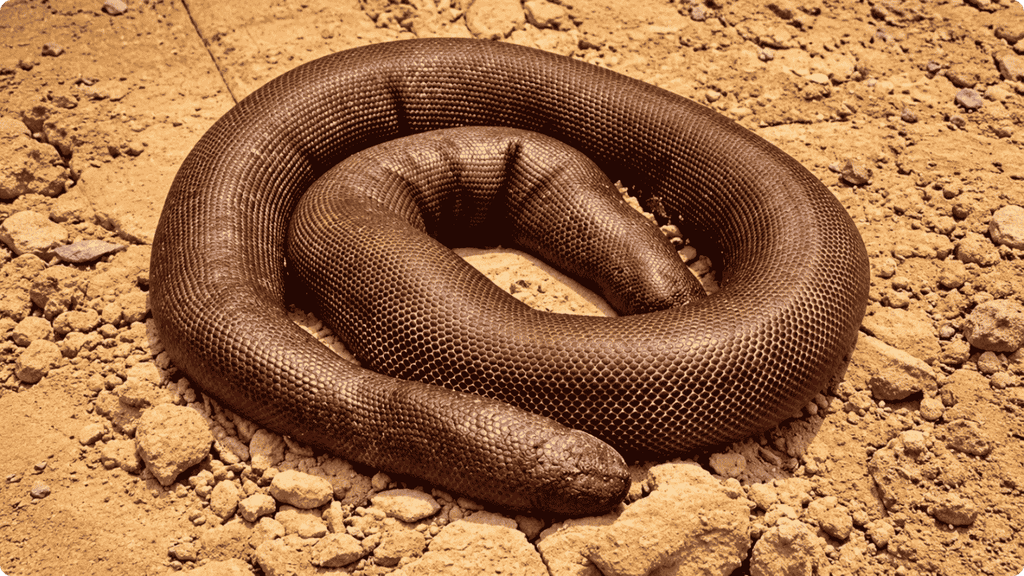
A red sand boa has been rescued from a five-star hotel in Cuffe Parade, South Mumbai, according to a report in Mid-Day. The snake was rescued, treated, rehabilitated and released back into the wild by SARRP — Spreading Awareness on Reptiles and Rehabilitation Programme, a Mumbai-based wildlife organisation registered since 2010 and recognised by the Maharashtra forest department.
Here is why that sentence should stop you.
Red sand boas are burrowing animals. They live below the surface in dry, loose, sandy soil across arid and semi-arid parts of the subcontinent, surfacing mostly after dark. They are built for a landscape that is the precise opposite of where this one was found.
Cuffe Parade is reclaimed land at the southern tip of Mumbai — towers, hotels, offices, and some of the most expensive real estate in India. There is no sand to burrow into. There is no scrubland next door for a snake to wander in from.
So it did not wander in. It was brought, and then it either escaped or was left behind.
That is a far more interesting story than a snake in a lobby.
How the rescue happened
Asif Patrawala of SARRP India described the call:
“We received a call from a five-star hotel informing us about the snake. Our volunteer reached there and identified it as a red sand boa. Immediately after the rescue, officials from the Mumbai Range of the Maharashtra Forest Department were alerted. The snake was placed under my care for observation and treatment. A medical check-up showed that it was weak and dehydrated.”
That last detail matters. A healthy sand boa that had somehow found its way into a building would not be weak and dehydrated. An animal that had been held, moved or confined would be.
Santosh Shinde, president of SARRP India, put the wider problem plainly:
“Widespread myths falsely allege that the snake brings overnight wealth, supernatural fortune, or possesses medicinal miracles. These superstitions drive a lucrative underground market, making every urban sighting a critical race to prevent poaching.”
That phrase — a critical race to prevent poaching — is the part worth holding onto. For this species, a sighting in a city is not simply an animal in the wrong place. It is an animal that someone else may also be looking for.
Nursed back to health
The reptile was administered supportive care under the guidance of veterinarian Dr Sunetra Wadke. Patrawala looked after the snake until it regained its strength and normal activity.
Following its recovery, Dr Nikhil Bangar, wildlife veterinary officer at Sanjay Gandhi National Park, examined the boa and certified it fit for release.
It is worth noting what that sequence involved: a volunteer response, forest department notification, veterinary supervision, weeks of individual care, and a formal fitness certification before release. For one non-venomous snake that most people would have killed on sight.
Hunted for what it isn’t
The red sand boa (Eryx johnii) is non-venomous. It is slow. It is docile to the point of being almost comically reluctant to bite. It eats rodents. It has no commercial use of any kind.
It is also one of the most heavily trafficked snakes in India.
Wildlife rescuers and forest officials have made the reason plain for years: red sand boas are targeted in the name of blind faith and superstitious ritual, and that is precisely why an underground market exists for them at all.
A harmless rodent-eater, hunted across the country because of things that are not true.
The four things people believe
That it finds buried treasure. This is the oldest and most persistent of the myths. Possess the snake, the belief goes, and hidden wealth reveals itself. Wildlife experts have been documenting this one for decades.
That it cures things. The snake is sought for traditional preparations and, reportedly, for cosmetics. There is no evidence behind any of it.
That it works in ritual. Police and forest officials repeatedly describe demand linked to occult practice — the phrase that recurs in official statements is “black magic.”
And that it has two heads. This one is the most revealing, because it is almost true.
The red sand boa’s tail is short, thick and blunt — so similar to its head that at a glance you genuinely cannot tell which end is which. That is not a coincidence or a deformity. It is a defence. A predator striking at the wrong end hits muscle instead of skull, and the snake survives.
It is an elegant piece of evolution. It has also been read, by people looking for something magical, as a creature with two heads — and reported as such in seizure coverage. The feature that evolved to keep the snake alive is now a selling point for the people killing them.
The law is not the weak point
Trading or possessing a red sand boa is illegal under the Wildlife (Protection) Act, 1972. The species is listed by the IUCN as Near Threatened.
Prosecutions are not token exercises either. Documented cases have been registered under a long list of sections — 9, 39, 40, 42, 43, 44, 49, 50, 51, 52 and 55 — covering hunting, possession, trade and transport. In one Haryana case, four accused went before a Special Environment Court and were remanded to fourteen days’ judicial custody.
The problem is the shape of the arrests. The pattern across reported cases is consistent: a tip-off, a vehicle intercepted, a snake recovered from a bag in the boot, and three or four men detained — a seller, some intended buyers, a driver.
In the 2024 Cuffe Parade case, the four arrested came from Telangana, Mulund and Mumbra. In Haryana, officials said investigations were continuing “to reach the roots of this gang.”
The couriers get caught. The gangs, mostly, do not.
What to do if you meet one
It cannot hurt you. Red sand boas are non-venomous, slow and defensive rather than aggressive. There is no reason to kill one, and every reason not to.
Don’t catch it, don’t crowd it. Keep people and pets back, keep it in sight from a distance if that is safe, and call a recognised snake rescue group or the forest department helpline. In Mumbai and Thane, organisations whose volunteers work with the forest department include SARRP, the Resqink Association for Wildlife Welfare (RAWW) and the Reptile Rescue and Study Centre (RRSC).
Do not call an untrained rescuer. This matters more than it sounds. Snake rescue in Mumbai has attracted self-professed rescuers with no training, and herpetologist Kedar Bhide of the Reptile Rescue and Study Centre has recorded 32 deaths among people rescuing snakes in Maharashtra over a twelve-year period. An untrained handler endangers himself and the animal.
If someone offers to sell you one, you are watching a wildlife crime. Not a grey area, not a paperwork question. Report it to the state forest department, and bring a recognised wildlife organisation into the complaint — it moves faster.
And if you are being offered one as a path to wealth, luck or a cure: the snake has never made anyone rich. It will, reliably, make someone a criminal defendant. Somewhere between the burrow and the buyer, it will probably die in a bag.
The questions that remain
The snake has been released. The circumstances that put it in a hotel have not been explained.
Was it an escape, an abandonment, or was it being kept there? Each points somewhere different, and only the first is innocent. The fact that it arrived weak and dehydrated narrows the possibilities.
Where did it come from? Red sand boas found in Mumbai have been traced to other states. The animal’s origin is the thread that leads back up the chain.
And is anyone following that thread? The pattern across reported trafficking cases is that the person holding the bag gets charged and the network does not.
One snake, found in time
A sand boa in a Cuffe Parade hotel makes for a good photograph and an easy headline. The actual story is underneath it.
An animal of no commercial value, protected by Indian law for more than fifty years, is being dug out of dry soil hundreds of kilometres away and moved through an underground market — on the strength of beliefs that collapse the moment anyone examines them.
This one was found, treated and put back where it belongs. That is the only unusual thing about it.
Pets News Network is India’s first dedicated media platform for the pet and animal industry. For breaking global pet news, brand coverage, and advertising enquiries, contact: info@petsnewsnetwork.com