
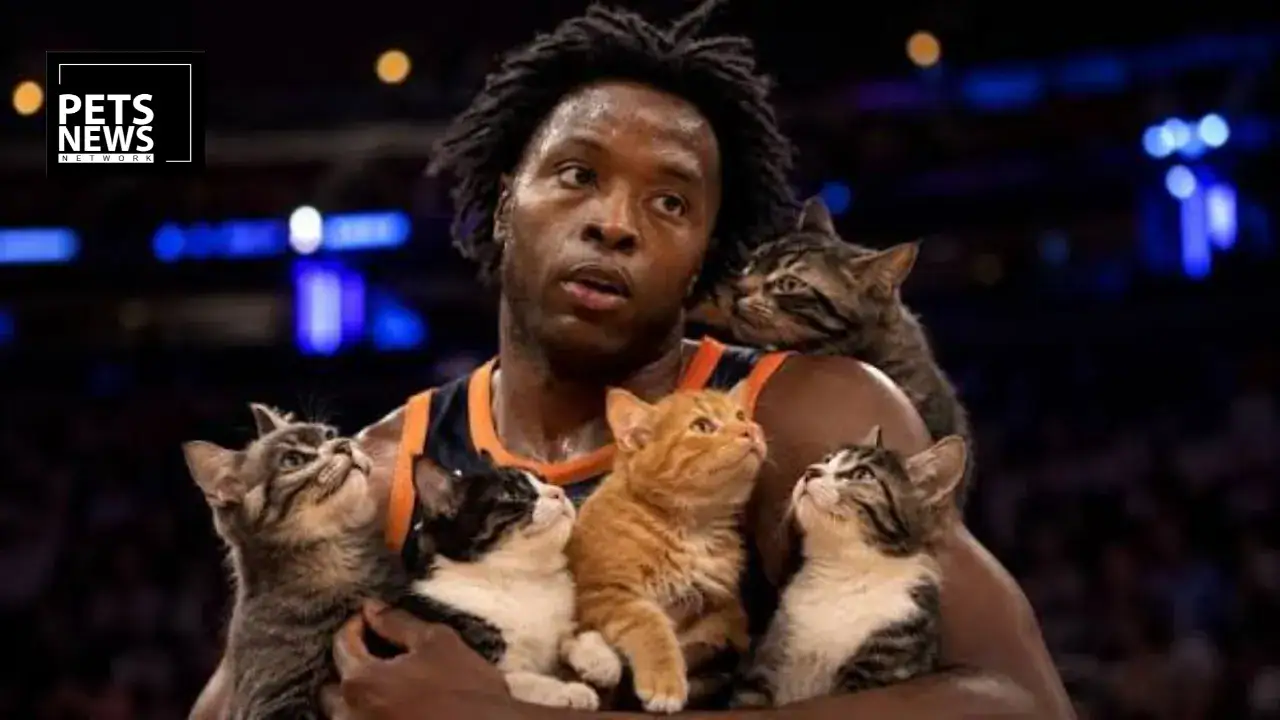

It isn’t every day that a professional athlete’s training philosophy becomes the centrepiece of a cat health campaign, but that’s precisely what’s happening ahead of National Take Your Cat to the Vet Day on August 22, 2026. NBA star OG Anunoby has partnered with Royal Canin U.S. and VCA Animal Hospitals to push a simple but often overlooked message: cats need routine preventive vet care just as much as any elite athlete needs regular medical check-ins.
The campaign leans into an analogy that’s easy to understand and hard to argue with. Just as professional athletes don’t wait for an injury to consult medical experts, cats shouldn’t have their health monitored only after something has already gone visibly wrong.
Why Cats Specifically Need This Message
The core problem the campaign is addressing isn’t a lack of concern from cat owners, it’s a structural blind spot. Cats are instinctively skilled at masking pain and illness, a survival trait passed down from their wild ancestors, where showing vulnerability could mean becoming prey. That same instinct, deeply embedded in domestic cats today, means health issues can progress significantly before an owner notices anything is wrong.
OG Anunoby captured this dynamic directly in his comments, noting that cats hide symptoms when something is wrong, and drawing a direct parallel to his own approach as a professional athlete: he doesn’t wait for an injury to check in with medical experts, and he believes pets deserve that same proactive mindset rather than a reactive one.
The Numbers That Reveal a Real Gap in Cat Care
Backing the campaign’s message is a striking set of statistics drawn from Mars Veterinary Health’s 2025 data, numbers that paint a clear picture of just how significant the gap in feline preventive care has become.
Dogs accounted for nearly 80% of pets seen at U.S. general veterinary practices, while cats represented just over 20%, despite cats being kept as pets in comparable numbers to dogs across many households. That imbalance carries through to visit frequency as well: dogs average nearly 3 veterinary visits per year, while cats average only 2.
Perhaps the most telling statistic in the entire dataset is what happens as cats grow up. Veterinary visits decline by 26% as cats transition from kittens, under 1 year old, into young adulthood, the 1 to 3 year age range. It’s precisely the age window where early-stage health issues are most treatable and most likely to go unnoticed.
What Gets Missed When Visits Drop Off
That drop-off in young adult cat visits isn’t just a statistic, it has measurable health consequences. According to the same 2025 data, unchecked health issues are already showing up in young adult cats at meaningful rates: nearly 30% suffer from dental calculus, 10% deal with gingivitis, and another 10% experience unhealthy weight gain or obesity.
These aren’t necessarily dramatic, symptomatic conditions in their early stages, which is exactly the problem. Dental calculus and gingivitis often develop gradually and painlessly at first, while weight gain can be easy to overlook in a cat that otherwise seems perfectly content. Without regular veterinary checkups, all three conditions have ample opportunity to progress well before an owner has any reason to suspect something is wrong.
What the Campaign Partners Are Saying
The message from Royal Canin and VCA leadership reinforces the same underlying theme from a clinical and nutritional standpoint. Jennifer Cullen, General Manager of Royal Canin U.S.’s Veterinary Business Unit, stressed that science-based nutrition and preventive veterinary care need to work hand-in-hand for genuine long-term cat health, positioning nutrition not as a standalone solution but as one half of a broader preventive care strategy.
Dr. Julia Georgesen, Chief Medical Officer at VCA Animal Hospitals, focused on the practical, cost-related argument for prevention. She noted that early detection makes health conditions significantly easier and less costly to manage, a point that speaks directly to pet owners weighing the value of routine checkups against the price of care. Georgesen also pointed to VCA’s CareClub Paws and Access plans, designed specifically to make routine cat care more predictable and affordable, removing one of the more common barriers that keeps cat owners from scheduling regular visits in the first place.
Why National Take Your Cat to the Vet Day Exists
National Take Your Cat to the Vet Day, observed annually on August 22, exists precisely because of the pattern this campaign highlights: cats are systematically underrepresented in veterinary care compared to dogs, not because owners care less, but because cats are simply better at hiding when something is wrong, and the structure of typical pet care routines doesn’t always account for that.
Campaigns pairing recognisable public figures like OG Anunoby with veterinary and nutrition brands aim to cut through that gap using a message people can immediately relate to: proactive care isn’t about waiting for a crisis, it’s a mindset elite performers, whether on the court or at home, apply consistently.
The Takeaway for Cat Owners
The message at the heart of this campaign is refreshingly simple, even if the underlying statistics are sobering. Cats won’t tell you when something’s wrong, and by the time visible symptoms appear, conditions like dental disease or obesity may have already been developing for months.
Scheduling a routine vet visit, even when a cat seems perfectly healthy, remains the single most effective way to catch these issues early, when they’re easiest and most affordable to treat. As OG Anunoby’s involvement in this campaign makes clear, preventive care isn’t just for elite athletes chasing peak performance, it’s exactly the same mindset every cat owner would do well to adopt.
Pets News Network is India’s first dedicated media platform for the pet and animal industry. For breaking global pet news, brand coverage, and advertising enquiries, contact: ankur@petsnewsnetwork.com