
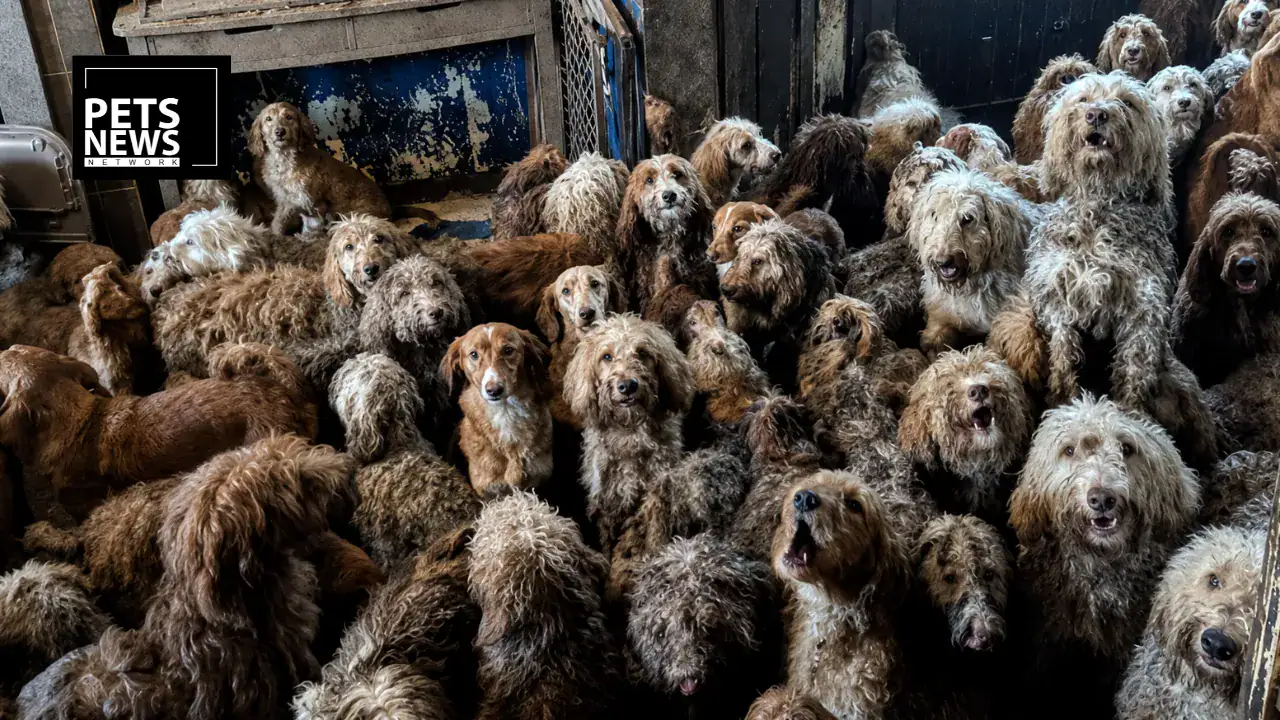

When the RSPCA shared a photograph of dozens of poodle-cross dogs crammed into a single, dilapidated living room, the reaction online wasn’t horror alone, it was disbelief. Comment after comment accused Britain’s leading animal welfare charity of posting an AI-generated fake, insisting the scene looked too extreme, too surreal, to actually exist.
The RSPCA’s response left no room for ambiguity. “As much as we wish this image wasn’t real, sadly it very much is,” the charity said in an official statement. “We don’t need to use AI as we have countless stories to share.” What the photo depicted, the charity confirmed, was the aftermath of a genuine rescue operation involving more than 250 poodle-cross dogs, discovered living in a single UK property earlier this year at an undisclosed location.
What Rescuers Actually Found
The dogs had been kept by an owner whose situation had spiralled far beyond anything manageable. The RSPCA described the case as one where “the numbers and living conditions of the dogs had rapidly grown out of control amid extenuating family circumstances,” rooted not in intentional cruelty, but in accidental overbreeding that overwhelmed the owner entirely, compounded by mental health struggles and genuine vulnerability.
The scenes that greeted RSPCA officers were harrowing. Dozens of dogs, many in poor physical condition with severely matted coats and sore skin, were found crammed together in a single living room. Staff at the Radcliffe Animal Centre in Nottingham, which took in some of the rescued dogs, said the animals arrived with coats so matted that “some were so frightened we had to carry them from their kennels to the grass.”
Of the more than 250 dogs found at the property, the RSPCA took in 87 directly, while the remaining animals were signed over to the Dogs Trust rehoming centre. Given the extreme vulnerability of the owners involved, the RSPCA made the decision not to pursue prosecution, a call the charity said reflected the genuinely difficult, non-malicious circumstances behind how the situation had developed.
Why So Many People Thought the Photo Was Fake
The RSPCA’s social media posts sharing the image quickly filled with comments questioning its authenticity. “Why use a clearly AI image for demonstration of the horrible conditions that animals are sometimes kept,” one commenter wrote. “That photo is fake,” another added, part of what the charity described as dozens of similar responses it had to directly address.
RSPCA Superintendent Jo Hirst addressed the disbelief head-on. “We understand that people are so aghast they don’t believe what they are seeing. But this photo is not AI, it’s real,” she said. “This is the staggering reality of what can happen when even well-meaning owners become overwhelmed, over-breeding can take over, and conditions can spiral out of control.”
Photography experts who examined the image later offered a fairly mundane explanation for why it looked so unsettling: it appeared to have been taken on a smartphone with a relatively slow shutter speed, leaving many of the dogs visibly blurred as they moved during the shot, while others stared directly and forlornly into the camera. The sheer density of animals, combined with that blur and the squalid setting, simply proved harder for viewers to accept as genuine than a more conventional rescue photo would have been.
A Charity Confronting a Genuine, Growing Crisis
Far from an isolated incident, this rescue is part of a documented and accelerating pattern across England and Wales. The RSPCA reported responding to 4,200 incidents last year involving at least 10 animals found living at the same address, a 70% rise since 2021. Of those large-scale cases, 75 involved more than 100 animals in 2025 alone, with the 250-dog case standing as one of the most extreme examples on record.
The charity’s own data shows the scale climbing steadily: incidents involving 10 or more animals rose from roughly 2,300 in 2021 to more than 3,900 by 2025, a 69% increase over four years. Separately, the RSPCA recorded 1,752 mass cat incidents and 1,119 mass dog incidents in 2025 alone, with animals currently in its care sitting at a six-year high, nearly half of them housed in emergency boarding due to a lack of standard shelter capacity.
What’s Actually Driving These Cases
According to the RSPCA, large-scale multi-animal cases like this one are rarely the result of deliberate cruelty. Instead, the charity points to a combination of underlying pressures: mental health struggles, the ongoing cost-of-living crisis, and poor breeding practices among informal or backyard breeders. Often, these situations begin with genuinely well-intentioned owners who simply lose control as animal numbers multiply faster than they can manage.
This particular case fits that pattern closely. A vulnerable individual, already facing difficult family circumstances, found themselves managing an accidentally overbred population that had grown far beyond what any single household could reasonably care for, until the situation became visibly, undeniably unsustainable.
From Rubble to Rehoming: Where the Dogs Are Now
Despite the grim conditions in which they were found, many of the rescued dogs have since made real progress on the road to recovery. Rescue centres across the country have been working to rehabilitate the animals, and while capacity remains stretched, a number of the dogs have already been placed up for adoption at regional RSPCA centres.
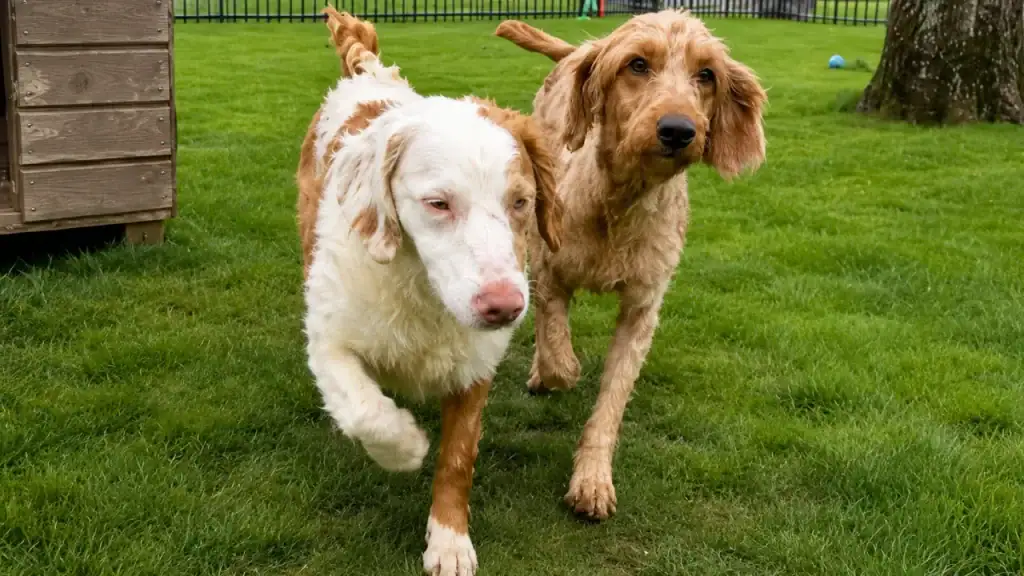
Among the standout stories is Stevie, a blind dog who was rescued from the property, now paired with Sandy, another rescued dog who has taken on the role of guide-companion, helping Stevie navigate his surroundings. Their bond has become one of the more heartening details to emerge from an otherwise difficult case, a reminder that recovery, even for animals who arrived in the worst condition, remains genuinely possible with the right care and support.
The RSPCA’s Wider Appeal for Adoption
With shelters already stretched thin by the scale of these incidents, the RSPCA has renewed its public appeal for adoptions to help ease pressure on overwhelmed centres. “We urgently need to find suitable homes for countless animals in our care,” Superintendent Hirst said, encouraging anyone able to take in a rescue pet to consider checking the charity’s Find a Pet listings.
That appeal carries added weight given the broader context: this single 250-dog case, while extreme, represents just one entry in thousands of similar incidents the RSPCA is now confronting annually, at a scale the charity says continues to climb year over year.
Why This Story Matters Beyond the UK
Beyond the animal welfare crisis itself, this case offers a striking, almost accidental case study in how difficult it has become for the public to distinguish authentic, documentary evidence from AI-generated content, even when an established, trusted institution is the one presenting it.
For an animal welfare charity, having to formally deny AI fabrication of genuine rescue footage, and pointedly note that it has “countless stories to share” without ever needing to fabricate one, is a telling sign of where public trust in visual media currently stands. It’s also a reminder that the reality of animal hoarding and uncontrolled overbreeding can be every bit as extreme, and every bit as real, as anything a viewer might initially mistake for fabricated shock content, and that recovery stories like Stevie and Sandy’s are just as real on the other side of it.
Pets News Network is India’s first dedicated media platform for the pet and animal industry. For breaking global pet news, brand coverage, and advertising enquiries, contact: ankur@petsnewsnetwork.com