
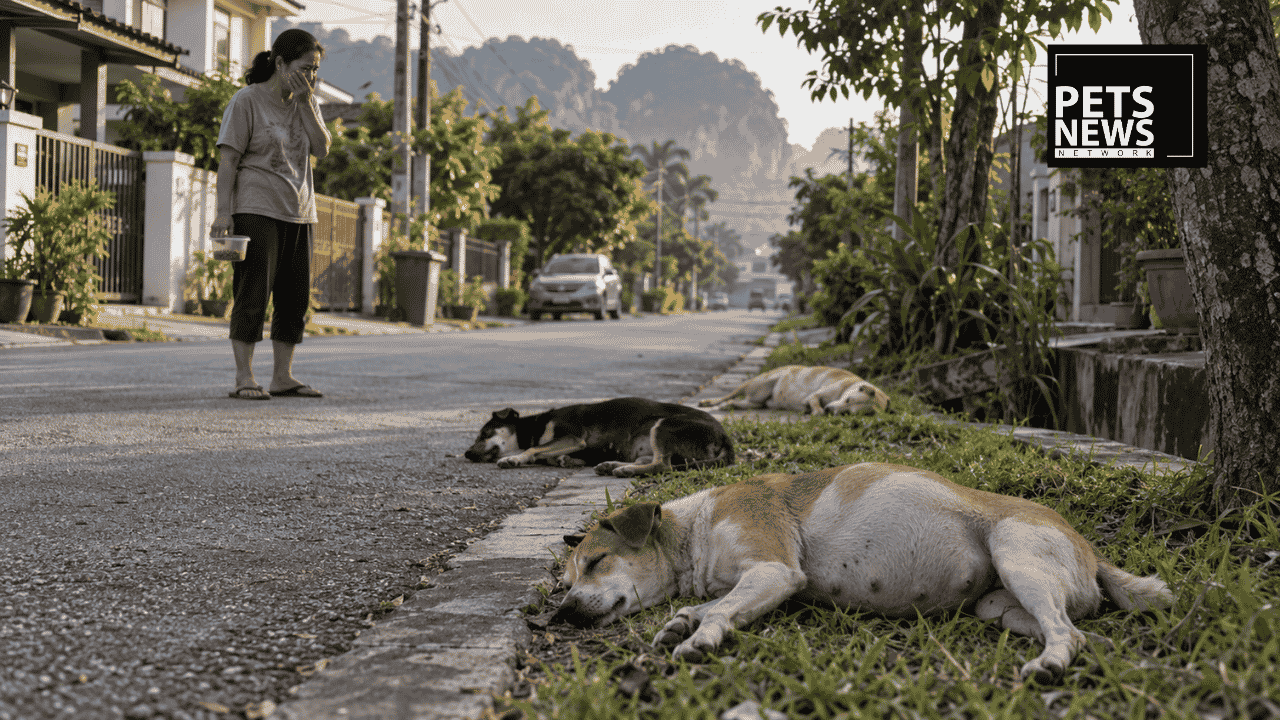

Three street dogs died in a Malaysian housing area on Saturday morning. By the time anyone thought about proving what killed them, they were already buried. That failure, and the overcrowded shelters behind it, will sound familiar to anyone following India’s stray dog debate.
What happened in Ipoh
On Saturday, 26 September, at about 7.30am, a community feeder in Desa Rishah Indah, in the Malaysian city of Ipoh, found three street dogs lying dead with foam around their mouths. One of them was pregnant.
G. Mageswary, 57, had been feeding the dogs in that area for six years. She told The Star there were around nine dogs living there, some abandoned by people, others drifting in from elsewhere. They were tame, she said. They would bark at strangers but did not chase anyone. They would eat, then go and rest at a nearby housing project site.
She was still searching for the others, hoping they were unharmed.
The Ipoh Society for the Prevention of Cruelty to Animals responded the following day. Its president, Ricky Soong, said volunteers had been asked to lodge a police report and that the society would cooperate fully with any investigation.
“We are deeply saddened and outraged by this incident,” he said. “It was a very inhumane act.”
Under Malaysia’s Animal Welfare Act 2015, poisoning an animal is an offence punishable by a fine, imprisonment or both, whether the animal is owned or a stray.
And then the case ran into a wall
Here is where the story becomes instructive rather than simply sad.
When The Star contacted Ipoh district police chief Asst Comm Muhammad Najib Hamzah, he said police had received no information or reports about the matter. Officers went to the location, he said, and found no such incident.
They would not have found much. Mageswary had buried two of the dogs at the site herself, and a third had been buried elsewhere by someone else. By the time anyone official arrived, there were no bodies.
No bodies means no post-mortem. No post-mortem means no toxicology. No toxicology means no proof of what actually killed three dogs, and therefore, in practice, no case.
This matters for how the story should be described. The dogs died with foam around their mouths, which is consistent with poisoning. Poisoning is strongly suspected by the people who found them and by the welfare group. But it has not been established, and at present there is no physical evidence that could establish it.
This has happened in Ipoh before, repeatedly
Several reports described this as the first such incident in that neighbourhood. In the city as a whole, it plainly is not.
Ipoh has a documented history of mass stray dog deaths suspected to be poisonings:
- May 2021 — 17 dogs
- February 2022 — eight dogs found around unoccupied shoplots at Lahat Mines
- February 2022 — around 20 dogs found dead at Tasik Cermin, reportedly one day before a pre-launch event for an eco park at the same site
- June 2022 — four more at Lahat Mines
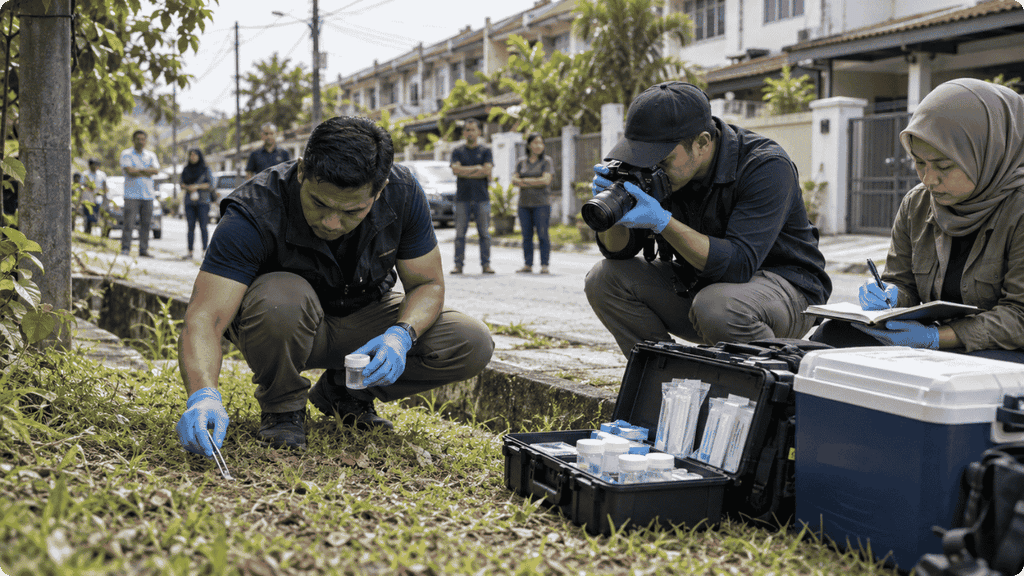
In at least some of those earlier cases, the state Department of Veterinary Services collected the carcasses for sampling to determine whether the animals had in fact been poisoned. That is precisely the step that did not happen this time.
A pattern of repeated incidents with no successful prosecution is not a coincidence. It is what happens when evidence is never collected.
The part that should worry India
The Ipoh SPCA did not stop at condemning the killings. Soong used the moment to renew a demand his organisation has been making for some time: that the government reintroduce Trap, Neuter, Release, Manage (TNRM) programmes.
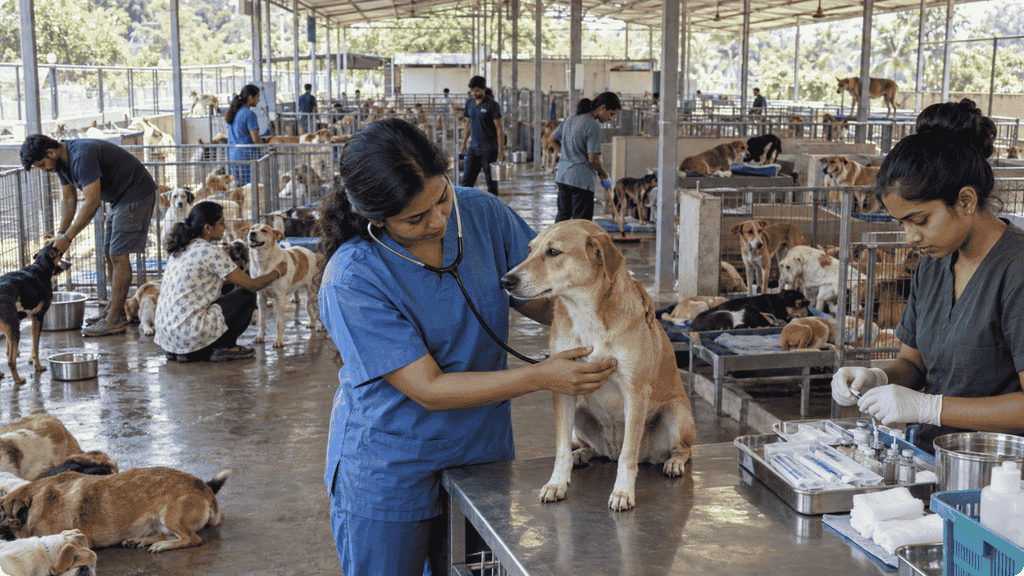
His reasoning was blunt. All shelters in Ipoh are overcrowded and at full capacity. Volunteers can no longer take in more dogs. If TNRM is not implemented effectively, he said, the situation will only get worse.
Three weeks earlier, The Star had reported Ipoh’s animal welfare organisations describing themselves as reaching breaking point, rescuers facing overwhelming financial and emotional strain, shelters unable to absorb more animals, and dogs caught by the city council unable to be released back where they came from. One volunteer said six harmless dogs in her care had been put down by the authorities. Another welfare worker argued that friendly, non-aggressive dogs should be released rather than warehoused, with shelters reserved for animals that genuinely cannot be returned.
Read that list of complaints again and substitute Indian place names. Every element of it is live in India right now.
India has its own sterilise-vaccinate-return framework in the Animal Birth Control (ABC) Rules, 2023, made under the Prevention of Cruelty to Animals Act, 1960. On paper, the approach Ipoh’s welfare groups are demanding is already Indian law. In practice, implementation is uneven across municipalities, shelter capacity is limited, sterilisation targets go unmet in many cities, and public frustration after dog bite incidents produces exactly the same pressure for removal that Malaysian councils are under.
The consequence is also the same. Where there is no functioning humane system, and where residents feel unheard, some of them take matters into their own hands. Poison is cheap, quiet and, as Ipoh demonstrates, very hard to prosecute.
What Indian law actually says
For anyone who thinks poisoning a street dog is a grey area in India, it is not.
Killing or maiming an animal is punishable under Section 325 of the Bharatiya Nyaya Sanhita, which replaced the corresponding IPC provisions in July 2024 and carries a jail term of up to five years, a fine, or both. Cruelty offences are separately covered under Section 11 of the Prevention of Cruelty to Animals Act, 1960.
The enforcement picture is improving slightly, at least in terms of visibility. The National Crime Records Bureau’s Crime in India 2024 report, released in May 2026, recorded PCA Act cases as a separate category for the first time, logging 9,039 cases nationally, with 10,312 people arrested. Maharashtra alone accounted for 2,927 of them.
But those are registered cases. The gap between incidents and FIRs remains enormous, and the reason is often the same one on display in Ipoh.
The practical lesson: do not bury the evidence
This is the part worth taking away from a case happening 3,500 kilometres away.
If you are a community feeder, a resident or a volunteer and you find dogs dead in circumstances that suggest poisoning:
Do not bury or dispose of the body. This is the single most important step, and the instinct to give the animal a decent burial quickly is exactly what destroys the case. Without a carcass there is no post-mortem, no chemical analysis, and nothing for a prosecutor to work with.
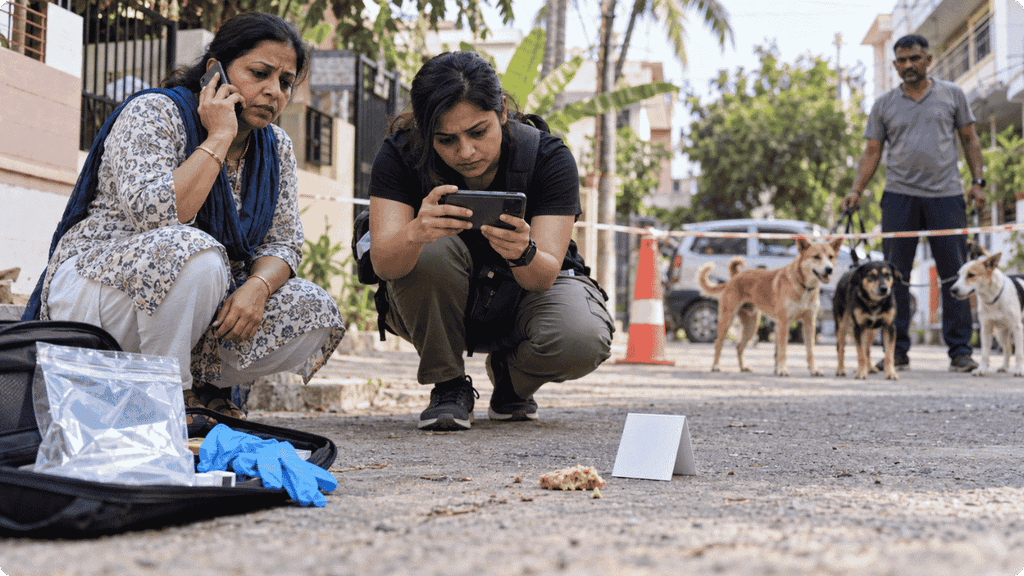
Photograph and video everything immediately. The body, its position, the surrounding area, any visible food or bait, other affected animals. Capture the date and time if your phone records it.
Call the authorities before moving anything. Contact the local police and your municipal veterinary officer or the state animal husbandry department. Ask specifically for a post-mortem and for samples to be sent for chemical analysis.
Bring an animal welfare organisation in. Complaints arriving with a recognised welfare group attached tend to move faster than those from an individual, and volunteers often know which officials to approach.
Check on the rest of the group. Poison left out affects whoever eats it. Surviving dogs in the area may need urgent veterinary attention, and bait may still be present. Keep pets and children away from the site.
Insist on the right sections. A complaint citing BNS Section 325 alongside the PCA Act is harder to shrug off than one citing the PCA Act alone.
Why a Malaysian case belongs in Indian news
Because the argument is identical, and Malaysia is slightly ahead of us in demonstrating where it leads.
Overcrowded shelters, a suspended or under-resourced sterilisation programme, volunteers at breaking point, councils catching dogs with nowhere humane to put them, and residents who feel the official system has failed them. Somewhere in that gap, three dogs died in a housing estate on a Saturday morning, and a pregnant one among them, and nobody will be held responsible because nobody thought to preserve the proof.
Mageswary is still looking for the other six.
Source: Based on reporting by The Star (Malaysia): “Pregnant dog among three strays found dead in Ipoh,” 26 September 2026, and “Action needed to address stray dog deaths in Ipoh, says animal welfare group,” 27 September 2026. Indian legal and data references drawn from the Bharatiya Nyaya Sanhita, the Prevention of Cruelty to Animals Act 1960, the ABC Rules 2023, and NCRB Crime in India 2024.
Pets News Network is India’s first dedicated media platform for the pet and animal industry. For breaking global pet news, brand coverage, and advertising enquiries, contact: info@petsnewsnetwork.com