

Before Costa Rica could bring an animal back, it had to establish that the animal was actually gone. There was no recent scientific survey to consult. So the conservationists did something that reintroduction programmes rarely do first: they asked the people who lived there. Three hundred and thirty-five of them, across thirteen villages. The answer they got is what started everything else.
What happened
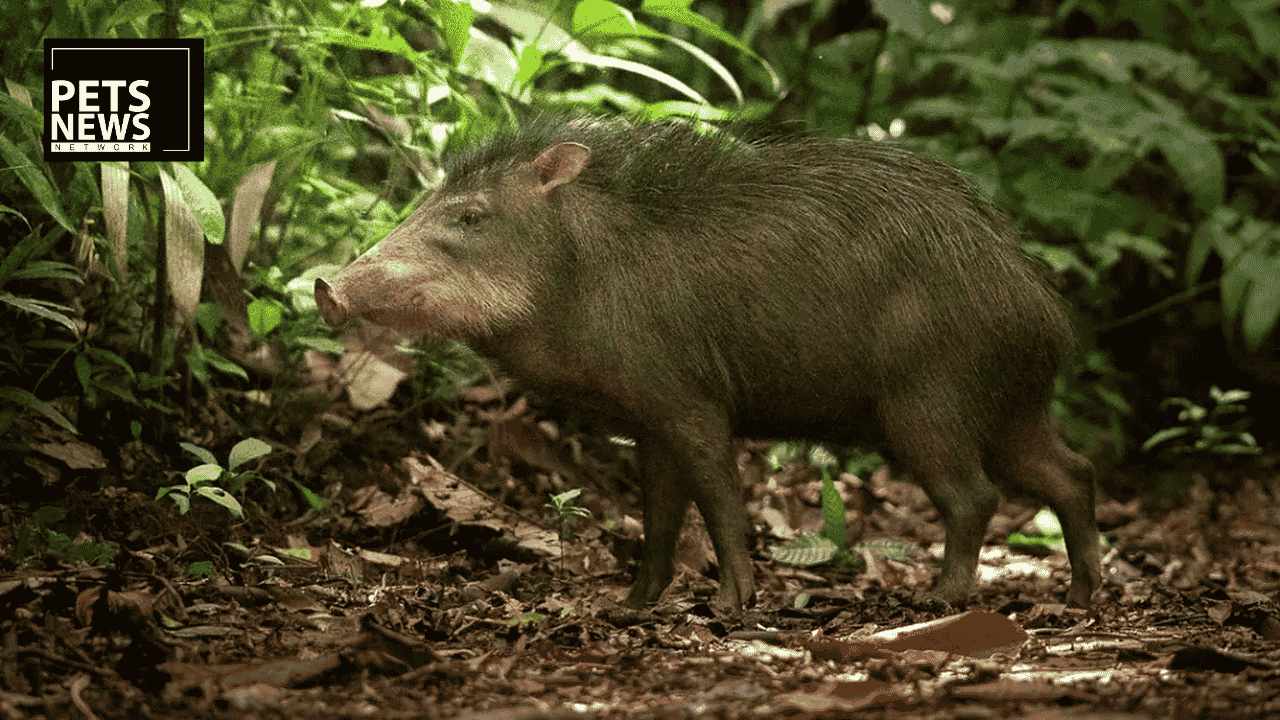
In the first week of July 2026, thirteen white-lipped peccaries (Tayassu pecari) — known locally in Costa Rica as chanchos de monte — were released into Piedras Blancas National Park in Golfito, on the country’s southern Pacific coast.
The species had not been recorded there for roughly eighteen years. Hunting had wiped it out.
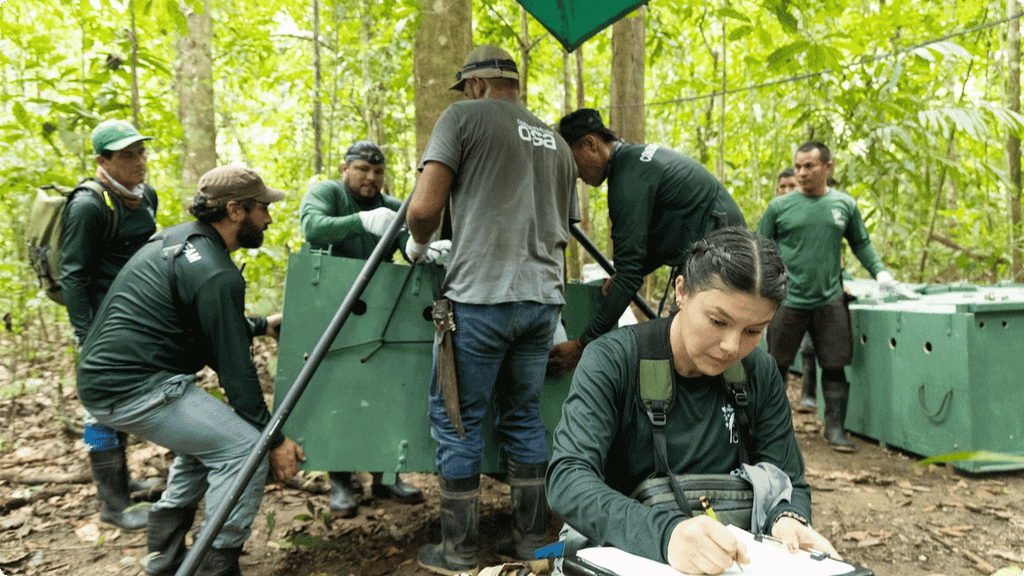
The animals were captured on the Osa Peninsula, where the species still holds strong numbers, then moved by truck and boat across the Golfo Dulce. According to Mongabay’s account of the operation, the relay ran about sixteen hours and involved more than twenty people. Each animal was then carried roughly two kilometres into the forest to a temporary enclosure.
They were not simply let loose. The project used a soft release — the peccaries were held in an acclimation corral and allowed to begin exploring gradually as they adjusted. Every animal carries a GPS tracking collar, which lets researchers follow their movements and also helps direct anti-poaching patrols.
The project is run by Osa Conservation, a non-profit, working with the Osa Conservation Area (ACOSA), part of Costa Rica’s national protected areas system, SINAC.
A second translocation is planned, with a target of building the Piedras Blancas population to 25 to 30 animals.
The survey that came first
This is the part of the story worth dwelling on, and it is the part most coverage has skipped.
Work began in 2023, when Osa Conservation and ACOSA started analysing the status of the white-lipped peccary on the Osa Peninsula and assessing what earlier conservation efforts had achieved. A year later the project took shape.
But a question had to be answered before anything could proceed: was the peccary actually absent from Piedras Blancas, or simply unrecorded?
There was no current scientific study to answer it. So the team ran two parallel exercises.
The first was a workshop with ACOSA officials to map the species’ historical and present distribution, alongside a literature review.
The second was a survey of 335 people across 13 communities bordering Piedras Blancas National Park.
By Osa Conservation’s own account, it was this community knowledge that confirmed the species had disappeared — and that confirmation is what gave the project its final green light.
A reintroduction programme that begins by asking villagers what they have seen, and then acts on the answer, is doing something unusual. The more common sequence is a decision taken elsewhere, announced locally afterwards.
Then they trained the same communities
The consultation did not end with the survey.
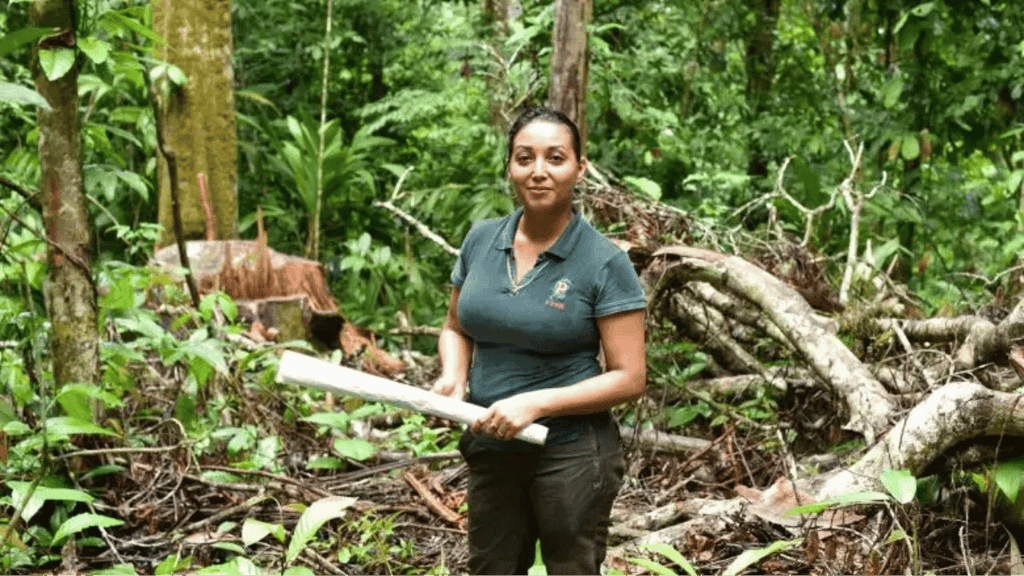
In the community of La Gamba, Osa Conservation set up a monitoring group where residents of all ages learn about the mammals around them and are trained to use camera traps. The organisation also worked with the Comisión Turística Sur-Sur on training aimed at strengthening tourism around Piedras Blancas National Park.
The logic is not sentimental. Poaching persists outside the national parks — the same pressure that emptied Piedras Blancas originally, and the reason peccaries had not simply walked back across from Osa on their own. A reintroduction into a landscape where hunting continues is an expensive way to restock a hunting ground.
Giving the surrounding villages both a monitoring role and an economic stake is the mechanism that is supposed to prevent that.
Guido Saborío, Wildlife Manager at Osa Conservation, has framed the project in exactly those terms — that protecting the natural wealth of southern Costa Rica also creates opportunities for local people through ecotourism and environmental education.
Why this animal, specifically
The white-lipped peccary is a pig-like ungulate that moves in herds — historically very large ones, with records of groups numbering in the hundreds. The IUCN lists it as Vulnerable with a declining population, and has reported a decline of around 89% in Costa Rica.
Osa Conservation describes the species as filling three roles at once: prey, predator, and seed disperser. That three-part description matters, because most coverage of this story has reported only the third.
Prey. This is the role driving the project. White-lipped peccaries are a primary food source for jaguars and pumas. When the peccary vanished from Piedras Blancas, the jaguar vanished too — along with Baird’s tapir. Osa Conservation has said the loss of this prey pushed the region’s jaguars toward smaller and scarcer targets, raising the risk of conflict with people. Restoring the peccary is intended to restore the conditions under which jaguars could return.
Seed disperser. Osa Conservation states the species disperses seeds for 57 types of plants. That figure comes from the organisation itself and is the one most widely repeated — but it is worth noting that it is presented without a supporting citation, and that the peer-reviewed picture is more complicated. A study in Costa Rica’s Corcovado National Park found white-lipped peccaries acted as seed predators for thirty tree species while dispersing seeds through their faeces for only two. The species does both, and the balance varies by forest and by fruit.
Ecosystem engineer. Peccaries create wallows — muddy depressions used by other species, functioning as microhabitats in their own right.
What India can take from this
The parallels with Indian reintroduction work are direct. Panna and Sariska both involved reintroducing a locally extinct large mammal into a protected area where the original cause of extinction — poaching — had not been fully resolved. Both used phased release and radio-collar monitoring. Both succeeded in establishing breeding populations, and both remain dependent on sustained protection.
Three elements of the Costa Rican approach stand out against that record.
The absence was established with community testimony, not assumed. In India, local knowledge is frequently gathered as an afterthought or as a formality. Here it was the deciding evidence.
Training came before the animals. Community outreach ran for years before any peccary was moved. Residents were taught to run camera traps — which makes them participants in monitoring rather than subjects of enforcement.
Tourism preparation was built into the project, not left to follow. Working with a regional tourism commission before release is an attempt to establish the economic case for protection in advance, rather than hoping it emerges.
None of this guarantees success. The thirteen animals are still settling, the second translocation has yet to happen, and poaching outside the park remains the open risk. A reintroduction is not complete at the moment of release — it is complete when a population sustains itself without intervention, and that determination takes years.
Where it stands
Thirteen peccaries are in Piedras Blancas, collared and monitored, slowly expanding their range from the release site. A second group is planned to bring the total toward thirty. Osa Conservation is also working toward translocations of harpy eagles and giant anteaters.
The project’s stated ambition is to become a replicable model, nationally and internationally.
Whether it earns that will be measured in years, not months. But the sequence it followed — establish the absence with the people who live there, train them, prepare the economy around the park, and only then move the animals — is worth recording regardless of how the peccaries fare.
Most reintroduction programmes start with the animal. This one started with a question, and 335 answers.
Pets News Network is India’s first dedicated media platform for the pet and animal industry. For breaking global pet news, brand coverage, and advertising enquiries, contact: info@petsnewsnetwork.com