
When the earthquake hit southern Japan this week, Tomoko Takaoka didn’t have time to think twice. She grabbed her two dogs, bundled them up, and went looking for somewhere safe to wait out the aftermath.
What she found instead was a painfully familiar problem for pet owners caught in disasters: the nearest evacuation centre wouldn’t take her animals in.
A Night Spent in the Car, Together
Unable to reach her parents and facing a shelter that wouldn’t accept her chihuahua, Ku, and her chihuahua-poodle mix, Sheri, the 31-year-old factory worker made a decision many pet owners will instantly understand. Rather than leave her dogs behind, she chose to stay with them — spending that first sweltering night crammed into her car with her canine family rather than separating from them during a crisis.
It’s a scenario that plays out again and again whenever disaster strikes: evacuation centres built for people simply aren’t designed to accommodate pets, leaving owners to choose between their own safety and their animals’ wellbeing.
Word Spreads, and a Refuge Emerges
Eventually, social media posts pointed Takaoka toward Ryunosuke Animal Hospital in downtown Kumamoto. The hospital had converted classrooms inside its veterinary nurse training school into temporary housing for evacuees, setting up separate rooms for cat owners and dog owners alike.
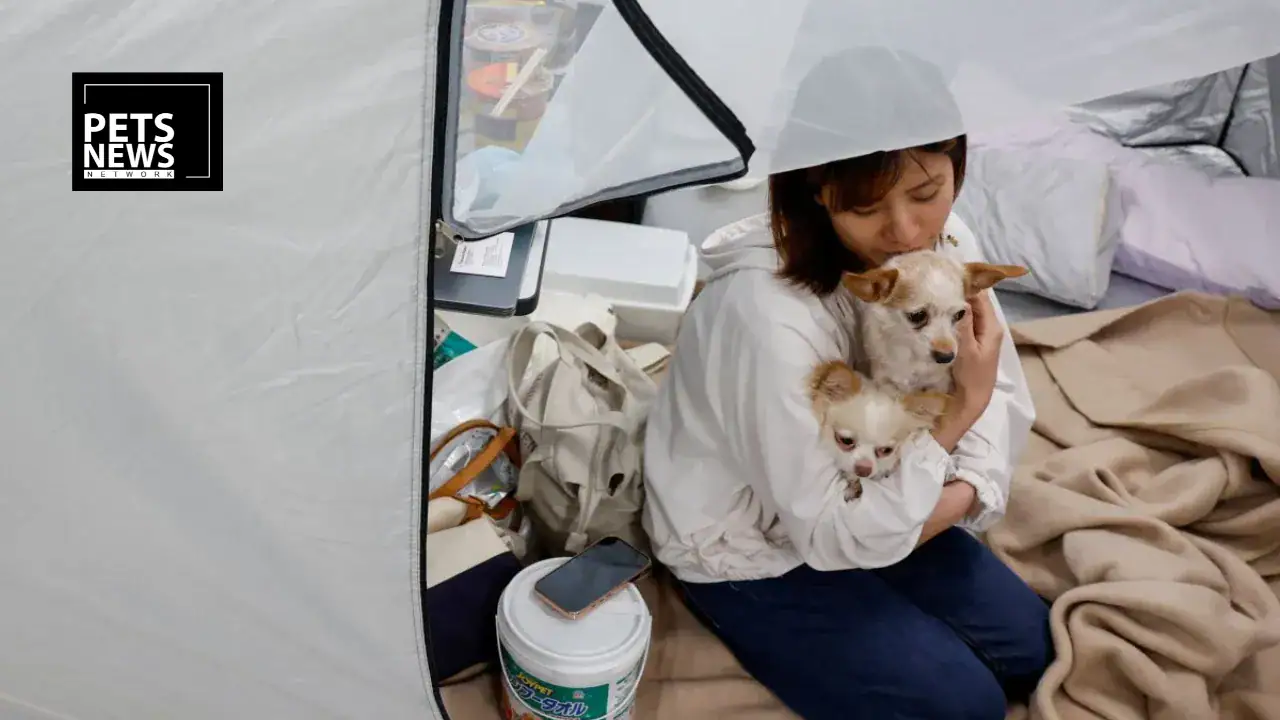
It’s there that Ku and Sheri finally found a safe, sheltered space, peering out from a tent alongside their owner as the city worked through the aftermath of the quake.
A Lesson Learned From 2016
This isn’t the hospital’s first time stepping in during a crisis. According to hospital director Ryunosuke Tokuda, the facility had learned from Kumamoto’s devastating 2016 earthquake that pet owners were frequently turned away from standard evacuation shelters — a gap that left animals and their families without anywhere safe to go during past disasters.
“During disasters it’s only natural for dogs and cats to stay together with their families. But people who don’t own pets don’t necessarily want to be with them,” Tokuda said, explaining the reasoning behind setting up dedicated, separate housing specifically for pet owners rather than trying to fold them into general shelters.

Why This Kind of Response Matters
Stories like Takaoka’s highlight a gap in disaster preparedness that extends well beyond Japan. Evacuation infrastructure built purely around human occupants often overlooks a simple reality: for many families, pets aren’t an afterthought, they’re family. When shelters can’t accommodate that, owners are forced into impossible choices — exactly the situation Takaoka faced her first night after the quake.
Ryunosuke Animal Hospital’s response offers a model worth paying attention to: a facility that recognized this gap after a past disaster and built the infrastructure to close it before the next one hit.
A Small Space That Means Everything
For evacuees like Takaoka, a converted classroom with a tent and a bit of space to be near her dogs might not sound like much. But after a night spent in a hot car with nowhere else to turn, it represents exactly the kind of support disaster response should offer — a reminder that keeping families and their pets together during a crisis isn’t a luxury, it’s a basic part of humane disaster relief.
As recovery efforts continue across the earthquake-affected region, facilities like this one stand as a quiet but important example of what pet-inclusive disaster planning can actually look like in practice.
Pets News Network is India’s first dedicated media platform for the pet and animal industry. For breaking global pet news, brand coverage, and advertising enquiries, contact: ankur@petsnewsnetwork.com