
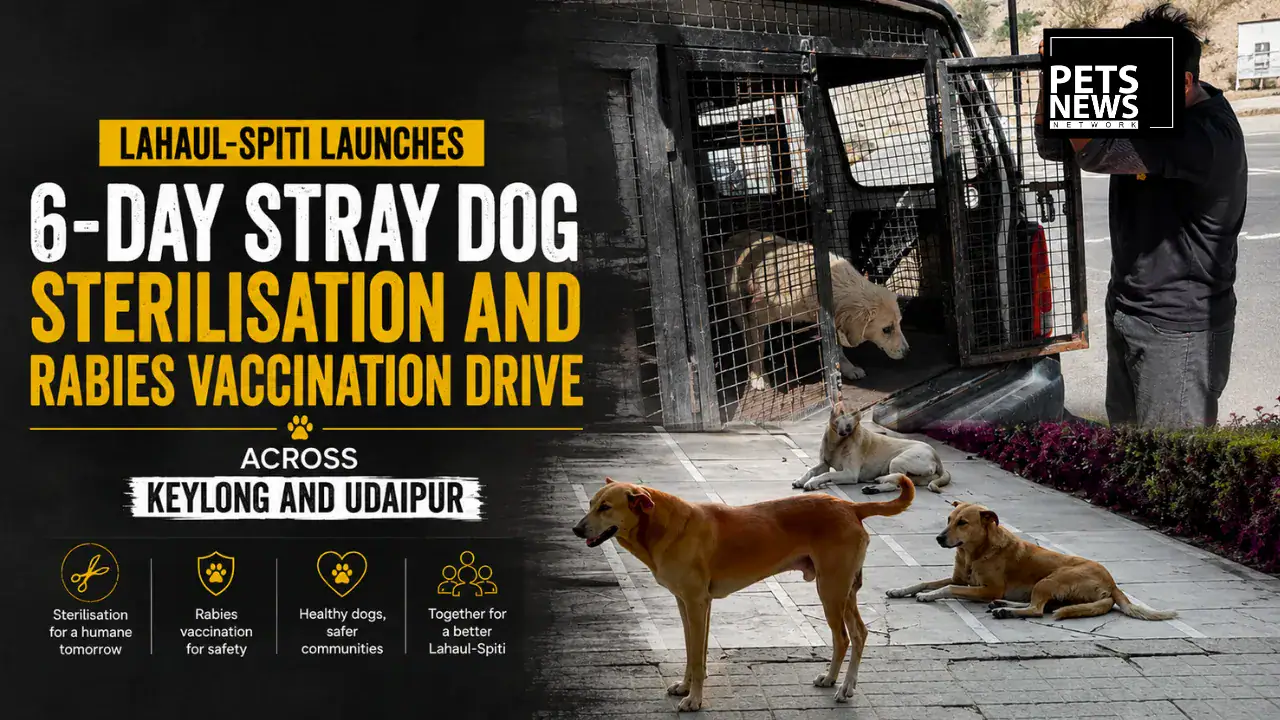

The Lahaul-Spiti district administration in Himachal Pradesh has launched a six-day Animal Birth Control (ABC) and anti-rabies vaccination campaign aimed at managing the local stray dog population while reducing the risk of rabies and dog-bite incidents.
The programme was inaugurated by Deputy Commissioner Kiran Bhadana at Gaushal Gram Panchayat in the Keylong subdivision and is being carried out in two phases across Keylong and Udaipur.
The first phase ran from August 24 to 26 in Keylong, with a target of sterilising 30 stray dogs. The second phase is scheduled from August 27 to 29 in Udaipur, where another 30 dogs are targeted.
That puts the immediate six-day target at 60 stray dogs.
The campaign combines humane capture, surgical sterilisation, post-operative care and anti-rabies vaccination, making it both a population-management intervention and a public-health measure.
Why the district is focusing on sterilisation and vaccination together
District officials have linked the initiative to concerns over the uncontrolled growth of the stray dog population and the associated risk of dog bites and rabies.
Deputy Commissioner Bhadana described the ABC approach as a humane and scientific method of controlling stray dog numbers rather than relying on indiscriminate removal.
The logic behind ABC programmes is long-term population stabilisation. Sterilisation limits repeated breeding, while anti-rabies vaccination addresses disease risk. Used together and repeated consistently, the two measures can reduce reproduction while improving community-level rabies protection.
A structured capture–treat–recover process
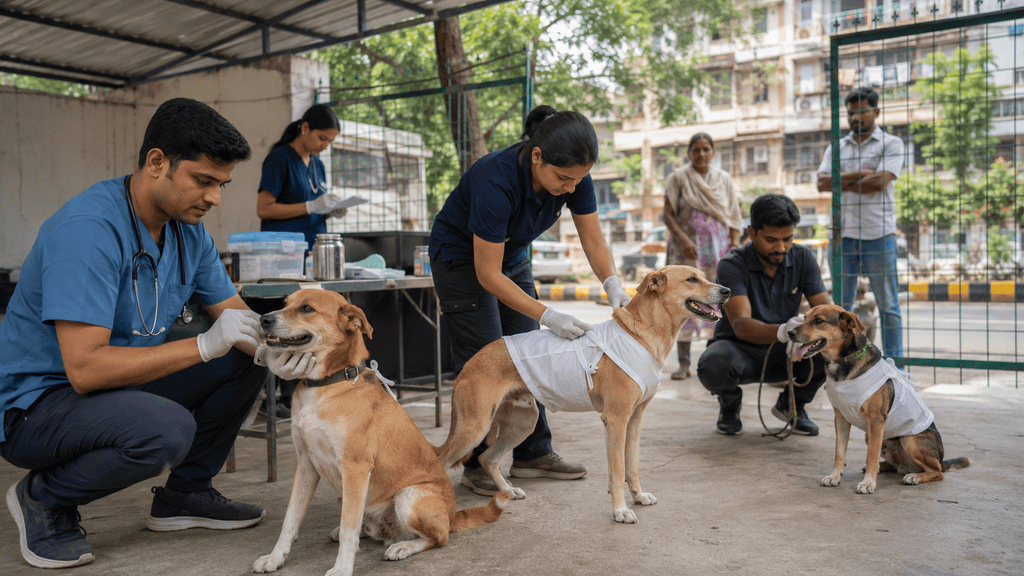
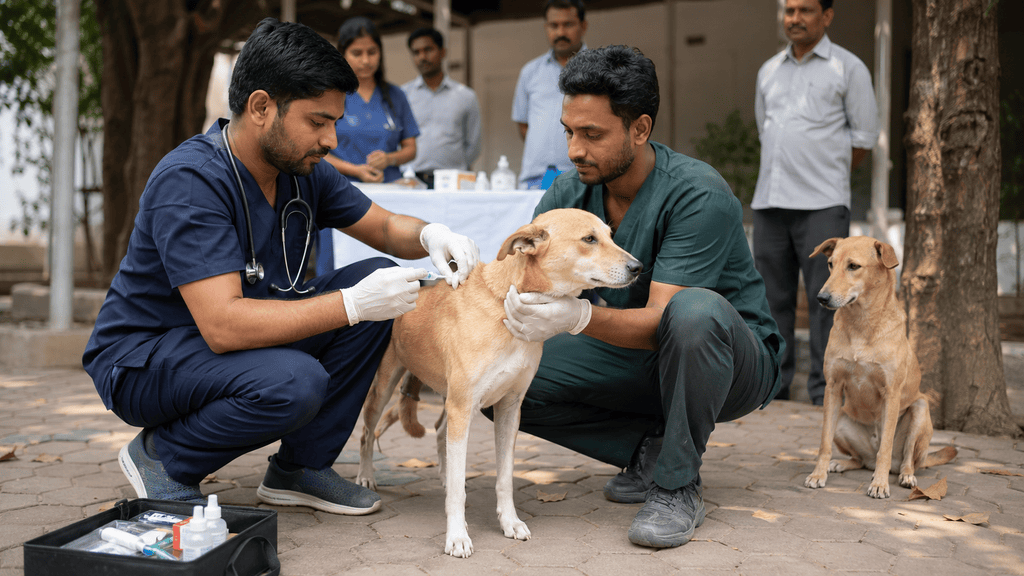
Under the Lahaul-Spiti programme, street dogs are captured for sterilisation and then given post-operative treatment and anti-rabies vaccination.
After recovery, eligible dogs are returned to the areas from which they were captured, following the broader framework of India’s Animal Birth Control Rules.
The Animal Birth Control Rules, 2023, notified under the Prevention of Cruelty to Animals Act, place responsibility for the sterilisation and immunisation of street dogs on local authorities, including municipalities and panchayats.
The rules replaced the earlier 2001 framework and strengthened standards around programme recognition, veterinary care, sterilisation and immunisation.
Supreme Court directions have strengthened the national ABC framework
India’s stray-dog management framework has also undergone significant judicial scrutiny.
In August 2025, the Supreme Court clarified that dogs picked up under ABC programmes should generally be sterilised, dewormed, vaccinated and released back to the same locality, except in cases involving dogs infected or suspected to be infected with rabies or animals displaying aggressive behaviour.
The Court later issued additional directions concerning sensitive institutional areas.
Under the current legal position, dogs removed from premises such as educational institutions, hospitals, sports complexes, bus depots and railway stations are not to be returned to those same controlled or sensitive locations after sterilisation.
For Lahaul-Spiti, sterilisation and vaccination remain the core tools, but implementation must also follow the Court’s latest directions on where treated dogs may be released.
Dr Poonam Thakur leads the district-level animal husbandry effort
The campaign is being implemented under the supervision of the district Animal Husbandry Department, with Dr Poonam Thakur, Deputy Director of Animal Husbandry, playing a key role in the programme.
According to the department, uncontrolled breeding of street dogs remains a challenge in the district and requires sustained intervention rather than a one-time sterilisation camp.
ABC programmes are most effective when repeated over time rather than treated as isolated camps. The current 60-dog target is therefore better understood as part of a continuing district effort, not a complete solution on its own.
Last year: 50 sterilisations and 534 anti-rabies vaccinations
Lahaul-Spiti already has a recent history of dog population and rabies-control work.
According to the Animal Husbandry Department, 50 stray dogs were sterilised in the district last year, while 534 dogs received anti-rabies vaccination.
The wider vaccination count shows that the district’s rabies-control work extends beyond dogs selected for surgery. The new six-day drive adds another sterilisation round while continuing the vaccination component.
Rabies prevention remains a critical public-health objective
Rabies is almost always fatal once clinical symptoms appear, but it is preventable through vaccination and timely post-exposure treatment.
India continues to carry a substantial burden of dog-bite incidents, making canine vaccination an important part of the national rabies-elimination strategy.
The central government’s Animal Birth Control Rules, 2023 specifically connect sterilisation with immunisation as part of scientific stray-dog population management.
For district administrations, ABC campaigns therefore sit at the intersection of veterinary medicine, public health and local governance.
High-altitude districts present their own management challenges
Lahaul-Spiti is not a typical urban district.
Its scattered settlements, mountainous terrain, severe winters and limited accessibility create logistical challenges for almost every public service, including veterinary care.
The two-phase structure—first Keylong and then Udaipur—allows veterinary teams to concentrate resources in defined areas, an important consideration in a district where transport and veterinary access can be difficult.
Humane population control is a long-term process
The Lahaul-Spiti administration’s current target is relatively modest in absolute numbers, but the programme reflects a larger shift in India’s approach to street-dog management.
The national framework increasingly centres on sterilisation and vaccination as the principal tools of scientific street-dog population management.
A one-week campaign can make a local contribution, but long-term population stabilisation requires repeated sterilisation rounds, reliable records and sustained vaccination.
What happens after the six-day campaign
The immediate objective is clear: sterilise and vaccinate 60 stray dogs across Keylong and Udaipur by August 29.
The more important question is what happens afterwards.
If the district continues building on last year’s 50 sterilisations and 534 vaccinations with recurring ABC drives, it could gradually improve both population control and rabies protection.
For Lahaul-Spiti, where geography makes large-scale animal management more difficult than in many urban areas, consistent district-level intervention may prove more important than headline numbers from a single camp.
The latest campaign therefore represents another step toward a structured model of humane stray-dog management—one that attempts to balance animal welfare, public safety and rabies prevention within the national legal framework.
Pets News Network is India’s first dedicated media platform for the pet and animal industry. For breaking global pet news, brand coverage, and advertising enquiries, contact: info@petsnewsnetwork.com