
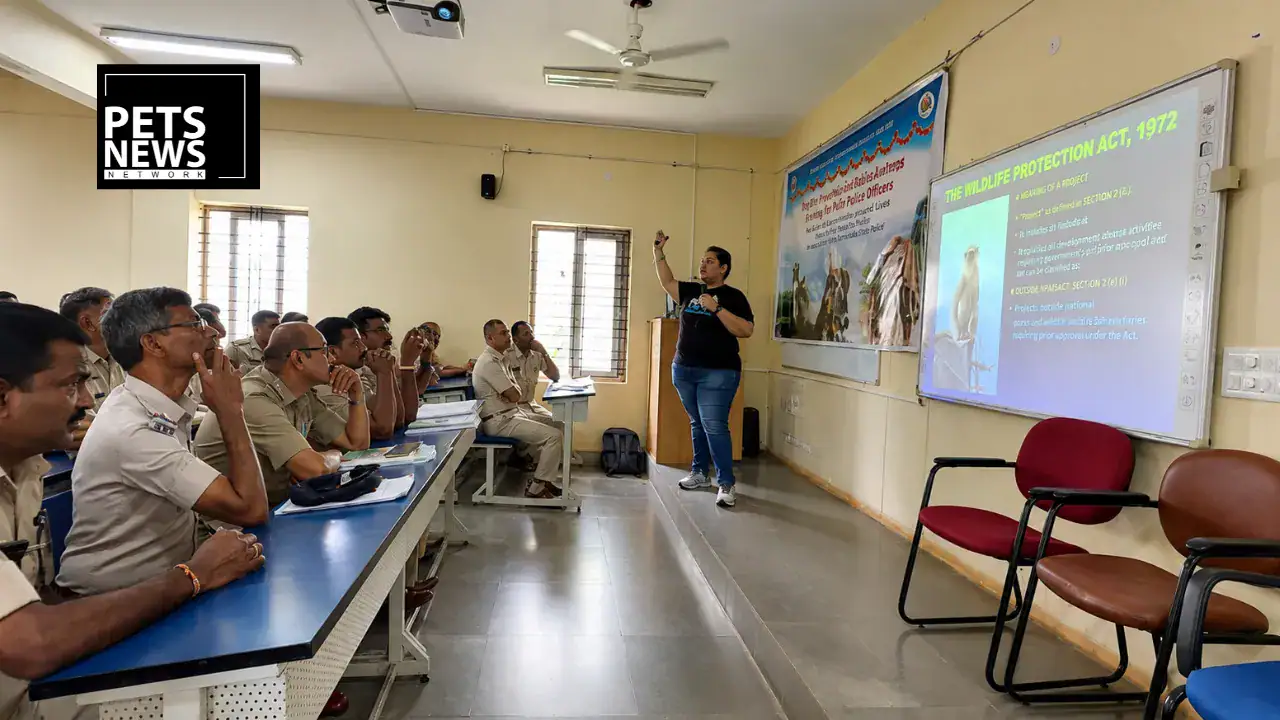

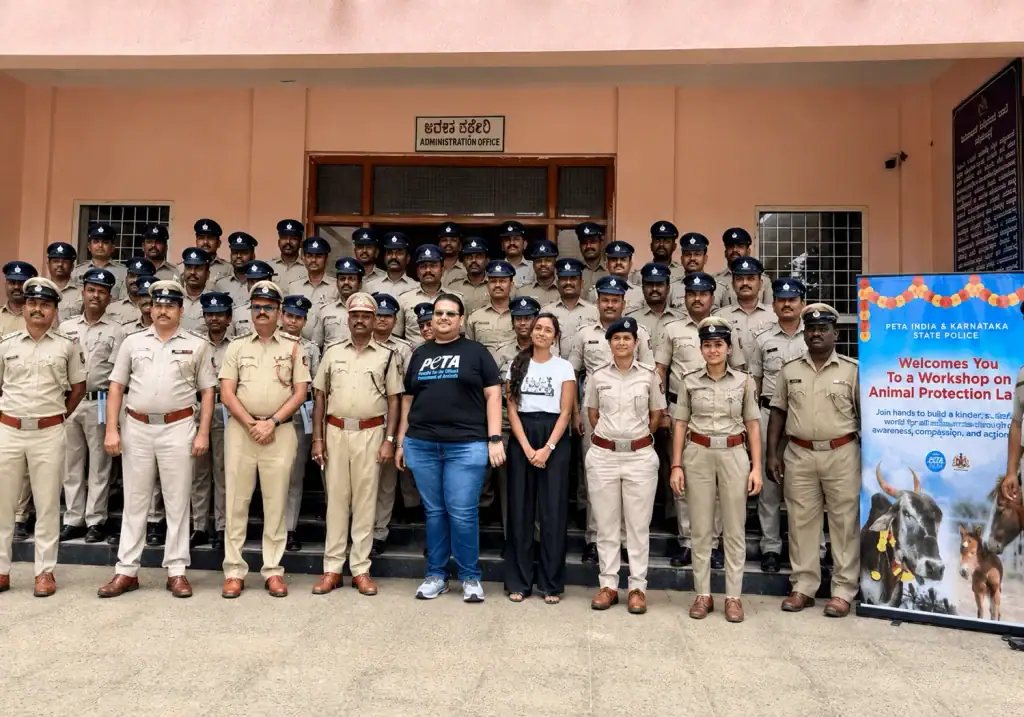
Over 150 police officers across two of Karnataka’s key training institutes recently sat through a very different kind of classroom session, one focused entirely on recognising, investigating, and prosecuting crimes against animals. PETA India conducted specialised three-hour workshops at the Police Training School (PTS) Thanisandra in Bengaluru on August 14 and at Kadur PTS in Chikkamagaluru on August 19, marking the latest in the organisation’s ongoing effort to strengthen how Indian law enforcement handles animal cruelty cases at the ground level.
The scale of participation was notable in itself: more than 100 officers attended the session at Kadur PTS, while over 50 took part at PTS Thanisandra, bringing the combined total past 150 trained officers across the two sessions.
Who Was in the Room
The workshops weren’t limited to junior-ranking staff. Attendees included Police Sub-Inspectors (PSIs), Assistant Sub-Inspectors (ASIs), and Head Constables (HCs), officer ranks that typically sit at the frontline of first response and initial case handling, precisely the stage at which animal cruelty cases are most often mishandled, dismissed, or lost due to unfamiliarity with the relevant legal provisions.
Leading the training from PETA India’s side were Meet Ashar, the organisation’s Legal Advisor and Director of Cruelty Response, and Sinchana, Senior Cruelty Response Coordinator, both bringing direct legal and field expertise to the sessions.
The workshops also carried the visible backing of senior police leadership. Shri D. Devaraja, IPS, Deputy Inspector General of Police (Training) for Karnataka, along with Shri H.S. Jayakrishna, SP and Principal of PTS Thanisandra, and Shri N. Srinivasa, SP and Principal of Kadur PTS, were involved in facilitating and supporting the sessions, lending institutional weight to what might otherwise be dismissed as a peripheral training topic.
What the Training Actually Covered
The three-hour sessions were structured around building practical, working familiarity with the specific legal frameworks that govern animal protection in India. Officers were walked through the Prevention of Cruelty to Animals (PCA) Act, 1960, the country’s foundational animal welfare law, alongside the Wild Life (Protection) Act, 1972, as amended in 2022, and the newly implemented Bharatiya Nyaya Sanhita (BNS), 2023, which has replaced the Indian Penal Code as India’s primary criminal code.
Beyond simply covering legal text, the sessions focused on sensitising officers to proper legal procedure when handling animal abuse cases, reinforcing the frontline role police play in enforcement, since officers are typically the first point of contact when an animal cruelty complaint is filed, and their initial handling of a case often determines whether it proceeds effectively through the legal system or stalls early due to procedural gaps.

The Data Behind Why This Training Matters
The push for structured police training on animal cruelty isn’t happening in a vacuum, it’s backed by data that paints a fairly stark picture of both the scale of the problem and the historical gap in how it’s been tracked and enforced.
The National Crime Records Bureau (NCRB) began tracking animal cruelty cases as a distinct category for the first time only in 2024, recording 9,039 cases and 10,312 arrests across India in that inaugural reporting year. The fact that a category this significant had no dedicated national tracking mechanism until so recently underscores just how underdeveloped formal enforcement infrastructure around animal cruelty has historically been in India.
Separately, data compiled by the Federation of Indian Animal Protection Organisations (FIAPO) paints an even broader picture, finding that over 500,000 animals were victims of crime over the 10-year period leading up to 2021, a scale that suggests the newly tracked NCRB figures likely represent only a fraction of the actual cruelty occurring nationwide, given persistent underreporting and inconsistent enforcement across jurisdictions.
The Link Between Animal Cruelty and Broader Violence
One of the more striking pieces of context PETA India brings into these training sessions is the documented connection between animal cruelty and other forms of violent crime. Citing a study published in the Forensic Research and Criminology International Journal, the organisation highlights that individuals who abuse animals are three times more likely to go on to commit other violent crimes, including murder, assault, rape, and robbery.
That statistic reframes animal cruelty cases as more than an isolated welfare issue, positioning them instead as a potential early warning indicator that trained police officers, equipped with the right legal knowledge and investigative awareness, could be uniquely positioned to recognise and act on before more serious violent crimes occur.
A Law PETA India Wants to See Reformed
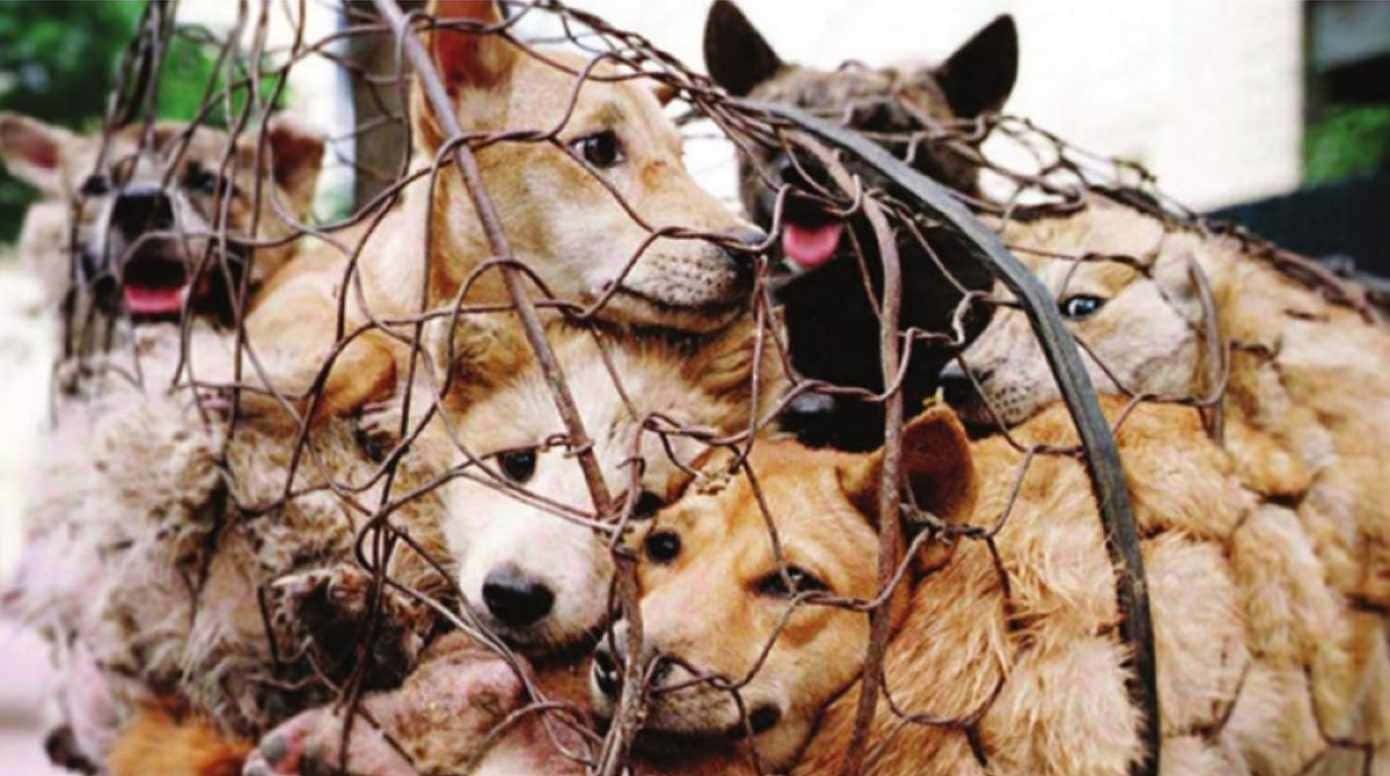
Beyond training officers on existing law, these workshops also serve as a platform for PETA India to highlight what it sees as a critical gap in the legal framework itself. The organisation has been actively pushing to amend the PCA Act, 1960, arguing that its penalty structure remains badly outdated, with maximum fines for first-time offenders capped as low as ₹50, a figure that carries essentially no deterrent value by any modern standard.
PETA India’s proposed reform calls for penalties under the PCA Act to be brought into alignment with the more substantial punishments available under the BNS and the Wildlife Protection Act, both of which carry meaningfully stronger consequences for comparable offences. The disparity between these frameworks currently means that how seriously an act of cruelty is punished can depend heavily on which specific law it happens to be prosecuted under, rather than on the severity of the act itself.
Part of a Much Larger National Campaign
The Karnataka sessions aren’t a standalone initiative, they’re part of a sustained, nationwide effort by PETA India to embed animal cruelty awareness directly into law enforcement training across the country. The organisation has previously conducted similar sensitisation workshops with the Border Security Force (BSF) in Gwalior, as well as with state and city police departments across Goa, Sikkim, Chhattisgarh, Pune, Nagpur, Mira-Bhayandar, Belagavi, Hubli-Dharwad, and Jammu & Kashmir.
That geographic spread, spanning paramilitary forces, state police departments, and city-level law enforcement across multiple regions, reflects a deliberate, long-term strategy: rather than pursuing legal reform in isolation, PETA India appears to be simultaneously building enforcement capacity on the ground, ensuring that if and when stronger penalties do come into effect, the police officers responsible for acting on them are already equipped with the legal knowledge and procedural clarity needed to make those laws genuinely enforceable.
Why This Matters for India’s Animal Welfare Landscape
Training initiatives like these address a frequently overlooked bottleneck in animal welfare enforcement: even well-designed laws fail in practice if the officers responsible for applying them lack clear, practical training on how to do so. By directly engaging with PSIs, ASIs, and Head Constables, the officers most likely to be first on the scene of a reported cruelty case, PETA India’s workshops target exactly the level of the system where better legal literacy has the most immediate, tangible impact.
As similar sessions continue rolling out across additional states and forces, the cumulative effect could meaningfully shift how consistently and effectively animal cruelty cases are handled nationwide, provided sustained institutional support from police leadership continues alongside PETA India’s ongoing training push.
Pets News Network is India’s first dedicated media platform for the pet and animal industry. Source : Peta India. For breaking global pet news, brand coverage, and advertising enquiries, contact: info@petsnewsnetwork.com