
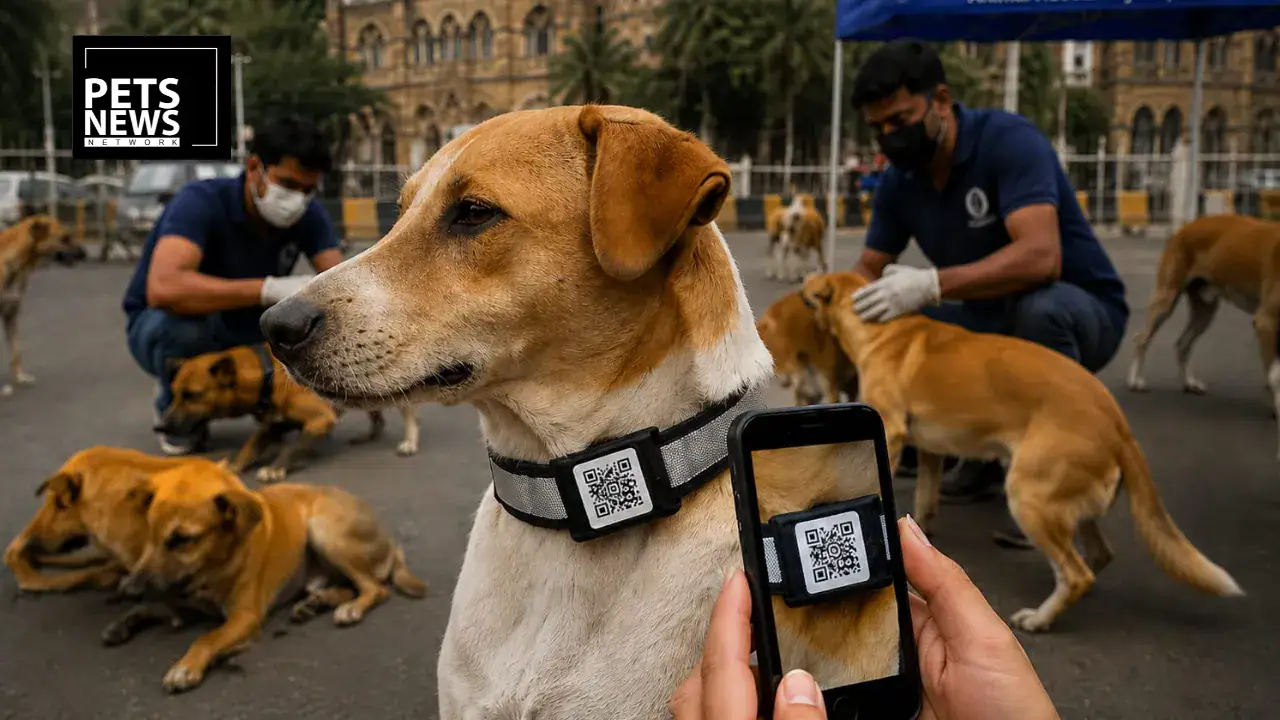

Mumbai’s community dogs are getting a distinctly modern identification system. The Brihanmumbai Municipal Corporation (BMC) has introduced reflective collars fitted with QR tags for stray dogs across the city, a move designed to make it dramatically easier for both citizens and field personnel to identify which dogs have already been vaccinated and sterilised, and which still need intervention.
The initiative, announced on Thursday, August 20, forms a core part of the civic body’s broader ambition to make Mumbai a rabies-free city by 2030.
Why the BMC Is Acting Now
The push behind this new system isn’t happening in isolation. The BMC confirmed it is strengthening its stray dog management, animal birth control, and anti-rabies measures in direct response to recent Supreme Court directions on how Indian cities must manage their community dog populations.
The collaboration was formally announced in the presence of Deputy Municipal Commissioner Vinayak Vispute, social entrepreneur Akshay Ridlan, and Dr. Akbar Pathan of the Veterinary Health Department, under the broader guidance of Municipal Commissioner Ashwini Bhide and Additional Municipal Commissioner Prajakta Verma-Lavangare. The presence of such senior civic leadership at the launch signals that this isn’t being treated as a minor pilot project, but as a structural piece of the city’s long-term rabies elimination strategy.
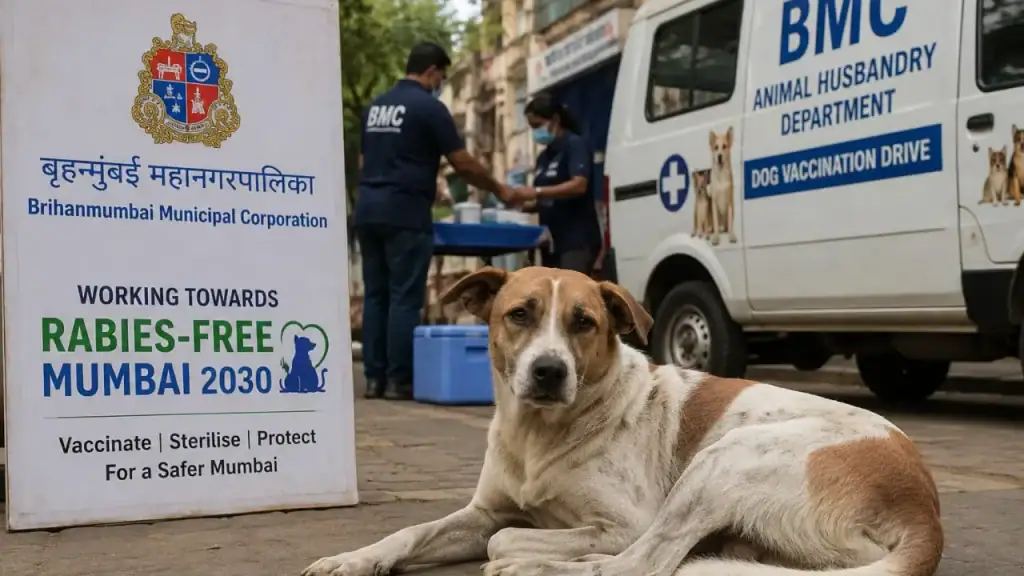
How the QR Collar System Actually Works
At the heart of the initiative is a partnership between the BMC and PawFriend.in, an effort by the Ridlan AI Foundation led by Akshay Ridlan. Under this collaboration, PawFriend.in is supplying QR-enabled reflective collars, each carrying a unique QR code, for community dogs across the city.
Scanning that QR code links directly to a digital record containing key information about the individual dog: its rabies vaccination status, sterilisation status, and other relevant health details. In effect, each collar functions as a durable, scannable digital ID card for the dog wearing it, information that was previously scattered, informal, or entirely undocumented in many cases now becomes instantly accessible with a simple scan.
Replacing a System That Simply Didn’t Last
Before this initiative, the BMC relied on considerably simpler methods to mark which dogs had already been vaccinated, most commonly, coloured ink or other temporary markings applied directly to the animal. The problem with that approach was straightforward: these markings faded or disappeared within a short period, making long-term identification and monitoring genuinely difficult for civic workers trying to track progress over weeks or months.
The QR-enabled collars, described by officials as “Aadhaar-style” identification, a comparison to India’s national digital identity system, are intended to solve that durability problem directly. Rather than a marking that washes away, the collar itself becomes a semi-permanent, technology-driven identifier that stays with the dog and remains scannable for as long as it’s worn.
What This Means for Civic Workers and Citizens
The practical benefit of this system extends well beyond simple record-keeping. By allowing both field personnel and ordinary citizens to instantly distinguish between dogs that have already been vaccinated or sterilised and those still requiring intervention, the collars are expected to significantly reduce duplication of effort.
That matters more than it might initially seem. Without a reliable way to identify which dogs have already received care, civic teams have historically risked re-catching, re-vaccinating, or re-sterilising the same animals, wasting limited public health resources that could otherwise be directed toward dogs who genuinely still need attention. A centralised, continuously updated digital registry of community dogs directly addresses that inefficiency, improving the transparency and accountability of the city’s Animal Birth Control (ABC) and anti-rabies vaccination programmes in the process.
Building a Long-Term Data Foundation
Beyond its immediate, on-the-ground utility, the digital infrastructure behind this initiative is designed to support something bigger: evidence-based public health planning. According to the BMC, the registry is expected to help avoid repeat interventions and unnecessary expenditure, strengthen field-level monitoring, and improve coordination between the BMC, animal welfare organisations, veterinary teams, and other stakeholders working on the same problem.
Over time, this kind of structured, growing dataset can become genuinely valuable for shaping Mumbai’s broader rabies elimination strategy, allowing officials to base future interventions on actual, verifiable data about vaccination coverage and sterilisation progress across different parts of the city, rather than relying on estimates or incomplete records.
What the Man Behind PawFriend.in Has to Say
Akshay Ridlan, the social entrepreneur leading the Ridlan AI Foundation’s PawFriend.in initiative, framed the project as part of a broader mission to bring genuine technological rigor to public health and animal welfare challenges. “We are committed to building innovative, technology-driven solutions that can create measurable impact in public health and animal welfare,” Ridlan said. “Our vision is to create a reliable digital infrastructure that enables better vaccination tracking, sterilisation monitoring and evidence-based interventions for community dogs.”
That framing captures the essence of what makes this initiative notable within India’s broader stray dog management landscape: it isn’t simply about visually marking dogs, it’s about building lasting, queryable data infrastructure around an issue that has historically been managed with far less precision.
Why This Initiative Matters for Mumbai’s Bigger Picture
This launch doesn’t exist in a vacuum. Mumbai recorded 1.54 lakh dog-bite cases in 2025 alone, a figure that underscores just how significant the stray dog management challenge remains for the city, and why the BMC has simultaneously been expanding sterilisation drives, shelters, and vaccination coverage alongside this new digital tracking system.
A durable, scannable identification system doesn’t solve the underlying population and public health challenge on its own, but it does give the city something it has historically lacked: a reliable, technology-backed way to actually measure progress. For a goal as ambitious as making Mumbai rabies-free by 2030, that kind of verifiable data foundation may prove just as important as the vaccination and sterilisation drives themselves.
Pets News Network is India’s first dedicated media platform for the pet and animal industry. For breaking global pet news, brand coverage, and advertising enquiries, contact: ankur@petsnewsnetwork.com