
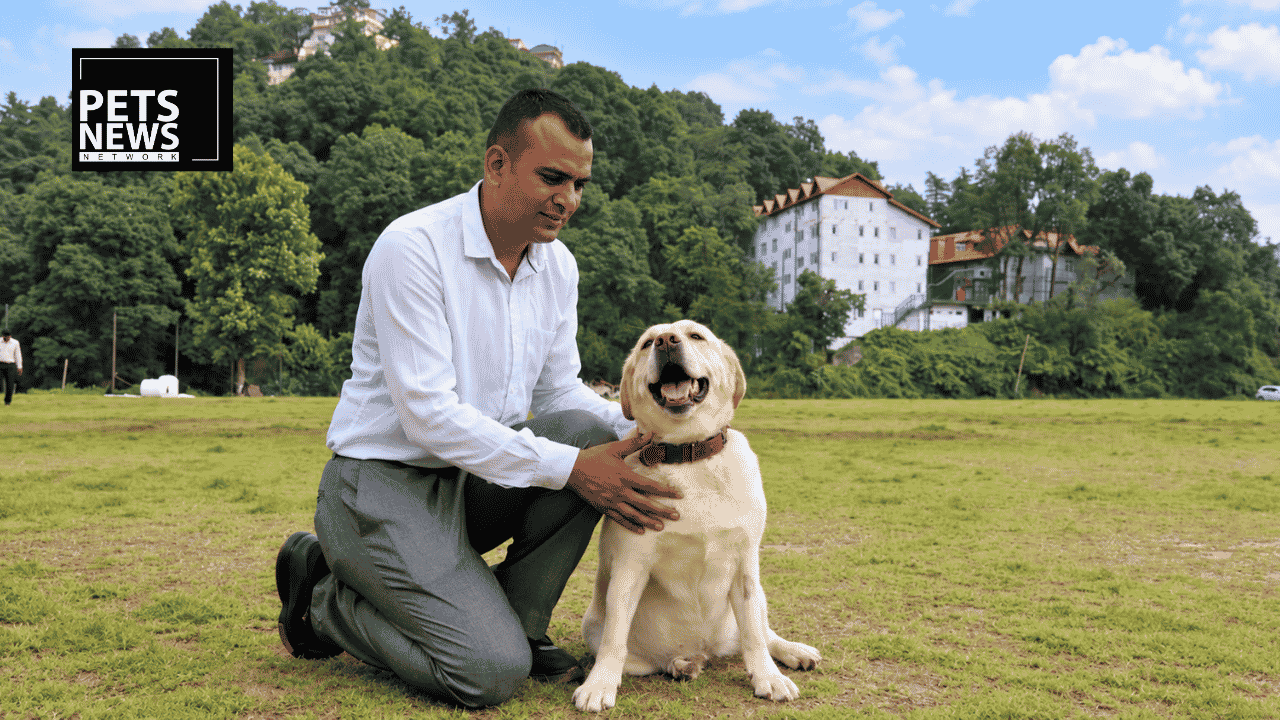

A Career Built on Keeping People Safe
For four years, Dora, a five-year-old Labrador Retriever, has been one of the quiet guardians standing between the public and potential danger. Since joining the Himachal Pradesh Police’s Explosive Detection Squad in 2021, she’s taken part in countless security sanitization exercises, working alongside handlers to sweep venues clear of explosive threats ahead of major events and VIP visits.
Her job was never glamorous in the way people imagine police work to be. There were no chases, no dramatic confrontations. Just methodical, disciplined sweeps, room by room, vehicle by vehicle, bag by bag, done quietly and repeatedly, often before dawn, long before any VIP motorcade arrived or any public event opened its doors. That invisible groundwork is precisely what made her valuable. A threat detected before it ever becomes a headline is a threat the public never has to know existed.
Now, Dora’s active service is coming to an end, not because of age or a lack of skill, but because her body simply can’t keep up with the physical demands the job requires anymore.
Why Dora Is Retiring
Dora has developed a chronic medical condition that has significantly affected her mobility and ability to walk. Despite ongoing medication, veterinarians assessing her condition advised that she be retired from active duty, concluding she would no longer be able to withstand the physically demanding routine that explosive detection work requires.
It’s a difficult but familiar reality for working dogs in high-intensity roles. Years of active field duty, often involving long hours on their feet across varied and sometimes harsh terrain, can take a genuine physical toll, and recognising when a dog’s body has reached its limit is an essential part of responsible handling. Explosive detection work in particular demands sustained concentration and mobility in equal measure, a dog has to be physically capable of covering ground quickly and repeatedly, sometimes across uneven or difficult terrain, while maintaining the sharp focus the job requires. Once mobility becomes compromised, that combination simply isn’t sustainable anymore, no matter how sharp the dog’s nose or instincts remain.
Handlers and veterinary staff working with police canine units generally treat this transition with real seriousness. Retiring a dog too late risks the animal’s health and safety in the field; retiring one prematurely wastes years of valuable training and experience. Dora’s case appears to reflect a considered, medically-guided decision rather than an abrupt or reactive one.
More Than Just a Working Dog
Behind Dora’s professional record is a personality that’s earned her plenty of affection within the force. She’s known for being playful, gentle, and deeply affectionate, qualities that don’t always come to mind when picturing a dog trained to detect explosives, but which have clearly defined her just as much as her working skills.
That duality isn’t unusual among explosive detection dogs, in fact, it’s often exactly what makes a breed like the Labrador Retriever so well suited to the role in the first place. Labradors are consistently favoured for detection work precisely because they combine sharp scenting ability with a calm, sociable, trainable temperament, the same traits that make them beloved family pets also make them dependable, steady partners in high-pressure security environments. A dog that panics or reacts unpredictably around crowds, loud noises, or unfamiliar environments is a liability during a security sweep; a dog that stays composed and focused, the way Dora reportedly has throughout her service, is exactly what the job demands.
That personality translated into recognition beyond her police duties too. In 2024, Dora won first prize in the dog show at the International Summer Festival in Shimla, a fun, public-facing achievement that added a distinctly different kind of accolade to a record otherwise built around security and detection work. It’s a small but telling detail, a dog trained to detect hidden danger also turning out to be a genuine crowd favourite at a public festival, comfortable enough in that very different kind of spotlight to actually win.
A Policy Change That Arrived Just in Time for Dora
Here’s what makes Dora’s retirement particularly significant: it comes right on the heels of a major shift in how the Himachal Pradesh Police handles its retiring service dogs.
Until recently, dogs completing their service with the force were auctioned off once their working days ended, a practice that treated retired canines essentially as departmental assets to be sold rather than as individuals deserving of a stable, caring home after years of service. That policy was changed just two months ago. Now, retiring police dogs are placed up for adoption instead, giving them the chance at a genuine family life once their working years are behind them.
Dora is among the first dogs to go through this new adoption process, making her case something of an early test of how the policy will actually work in practice. How smoothly her placement goes, and how well the department’s verification and follow-up system functions in a real case, could well shape how confidently the policy is applied to future retirements across the force’s roughly 40-dog sanctioned squad strength.
How the Adoption Process Actually Works
The Himachal Pradesh Police isn’t simply handing over its retired canine partners to anyone who asks. The department has built a structured verification process around the new adoption policy:
- Preference goes to police handlers and personnel first, recognising that the people who’ve worked alongside these dogs often have the strongest existing bond and understanding of their needs, though the opportunity remains open to members of the general public as well.
- Applicants undergo background verification, confirming they have the resources and genuine ability to care for a retired working dog long-term.
- Living conditions are checked before any placement is finalised, ensuring the home environment is actually suitable for the dog’s needs.
- An official undertaking must be signed, formalising the adopter’s commitment to the dog’s ongoing care.
- Police will conduct periodic check-ins after adoption, maintaining oversight of Dora’s wellbeing even after she’s settled into her new home, rather than considering their responsibility finished once the adoption paperwork is signed.
This layered approach matters especially for a dog like Dora, who requires ongoing medical management for her mobility condition. A verified, monitored placement gives the department some assurance that whoever takes her in understands, and is equipped to handle, her specific medical needs going forward, not just the general responsibilities of pet ownership.
Why This Shift Matters Beyond One Dog
Himachal Pradesh’s move away from auctioning retired service dogs reflects a broader, welfare-conscious reconsideration of how India’s police and paramilitary forces treat the animals who serve alongside them. Dogs like Dora spend years of their working lives directly protecting public safety, often in physically demanding, high-stakes roles that leave a genuine mark on their bodies by the time retirement comes.
Auctioning these dogs once they’re no longer fit for duty has long struck animal welfare advocates as fundamentally at odds with the loyalty and service these animals provide. An adoption-based model, particularly one with genuine verification and follow-up built in, represents a meaningful improvement, treating retirement as the beginning of a dog’s next chapter rather than simply the end of its usefulness to the department.
This shift also fits into a wider pattern seen elsewhere in India and beyond, where police forces and defence establishments have increasingly moved toward formal rehoming and adoption programmes for retired service animals, rather than treating them as disposable once their working years end. Similar adoption-focused initiatives for retired explosive detection and tracking dogs have been reported in other Indian states and international forces in recent years, suggesting Himachal Pradesh’s new policy is part of a broader, gradual shift in institutional attitudes toward working animal welfare, rather than an isolated, one-off change.
What Comes Next for Dora
As Dora’s search for a permanent home continues, her case stands as an early example of what this new policy looks like in action. For a dog who spent years helping keep VIPs, public events, and everyday citizens safe from explosive threats, the hope now is straightforward: that she gets to spend her retirement the way any devoted, hardworking companion deserves, in a genuinely loving home, with people who understand and appreciate exactly what she gave during her years of service.
If her placement goes well, and the department’s check-in system proves effective in practice, Dora’s story could end up serving as a template, not just for how Himachal Pradesh handles its future canine retirements, but for how other state forces across India might reconsider their own approach to the dogs who’ve spent years quietly keeping the public safe.
Pets News Network is India’s first dedicated media platform for the pet and animal industry. For breaking global pet news, brand coverage, and advertising enquiries, contact: info@petsnewsnetwork.com