


The Ranchi Municipal Corporation (RMC) has floated a ₹2.05-crore tender to construct a new Animal Birth Control (ABC) centre in Bargai, Ward 4, a facility that, once completed, will quadruple the city’s current capacity to house and treat stray dogs. The tender was published on September 11, with bids due to close on September 24, 2026.
On paper, this looks like meaningful progress. In practice, the numbers behind it reveal just how large the gap remains between Ranchi’s stray dog population and its institutional capacity to manage it.
The Scale of the Problem RMC Is Facing
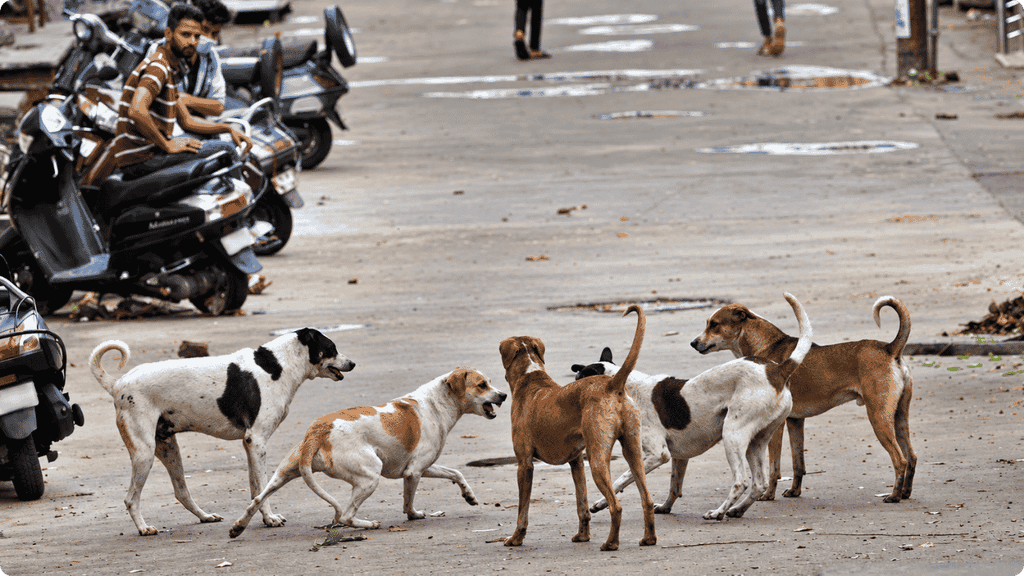
Ranchi’s stray dog population is currently estimated at 34,000 animals, a figure that has translated into rising public concern over dog-bite incidents across the city. That scale of population puts real, sustained pressure on the city’s existing sterilisation and vaccination infrastructure, infrastructure that, until now, has been genuinely limited.
Ranchi currently operates just one ABC facility, located at Chutia, with a capacity of only 15 kennels. That facility is presently undergoing modernisation work of its own. Once the new Bargai centre is completed, the city’s total kennel capacity across both facilities will rise to 65, a meaningful improvement in relative terms, but still a strikingly small number set against a stray population estimated in the tens of thousands.
What the New Facility Will Actually Include
The proposed Bargai centre is designed with more than simple sterilisation capacity in mind. The full site spans approximately 1 acre, with 20 decimals specifically allocated to the ABC unit itself, while the remaining land is earmarked for a long-term shelter facility, suggesting RMC is planning for sustained, ongoing dog care needs rather than a purely short-term sterilisation drive.
The facility’s design includes several features aimed at more sophisticated, humane dog management:
- Separate, dedicated enclosures for aggressive and non-aggressive dogs, allowing staff to house animals according to temperament rather than mixing potentially dangerous dogs with calmer ones
- A specialised isolation ward for observing dogs suspected of carrying rabies or other diseases, a critical feature for preventing disease spread within the facility itself
- Dedicated on-site cooking and feeding areas, managed by qualified staff, ensuring consistent, monitored nutrition for animals housed at the centre
This layout reflects current best practices in ABC facility design, recognising that effective stray dog management requires more than simply sterilising as many animals as possible, it requires proper triage, disease control, and differentiated care based on each animal’s behavioural and medical needs.
Where the New Centre Will Focus Its Efforts
RMC has indicated the new facility will prioritise complaints and high-risk zones specifically, including railway stations, bus terminals, and residential areas, locations where human-dog interaction is frequent and where the consequences of an aggressive or rabid stray going unaddressed are particularly serious given the volume of daily foot traffic.
This targeted approach makes practical sense given the capacity constraints at play. With only 65 total kennels available to manage a population estimated at 34,000, RMC clearly cannot pursue a blanket, citywide sterilisation sweep simultaneously. Prioritising high-traffic, high-complaint zones allows limited resources to be directed toward the locations where intervention will have the most immediate public safety impact.
The Feeding Zone Complication
Beyond the new ABC centre itself, RMC has also established 15 designated stray feeding zones across various wards, an effort to manage where strays congregate and reduce the kind of scattered, informal feeding that can contribute to larger, harder-to-manage stray populations in residential areas.
This particular initiative, however, has run into a familiar civic obstacle: local resistance. RMC has reported difficulty finding alternative sites for these feeding zones in some areas, as nearby residents object to having a designated stray feeding point established close to their homes. It’s a tension increasingly common across Indian cities attempting structured stray management, ranging from Delhi’s own recent push to establish feeding points in every ward, to Ranchi’s current struggle to place all 15 zones without local pushback. Balancing the practical need for organised feeding locations against residents’ concerns about stray dog concentration near their homes remains an unresolved friction point in the city’s broader stray management strategy.
How Ranchi’s Numbers Compare to Other Indian Cities
Placing Ranchi’s new facility in a national context is useful for understanding just how significant, or modest, this expansion actually is. Chandigarh, by comparison, already operates a single ABC centre at Raipur Kalan with a capacity of 310 kennels, and city officials have discussed building an additional facility there with capacity for as many as 1,000 dogs. Amritsar, meanwhile, has faced its own persistent criticism from local activists, who argue that even the city’s existing ABC centres, aimed at sterilising a targeted 20,000 dogs over a multi-year tender period, remain insufficient to meaningfully dent a stray population exceeding 50,000.
Set against that backdrop, Ranchi’s move from 15 kennels to 65 represents real, incremental progress, but nowhere near the scale some other Indian cities have found necessary to make a visible dent in their own stray populations. If Amritsar’s 50,000-dog population is straining capacity built around 20,000 sterilisations, Ranchi’s 34,000-dog population working with a total of 65 kennels across two facilities faces an even steeper capacity gap in relative terms.
Why Sterilisation-Based Approaches Still Matter, Even at This Scale
None of this capacity gap is an argument against building the Bargai centre, sterilisation remains a humane, scientifically supported approach to managing stray dog populations over time, consistent with the Animal Birth Control Rules, 2023, and the broader framework the Supreme Court has pushed states to adopt nationally. The catch-neuter-vaccinate-release model this facility will support is specifically designed to reduce population growth at its source, rather than relying on reactive, less humane population control measures.
The honest challenge Ranchi faces isn’t the approach itself, it’s the pace and scale at which that approach is being resourced relative to the size of the problem. A facility capable of processing dogs faster than the population’s natural reproduction rate is essential for sterilisation-based programmes to actually reduce, rather than simply manage, a stray population over time. Whether 65 total kennels across Ranchi’s two facilities can achieve that kind of throughput against a 34,000-dog population remains an open question that will likely become clearer only once the Bargai centre is operational and its actual processing rate becomes visible.
What Happens Next
With tender bids due to close on September 24, 2026, the coming weeks will determine which contractor takes on construction of the new facility, and how quickly the Bargai centre can move from a paper commitment to an operational reality. For a city grappling with a stray population many times larger than its current sterilisation infrastructure can handle, timely execution, not just approval, will determine whether this investment translates into a genuine reduction in dog-bite incidents and stray population growth, or simply a modest improvement that still falls well short of what Ranchi’s numbers actually demand.
Pets News Network is India’s first dedicated media platform for the pet and animal industry. For breaking global pet news, brand coverage, and advertising enquiries, contact: info@petsnewsnetwork.com