

Four years after the devastating 2022 outbreak that killed nearly 100,000 cattle across the country, Lumpy Skin Disease is resurging across India in 2026, and this time it’s spreading wider than before. Under the National Animal Disease Referral Expert System (NADRES), a risk alert issued for September 2026 has identified 219 districts across 28 states and Union Territories as being at risk, a genuinely national-scale warning that demands attention from every dairy farmer, cattle owner, and livestock caretaker across the country.
The good news is that current severity and mortality rates remain considerably lower than the catastrophic 2022 wave. The important caveat is that “lower than catastrophic” doesn’t mean “safe to ignore.”
The Scale of the Current Alert
According to figures from the Ministry of Animal Husbandry, Dairying and Fisheries (DAHD), roughly 3,461 active cases have been reported nationally as this resurgence unfolds. That’s a fraction of the millions of cases recorded during 2022’s peak, but the geographic spread captured in this year’s NADRES alert is actually broader, 219 districts across 28 states and Union Territories, compared to 251 districts across 15-16 states during the worst of the 2022 crisis.
Perhaps most concerning, veterinary researchers have noted the disease has now spread beyond cattle to affect 13 different animal species, including camels, horses, and mules, and has reportedly reached wildlife populations as well, a development that significantly complicates containment efforts compared to when the disease was primarily confined to cattle and buffalo herds.
Where the Outbreak Is Hitting Hardest Right Now
Several states are reporting active concern as this resurgence develops:
- Uttarakhand: Approximately 180 suspected cases reported across six districts
- Haryana: Around 1,356 suspected cases concentrated in Kurukshetra, Panchkula, Rewari, and Yamunanagar
- Punjab: Authorities are intensifying vaccination efforts across the state’s roughly 23 lakh cattle population
- Uttar Pradesh: Reports of sick animals emerging from villages across multiple districts, including Meerut
- Rajasthan and Himachal Pradesh: Also flagged among the states currently under heightened monitoring
Given Rajasthan’s brutal experience during the 2022 outbreak, where the state recorded the highest cattle death toll in the country at roughly 64,000 animals, renewed activity there in particular warrants close attention from both farmers and state veterinary authorities.
Why Experts Say This Resurgence Happened
A senior veterinary research scientist quoted by Rural Voice offered a fairly direct explanation for why LSD is back: following the 2022 outbreak, India’s government placed considerable emphasis on a “One Health” approach to disease control, but vaccination drives and other preventive measures have since seen some slackening. That gradual easing of vigilance, combined with the virus’s genuine ability to persist and re-establish itself in livestock populations, appears to be a central factor behind this year’s renewed spread.
Understanding the Virus Itself
Lumpy Skin Disease is caused by the Lumpy Skin Disease Virus (LSDV), part of the Capripoxvirus genus. It’s a vector-borne disease, meaning it spreads primarily through biting insects, including mosquitoes, ticks, and biting flies such as Stomoxys calcitrans and Haematobia irritans, rather than through direct animal-to-animal contact alone.
Monsoon conditions significantly accelerate transmission, since standing water and humid conditions create ideal breeding grounds for the insect vectors responsible for spreading the virus between animals. Cattle remain the primary target species, with heifers, young calves, and unvaccinated herds facing the greatest vulnerability to serious infection.
Recognising the Clinical Signs
Early recognition of LSD symptoms is critical for containing spread before it reaches a wider herd. Key signs to watch for include:
- Fever, often one of the earliest indicators
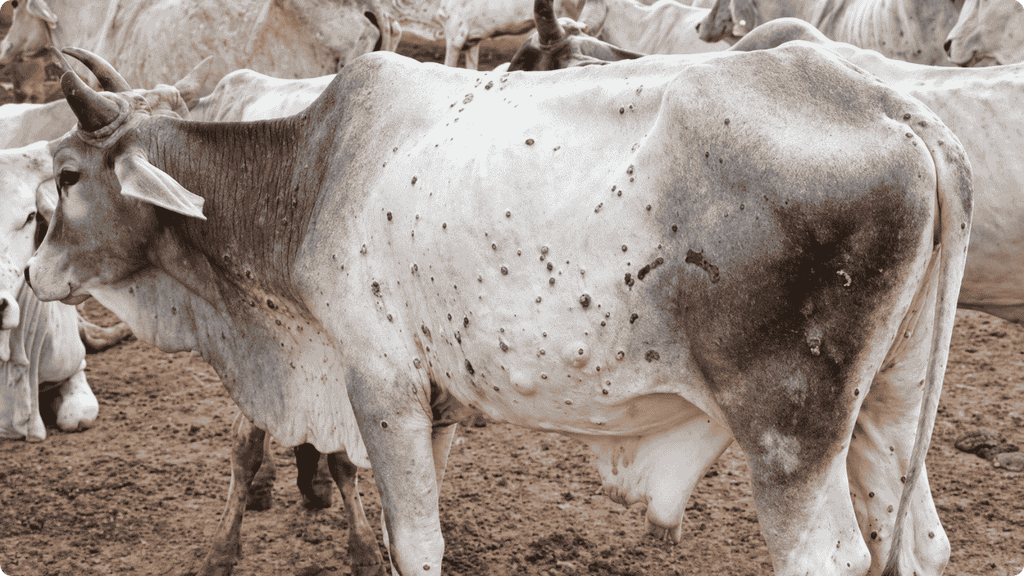
- Skin nodules, typically ranging from 2 to 5 centimetres in size, appearing across the body
- Swollen lymph nodes
- Oedema (swelling), which can affect limbs and other areas
- A noticeable drop in milk production, often one of the first economically significant signs a dairy farmer will notice
Some veterinary field reports from the 2022 outbreak also documented longer-term complications in recovered cattle, including kidney and heart ailments, underscoring that LSD’s impact isn’t always limited to the visible symptoms during active infection.
The Economic Stakes for Farmers
Beyond the direct animal health concern, LSD carries genuinely significant economic consequences for dairy farmers and livestock owners. Reduced milk yield during and after infection directly hits farmer income, while reproductive delays in affected cattle compound losses over a longer timeframe. Hide damage from skin nodules affects any secondary value from cattle, and movement or trade restrictions imposed to control outbreak spread can disrupt normal livestock commerce entirely in affected regions.
For rural communities heavily dependent on dairy farming and cattle rearing, an LSD outbreak isn’t simply an animal health issue, it’s a direct threat to household income and food security, exactly the dynamic that made the 2022 outbreak such a significant national concern beyond veterinary circles alone.
What’s Being Done: The National Response
India’s control effort in 2026 draws heavily on lessons learned from 2022, with a strong emphasis on ring vaccination, vaccinating animals in a defined radius around confirmed or suspected cases to create a protective buffer preventing further spread. Nationally, more than 36 crore vaccine and booster doses have been administered to date, reflecting the sheer scale of the country’s ongoing immunisation effort against this disease.
Research from Karnataka’s earlier outbreak experience offers an encouraging data point here: vaccination campaigns that achieved near 100% coverage in affected districts by 2022 helped reduce LSD-related mortality rates from 1.45% down to negligible levels by 2024, concrete evidence that sustained, high-coverage vaccination genuinely works to bring this disease under control over time.
A Practical Checklist for Farmers and Cattle Owners
Given the current alert level, here’s what livestock caretakers should be actively doing right now:
1. Vaccination. Ensure your herd’s vaccination status is current, and cooperate fully with ring vaccination efforts if your area falls within an affected zone. Booster doses matter as much as initial vaccination for maintaining protection.
2. Isolation and biosecurity. Any animal showing symptoms should be quarantined immediately and separated from the rest of the herd. Halt inter-district or interstate movement of cattle from areas with active or suspected cases, movement restrictions exist precisely because they slow the virus’s geographic spread.
3. Vector management. Since LSDV spreads primarily through biting insects, controlling those vectors directly reduces transmission risk. Use appropriate insecticides, maintain clean, sanitary shed conditions, and eliminate standing water sources near livestock housing wherever possible, particularly important during monsoon season when vector populations peak.
4. Prompt surveillance and reporting. Any suspected case should be reported immediately to local veterinary authorities rather than waiting to see if symptoms worsen. Testing through established veterinary research institutions, including ICAR-IVRI or LUVAS, helps confirm cases accurately and supports the broader national surveillance effort tracking this resurgence.
Reassurance Alongside Urgency
It’s worth ending on a note of genuine, evidence-based reassurance rather than alarm alone. Current case numbers and mortality rates remain well below 2022’s devastating peak, and India’s veterinary infrastructure now has real, tested experience managing this exact disease, including a vaccination programme that has already demonstrated its ability to drive mortality rates down dramatically when coverage is sustained.
The most important thing any cattle owner can do right now is simple: don’t wait for symptoms to worsen before acting, ensure vaccination is current, isolate any sick animals immediately, and maintain open communication with local veterinary services. LSD’s spread depends heavily on gaps in vigilance, exactly the kind of gap that renewed vaccination slackening appears to have opened after 2022. Closing that gap again, quickly and consistently, remains the clearest path back to control.
Pets News Network is India’s first dedicated media platform for the pet and animal industry. For breaking global pet news, brand coverage, and advertising enquiries, contact: info@petsnewsnetwork.com