
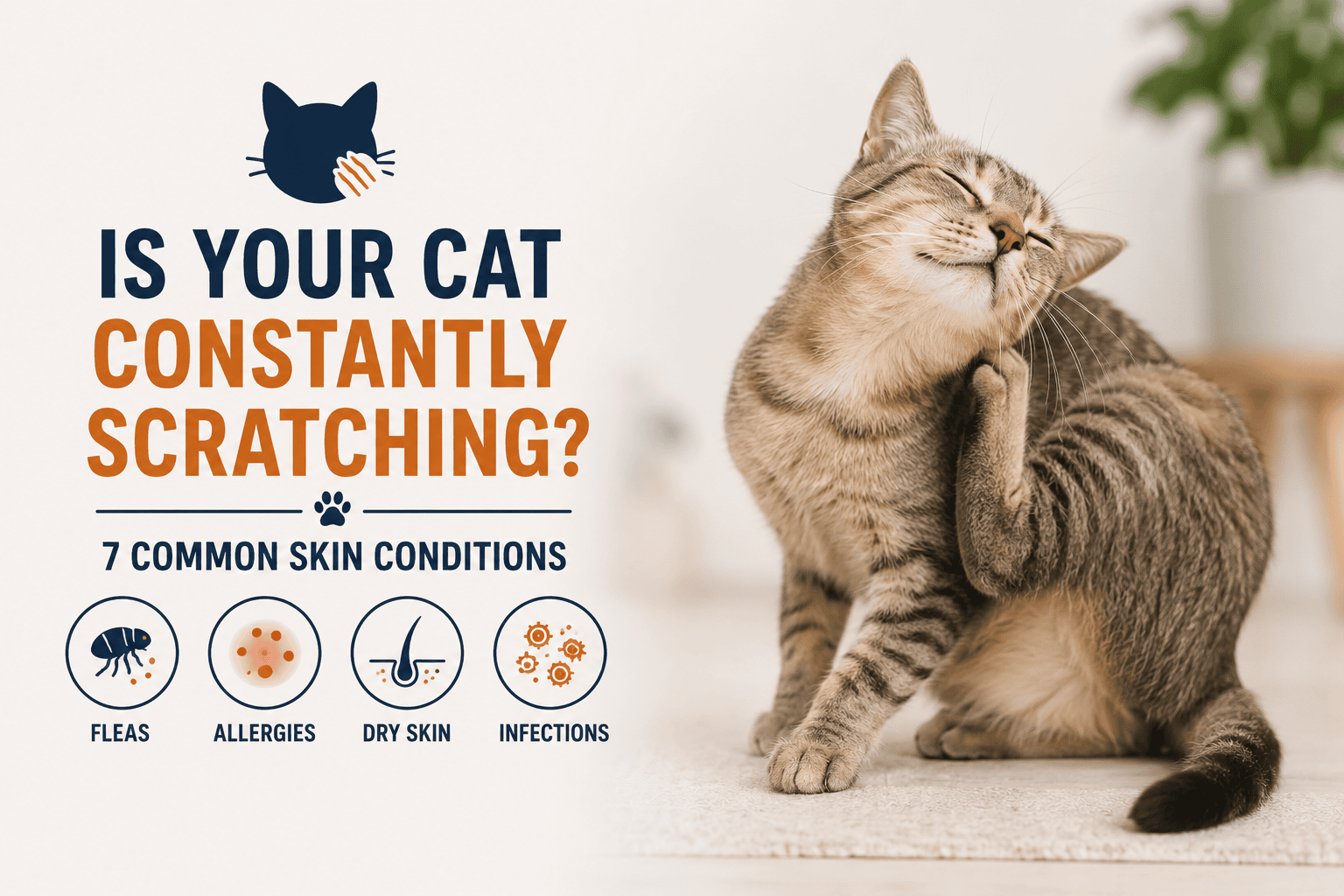

A healthy cat typically spends a good part of the day grooming, but when licking, scratching, or biting becomes excessive, it could be a sign that something isn’t right.
Skin problems are among the most common reasons cats are taken to the veterinarian. While some conditions cause only mild irritation, others can lead to severe discomfort, infections, hair loss, and long-term health complications if left untreated.
The challenge for many pet owners is recognizing the difference between normal grooming behavior and signs of an underlying skin condition.
Understanding the warning signs can help you catch problems early and get your feline companion the care they need before symptoms worsen.
Why Skin Health Matters in Cats
A cat’s skin serves as its first line of defense against bacteria, parasites, allergens, and environmental irritants.
When skin health is compromised, cats may experience discomfort that affects their sleep, appetite, behavior, and overall well-being.
Because cats are naturally skilled at hiding pain and illness, skin conditions often go unnoticed until symptoms become more obvious.
That’s why routine observation is one of the best tools pet owners have for protecting their cat’s health.
Common Signs of Skin Problems in Cats
Regardless of the underlying cause, many feline skin disorders share similar symptoms.
Watch for signs such as:
- Excessive scratching
- Constant licking or grooming
- Hair loss
- Scabs or crusty skin
- Redness or inflammation
- Flaky skin or dandruff
- Open sores
- Unpleasant skin odor
- Changes in coat quality
If any of these symptoms persist, a veterinary evaluation is recommended.
1. Flea Allergy Dermatitis
One of the most common skin issues in cats is flea allergy dermatitis.
Some cats develop an allergic reaction to flea saliva, meaning even a single flea bite can trigger intense itching and inflammation.
Affected cats may experience:
- Severe scratching
- Hair loss around the tail and back
- Scabs on the skin
- Restlessness and discomfort
Many pet owners are surprised to learn that they may never actually see fleas on their cat because cats groom themselves so thoroughly.
2. Ringworm
Despite its name, ringworm is not caused by a worm.
It is a fungal infection that affects the skin, hair, and sometimes the nails.
Common symptoms include:
- Circular patches of hair loss
- Scaly skin
- Broken hairs
- Red or irritated areas
Ringworm is particularly important because it can spread to other pets and even humans.
Early diagnosis and treatment are essential to prevent transmission.
3. Allergies
Cats can develop allergies to a variety of substances in their environment.
Potential triggers include:
- Pollen
- Dust mites
- Mold
- Certain foods
- Household cleaning products
Allergic cats often suffer from chronic itching, excessive grooming, and skin irritation.
Because allergies can have multiple causes, identifying the specific trigger often requires veterinary testing and careful observation.
4. Ear Mites
Although technically not a skin disease, ear mites frequently cause skin irritation around the ears, head, and neck.
These tiny parasites are highly contagious among cats.
Common signs include:
- Intense ear scratching
- Head shaking
- Dark debris inside the ears
- Redness and inflammation
Without treatment, secondary skin infections can develop due to excessive scratching.
5. Feline Acne
Just like humans, cats can develop acne.
Feline acne most commonly appears on the chin and lower lip area.
Symptoms may include:
- Small black spots
- Crusty bumps
- Swelling
- Hair loss around the chin
While mild cases may resolve with improved hygiene, severe cases sometimes require veterinary treatment.
6. Skin Infections
Bacterial or yeast infections can develop when the skin’s natural protective barrier becomes damaged.
These infections often occur secondary to allergies, parasites, or injuries.
Warning signs include:
- Red, inflamed skin
- Pustules
- Unpleasant odor
- Oozing lesions
- Increased grooming
Prompt treatment is important because infections can become painful and spread if left untreated.
7. Psychogenic Overgrooming
Not all skin problems begin with a physical illness.
Stress, anxiety, boredom, or environmental changes can sometimes cause cats to groom excessively.
This condition, known as psychogenic overgrooming, may lead to:
- Bald patches
- Irritated skin
- Repeated licking of specific areas
Common triggers can include moving to a new home, introducing another pet, changes in routine, or lack of environmental enrichment.
When Should You See a Veterinarian?
While occasional scratching is normal, persistent symptoms should never be ignored.
Pet owners should seek veterinary care if they notice:
Ongoing Hair Loss
Large bald patches often indicate an underlying medical issue.
Open Wounds or Sores
Broken skin increases the risk of infection.
Severe Itching
Constant scratching can quickly damage the skin.
Behavioral Changes
Pain and discomfort may cause irritability, hiding, or reduced activity levels.
Symptoms That Don’t Improve
If home care measures fail to resolve the issue, professional evaluation is necessary.
How Veterinarians Diagnose Skin Conditions
Because many skin disorders produce similar symptoms, diagnosing the exact cause often requires several steps.
Veterinarians may perform:
- Physical examinations
- Skin scrapings
- Fungal cultures
- Allergy testing
- Blood tests
- Microscopic evaluation of skin samples
These diagnostic tools help determine the most effective treatment plan.
Treatment Depends on the Underlying Cause
The right treatment varies based on the specific condition.
Depending on the diagnosis, veterinarians may recommend:
- Parasite prevention products
- Antifungal medications
- Antibiotics
- Allergy management plans
- Specialized diets
- Medicated shampoos
- Behavioral interventions
Following the treatment plan consistently is often the key to successful recovery.
Keeping Your Cat’s Skin Healthy
Prevention plays a major role in maintaining healthy skin and coat condition.
Pet owners can support skin health by:
- Using veterinarian-approved flea prevention
- Feeding a balanced diet
- Maintaining a clean environment
- Scheduling routine wellness exams
- Monitoring for early signs of irritation
Regular grooming and observation can also help identify potential problems before they become severe.
The Bottom Line
Skin problems in cats can range from mild irritation to serious medical conditions that require professional treatment.
Whether the cause is fleas, allergies, fungal infections, parasites, or stress-related grooming, early recognition is crucial.
If your cat is scratching more than usual, losing hair, or developing unusual skin changes, don’t assume it’s simply a grooming habit.
Paying attention to these warning signs and seeking timely veterinary care can help keep your feline companion comfortable, healthy, and itch-free for years to come.
Because when it comes to your cat’s skin health, early action often makes all the difference.