
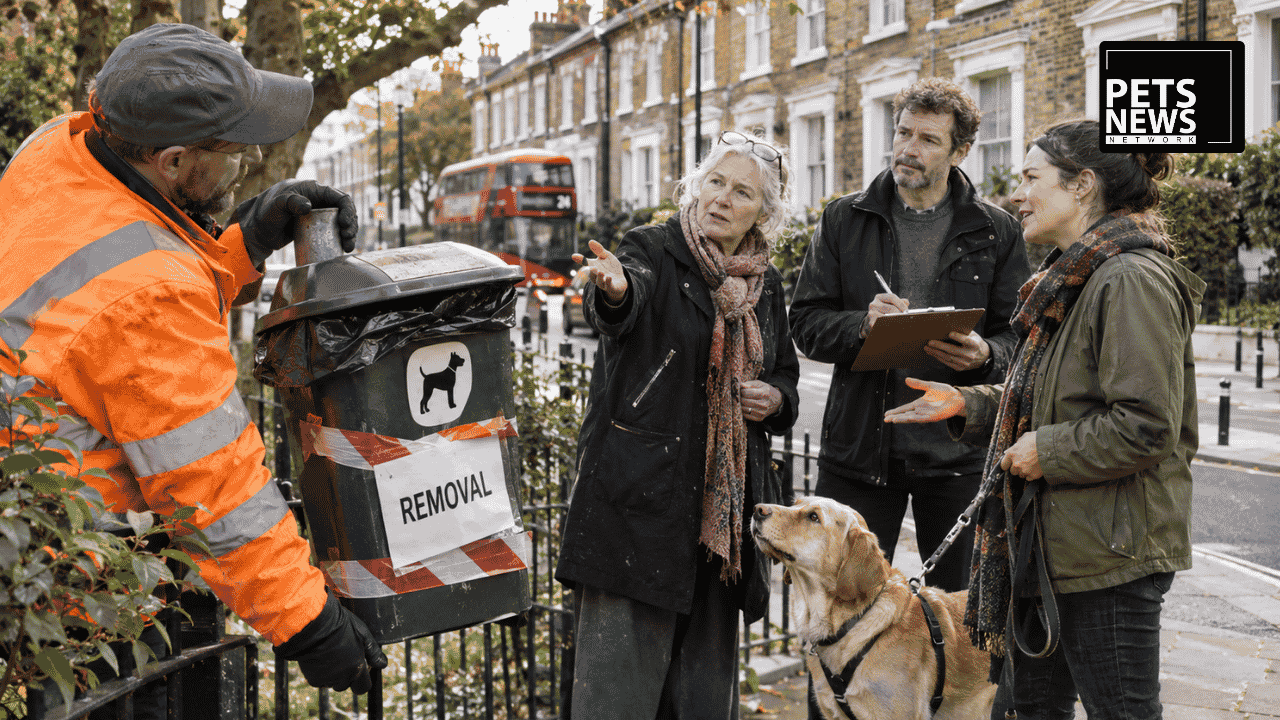

Hillingdon Council has approved a plan to remove roughly 700 dedicated dog waste bins across a West London borough. The headline saving is £160,000 a year. The amount the council actually expects to keep is £100,000, after £60,000 goes back into street cleaning. Removals are not due to begin until late January 2027. But residents are already pointing to bins with no nearby alternative — and in Ickenham, a community campaign wants to take over the bins before the council takes them away. This is no longer simply a story about cutting a service. It is a test of whether the replacement will work on the routes where people actually walk their dogs.
What has actually been approved
Councillor Wayne Bridges, Hillingdon’s Cabinet Member for Residents’ Services, approved the removal on 22 October 2026. The decision is recorded as Rationalisation of Dog Waste Containers, reference 2026/1819. This was a cabinet-member decision, rather than a vote of the full council. The council report says there was no formal public consultation, and none was proposed.
| Key fact | Position as of 6 November 2026 |
|---|---|
| Dedicated dog waste bins affected | Approximately 700 across Hillingdon |
| Approval date | 22 October 2026 |
| Annual gross saving projected | £160,000 |
| Annual reinvestment in street cleansing | £60,000 |
| Annual net saving projected | £100,000 |
| Dog waste currently collected | About 14.5 tonnes per month, or 174 tonnes per year |
| Alternative | Existing ordinary litter bins or household general waste |
| Expected start of phased removals | Late January 2027 |
The council has approved removal; that is not the same as having removed the bins. The phase-out is scheduled for 2027. Local reporting updated on 1 November says no scrutiny call-in had been published by the 29 October deadline.
The saving is £100,000. The headline is £160,000.
Hillingdon currently spends about £160,000 a year emptying dedicated dog waste bins. Ending that part of its specialist collection arrangement creates the projected gross saving. But the council proposes putting £60,000 of that money back into ordinary street cleaning, including additional capacity where general litter bins receive more use.
| Annual projection | Amount |
|---|---|
| Cost of dedicated collection to be ended | £160,000 |
| Reinvestment in street cleaning | −£60,000 |
| Net recurring saving | £100,000 |
The waste will move into litter bins and household rubbish, not disappear.
The public-service question is therefore not just how much the council saves. It is whether the remaining bins can carry the extra waste without creating a more expensive cleanliness problem elsewhere.
These are projected savings, not realised ones.
Where the 174 tonnes are supposed to go
The council’s plan is to let people place bagged dog waste in ordinary litter bins, or take it home and dispose of it with household general rubbish. It says its existing public litter-bin network can absorb the change.
Selected litter bins in parks and popular dog-walking locations are to receive stickers saying “I can take dog waste too” before the dedicated bins are removed. The council has nearly 1,500 ordinary litter bins, according to local reporting.
But is there an ordinary bin along every affected walking route?
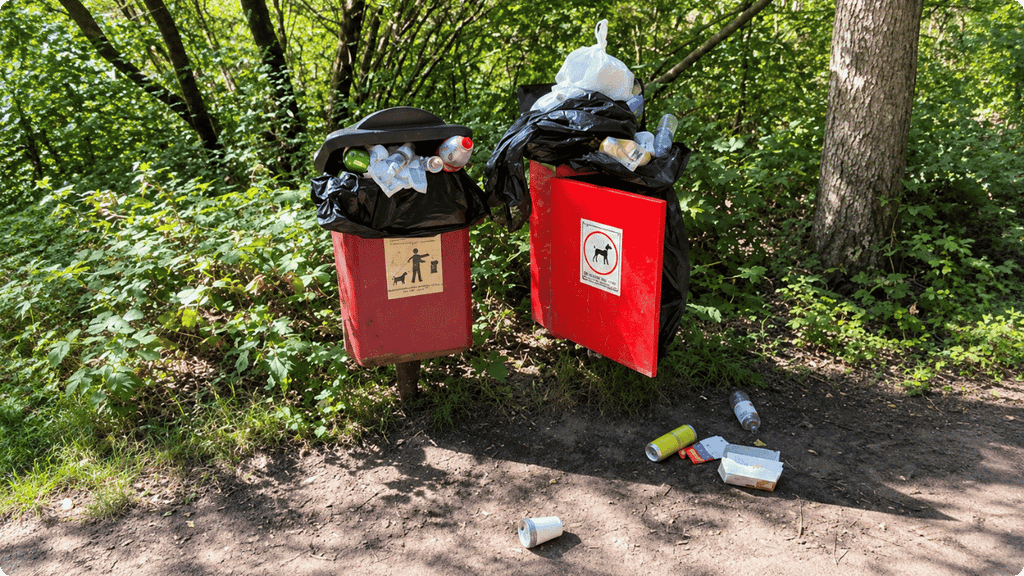
The Ruislip Residents’ Association has identified places, including Ruislip Woods, where dog bins do not have a convenient general-waste alternative nearby. It has also highlighted overflowing dedicated bins and questioned how the remaining bins will handle additional bags.
A borough-wide count cannot resolve that local question.
The council considered a smaller cut and rejected it
Council officers examined three basic approaches:
- Keep all the dedicated dog waste bins.
- Remove some, especially where ordinary litter bins are already nearby.
- Remove the entire dedicated network and end the separate collection service.
They selected the third option. Their reasoning was operational: retaining some specialist bins would still require a dedicated collection arrangement, preserving costs and complexity.
The council has also acknowledged the risks. These include dog fouling increasing, ordinary bins overflowing and negative public reaction. Its proposed mitigations include communication, signage, enforcement and extra emptying capacity at busy locations.
The claimed efficiency has yet to be tested against actual cleanliness outcomes.
The part that changed after the original headlines: residents have a plan
On 3 November, the Ruislip Residents’ Association reported that residents in Ickenham had launched a scheme called Bin There, Dung That.
Rather than relying only on objections, the campaign is exploring whether local people and businesses can take over, fund and maintain roughly 30 dog bins in their neighbourhood, subject to the council agreeing to transfer them.
The ideas include:
- Monthly pledges from residents, without immediate payment.
- Bin sponsorships, advertised at £150 per year.
- A live map identifying local dog waste bins.
- Volunteers to help organise the campaign and upkeep.
Organisers say the approach could spread to Ruislip and Ruislip Manor if volunteers step forward.
There is an important limit to what this proves. The council has not agreed to hand over the bins, and the campaign has not demonstrated that the proposed community funding would cover the full long-term costs. It is an organising proposal, not a functioning replacement service.
Residents are asking whether they can sustain the service themselves.
No public consultation, despite a borough-wide change
The original decision report states that no formal public consultation was undertaken or proposed.
That does not by itself establish that the decision was unlawful. A council can make certain operational service decisions without a referendum or borough-wide vote, and the council report says it is not legally required to provide dedicated dog waste bins.
The issue raised by residents is practical as well as democratic: without public consultation or a detailed alternative-bin map, how did the council establish which walking routes would be left without a convenient disposal point?
And the law requiring dog owners to pick up after their pets does not disappear with the bins. Under the council’s Public Spaces Protection Order, leaving dog fouling in public places remains an offence.
The January timetable matters
The plan has not already eliminated all 700 bins.
| Stage | Reported timetable |
|---|---|
| 22 October 2026 | Cabinet-member approval |
| 29 October 2026 | Scrutiny call-in deadline |
| Mid-November 2026 | Stickers and public information expected to begin appearing |
| Late January 2027 | Phased removal of dedicated bins expected to start |
The rollout is phased; existing bins remain usable until physically removed.
What dog walkers should actually do
For dog owners in Hillingdon, the immediate advice is simple: continue picking up and bagging dog waste. Dedicated bins remain usable while present. After they are removed, use an appropriate public litter bin or take the bag home for household general-waste disposal.
Report missing disposal points and overflowing bins to the council, including through Love Clean Streets, rather than leaving bags beside a bin.
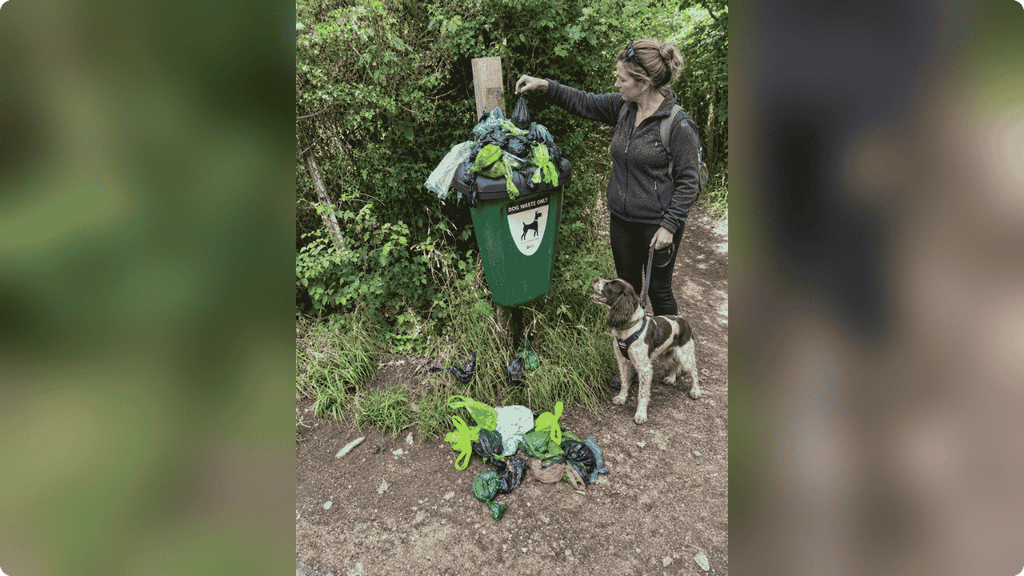
The more useful public measure will be the state of the parks and paths once the specialist bins disappear: whether ordinary bins overflow, whether collections become more frequent, and whether incidents of fouling increase.
This is a pet infrastructure story, not just a bin story
Public dog waste bins are not a veterinary service or an animal rescue programme. They are a small part of what makes a city practical to live in with pets.
Removing a dedicated container does not automatically produce more dog fouling. People can dispose of bagged waste in ordinary bins, and responsible owners are still expected to clean up. Hillingdon’s argument is that a single collection network can provide the same result more efficiently.
But the council’s own risk assessment recognises that the result is not guaranteed. Location, capacity, emptying frequency and clear instructions all matter.
The question to ask in January is not whether 700 red or green containers have disappeared. It is whether the places they served have remained clean. And if Ickenham succeeds in retaining its bins, there will be a second, equally useful question: whether residents can sustainably maintain a service that the council has decided it no longer wants to run.
Pets News Network is India’s first dedicated media platform for the pet and animal industry. For breaking global pet news, brand coverage, and advertising enquiries, contact: info@petsnewsnetwork.com