
By using this site, you agree to the Privacy Policy and Terms of Use.
Accept
PNN Logo - Pets News Network PNN Logo - Pets News Network
  • World
    A Shelter Took In 84 Dogs at Once. Nearly 2,000 People Now Want Breeders Licensed.
    Animal Rescue & WelfareDaily DigestGlobal Pet NewsGovernment PolicyInvestigationsPet CarePet Parent GuidesPet SafetyPolicy & Law

    A Shelter Took In 84 Dogs at Once. Nearly 2,000 People Now Want Breeders Licensed.

    By
    Ankur Jain
    12 Min Read
    More Than 1,100 Chinchillas Left an Ohio Breeder. Now They Need Homes That Last 20 Years.
    Animal Rescue & WelfareDaily DigestGlobal Pet NewsPet CarePet Human BondPet Parent GuidesPet SafetyPolicy & LawWildlife

    1,100+ Chinchillas Rescued From an Ohio Breeder Now Need Homes That Last 20 Years

    By
    Ankur Jain
    November 19, 2026
    "I Don't Want to Be a Labrador": How Pets Became the Sharpest Argument in the AI Debate
    Daily DigestDog BreedsGlobal Pet NewsPet Human BondTechnology

    “I Don’t Want to Be a Labrador”: How Pets Became the Sharpest Argument in the AI Debate

    By
    Ankur Jain
    November 19, 2026
  • Pet Technology
    A Hardware Chain Will Engrave Your Dog’s Tag for $14. Here’s What the Research Says It’s Worth.
    Daily DigestGlobal Pet NewsIndustry InsiderNew LaunchesPet Business & FinancePet CarePet EducationPet Human BondPet Parent GuidesPet SafetyPet StartupPet TechResearchTechnology

    A Hardware Chain Will Engrave Your Dog’s Tag for $14. Here’s What the Research Says It’s Worth.

    Comparing a pet ID tag vs microchip for lost dogs? Research from…

    By
    Ankur Jain
    9 Min Read
    More Than 1,100 Chinchillas Left an Ohio Breeder. Now They Need Homes That Last 20 Years.
    Animal Rescue & WelfareDaily DigestGlobal Pet NewsPet CarePet Human BondPet Parent GuidesPet SafetyPolicy & LawWildlife
    1,100+ Chinchillas Rescued From an Ohio Breeder Now Need Homes That Last 20 Years
    "I Don't Want to Be a Labrador": How Pets Became the Sharpest Argument in the AI Debate
    Daily DigestDog BreedsGlobal Pet NewsPet Human BondTechnology
    “I Don’t Want to Be a Labrador”: How Pets Became the Sharpest Argument in the AI Debate
    A Dog Was Exhumed After 19 Days in Azamgarh. The Post-Mortem Could Not Say How She Died.
    Animal Rescue & WelfareDaily DigestPet CarePet Parent GuidesPet SafetyPolicy & Law
    A Dog Was Exhumed After 19 Days in Azamgarh. The Post-Mortem Could Not Say How She Died.
    More Than Fifty Parrots Came Out of Smuggling Cases. One Pair Has Now Raised a Family.
    Animal Rescue & WelfareDaily DigestGlobal Pet NewsInvestigationsPet CarePet EducationPet SafetyPolicy & LawResearchWildlife
    More Than Fifty Parrots Came Out of Smuggling Cases. One Pair Has Now Raised a Family.
  • Pet Insider

    How to Remove Plaque From Your Dog’s Teeth- A Simple Vet-Approved Guide.

    Two Minutes a Day Keeps the Vet Bill Away — Your Dog's Dental Care Routine Starts…

    By
    Ankur Jain

    Which Dogs Have the Strongest Bite Force? A Vet’s Honest Guide.

    Powerful Jaws, Misunderstood Dogs — The Truth About Bite Force Every Owner Should Know

    By
    Ankur Jain

    How to Check if Your Cat Has Eyelashes- What Every Cat Owner Should Know

    Look Closer — Your Cat's Eyes Are Hiding Something Important

    By
    Ankur Jain

    A Shelter Took In 84 Dogs at Once. Nearly 2,000 People Now Want Breeders Licensed.

    More than 120 dogs were seized in two operations on Prince Edward Island this year. A…

    By
    Ankur Jain

    The New Rules of Pet Care: How Investors and Founders Are Shaping India’s Booming Pet Industry

    Founders With Heart, Investors With Data — Who Will Shape India's Pet Industry?

    By
    Ankur Jain

    Chronic Kidney Disease in Dogs: Symptoms, Treatment, Diet, and How to Give Your Dog a Better Quality of Life.

    When Your Dog's Kidneys Start to Fail — Here's What Every Pet Owner Must Know

    By
    Ankur Jain

    Urinary Bladder Stones in Dogs: Types, Symptoms, Diagnosis, and Treatment Guide for Pet Parents.

    That Sad, Tired Look Could Mean More Than a Bad Day — Know the Signs of…

    By
    Ankur Jain

    Dog Vaccination Schedule in India, The Complete Guide Every Pet Parent Needs in 2025.

    One Small Injection — A Lifetime of Protection for Your Dog

    By
    Ankur Jain
  • Blog Index
  • Contact US
  • My Bookmarks
Reading: A Scientist Decoded 11 Bird Calls and Won $100,000. The Proof Was in the Calls the Birds Got Wrong.
Sign In
  • Join US
Pets News NetworkPets News Network
Font ResizerAa
  • Pet Business & Finance
  • Animal Rescue & Welfare
  • Entertainment
  • Pet Food Science
  • Technology
  • Industry Insider
Search
  • Technology
  • Entertainment
  • Animal Rescue & Welfare
  • Industry Insider
  • Pet Business & Finance
  • Pet Food Science
  • Pet Health
Have an existing account? Sign In
Follow US
© Pets News Network 2026. All Rights Reserved.
A Scientist Decoded 11 Bird Calls and Won $100,000. The Proof Was in the Calls the Birds Got Wrong.
Daily DigestGlobal Pet NewsPet EducationPet Human BondResearchWildlife

A Scientist Decoded 11 Bird Calls and Won $100,000. The Proof Was in the Calls the Birds Got Wrong.

Ankur Jain
Published: November 12, 2026 Last updated: November 19, 2026 11:19 am
By
Ankur Jain
12 Min Read
Share
SHARE

Every few months a new version of the same promise appears: a device, an app or an implant that will finally let you ask your dog what it is thinking. The science behind AI animal communication is moving quickly, quickly enough to have handed out a six-figure prize this year. However, it looks nothing like that promise. Researchers record animals in their own habitats, run the recordings through machine learning, and then ask the animals themselves whether the signals mean anything. The prize also writes one condition into its rules: nothing invasive.

Contents
The prize, and this year’s winnerThe mistakes were the discoveryIt is not only finchesThe rules, and the finish lineWhy that last condition is so strictThe claim that keeps resurfacingWhat the technology actually does with animalsWhat this means if you live with a dogWhat is actually true

The prize, and this year’s winner

The Coller Dolittle Prize, funded by the Jeremy Coller Foundation, awards US$100,000 a year to the most promising research working towards an algorithm for communication with animals. Professor Yossi Yovel of Tel Aviv University chairs the challenge, and the scientific panel draws on bioacoustics, cognitive science, animal behaviour and philosophy.

The 2026 prize, presented in June, went to Dr Julie E. Elie of the Theunissen Lab at the University of California, Berkeley, for work on zebra finches.

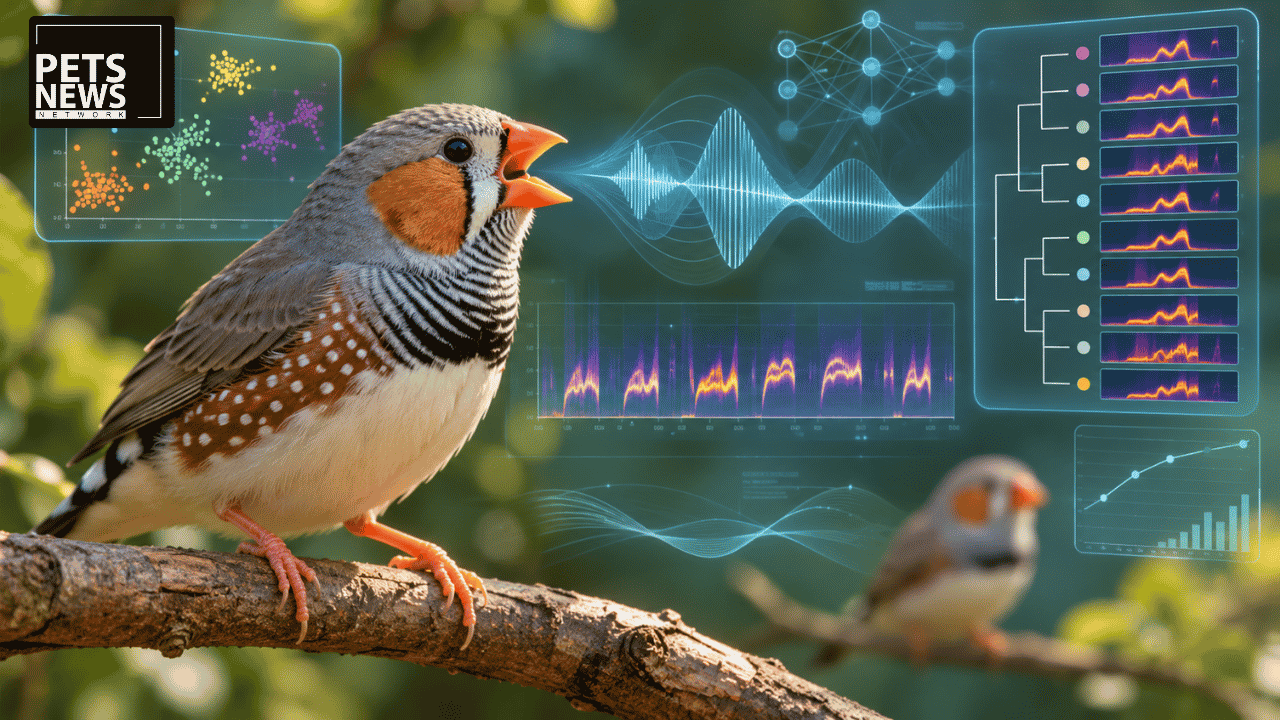
Elie combined machine learning with behavioural observation to build a dictionary of 11 distinct call-types. The meanings include aggression, hunger and bonding.

A catalogue of calls, on its own, is not new. What makes this work matter is how it tested whether the birds treat those calls as meanings rather than as sounds.


The mistakes were the discovery

In a button-pressing experiment, the researchers rewarded one call-type with seeds each day, and the zebra finches quickly learned which one. The revealing part was not what the birds got right. It was the pattern in what they got wrong.

The birdsThe calls involved
Confused themLong-distance and short-distance contact calls, which sound very different from each other
Never confused themA short contact call and a short alarm call, which sound very similar

That pattern is the whole result. If the birds were responding to sound, they would have muddled the two calls that sound alike and separated the two that sound different. They did the opposite. They grouped two very different noises that mean roughly the same thing, and they kept apart two near-identical noises that mean different things.

The researchers read this as evidence that a call is not a simple reflex trigger for a zebra finch. Instead, the birds appear to respond to what the call is about, which suggests a representation of meaning rather than a reaction to a waveform.

It is a finding about comprehension in a small bird, and the team obtained it by watching finches press buttons for seeds.


It is not only finches

The prize has a short history and a strong one. The 2025 award went to Laela Sayigh and colleagues at the Woods Hole Oceanographic Institution. They found the first evidence of a possible language-like system in dolphins, with whistles that appear to carry shared, context-specific meanings.

This year, Dr Irene Pepperberg also received a Lifetime Achievement Award for her work on grey parrot communication. Her inclusion is a useful reminder of how long this research takes.

Pepperberg spent roughly three decades with an African grey parrot named Alex. He learned to label dozens of objects, identify colours, shapes and materials, and answer questions about whether two items were the same or different. In later published work, she argued that he showed something close to an understanding of zero. Alex died in 2007.
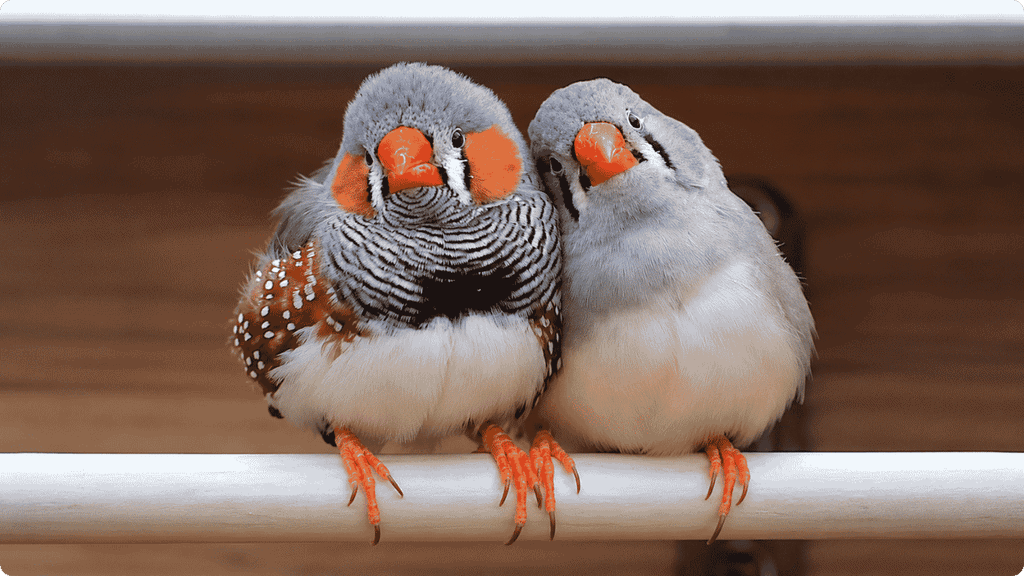
Two zebra finches with orange beaks perch close together on a white rail, one with spotted brown flanks

The significance was not that a bird had been taught words. It was that a bird appeared to reason about categories. Pepperberg faced years of scepticism that she was over-interpreting, and the field has since moved much closer to her position.

That is the pattern this research follows: slow, contested, and decided by experimental design rather than by announcement.


The rules, and the finish line

To be eligible, research must meet three tests:

  • Use non-invasive approaches
  • Demonstrate communication in more than one context, using the animal’s own communication signals
  • Produce a measurable response from the animal

Non-invasive is a condition of entry. The field making real progress on understanding animals has ruled out opening their heads.

That is a methodological choice as much as an ethical one. An implant tells you about neural activity in a captive, surgically altered individual. In contrast, recording an animal’s own signals in its own environment, and then testing whether it responds as though those signals carry meaning, tells you about the communication system itself.

The challenge has also set its own finish line. A Grand Prize, either US$10 million in equity or US$500,000 in cash, awaits the first demonstration of an animal communicating independently with researchers without realising it is talking to humans. No one has claimed it.


Why that last condition is so strict

The phrase without realising it is talking to humans looks like a flourish. In fact, it is the hardest requirement in the challenge, and it exists because of a horse.

In Berlin in the early 1900s, a horse called Clever Hans appeared to perform arithmetic by tapping out answers with his hoof, and he was right about nine times in ten. In 1907, the psychologist Oskar Pfungst showed what was really happening. Hans could not do sums. He was reading small, unconscious changes in the posture and expression of whoever was asking. When the questioner did not know the answer, Hans failed.

The horse was not a fraud. He was doing something arguably more impressive than arithmetic, which was reading human beings with extraordinary precision. But he was not counting.

Every claim about animal communication since has had to survive that problem. An animal that responds correctly may be reading the handler rather than the signal. Therefore the prize demands the animal’s own signals, responses across more than one context, and a demonstration in which the animal is not performing for a human at all. It is designed so that Clever Hans could not win it.


The claim that keeps resurfacing

Against that background, a claim circulates online from time to time: that brain-computer interface company Neuralink will let humans communicate with animals by 2028.

PNN could not find a primary source for it. There is no interview, no dated statement and no transcript. The versions in circulation trace back to aggregator articles with no quote, no venue and no link to an original.

The company’s own reported targets do not fit that date.

Neuralink targetReported date
Regulatory approval of the Telepathy implant2029
Blindsight launch2030

Bloomberg reported those targets in July 2025, citing investor documents.

Telepathy is designed to let a person with paralysis control a computer cursor. That is the product, and the company does not expect approval for it until 2029. A claim that interspecies communication arrives in 2028 would place it a year before the basic human device is cleared. Neuralink’s first human trial received FDA clearance in 2023, and the first patient was implanted in January 2024.
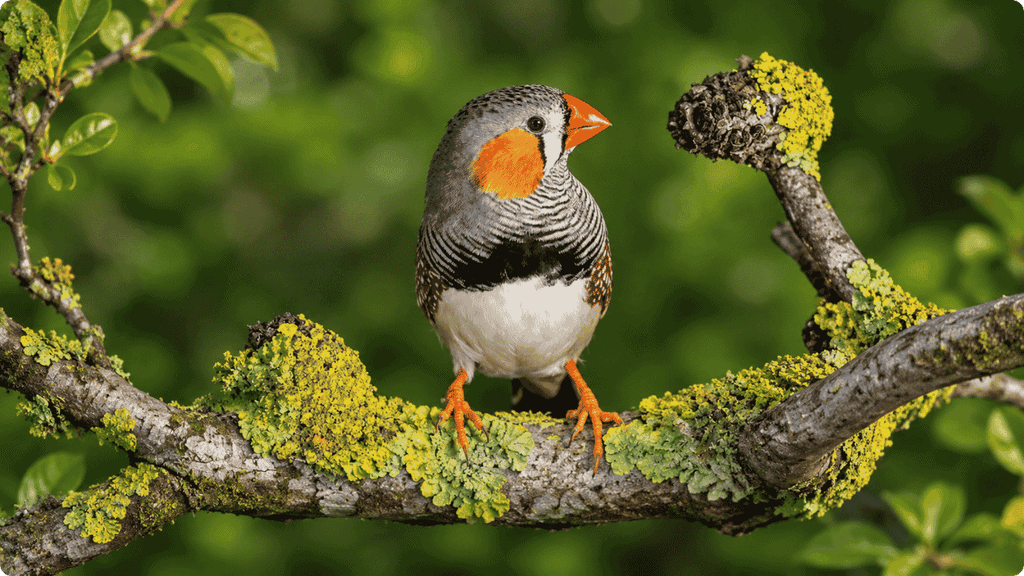
Zebra finch with orange cheeks and beak perched on a lichen-covered branch against a green background

What the technology actually does with animals

For a pet readership, this is worth stating directly. Neuralink’s relationship with animals has not been conversational. Pigs and macaques have been research subjects, and the company has shown a pig with an implant (2020) and a monkey playing a video game through one (2021). Animal-research campaigners have separately asked US regulators to investigate how the company described primate deaths. Those are allegations, not findings.

The idea of talking to your dog through a brain chip rests on a programme in which animals are the test subjects. The research producing results on animal meaning has gone the other way, and made that a rule.


What this means if you live with a dog

The prize-winning work is on finches, dolphins and parrots rather than pets. Animals with large, structured vocal repertoires give researchers more to analyse.

Dogs, however, have their own body of evidence. A border collie named Chaser, trained by the psychologist John Pilley at Wofford College, learned the names of 1,022 individual objects. The published finding was not the number. It was that Chaser appeared to treat the words as names for things rather than as cues for a trained action. Dogs also read human gestures such as pointing with unusual skill.

None of this amounts to conversation, and it does not mean a dog understands sentences. It does suggest that the gap between you and your dog is not a technology problem waiting on a device. Instead, it is a question of how much signal each species can extract from the other, and dogs have been doing most of that work for thousands of years.


What is actually true

No one is going to hand you a device that translates your dog in 2028.

What is happening is slower and considerably more respectful of the animals involved. Researchers record natural signals, use machine learning to find structure in them, and then design experiments that let the animal show whether that structure carries meaning.

The zebra finch results point to an answer. The birds sorted calls by what they meant rather than by how they sounded, and nobody had to open a skull to find out.


Pets News Network is India’s first dedicated media platform for the pet and animal industry. For breaking global pet news, brand coverage, and advertising enquiries, contact: info@petsnewsnetwork.com


Total Views: 5,646

You Might Also Like

Animal Health Sector Sees Strong Q2 2026 Results
Vet Bills Are Soaring — Here’s Why Indian Pet Parents Are Rushing to Insure
Hong Kong Just Rewrote the Rules for Pet Owners — And the Rest of Asia’s Pet Industry Is Taking Notes
Ahmedabad Is Boiling, And Your Pet Dog Is Running Out of Time
₹42 Crore Spent. 8.8 Lakh Dogs Sterilised. So Why Is Bengaluru’s Stray Dog Crisis Only Getting Worse?
TAGGED:AI animal communicationAlex the parrotAnimal Behaviouranimal cognitionanimal communication researchanimal emotionsanimal intelligenceanimal languageanimal testingAnimal Welfareartificial intelligenceBCIbioacousticsbirdsongbrain computer interfacecat behaviourChaser border collieClever HansColler Dolittle PrizeColler Dolittle Prize 2026comparative cognitiondog behaviourDog Ownersdolphin whistlesdolphinsethologygrey parrotinterspecies communicationIrene PepperbergJeremy Coller FoundationLaela Sayighmachine learningNeuralinkneurotechnologynon invasive researchpet communicationPet Ownersprimate researchresearch ethicsscience communicationTel Aviv UniversityTheunissen LabWoods Holezebra finch
Share This Article
Facebook Email Copy Link Print

More Popular from PNN

A golden-brown Golden Retriever lying quietly on a dark leather couch with a tired, sad expression, representing the lethargy and discomfort experienced by dogs suffering from urinary bladder stones or uroliths.
Pet Health

Urinary Bladder Stones in Dogs: Types, Symptoms, Diagnosis, and Treatment Guide for Pet Parents.

By
Ankur Jain
16 Min Read
A golden-brown Golden Retriever lying quietly on a dark leather couch with a tired, sad expression, representing the lethargy and discomfort experienced by dogs suffering from urinary bladder stones or uroliths.

Urinary Bladder Stones in Dogs: Types, Symptoms, Diagnosis, and Treatment Guide for Pet Parents.

By
Ankur Jain
A Shelter Took In 84 Dogs at Once. Nearly 2,000 People Now Want Breeders Licensed.
Animal Rescue & WelfareDaily DigestGlobal Pet NewsGovernment PolicyInvestigationsPet CarePet Parent GuidesPet SafetyPolicy & Law

A Shelter Took In 84 Dogs at Once. Nearly 2,000 People Now Want Breeders Licensed.

By
Ankur Jain
12 Min Read
- Advertisement -
Ad image
Pet Health

Urinary Bladder Stones in Dogs: Types, Symptoms, Diagnosis, and Treatment Guide for Pet Parents.

That Sad, Tired Look Could Mean More Than a Bad Day — Know the Signs of…

By
Ankur Jain
Treatment & Health

Blood Panel Clues in Dogs and Cats, What Your Vet’s Blood Tests Are Really Telling You

Your Cat's Blood Test Could Be Saving Their Life — Here's How

By
Ankur Jain
Pet HealthTreatment & Health

Chronic Kidney Disease in Dogs: Symptoms, Treatment, Diet, and How to Give Your Dog a Better Quality of Life.

When Your Dog's Kidneys Start to Fail — Here's What Every Pet Owner Must Know

By
Ankur Jain
Pet Health

Urinary Bladder Stones in Dogs: Types, Symptoms, Diagnosis, and Treatment Guide for Pet Parents.

That Sad, Tired Look Could Mean More Than a Bad Day — Know the Signs of…

By
Ankur Jain
Pet Health

Dog Vaccination Schedule in India, The Complete Guide Every Pet Parent Needs in 2025.

One Small Injection — A Lifetime of Protection for Your Dog

By
Ankur Jain
PNN Logo - Pets News Network

Pets News Network (PNN) is India’s first independent pet-industry news service and watchdog, delivering professional journalism, lifestyle content, and trusted reporting for every pet parent, professional, and animal lover.

Categories

  • Technology
  • Entertainment
  • Animal Rescue & Welfare
  • Industry Insider
  • Pet Business & Finance
  • Pet Food Science
  • Pet Health

Quick Links

  • World
  • Pet Technology
  • Pet Insider
  • Blog Index
  • Contact US
  • My Bookmarks

@COPY RIGHTS – 2026, Pets News Network. All Rights Reserved.

© Pets News Network 2026. All Rights Reserved.
PNN Logo - Pets News Network PNN Logo - Pets News Network
Welcome Back!

Sign in to your account

Username or Email Address
Password

Lost your password?