
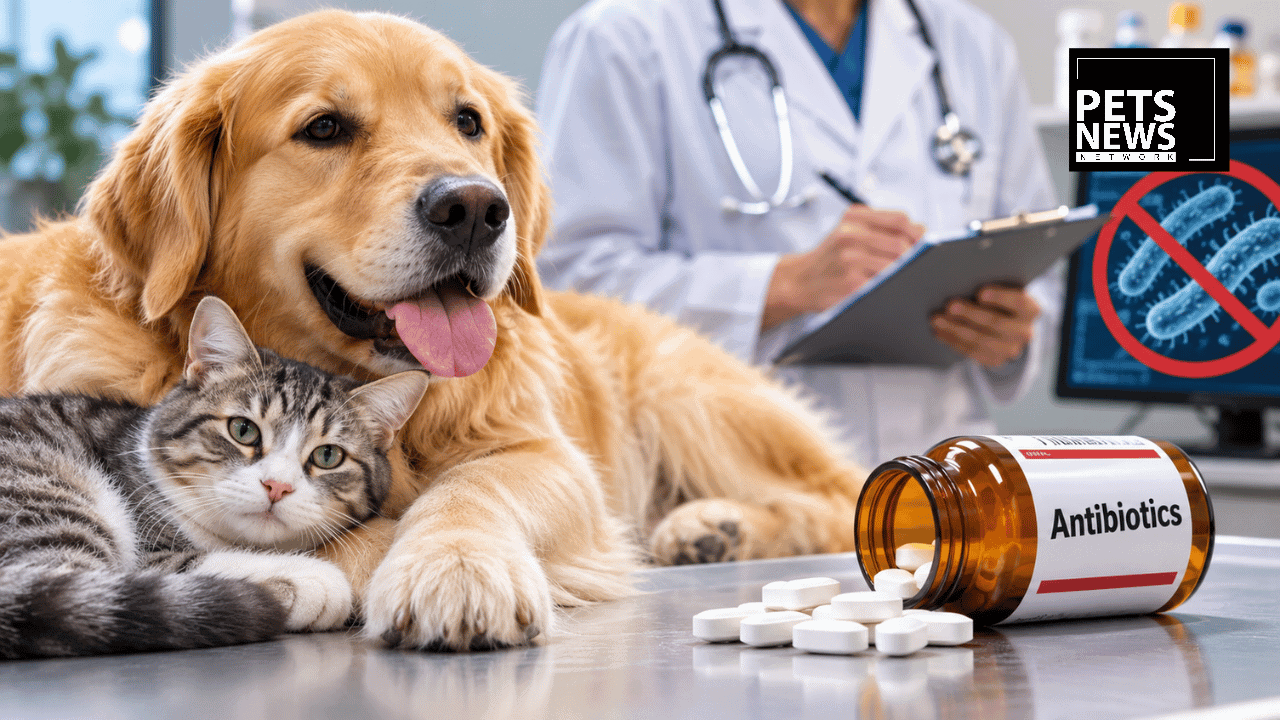

Antibiotic resistance in pets is rarely mentioned when people talk about superbugs. The conversation usually stays in hospitals, or on farms. But the dog on the sofa and the cat on the windowsill are given many of the same medicines that people rely on, and the bacteria they carry do not stay with them. As the drugs that made infections treatable grow weaker around the world, what happens in an ordinary home with an ordinary pet has become part of the picture.
This article is general information and is not a substitute for veterinary advice.
The scale of the problem
Antibiotics kill bacteria or stop them multiplying. Resistance is what happens when bacteria change so that the drug no longer works. Every use of an antibiotic gives the bacteria that survive it a chance to multiply, which is why overuse speeds the process up.
| Measure | Estimate |
|---|---|
| Deaths directly caused by drug-resistant bacterial infections, 2021 | More than 1.1 million worldwide |
| Deaths in which resistance played a part, 2021 | About 4.7 million |
| Forecast for 2025 to 2050 | About 39 million deaths directly caused by resistance over the period, if little changes |
| India, 2021 | An estimated 267,000 deaths directly attributable to resistance |
| Resistant infections, 2023 | About one in six laboratory-confirmed bacterial infections worldwide was resistant to antibiotic treatment |
The figures come from the largest global study of the subject and from the World Health Organization’s surveillance. The forecast is a total across twenty-five years, not an annual toll.
Where animals come in
Most antibiotics in the world are not given to people. One widely cited estimate holds that around 73% of all antimicrobials sold globally are used in animals raised for food. A good deal of that use has been to prevent illness in crowded conditions, or to make animals grow faster, and not to treat animals that are sick.
The clearest warning came from a drug called colistin. It is a last-resort antibiotic, kept back for people with severe infections caused by bacteria that resist almost everything else. For years it was also used routinely in poultry and pig farming in many countries. Then bacteria appeared carrying a resistance gene that could be passed from one kind of bacterium to another, and it turned up in animals, in food and in people. India prohibited colistin in food-producing animals in 2019.
The reasoning that follows is simple, and it is the one international animal health bodies now promote. Animals kept in clean, uncrowded conditions, properly fed and vaccinated, fall ill less often. As a result, they need fewer antibiotics. Countries such as Denmark and the Netherlands cut farm antibiotic use sharply, through a combination of strict rules on prescribing, monitoring of use and better husbandry.
That same reasoning applies, on a small scale, to a single pet.

Pets are part of this too
Dogs and cats are treated with antibiotics from the same families used in human medicine, sometimes the very same drugs. They also live in close contact with people: sharing beds, licking hands and faces, sitting in laps.
A study of households in the United Kingdom and Portugal looked at what that closeness means. Researchers followed 65 households in which a dog or cat was being treated for a skin, soft-tissue or urinary infection, and tested the pets and their owners for bacteria resistant to important antibiotics.
- In Portugal, more than half the animals and over a third of the owners carried such bacteria.
- In seven households, genetic testing showed the pet and its owner were carrying the same resistant strain.
- In three of those, the timing of the tests suggested the bacteria had passed from pet to owner, though the direction could not be proved.
One finding should be kept in view: none of the owners became ill, and all the animals were treated successfully. Carrying a bacterium is not the same as being infected by it. The lesson is not that pets are dangerous. It is that people and their animals share bacteria, so the way antibiotics are used in one affects the other.
How well-meaning owners make it worse
Almost nobody misuses antibiotics on purpose. The habits that feed resistance are ordinary ones.
- Giving antibiotics without a vet. Buying a course over the counter because it worked last time, or because a neighbour recommended it.
- Using leftovers. Half a strip saved from a previous illness, given for a new one.
- Using human medicines. The drug may be wrong for the animal, the dose is a guess, and some human medicines are harmful to pets.
- Stopping early or skipping doses without checking with the vet, because the animal looks better.
- Pressing the vet for antibiotics “just in case”, when the vet has not suggested them.
- Treating everything as an infection. Many common problems are not bacterial at all.
What antibiotics do not treat
| Problem | Why antibiotics usually do not help |
|---|---|
| Viral illnesses, including many coughs and colds | Antibiotics act on bacteria, not viruses |
| Most short bouts of vomiting or diarrhoea | Often caused by diet, a virus or a parasite, and often settle with supportive care |
| Itchy skin from allergies | The cause is the allergy; infection is sometimes a secondary problem that a vet must confirm |
| Worms, fleas, ticks and mites | These need antiparasitic treatment |
| Fungal infections such as ringworm | These need antifungal treatment |
| Pain and stiffness | Antibiotics are not painkillers |
A vet may still prescribe an antibiotic in some of these situations if a bacterial infection has set in as well. That is a judgement for the vet to make after examining the animal.
What a pet owner can do
Let the vet decide. Never start an antibiotic on your own, and do not ask for one as a precaution.
Ask what the infection is. It is reasonable to ask, “Is this bacterial, and how do we know?”
Ask about testing for stubborn or repeat infections. A culture and sensitivity test identifies the bacterium and shows which drugs still work against it. It costs more at the start and can save weeks of failed treatment.
Give the course exactly as prescribed. The right dose, at the right times, for as long as the vet has said. If you are struggling to give tablets, tell the clinic; there may be a liquid or another option.
Never keep or share leftovers. Return unused medicine to the clinic or dispose of it as advised. Do not flush it or pour it down a drain.
Wash your hands after handling a sick pet, cleaning wounds, or dealing with urine and faeces, and keep an infected pet’s bedding and bowls clean.
Prevent the illness in the first place. Vaccinations kept up to date, parasite control, good food, clean water, dental care and regular check-ups all mean fewer infections and fewer courses of antibiotics. Some of what goes into managing a pet’s health without reaching for a prescription is described in our case study on care beyond antibiotics.
Tell your own doctor you have pets if you have a persistent or recurring infection. It is useful information.

Welfare is the best prevention
The argument made for farms holds in the home. A pet that is well fed, kept clean, vaccinated, exercised and seen by a vet regularly is a pet that tends to fall ill less often. Fewer illnesses mean fewer antibiotics, and fewer antibiotics mean fewer chances for resistance to develop.
Good care is the kind thing to do for an animal. It is also one of the most practical ways of keeping these medicines working.
The short version
- Resistance is rising, and was directly responsible for more than a million deaths in 2021.
- Animals account for most antibiotic use worldwide, and pets share bacteria with their owners.
- Antibiotics should be started only by a vet, given exactly as prescribed, and never reused.
- Prevention, through vaccination, hygiene and good everyday care, is what reduces the need for them.
Every course that is avoided because an animal stayed healthy is one less opportunity for a bacterium to learn how to survive.
Pets News Network is India’s first dedicated media platform for the pet and animal industry. For breaking global pet news, brand coverage, and advertising enquiries, contact: info@petsnewsnetwork.com