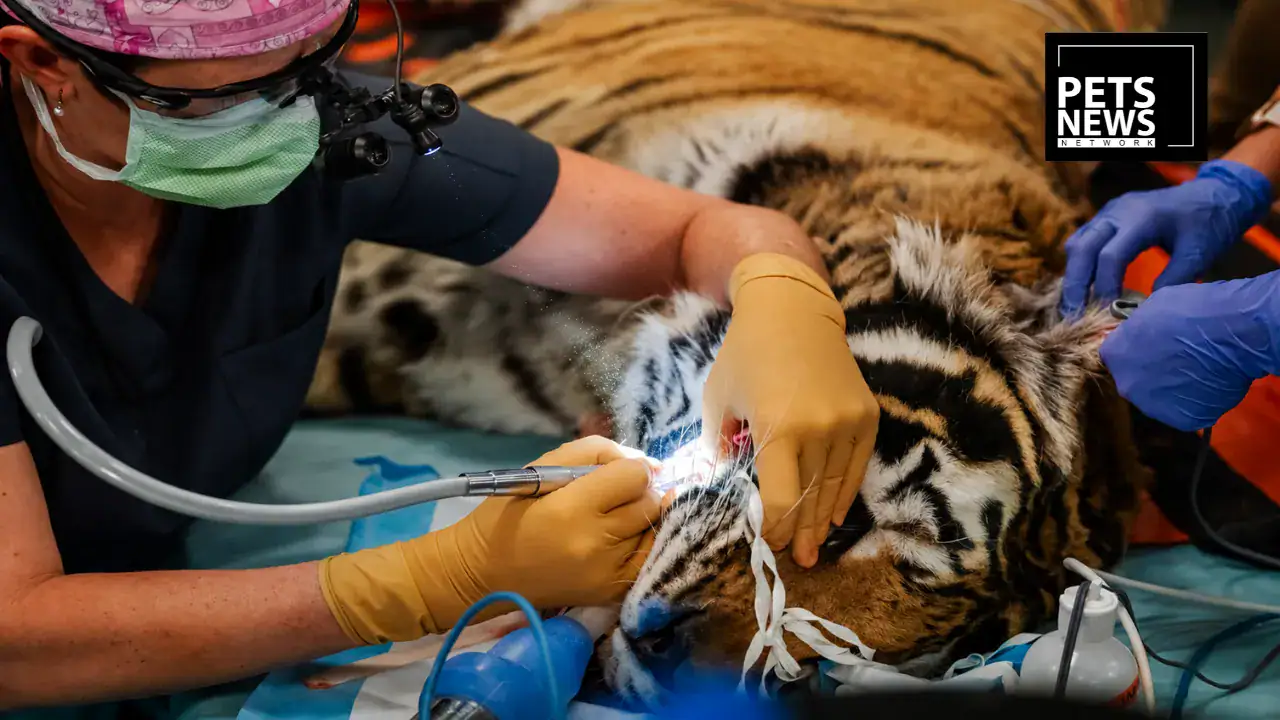

Inside the Denver Zoo’s animal hospital on a recent Tuesday morning, a 12-year-old Sumatran tiger named ChloJo lay under bright surgical lights while veterinarians removed a small mass from her back. It wasn’t an emergency. It was preventive care, and it’s exactly the kind of moment that defines how the zoo approaches every animal in its charge.
For Dr. Jimmy Johnson, the zoo’s head veterinarian, that procedure is one small piece of a much bigger philosophy his team calls “whole life care.” It’s a framework that guides how roughly 3,000 animals, spanning 450 species, are looked after from birth through old age, and eventually, through the hardest decisions of all.
A Difficult Year Brings the Conversation Forward
The topic of end-of-life care has come into sharper focus at Denver Zoo this year following a series of high-profile animal losses.
In May, the zoo made the decision to euthanize Rudy, a 32-year-old black rhinoceros, after chronic health issues and worsening mobility problems tied to his age. June brought the loss of Indy, a 46-year-old Egyptian vulture believed to be among the oldest of her species living under human care.
July was particularly hard. The zoo said goodbye to Kai, a Cape buffalo calf born earlier this year, after veterinary teams determined his kidney failure was untreatable. Just days later, Hagrid, a critically endangered Bactrian camel, died unexpectedly following acute gastrointestinal complications.
Two additional deaths this year stemmed from human error, when two Malayan tapirs died after receiving toxic levels of a copper supplement. The zoo has since traced the cause to a medication preparation mistake and rolled out additional safeguards to prevent it from happening again.
Why “Quality of Life” Guides Every Decision
Dr. Johnson said losses like these are never easy for a team that spends years building relationships with the animals in their care.
“It is hard, and it’s hard because we care,” he said.
Even so, he noted that this year’s number of animal deaths isn’t unusual for an institution housing thousands of animals across hundreds of species, each with different lifespans, health risks, and aging patterns. When an animal develops a terminal or untreatable condition, the care team’s guiding question shifts away from simply extending life.
“We always ask ourselves, just because we can, should we, and what does the outlook for that animal look like?” Johnson explained. “We don’t focus just on quantity of life; we focus on quality of life as well.”
That principle, he said, is exactly what shapes euthanasia decisions at the zoo.
Reframing Euthanasia as Part of Compassionate Care
Johnson pushed back on the idea that euthanasia represents giving up on an animal.
“Euthanasia in itself means ‘good death,’ and it’s a part of the care we provide,” he said. “It is not an absolute last resort. It is a part of a thoughtful end-of-life care plan because we want every animal to have a comfortable and dignified end of their life.”
Care teams work to make these calls before an animal experiences significant pain, Johnson said, summing up the approach in one line: “An animal’s last day does not need to be their worst day.”
The Work That Continues After Loss
Every animal death at the zoo is followed by a necropsy conducted by a board-certified pathologist, along with a full review of diagnostic findings. Johnson said these examinations play a real role in advancing veterinary knowledge, improving care standards, and contributing to global conservation efforts.
“Even though we’ve lost an animal and that’s hard, that animal is contributing to our understanding and allowing us to continue to advance the already high-quality care that we provide,” he said.
For zoo visitors, a trip to Denver Zoo is often measured in the moments spent watching animals in their habitats. Behind the scenes, as Johnson describes it, the real measure is a lifetime of care, including the hardest decision a veterinarian can face.
“I have euthanized animals throughout my career, it doesn’t get any easier,” he said. “But I think what really reaffirms my commitment to our animals in this profession and my love of animals is knowing that the animals that live at Denver Zoo have the absolute best care possible, and that includes end-of-life care as well.”
Pets News Network is India’s first dedicated media platform for the pet and animal industry. For breaking global pet news, brand coverage, and advertising enquiries, contact: ankur@petsnewsnetwork.com