
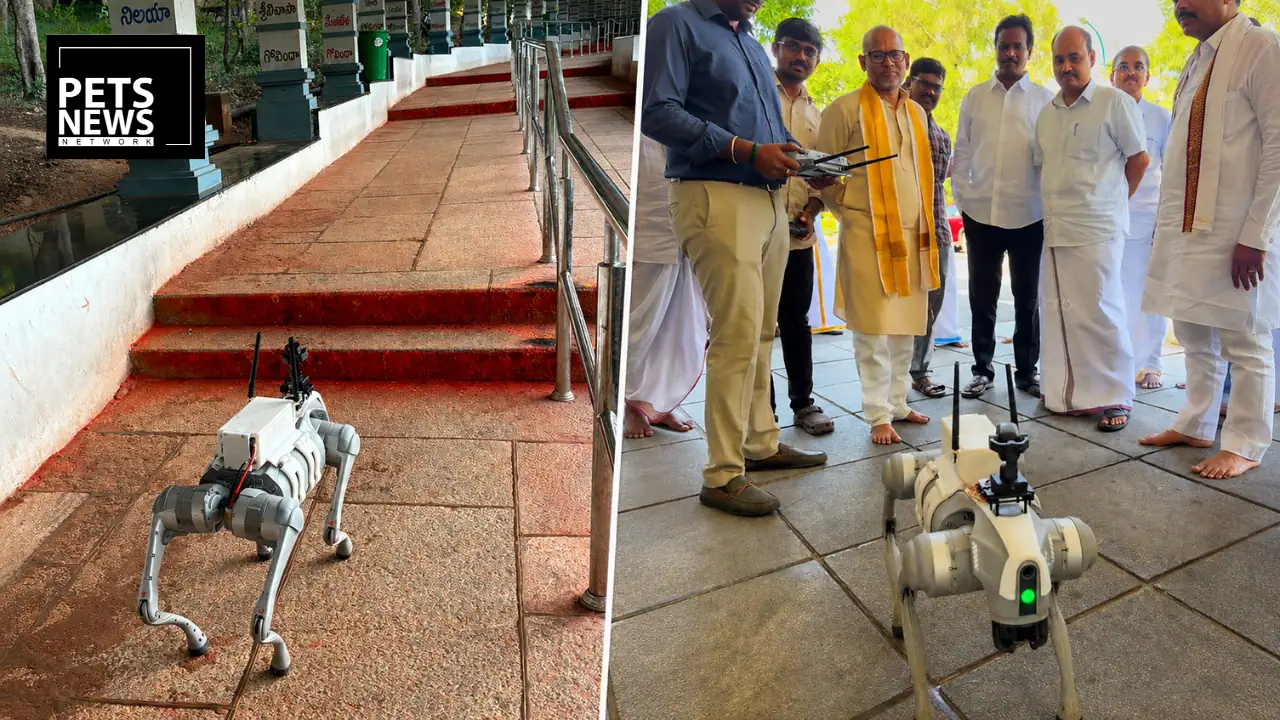

The forested hills of Tirumala, home to one of the world’s most visited religious sites, are about to get an unusual new patrol partner. Tirumala Tirupati Devasthanams (TTD), the administrative body governing the Lord Venkateshwara temple in Andhra Pradesh’s Tirupati district, is planning to deploy AI-powered robotic dogs to help prevent human-wildlife conflicts along the hill’s forest trekking routes, most notably the well-traveled Alipiri–Tirumala footpath.
It’s a striking pairing: a temple complex steeped in centuries of tradition, turning to some of the most advanced quadruped robotics and AI sensing technology available today, all in service of protecting both pilgrims and the wild animals sharing the same forested terrain.
Why Tirumala Needs This Kind of Solution
The core challenge TTD is trying to address is straightforward but genuinely difficult to solve through conventional means alone: the Seshachalam forest range surrounding Tirumala is home to leopards and other wildlife, and the same trails used daily by thousands of pilgrims cut directly through that habitat.
Early detection of predators like leopards along these routes has traditionally relied on a combination of forest guards, security patrols, and static camera traps, tools that work reasonably well but come with real limitations, particularly in hazardous or difficult-to-access terrain, and especially during conditions of poor visibility such as dense fog or nighttime darkness, when both human patrols and fixed cameras become significantly less effective.
What the Robotic Dog Can Actually Do
The technology TTD is considering isn’t a simple remote-controlled device, it’s a genuinely sophisticated piece of field robotics built specifically for autonomous environmental monitoring.
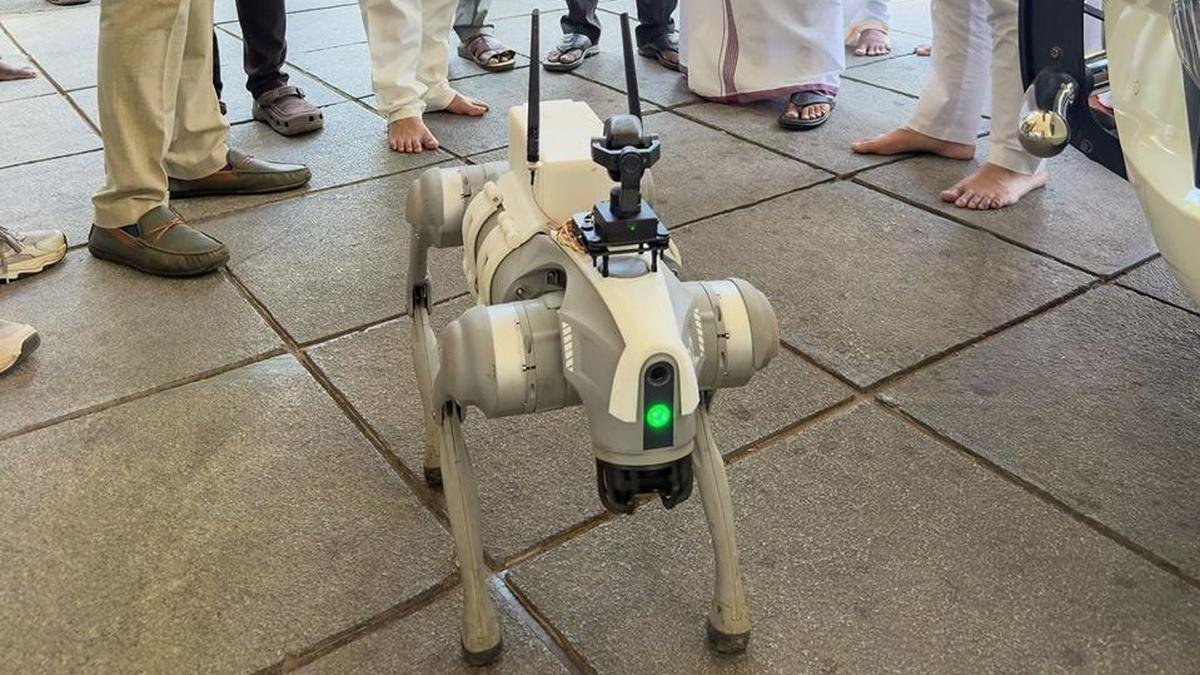
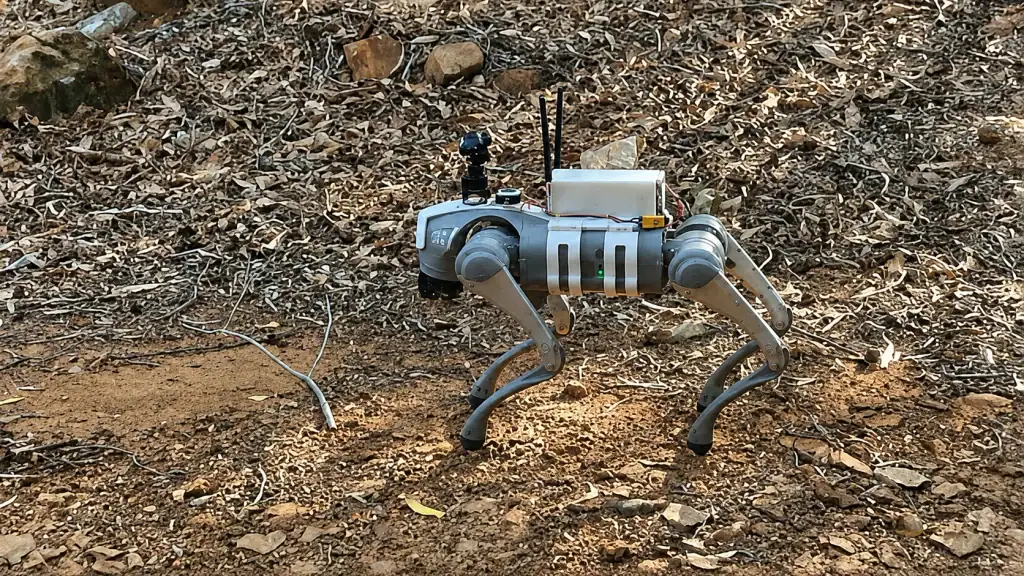
The hardware itself is an advanced four-legged quadruped robot, equipped with a suite of sensing technology that includes both optical and thermal imaging cameras, 360-degree LiDAR (light detection and ranging) for spatial mapping, and additional environmental sensors. Critically, this sensor combination allows the robot to operate effectively even in low-visibility conditions like dense fog or total darkness, precisely the scenarios where traditional patrol methods struggle most.
Smart classification capability sits at the heart of what makes this system genuinely useful rather than just a novelty. The onboard AI is designed to distinguish between large wild animals, humans, vehicles, and domestic animals in real time, allowing it to filter out irrelevant movement and flag only the detections that actually matter, a wild predator on or near a pilgrim route, for instance, rather than every passing person or vehicle.
Real-time alerting rounds out the operational capability. When the system detects something requiring attention, it generates real-time, geo-tagged alerts, paired with live thermal and video feeds streamed directly to control rooms and patrol teams on the ground. This gives responders immediate, precise location data rather than a delayed or vague report, potentially critical in situations where minutes matter.
A Non-Violent Approach to Deterrence
One of the more thoughtful design elements of this system is how it’s meant to actually respond when a wild animal is detected near a human pathway. Rather than any form of physical intervention, the robotic units are equipped with sound and light deterrent mechanisms specifically designed to non-physically discourage wild animals from approaching human trails, without causing them any harm.
This approach reflects a broader conservation-conscious philosophy behind the entire initiative: the goal isn’t to control or harm wildlife populations in the Seshachalam range, but to reduce the likelihood of dangerous, unplanned encounters between pilgrims and animals like leopards, while leaving the animals themselves undisturbed and free to continue their natural movement patterns away from human areas.
A Tool That Complements, Not Replaces, Existing Systems
Despite the sophistication of the technology involved, TTD has been clear that these robotic units are intended to serve as a mobile monitoring asset, particularly valuable for hazardous or otherwise human-inaccessible terrain within the Seshachalam forest range, rather than as a replacement for existing conservation and security infrastructure.
Traditional camera traps, physical forest guards, and standard security patrols will continue operating alongside the robotic units, with the technology functioning as an additional layer of coverage in areas or conditions where those existing methods face genuine limitations. It’s a complementary model rather than a wholesale technological replacement, one that plays to the robotic system’s specific strengths, all-weather operation, difficult terrain access, and continuous monitoring, without discarding the value of experienced human patrol teams and established camera infrastructure.
Building a Long-Term Wildlife Data Picture
Beyond its immediate safety function, the robotic dog initiative carries a secondary, longer-term benefit for conservation planning. As these units patrol the forest range, they continuously aggregate movement data and imagery, information that can help forest officials map wildlife movement patterns across the Seshachalam range over time.
That kind of accumulated, systematic dataset has genuine conservation value well beyond simple pilgrim safety. Understanding how leopards and other wildlife move through the landscape, which areas see the most activity, how patterns shift seasonally, gives forest management teams a stronger evidence base for long-term habitat planning and conflict-prevention strategy, rather than relying solely on anecdotal sightings or periodic camera trap reviews.
When and How the Testing Will Happen
TTD has indicated that field testing of the robotic dog system is scheduled to take place during the upcoming Tirumala Brahmotsavam festival, one of the most significant annual events at the temple, drawing enormous pilgrim footfall across the hill’s trails and pathways.
Testing the system during a period of peak pilgrim activity makes practical sense: it offers a genuine, high-stakes environment to evaluate how the technology performs under real operational pressure, rather than in a controlled, low-traffic setting that might not accurately reflect the conditions the system would need to handle during normal, high-volume periods.
Why This Initiative Matters Beyond Tirumala
TTD’s exploration of robotic wildlife monitoring technology reflects a broader, growing trend across India and globally: using AI-driven robotics and sensing technology to manage human-wildlife interfaces more effectively, particularly in high-footfall areas that overlap with sensitive natural habitats.
For a site like Tirumala, where religious tourism brings extraordinary numbers of visitors through genuinely wild, leopard-inhabited terrain on a daily basis, a technology-assisted early warning system represents a meaningful step toward protecting both pilgrims and wildlife simultaneously, without resorting to more invasive or disruptive conservation measures. If the Brahmotsavam trial proves successful, it could offer a genuinely replicable model for other pilgrimage sites, national parks, and forested tourist destinations across India facing similar human-wildlife coexistence challenges.
Pets News Network is India’s first dedicated media platform for the pet and animal industry. For breaking global pet news, brand coverage, and advertising enquiries, contact: ankur@petsnewsnetwork.com