


For several months, a local animal caregiver in Chennai’s MGR Nagar area reportedly watched community cats in the neighbourhood die under suspicious, repeated circumstances. What eventually emerged was a pattern serious enough to trigger a formal police complaint: a local resident allegedly poisoning community and stray cats on multiple occasions over an extended period.
Following the caregiver’s complaint and swift intervention from PETA India, the MGR Nagar Police registered a formal First Information Report (FIR) against the accused resident, a case that’s now drawing renewed attention to how Indian law treats crimes against community animals, and what more needs to happen to make that legal framework genuinely effective.
The Legal Charges Filed So Far
Police have registered the case under Section 325 of the Bharatiya Nyaya Sanhita (BNS), 2023, India’s relatively new criminal code that replaced the Indian Penal Code. This particular provision specifically criminalises mischief by killing, poisoning, maiming, or rendering an animal useless.
Section 325 is classified as a cognizable offence, meaning police can investigate and make arrests without requiring prior court approval, and carries meaningful penalties: imprisonment for a term extending up to five years, a fine, or both. This is the same provision that has increasingly become the standard charge applied in similar recent animal cruelty cases across the country, including recent, well-publicised cases involving mass cat killings in Mumbai’s Chembur area and dog poisoning incidents in Maharashtra and Haryana, reflecting a fairly consistent, if still evolving, legal response pattern to serious animal cruelty nationwide.
Why PETA India Wants the Charges Strengthened
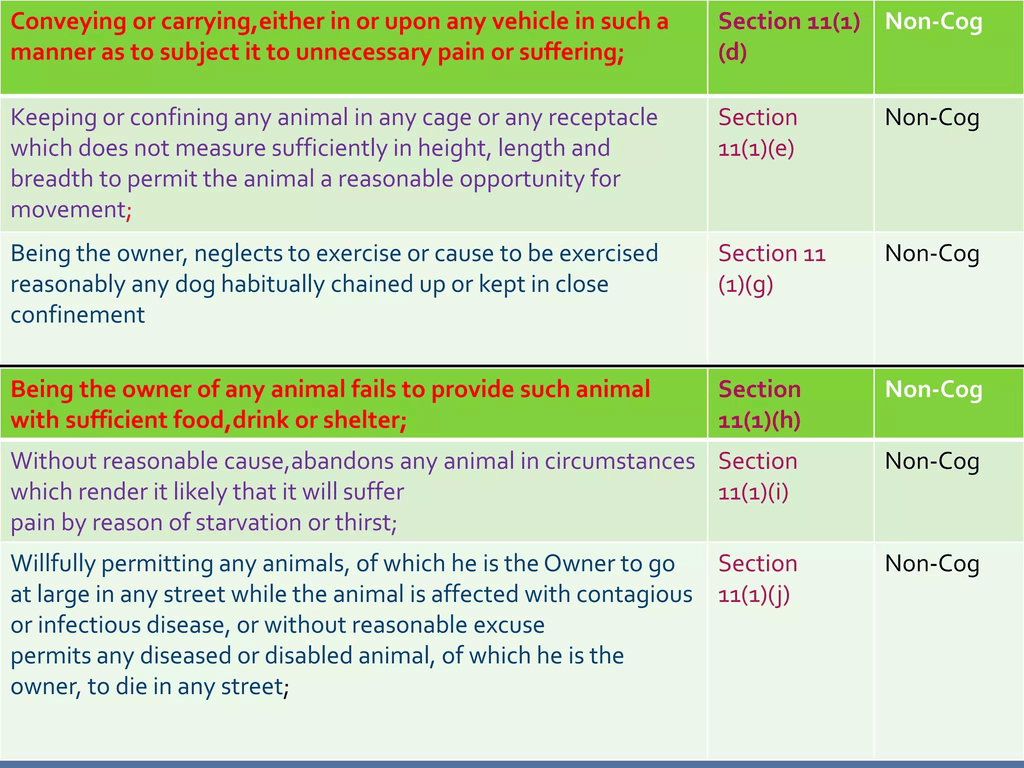
While the Section 325 charge represents a meaningful first step, PETA India is pushing law enforcement to add relevant sections of the Prevention of Cruelty to Animals (PCA) Act, 1960 to the case as well. This isn’t an unusual request, in comparable recent cases, including the Chembur cat killings and a dog-beating case in Bhiwani, Haryana, police have similarly registered charges under both Section 325 BNS and specific PCA Act provisions, typically Sections 11(1)(a) and 11(1)(l), which address cruel treatment of animals more broadly.
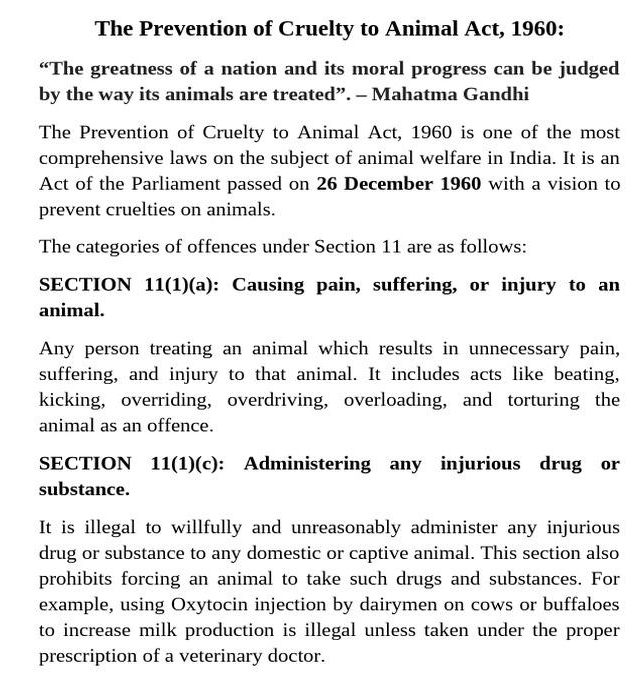
Layering both legal frameworks together gives prosecutors a stronger, more comprehensive case, addressing both the specific act of killing or poisoning under the BNS and the broader pattern of cruelty under the PCA Act, rather than relying on a single charge that might not fully capture the scope of repeated, deliberate harm alleged in this case.
The Push for Psychological Evaluation
Beyond strengthening the legal charges themselves, PETA India has also strongly recommended that the accused undergo a mandatory psychiatric evaluation, a recommendation that reflects a growing body of criminological research the organisation has consistently highlighted in similar cases.
This isn’t simply a punitive suggestion. Mandatory psychological evaluation for animal cruelty perpetrators serves two purposes: it can help identify underlying behavioural or mental health issues that may be driving the abuse, and it can inform whether the individual poses a broader risk that extends beyond animals alone.
The Well-Documented Link Between Animal Cruelty and Violence Toward People
PETA India’s push for psychological evaluation isn’t based on assumption, it draws on genuine, published criminological research establishing a documented connection between animal abuse and broader patterns of violent behaviour. Research published in the Forensic Research & Criminology International Journal has found that individuals who commit animal cruelty are three times more likely to go on to commit other violent crimes, including assault, harassment, and robbery.
This isn’t a talking point PETA India has invoked only in this specific case. In comparable recent incidents, the organisation’s cruelty response officers have made the same point directly. Following a similar case in Mumbai’s Govandi area, PETA India’s cruelty response officer Ishani Rathee stated plainly: “Those who abuse animals often move on to harming other animals and humans. For everyone’s safety, it’s imperative that members of the public report cruelty to animals such as this one to the police.” That framing, treating animal cruelty reporting as a matter of broader public safety rather than purely animal welfare, has become a consistent thread across PETA India’s advocacy in cases like this one.
The Bigger Picture: Why Community Cats Remain So Vulnerable
Cases like the MGR Nagar poisonings highlight a harsh reality facing street and community cats across Indian cities: they face an accumulation of serious risks well beyond deliberate cruelty alone. Vehicular accidents, starvation, disease, and shelter overpopulation all compound the danger community cats navigate daily, danger that intentional poisoning or violence adds to rather than represents in isolation.
That combination of risks is precisely why sustainable, humane population management matters so much for community animal welfare, not simply as a response to individual cruelty cases, but as an ongoing structural solution to the pressures that leave street cats vulnerable in the first place.
Why Sterilization Remains the Most Effective Long-Term Solution
Amid the understandable focus on prosecuting individual cruelty cases, animal welfare experts consistently point back to Trap-Neuter-Vaccinate-Return (TNVR) programmes and adoption as the genuinely effective, humane, long-term approach to managing community cat and dog populations sustainably.
The scale of impact a single sterilization can have is genuinely striking. Sterilizing one female cat can prevent up to 420,000 births over a seven-year period, while sterilizing a single female dog can prevent approximately 67,000 births over six years. These aren’t abstract statistics, they reflect the exponential nature of unchecked animal reproduction, and why consistent, well-funded sterilization programmes represent far more effective population management than reactive measures alone.
For community caregivers, like the one whose complaint triggered this Chennai case, TNVR programmes also offer a practical, positive alternative to the conflict and tension that sometimes arises between residents and community animal populations, tension that, in the worst cases, can escalate into exactly the kind of deliberate cruelty alleged in this case.
What This Case Means Going Forward
As the investigation into the MGR Nagar poisoning case proceeds, its outcome will likely be watched closely by animal welfare advocates across Tamil Nadu and beyond, both as a test of how thoroughly Section 325 BNS and PCA Act provisions can be applied together in practice, and as a broader signal of how seriously local law enforcement treats sustained, repeated animal cruelty within a community.
For residents and animal caregivers dealing with similar situations elsewhere, this case reinforces a clear message: reporting suspected animal cruelty to police, and seeking support from organisations like PETA India when needed, remains an essential step, not just for the animals directly affected, but for the broader safety of the communities these individuals live in.
Pets News Network is India’s first dedicated media platform for the pet and animal industry. For breaking global pet news, brand coverage, and advertising enquiries, contact: info@petsnewsnetwork.com