

A Dog Who Solved His Own Emergency
Sometimes the smartest move in a crisis is simply recognizing where safety actually is. That’s exactly what a stray dog named Archer did in El Paso, Texas, when he found himself dangerously close to the busy Border Freeway, and rather than bolting further into traffic or resisting the humans trying to help him, he made a decision that ended up doing half the rescue work himself.
Too Close to the Freeway for Comfort
Archer had wandered near the Border Freeway, one of El Paso’s busier roadways, putting himself in genuine danger from fast-moving traffic. Officers from the El Paso Police Department (EPPD) arrived on the scene specifically to secure him and keep him from running into the road, a situation that, with most stray or frightened dogs, can turn into a prolonged, stressful chase, since a scared animal near traffic often bolts unpredictably rather than cooperating with rescuers trying to help.
Archer had other plans entirely.
The Moment That Made This Story Stand Out
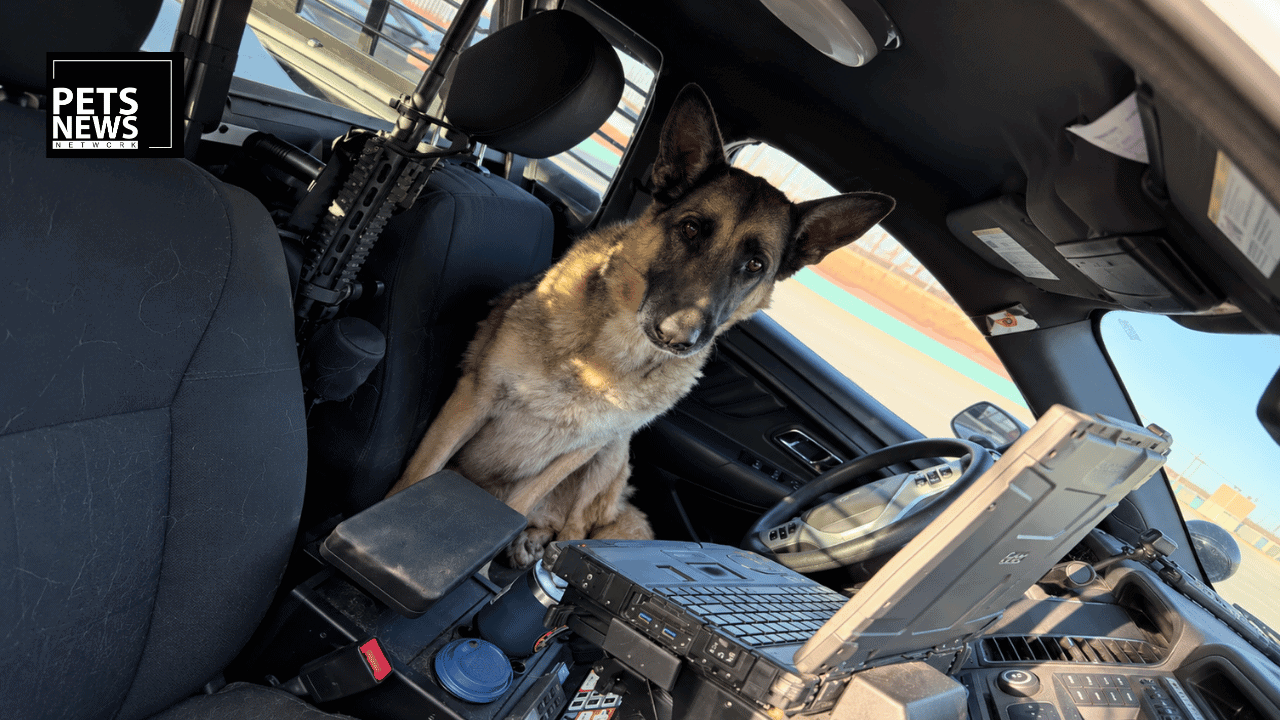
As officers attempted to get hold of him, Archer simply jumped into one of the police vehicles on his own, choosing the patrol car as his own safe haven rather than continuing to linger near the dangerous roadway. According to El Paso Animal Services (EPAS), which shared the story on social media, Archer essentially assisted in his own rescue, sparing everyone involved a potentially chaotic chase along a busy freeway.
It’s a small moment, but a genuinely striking one. Rather than needing to be cornered, coaxed, or physically restrained, Archer appears to have recognised the vehicle, and the people around it, as his way out of a dangerous situation, then acted on that instinct decisively.
From the Freeway to Safety
Once Archer was secured inside the patrol vehicle, Animal Protection Officer (APO) Cobo, from El Paso Animal Services, took over the situation. Officer Cobo safely relocated Archer away from the freeway to a secure location, then scanned him for a microchip, a routine but absolutely essential step whenever a stray or loose animal is picked up.
That scan turned out to be the key to everything that followed.

A Microchip That Actually Did Its Job
Archer’s microchip contained current, accurate contact information for his family, allowing El Paso Animal Services to quickly identify his owners and arrange his return home. Within a short window, Archer was reunited with his family, transforming what could have been a frightening, days-long ordeal, or worse, into a same-day happy ending.
El Paso Animal Services didn’t hold back in crediting the outcome to that small piece of technology: “Archer’s story is just more proof that microchips work. Keeping your pet’s microchip information up to date can make all the difference when they unexpectedly find themselves away from home.”
Why This Detail Matters More Than It Might Seem
It’s worth pausing on exactly what made Archer’s reunion possible, because it wasn’t luck alone. A microchip only works as intended when two conditions are both met: the chip itself needs to be present and functional, and just as importantly, the contact information linked to it needs to be current and accurate.
El Paso Animal Services has previously stressed this exact point in its broader public guidance, noting that microchipping alone isn’t enough, the chip also needs to be properly registered with both the local animal services department and a national registry, and that information needs updating whenever a phone number or address changes. A microchip linked to an old phone number or a previous address can leave a found pet just as hard to reunite with its owner as having no microchip at all.
Archer’s case worked exactly the way the system is designed to: a functioning chip, accurate contact details, and a quick scan by a trained officer combined to turn a dangerous, uncertain situation into a fast, successful reunion.
A Story That Reflects a Bigger, Busier Reality
Archer’s rescue wasn’t an isolated event for El Paso’s animal services team, it was one of roughly 670 calls Animal Protection Officers responded to that same week alone. That figure offers useful context: incidents involving loose, stray, or at-risk animals near roadways and public spaces are a routine, high-volume part of municipal animal services work, not rare occurrences.
Against that backdrop of hundreds of weekly calls, having a reliable, quick method for identifying an animal’s owner, exactly what a properly registered microchip provides, makes a genuine difference in how many of those cases end in a fast reunion rather than an extended shelter stay while officers try to track down an owner through other means.
Smooth Teamwork Behind a Simple Happy Ending
Beyond Archer’s own instincts, this story is also a clean example of effective, coordinated response between two different city departments. The El Paso Police Department handled the immediate, on-the-ground safety concern, keeping a dog away from dangerous freeway traffic, while Animal Protection Officer Cobo and El Paso Animal Services took over the specialised work of securing, identifying, and safely returning the animal home.
El Paso Animal Services acknowledged this collaboration directly, expressing gratitude for its “continued partnership with the El Paso Police Department and for Officer Cobo’s help in getting this pup safely out of harm’s way and back home.” That kind of smooth handoff between police and animal services isn’t something that happens automatically, it reflects an established, functioning working relationship between departments that likely handle overlapping situations like this on a regular basis.
The Simple Lesson Every Pet Owner Should Take From This
Archer’s story offers pet owners a genuinely simple, actionable takeaway: microchip your pet, and keep that microchip’s contact information current. It’s easy to treat microchipping as a one-time task completed at a vet visit and then forgotten, but a chip is only as useful as the information attached to it. A changed phone number, a new address, or a registration that was never fully completed can all turn a potentially quick reunion into a much longer, more uncertain search.
For pet owners who haven’t yet microchipped their animals, or aren’t entirely sure their existing chip’s information is up to date, El Paso Animal Services, like many municipal animal services departments, offers free or low-cost microchipping services specifically to remove cost as a barrier to this basic, effective form of pet identification.
A Genuinely Good Ending
Archer’s story checks nearly every box that makes an animal story worth sharing: a moment of surprising canine instinct, a dangerous situation resolved quickly and safely, effective teamwork between city departments, and a piece of practical technology working exactly as intended to bring a family back together. For Archer and his relieved family, what could have been a frightening, drawn-out ordeal instead became a quick, almost funny story about a dog clever enough to simply hop into the safest option available, and a microchip that made sure the story ended exactly where it should have: back home.
Pets News Network is India’s first dedicated media platform for the pet and animal industry. For breaking global pet news, brand coverage, and advertising enquiries, contact: info@petsnewsnetwork.com