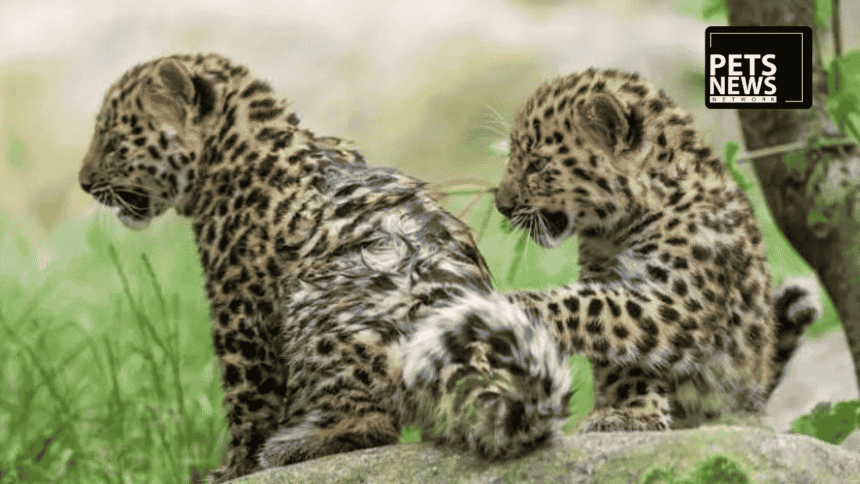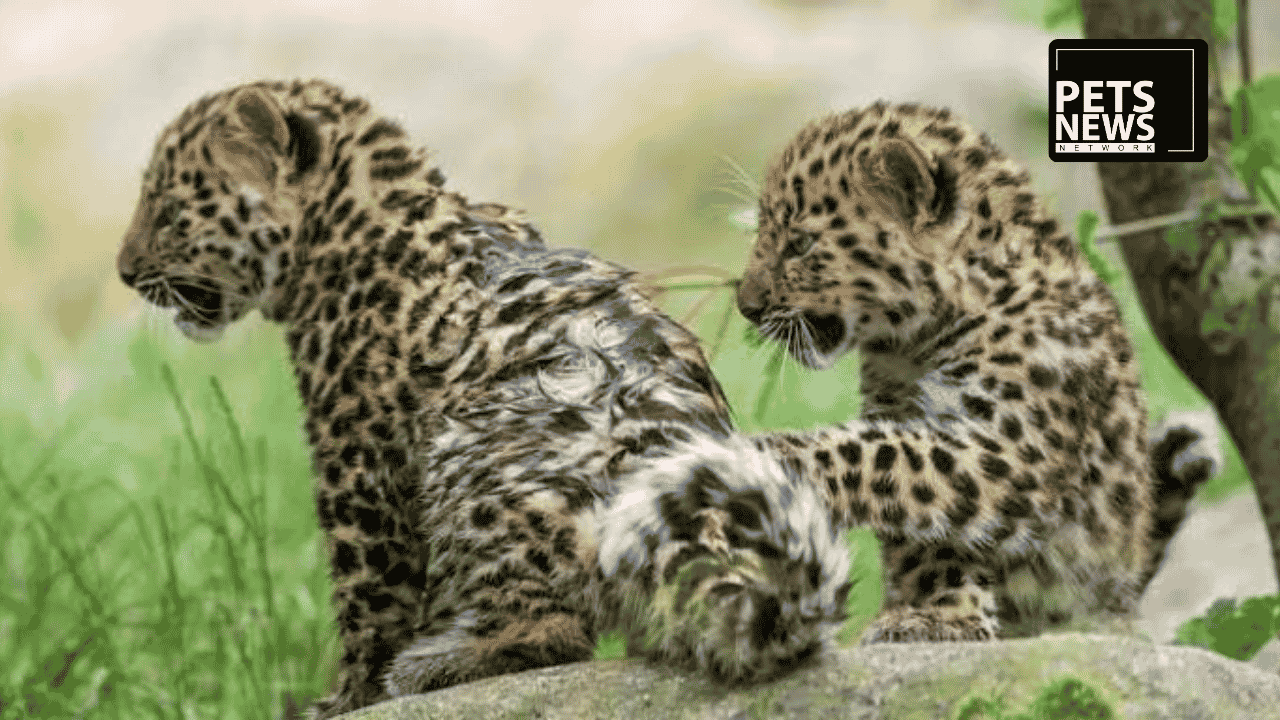

Two leopard cubs, a male and a female of about two to three months, are being cared for in upper Assam after they were rescued near a residential area in Margherita. The Forest Department tried to reunite them with an adult female leopard it suspected was their mother. The attempt failed. What the coverage does not give is the order of events, because that female had been sighted in the locality and was later released into Dehing Patkai National Park.
What is known
| Where | Near a residential area in Margherita, Tinsukia district, Assam |
| Jurisdiction | Margherita East Range, Digboi Forest Division |
| Cubs | One male, one female, each about two to three months old |
| Rescued by | Assam Forest Department |
| Now with | The IFAW-WTI Mobile Veterinary Service Unit – Eastern Assam, working with the Forest Department and supported by the Ashrayhasta Trust |
| Status | Officials say the cubs will need specialised care and appropriate wildlife management measures |
The Wildlife Trust of India (WTI) shared the information on social media on Friday and spoke about it on Saturday. No calendar date has been published for the rescue. Reports say only that it happened during the week.
The sequence that matters
An adult female leopard was sighted earlier in the same locality and later released into Dehing Patkai National Park, in the same region of upper Assam. The Forest Department suspected she was the cubs’ mother and tried to reunite them with her. The attempt did not succeed.
That raises a question the published accounts do not answer: was the female moved before anyone knew the cubs existed? PNN is not asserting that. The reports do not say when she was captured, whether she was captured at all rather than observed and later relocated, whether the cubs were found before or after she was moved, or how the failed reunion was attempted. If she was moved before the cubs were found, it raises a question about how a locality is checked before an animal is relocated out of it. If the cubs were found first, the sequence is a different matter. The Digboi Forest Division can answer it.
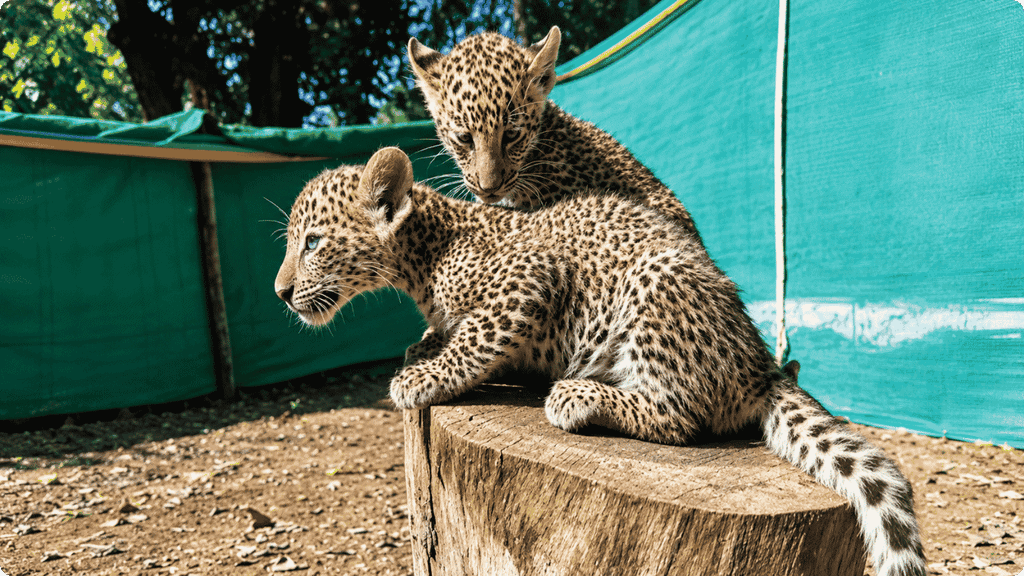
And the release itself is worth asking about
Moving a leopard out of a locality is not a neutral act, and research from Maharashtra says so. A study of the Junnar region by Dr Vidya Athreya and colleagues found that attacks on people rose after a capture-and-release programme began: 8–24 a year, against 1–7 a year before. The authors attributed those attacks to the translocated animals. A later telemetry study found that three leopards released less than 10 km from where they were caught returned to their original home ranges.
That research is reported to have led the Maharashtra Forest Department to stop using translocation as a standard response.
A leopard seen in a locality is not, by itself, a reason to move her.
Whether anything more than a sighting was involved at Margherita has not been published. That is the same gap again.
Reuniting cubs with their mothers is routine elsewhere in India
In Junnar, Pune district, Maharashtra, the forest department runs leopard cub reunions as standard practice. DCF Amol Satpute has said there have been 125 such reunions in the last five years. As he describes the protocol:
- The cub is placed in a small plastic crate with an easy-open lid, so the mother can lift it out.
- Staff wear gloves, leave immediately, and watch from a distance if needed.
- Camera traps are set at the spot to record the reunion and other movement.
- The cub gets a medical examination and is returned to where it was found only if it is fit.
- The reunion is planned for night, when leopards are active.
Reunions are not always achieved first time. In Junnar in 2022, a 60-day-old cub was reunited with its mother on the fifth attempt, after four unsuccessful ones, according to Deccan Herald. A single failed attempt is not necessarily the end of the process.
It has been done in this district
In May 2018, WTI’s Mobile Veterinary Service team handled a similar case in Tinsukia district. Tea garden workers at Rangagora Tea Estate, Guijan, found three leopard cubs, one of them melanistic, in a trench on 12 May. All were less than two weeks old.
- The team sealed off the area and limited human movement so the mother could return.
- Forest Department staff and villagers controlled crowds at the garden entrance.
- After noon, the team withdrew and waited about five hours. Two cubs were gone, with fresh adult pug marks nearby.
- To avoid disturbing the mother, the team left the last cub overnight. By the next morning it was gone too.
The operation was led by WTI veterinary surgeon Dr Santosh Kumar Gupta and took about a day and a half. The decision that looks like inaction, staying away, was what let the mother come back.
What two to three months means for these cubs
The Margherita cubs are older than the Rangagora cubs were, but age alone does not rule out a reunion: the Junnar cub reunited on the fifth attempt was about 60 days old. A successful reunion returns a cub to its mother within days. Hand-raising and rewilding is a different path. It requires a suitable release site, takes far longer and does not always end in release. WTI runs a Centre for Wildlife Rehabilitation and Conservation near Kaziranga for orphaned wildlife. PNN has not seen a plan for these two cubs.
Why this is worth following
Two cubs in care is a good outcome compared with two dead cubs. It is a poorer one compared with two cubs back with their mother, and the gap between those outcomes often comes down to timing, patience and keeping people away. India has documented reunion practice, in Maharashtra and in this same Assam district, and it is published and transferable.
Pets News Network is India’s first dedicated media platform for the pet and animal industry. The sequence of events described here is as published; PNN has not independently confirmed the rescue date or the identity of the female leopard released into Dehing Patkai National Park. For breaking global pet news, brand coverage, and advertising enquiries, contact: info@petsnewsnetwork.com